
What NJIT Learned from Moving into a Former Merck Lab
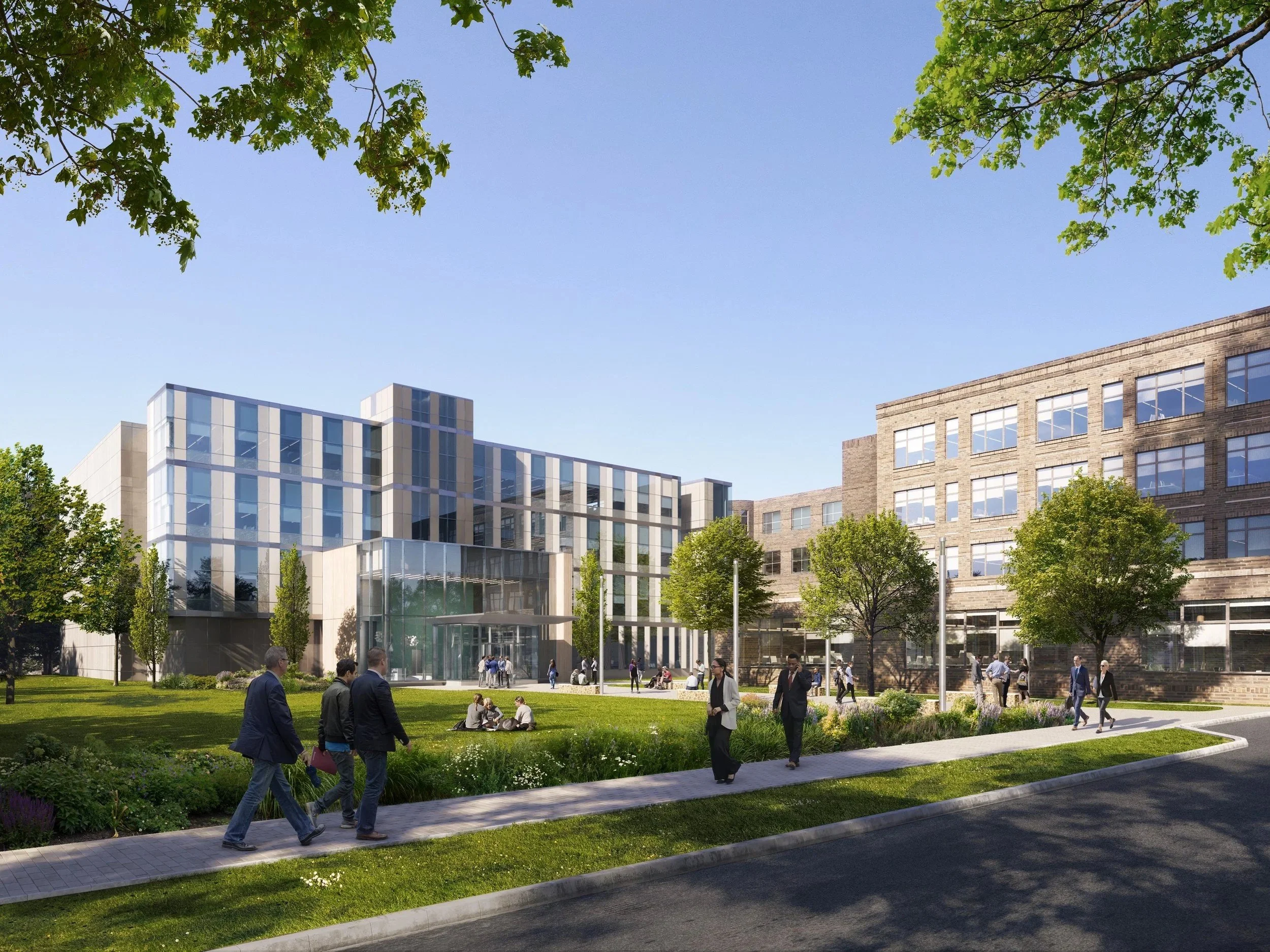
Rendering of 15 NEST, the future home of NJIT's Translational Research facility. Image: Courtesy of the HOK Group
Just over a year after announcing its partnership with the Northeast Science and Technology (NEST) Center, New Jersey Institute of Technology (NJIT) has officially moved researchers and students into the former Merck research campus in Kenilworth, NJ.
The university's 25,000-sf NJIT @ NEST Center for Translational Research is now home to four professors and 26 undergraduate and graduate students conducting research in photonics, biomaterials, environmental science, and sustainable technologies. The facility supports projects ranging from advanced imaging materials and drug delivery systems to plastics recycling and environmental remediation research.
The project's early occupancy provides a real-world case study in how existing pharmaceutical research infrastructure can be adapted to support academic research while minimizing costs and accelerating occupancy.
A cost-conscious alternative to new construction
One of the clearest lessons emerging from NJIT's move is the growing appeal of repositioned laboratory facilities for universities facing budget pressures.
According to Matthew Flath, senior vice president of asset management at Onyx Equities, academic institutions continue to pursue research growth despite ongoing funding challenges.
“This partnership with NJIT validated that universities are paying close attention to their budgets, but they're still looking to find space to advance their research and ultimately commercialize it,” Flath says, noting that many universities are navigating financial constraints while simultaneously trying to maintain research momentum.
“Cost of occupancy is the chief concern for most universities right now. NIH funding is down; in some cases, so are tuition and enrollment. But science and discovery haven't stopped,” saysFlath. “Partnerships, such as this one with NEST and NJIT, allow institutions to occupy a world-class facility at very little cost. The space was move-in ready, compared to constructing a brand new facility.”
For academic institutions evaluating future laboratory projects, the NEST model highlights an alternative to lengthy new construction efforts: leveraging existing high-performance research infrastructure that can be adapted to evolving research programs.
Flexibility proves its value
While the facility was largely move-in ready, NJIT's occupancy has also revealed the importance of designing laboratory infrastructure with future adaptability in mind.
One of the few physical modifications required after occupancy involved additional chemistry support.
“NJIT needed more fume hoods than we previously thought,” Flath says. “One of the very few improvements that they made was increasing the number of chemistry fume hoods within the space.”
The change reflects broader research trends occurring throughout the Garden State’s innovation ecosystem.
“That's actually a theme we're seeing with a number of our prospective tenants right now: there's a big push in chemistry and materials science in New Jersey,” Flath says.
The ability to accommodate those changes quickly was possible because of infrastructure decisions originally made when the facility was operated by Merck.
Designing for the unknown
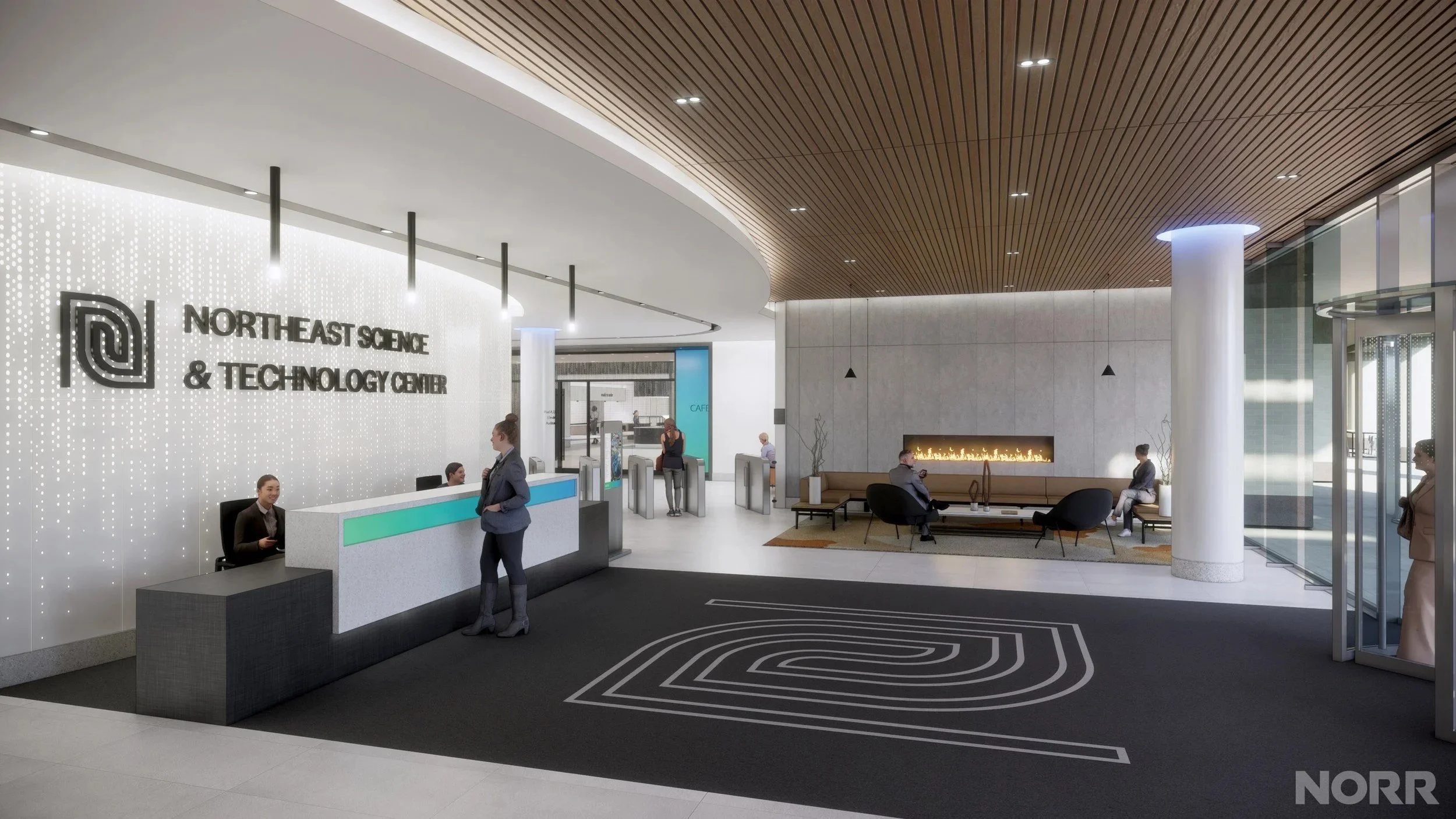
Renovations at the 15 NEST building in Kenilworth, NJ will modernize more than 75,000 square feet of amenity and common space, enhancing shared areas while complementing the campus’s existing laboratory and biomanufacturing facilities. Image: Courtesy of Northeast Science and Technology (NEST)
According to Flath, one of the most valuable features inherited from the site's pharmaceutical past is an intentionally oversized air-handling infrastructure.
“One of the many things Merck did when this facility was created was to construct an oversupply of airflow to all the research spaces, to the point where it's almost more than any user could use,” he says.
The building includes multiple oversized air chases serving laboratory areas, allowing new fume hoods and equipment to be added without extensive renovations.
“So it was as simple as basically dropping the hood in the space and just running a horizontal duct to connect the hood to the vertical chase that was already there,” Flath says.
That flexibility has proven especially valuable as research needs evolve after occupancy.
“That oversupply of air flow allows greater flexibility in adding equipment, such as additional fume hoods, to any of the spaces at NEST,” he adds.
For laboratory designers, the project demonstrates how strategic investments in core building systems can extend a facility's usefulness across multiple generations of occupants and research programs.
Lessons for future lab projects
As more owners explore conversions of office, industrial, and former research facilities into laboratories, Flath believes flexibility should remain a priority—even in speculative developments.
“When developers build speculative lab space, they build to the lowest common denominator of what they think the market needs,” he says.
However, he argues that certain infrastructure investments can provide significant long-term value without dramatically increasing project costs.
“Build additional, oversized air shafts to accommodate more potential chemical hoods and other equipment that require increased airflow,” Flath recommends. “It provides future flexibility without overbuilding.”
For NJIT, that flexibility is already supporting research growth while allowing the university to expand its presence within New Jersey's life sciences ecosystem. For planners and designers, the project offers a reminder that the most successful laboratory environments are often those that can adapt to needs their original designers could not fully predict.