
[[bpstrwcotob]]
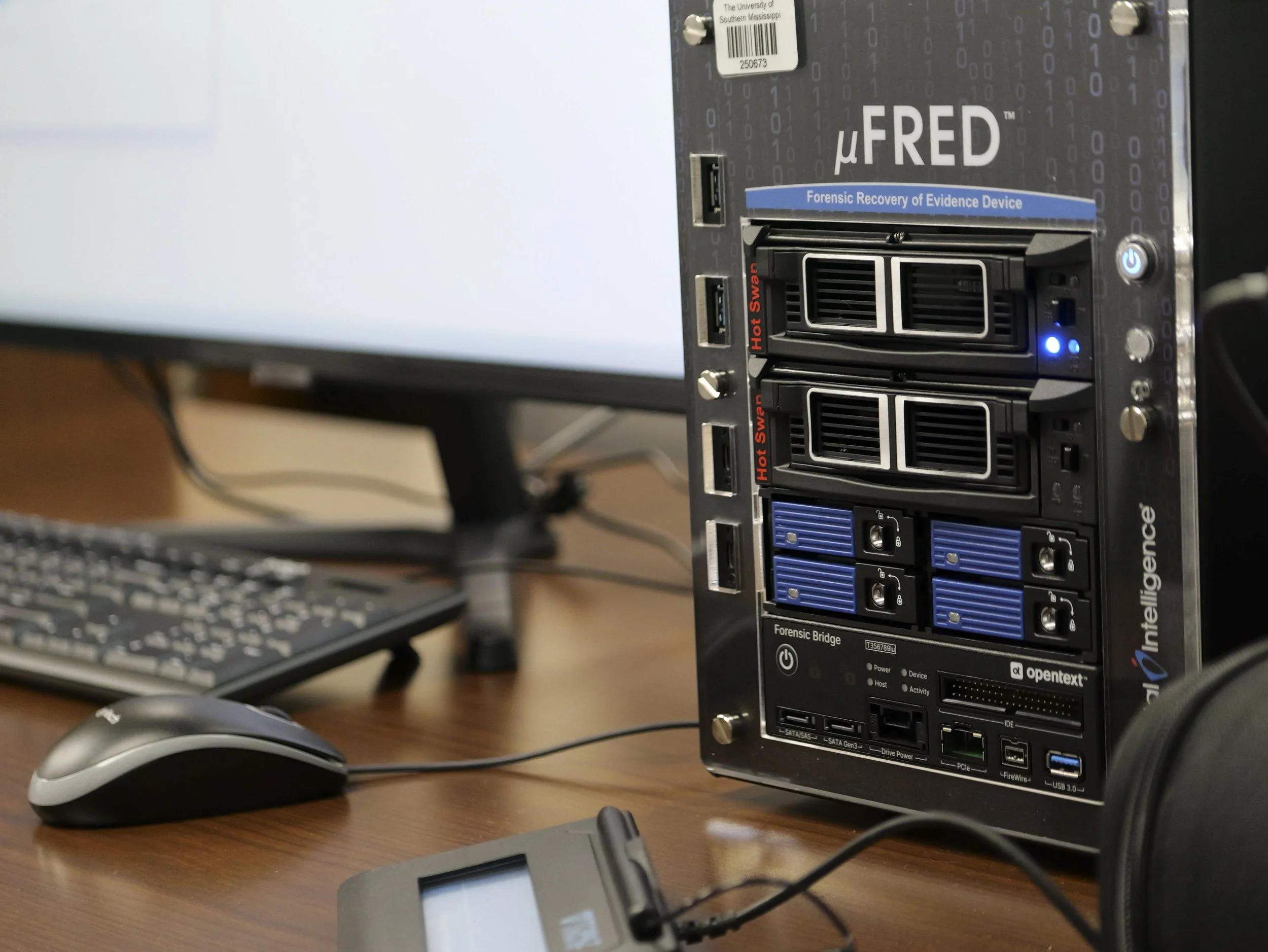
Secure Lab Expands Digital Forensics Access for Rural Agencies
The University of Southern Mississippi’s new Rural Digital Forensics Initiative laboratory balances secure evidence handling, forensic operations, and hands-on education within a renovated campus space designed to expand access for rural law enforcement agencies

Event Preview: The Smart Tools Shaping Tomorrow’s Labs
The Smart Design Tools & Software Digital Conference explores how AI, BIM, VR, and other digital tools are reshaping laboratory design to improve collaboration, accuracy, and performance
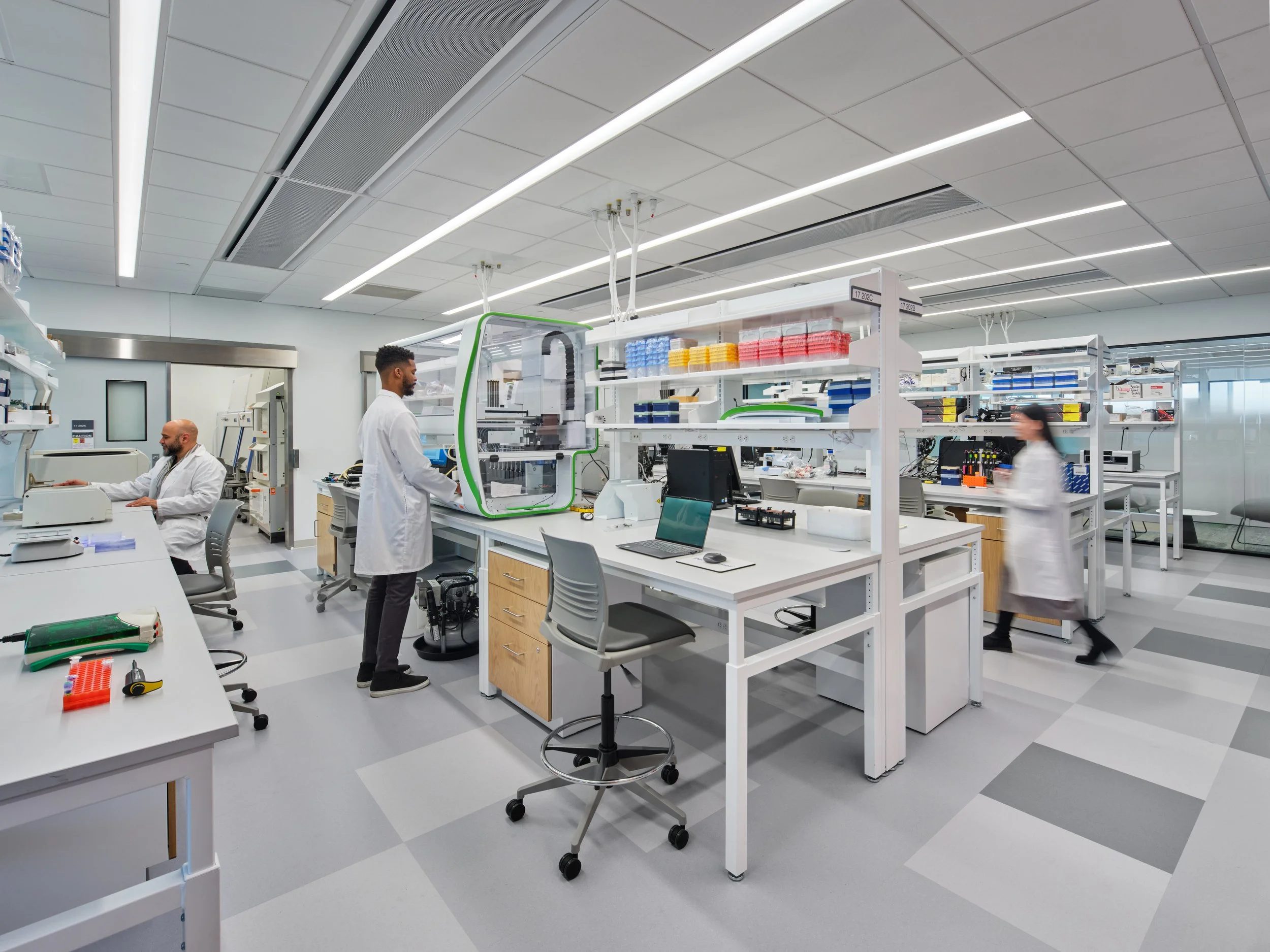
How AI Is Reshaping Lab Design
AI is reshaping lab design and operations by changing how space is used, how infrastructure is prioritized, and how workflows are structured—driving a shift toward more flexible, data-driven, and automation-ready environments that can evolve alongside science and technology
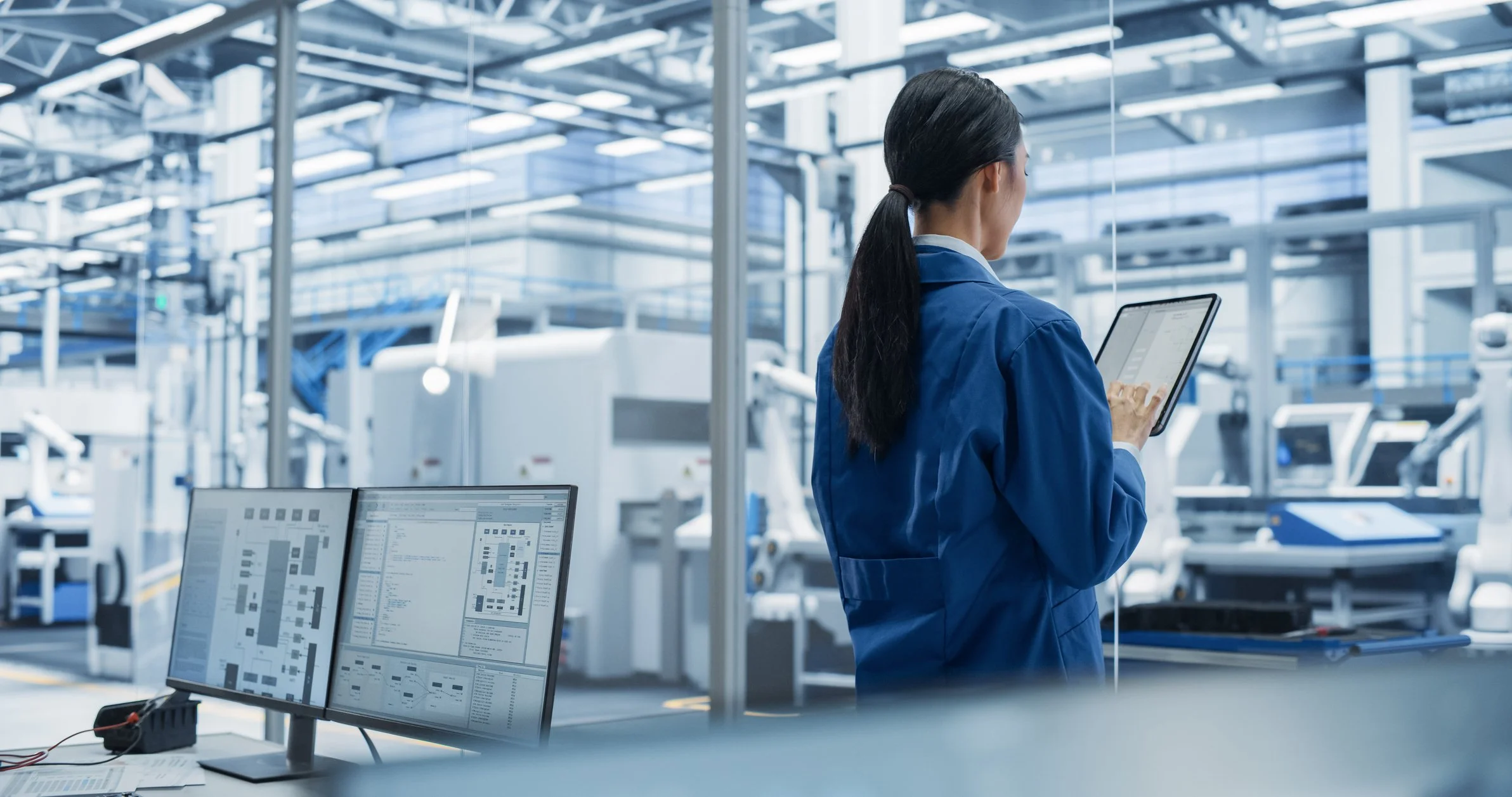
Smarter Labs: AI, Compliance, and Energy in Sync
independent data layers, continuous monitoring, and AI-driven analytics are transforming laboratory facilities by improving transparency, detecting operational drift, sustaining lifecycle performance, and enabling safer, more energy-efficient, and data-informed design decisions
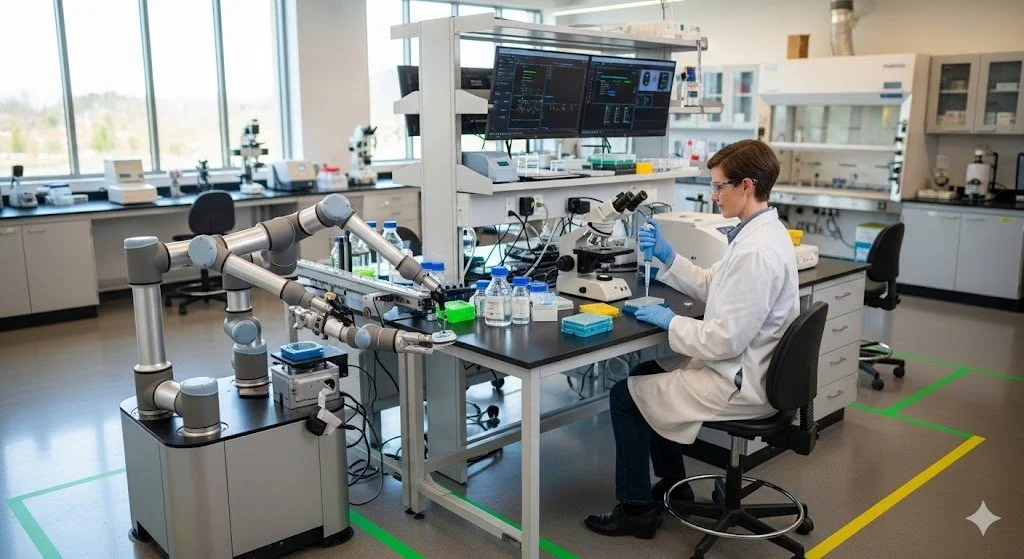
Collaborative Robotics (Cobots): Safety & Spacing
As collaborative robots (cobots) break free from traditional safety cages to work directly alongside scientists, laboratory architects must design specialized spatial buffer zones and ergonomic workflows that ensure human-robot collaboration is both efficient and harmless.
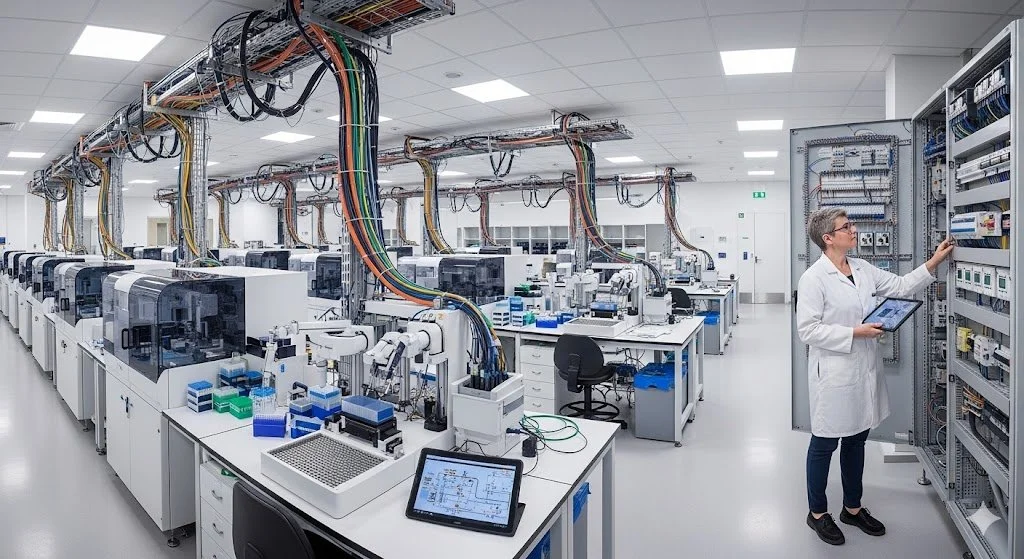
Power & Data Density for Liquid Handlers: Architecting for High-Throughput Utilities
As laboratories scale up their automation, the electrical and network infrastructure must evolve to support fleets of power-hungry liquid handlers like Hamiltons and Tecans. Strategic utility planning prevents catastrophic tripped breakers, ensures uninterruptible workflows, and guarantees seamless data transmission.
Using Occupancy Sensors to Right-Size Laboratory Design
Advances in thermal occupancy sensing and analytics are enabling data-driven laboratory planning by revealing real-world space utilization patterns without compromising privacy

AI and the Future of Lab Building Performance
As laboratory buildings grow more complex and future demands more uncertain, AI is helping project teams turn fragmented HVAC and building data into smarter forecasts, fewer performance surprises, and more resilient, right-sized facilities across the lab lifecycle
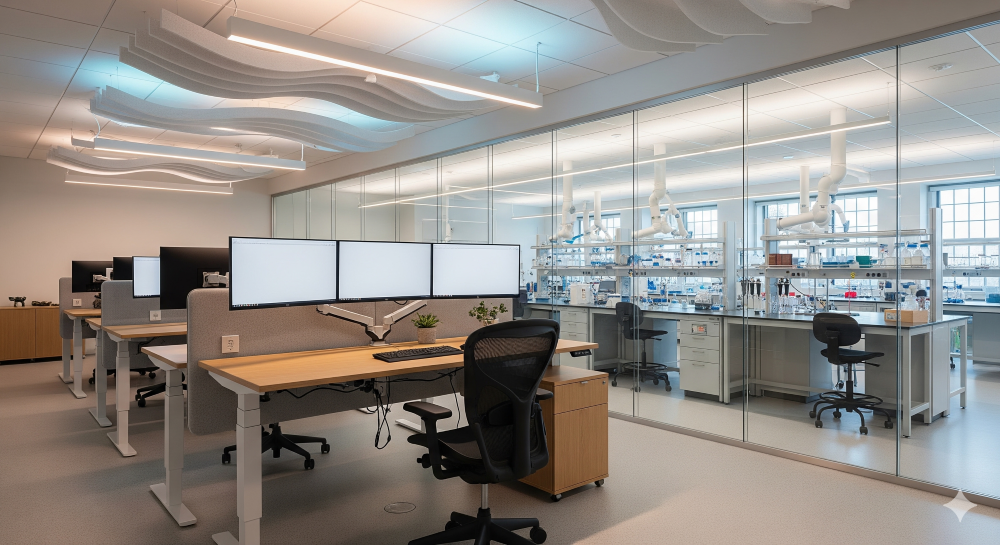
Ergonomics for Coding: Lighting & Acoustics in the Hybrid Lab
Bioinformaticians are coders, not chemists. Stop putting them on stools under fluorescent lights.
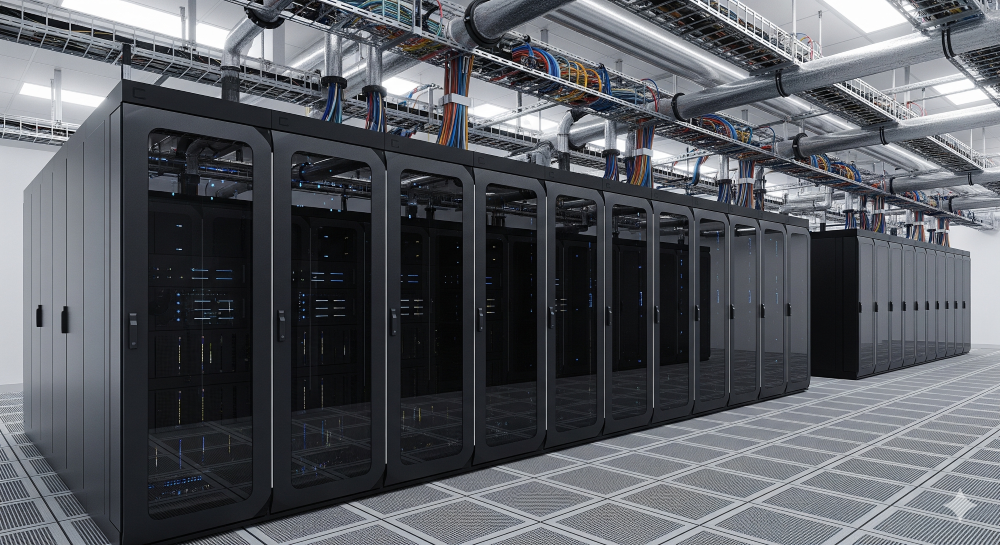
On-Premise vs. Cloud: Sizing the Lab Server Room
Don't let the server room melt. Calculating the massive cooling loads of AI-driven drug discovery.