
USDA Opens Applications for Historic $125M Infrastructure Investment
Editor’s Note: Agricultural research facilities at land-grant universities have long grappled with severe deferred maintenance backlogs, threatening their capacity to support high-tech, modern science. This major influx of federal funding signals a significant shift toward renewing legacy academic infrastructure. For lab planners and AEC professionals, this initiative opens substantial opportunities for design and construction partnerships, requiring a deep understanding of local matching requirements and scalable project levels.
The US Department of Agriculture has officially opened the application window for its newly revitalized Research Facilities Act program, injecting $125 million annually into agricultural lab infrastructure. This permanent funding stream aims to reverse decades of deferred maintenance and accelerate the construction of state-of-the-art research spaces at land-grant institutions nationwide.
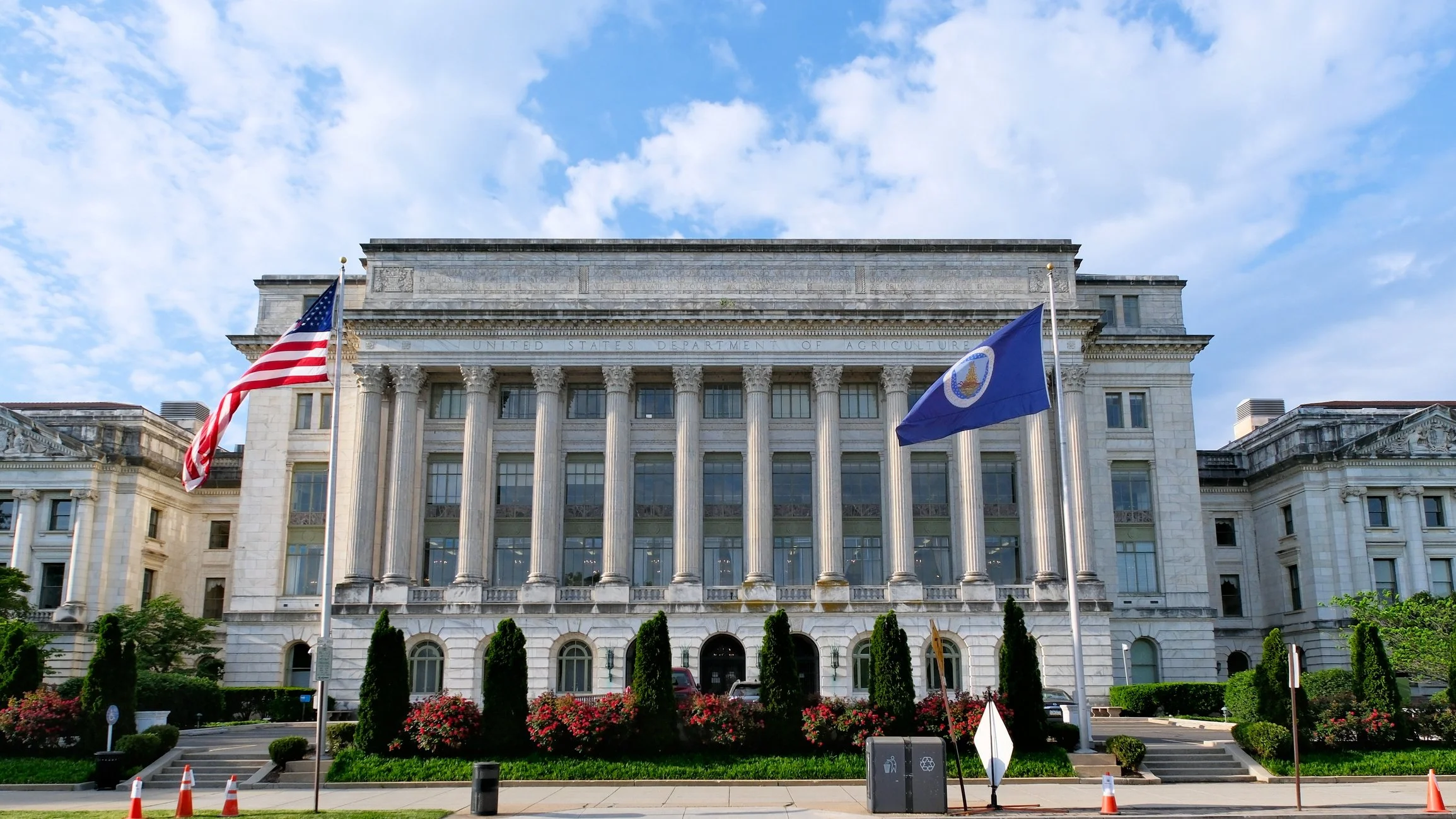
The announcement follows a high-level roundtable at the USDA headquarters involving US Secretary of Agriculture Brooke L. Rollins, US Secretary of Education Linda McMahon, and leaders from various land-grant universities. The program—administered by the USDA National Institute of Food and Agriculture (NIFA)—represents a critical turning point for university facility managers and architects tasked with updating aging agricultural laboratories.
Addressing decades of deferred maintenance
For years, academic research facilities have faced a growing backlog of capital improvement needs, particularly in agricultural and environmental sciences. Legacy facilities often lack the robust mechanical, electrical, and plumbing (MEP) systems required to support sensitive modern instrumentation, precise climate control, and high-throughput genomic sequencing.
“A nation that cannot feed itself is not secure and for too long, many of our land-grant universities have faced aging facilities and mounting deferred maintenance costs that threaten their ability to conduct world-class agricultural research,” says Brooke L. Rollins, US Secretary of Agriculture. “We are announcing a $125 million investment to ensure America’s farmers and ranchers continue to benefit from the innovation that secures our vital US agriculture industry and allows us to feed, clothe, and fuel not only our nation but the world.”
This capital injection will allow universities to move projects from their long-term master plans into active design and construction phases. For lab planners, this means a sudden demand for sustainable, resilient facilities capable of enduring evolving environmental challenges.
Bridging education, innovation, and national security
The modernization of these facilities is increasingly viewed through the lens of economic competitiveness and food biosecurity. Modern agricultural labs are no longer just greenhouses and basic chemistry benches—they are highly complex environments integrating robotics, data analytics, and advanced biosafety containment zones.
“Agricultural advancement is not an accident of history; it is the product of generations of Americans’ hard work and ingenuity,” says Linda McMahon, US Secretary of Education. “Our land-grant universities have driven agricultural development for more than a century—advancing critical scientific breakthroughs, pioneering cutting-edge technologies, and cultivating dedicated Americans who have strengthened America’s food and farming systems.”
Architects and engineers working in this sector must balance rigid biosecurity protocols with the collaborative, daylight-filled workspaces that modern principal investigators demand. Designing to meet stringent standards, such as those defined by the US Green Building Council for energy efficiency, will be paramount as universities look to minimize long-term operational costs.
Navigating the four-tiered funding structure
To accommodate the diverse needs of campuses nationwide—from initial feasibility studies to sprawling new builds—NIFA has structured the competitive funding into four distinct project levels. Lab planners and facility managers must evaluate their current campus master plans to align projects with the appropriate tier.
Level I—Planning Grants ($100,000 to $200,000): Allocated for initial groundwork, including facility needs assessments, site surveys, preliminary architectural designs, and detailed cost estimations.
Level II—Small Facility Upgrades ($250,000 to $2 million): Targeted at targeted renovations, lab modernizations, and retrofitting existing footprints with updated casework and localized HVAC systems.
Level III—Mid-Scale Construction/Expansion ($2 million to $10 million): Designed for adding specialized research wings, constructing greenhouses, and executing major retrofits to existing building envelopes.
Level IV—Large-Scale Research Complex ($10 million to $30 million): Reserved for entire new buildings, high-containment specialized labs, and advanced controlled-environment agriculture facilities.
A crucial caveat for university planning teams is the program's strict dollar-for-dollar non-federal cash match requirement. This mechanism ensures deep local investment but requires institutions to secure matching capital early in the design cycle. Furthermore, eligible entities can only receive funding for one project at a time, necessitating careful prioritization of campus infrastructure needs.
Designing for the next generation of agricultural science
The push for modernization aligns with broader laboratory design trends emphasizing flexible benching, modular utilities, and decarbonization strategies within academic labs. Bringing these outdated agricultural research hubs into the 21st century involves rethinking traditional configurations in favor of agile spaces that can shift as research grants evolve.
“For 164 years, USDA has partnered with America’s great land-grant and agricultural universities to produce the discoveries, service, and education needed to keep the nation fed and to fuel US agricultural progress around the world,” says Dr. Jaye L. Hamby, NIFA Director. “This investment reaffirms our commitment to that valued partnership and to the next generation of agriculturists. We are excited to see the tremendous impact this program will have to accelerate research from the lab to the marketplace and the fields to improve profitability for our farmers, ranchers, and producers and secure our nation’s food supply.”
To successfully secure and deploy these funds, design firms and university facility managers must move quickly. The deadline for submitting comprehensive applications to NIFA is July 17, 2026.
What this means for your next lab project
For AEC firms specializing in higher education and science and technology sectors, this announcement represents an immediate pipeline of public-sector projects. The strict matching funds requirement means institutions will likely favor design partners who can demonstrate predictable delivery methods, precise cost-estimation tracking, and deep knowledge of specialized lab infrastructure and casework.
When planning upgrades under this program, facilities teams should prioritize infrastructure flexibility. Prioritizing overhead utility carriers, mobile casework, and scalable HVAC zoning will ensure that a Level II modernization or a Level IV new build remains viable for decades to come, maximizing the impact of this historic federal investment.
References
US Department of Agriculture. (2026). Research Facilities Act Program Funding Opportunity. National Institute of Food and Agriculture.
US Green Building Council. (2025). LEED v5 for Building Design and Construction.
National Council of University Research Administrators. (2026). Matching Fund Requirements and Stewardship in Federal Grants.