Secure Lab Expands Digital Forensics Access for Rural Agencies
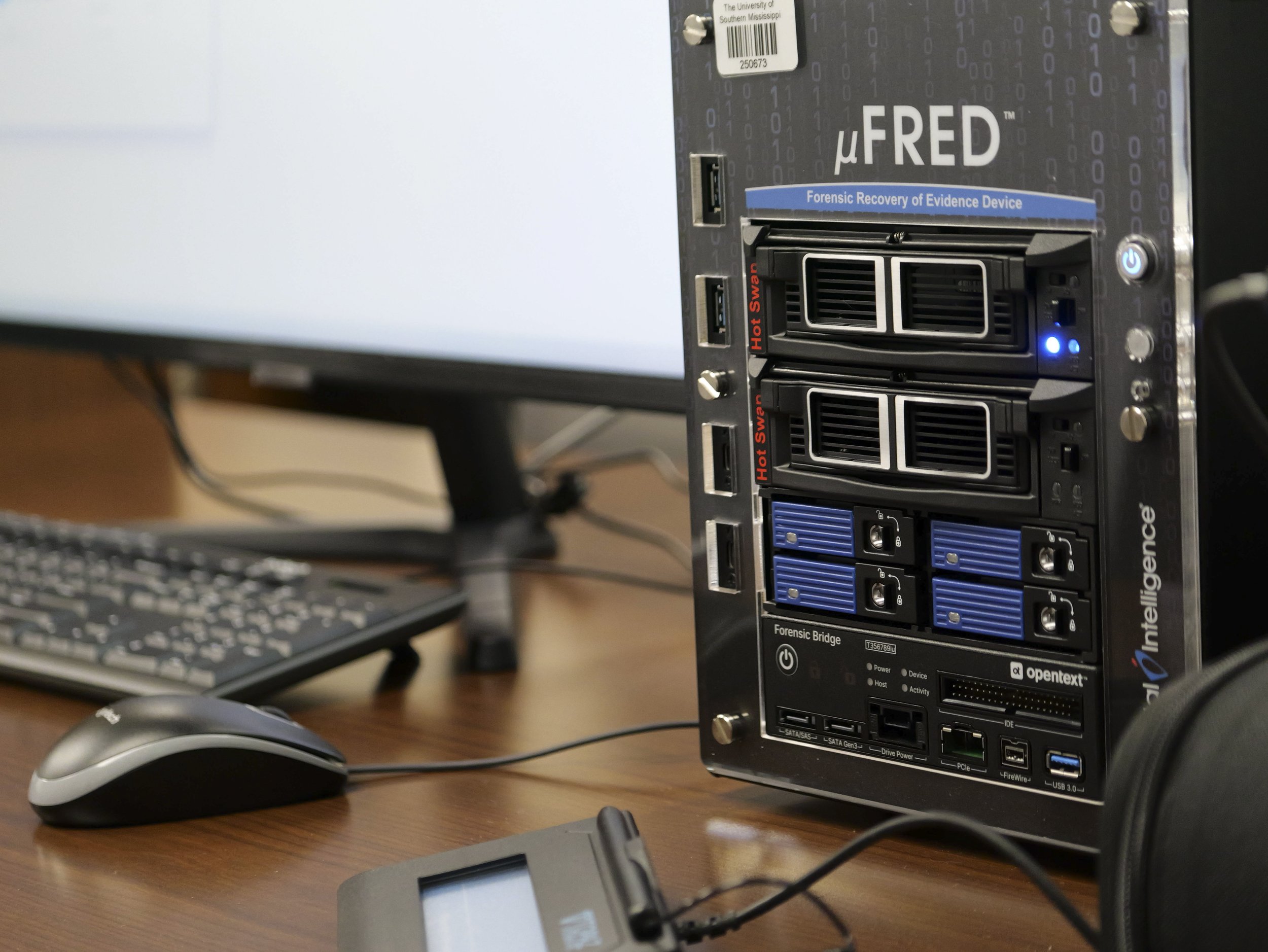
The microFRED is one of the tools used in the lab for forensic acquisition, analysis and processing of digital evidence. Image: Courtesy of the University of Southern Mississippi
When investigators need to extract evidence from smartphones, computers, tablets, or other digital devices, access to specialized forensic resources can be a significant challenge—particularly for rural law enforcement agencies with limited personnel, equipment, or funding.
To help address those challenges, the University of Southern Mississippi (USM) recently opened the Rural Digital Forensics Initiative (RDFI) laboratory within the School of Criminal Justice, Forensic Science and Security. Supported by the US Department of Justice, the new facility provides digital forensic services to law enforcement agencies while also serving as a training resource for students and investigators.
The RDFI laboratory is one of only three digital forensics laboratories of its kind in Mississippi and was designed around a dual mission: supporting active forensic investigations while preparing the next generation of digital forensic professionals.
For the design team, that meant creating a space that could balance operational security, evidence handling requirements, and academic collaboration within an existing university environment.
Designing around rural law enforcement needs
The initial planning for the RDFI laboratory was shaped by the realities faced by rural law enforcement agencies, including limited access to forensic resources and the logistical challenges associated with sending digital evidence to centralized facilities.
“The needs of rural law enforcement agencies were central to the lab’s initial planning,” says RDFI laboratory manager John Tryner. “My prior law enforcement experience gave me firsthand insight into the practical challenges agencies encounter.”
Rather than designing a new building from the ground up, the university adapted an existing campus space into a specialized forensic environment. That required careful consideration of how available facilities could support the laboratory’s operational needs.
“Because the lab was retrofitted into an existing university space, decisions had to be made about careful use of the available rooms and infrastructure,” Tryner says.
Since evidence handling is central to digital forensics, the lab’s setup prioritized a streamlined path through each stage of the process.
“The layout was organized to support evidence intake, documentation, temporary storage, processing and return while limiting unnecessary movement of evidence,” Tryner says.
Supporting chain of custody and data security
Digital forensics laboratories require strict controls to maintain the integrity of evidence. Unlike traditional academic computer labs, forensic environments must support documented workflows, restricted access, and clear separation between operational systems and instructional resources.
At RDFI, those requirements influenced both the physical organization of the space and the procedures governing how the laboratory operates.
“The lab supports a documented evidence workflow beginning with intake and continuing through processing, temporary storage, and subsequent return to the submitting agency,” Tryner says. “Because we were adapting an existing space, the focus was on creating clear operational boundaries between evidence storage, active forensic work, and instructional activities.”
The laboratory uses layered physical and technical controls to protect sensitive information and maintain evidence security. While specific security measures are not publicly disclosed, Tryner notes that the design approach emphasizes restricted access, documentation, and separation of functions.
“Case data and forensic systems are also treated separately from normal academic computing resources,” Tryner says.
Creating a lab that serves both investigations and education
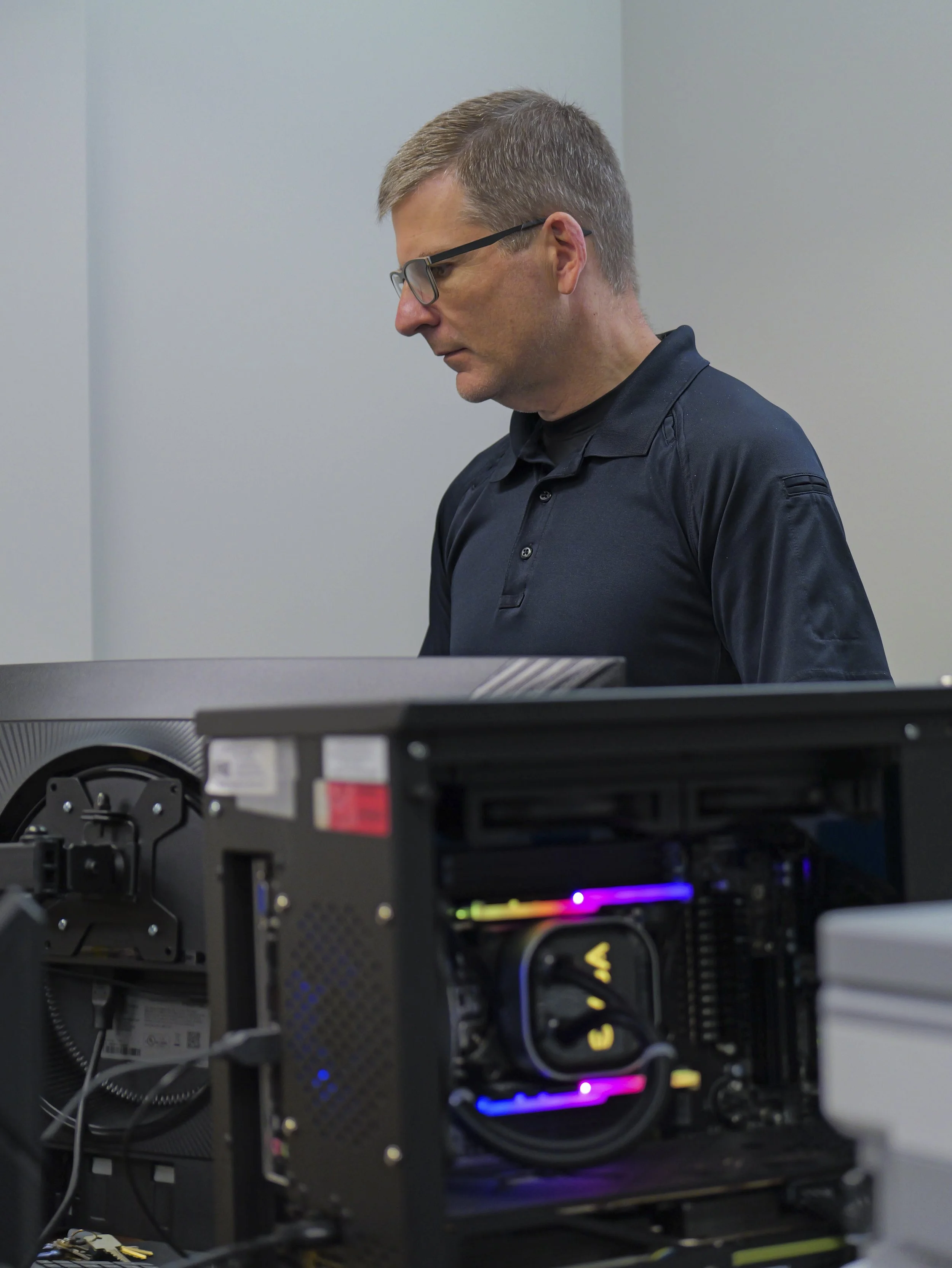
John Tryner, RDFI laboratory manager, reviews digital evidence in the lab. Image: Courtesy of the University of Southern Mississippi
One of the unique aspects of the RDFI laboratory is its role as both an operational forensic resource and an educational environment for USM students. Balancing those missions required careful planning to ensure students could learn about digital forensics without compromising active investigations.
“All instructional activities use training devices, simulated evidence, sanitized datasets, and other materials that are clearly separate from laboratory casework,” Tryner says.
Students and training participants work with simulated evidence, sanitized datasets, and training resources rather than active cases or operational systems. This separation allows the university to provide hands-on instruction in areas such as evidence preservation, chain of custody, documentation, and quality assurance while maintaining the security requirements of an operational forensic facility.
“The academic setting nevertheless creates opportunities for students to understand the professional standards surrounding digital forensics,” Tryner notes.
Designing for flexibility and future technology
Digital forensics is a rapidly evolving field, with increasing data volumes and constantly changing technologies. A device that once contained gigabytes of information may now contain terabytes of data, creating new demands for storage, processing capabilities, and examination methods.
To accommodate those changes, the RDFI laboratory was designed with flexibility in mind.
“The laboratory’s configuration makes it adaptable and able to accommodate changes in forensic equipment, data-processing requirements, storage needs, and examination types,” Tryner says. “The lab was designed to support responsible adaptation while maintaining the same expectations for documentation, security, evidence control, and quality.”
Rather than attempting to replicate every capability available at larger centralized facilities, the RDFI was designed as a regional resource that can complement existing forensic infrastructure.
“Our goal is not to duplicate every capability available elsewhere, but to develop a sustainable regional resource that can respond to changing needs and contribute to the broader digital forensic capacity of the state,” Tryner says.
Improving access through regional capacity
A major goal of the RDFI laboratory is reducing barriers for agencies that may otherwise face long travel distances or delays when seeking digital forensic assistance. By providing another location for appropriate examinations, the laboratory can help streamline workflows and reduce logistical challenges.
“The lab was designed to reduce avoidable logistical and workflow delays for agencies in the region,” Tryner says.
Within the facility, the evidence workflow follows a defined progression from intake and documentation to temporary storage, processing, and return. Organizing these functions within a controlled environment helps reduce unnecessary evidence movement and supports efficient case management.
The RDFI is not intended to replace existing state and local forensic resources. Instead, it provides an additional pathway for suitable examinations while expanding Mississippi’s overall digital forensic capacity.
“Specialized and centralized laboratories remain essential, but by providing an additional pathway for suitable examinations, the lab can contribute to the state’s overall capacity,” Tryner says.
As digital evidence continues to play an increasingly important role in investigations, facilities like the RDFI demonstrate how thoughtful laboratory planning can support both public safety and education. By integrating secure workflows, adaptable infrastructure, and a mission-driven design approach, the University of Southern Mississippi has created a facility that extends forensic capabilities beyond traditional centralized models and into the communities that need them most.