
Beyond Equipment: The Hidden Impact of Laboratory Infrastructure
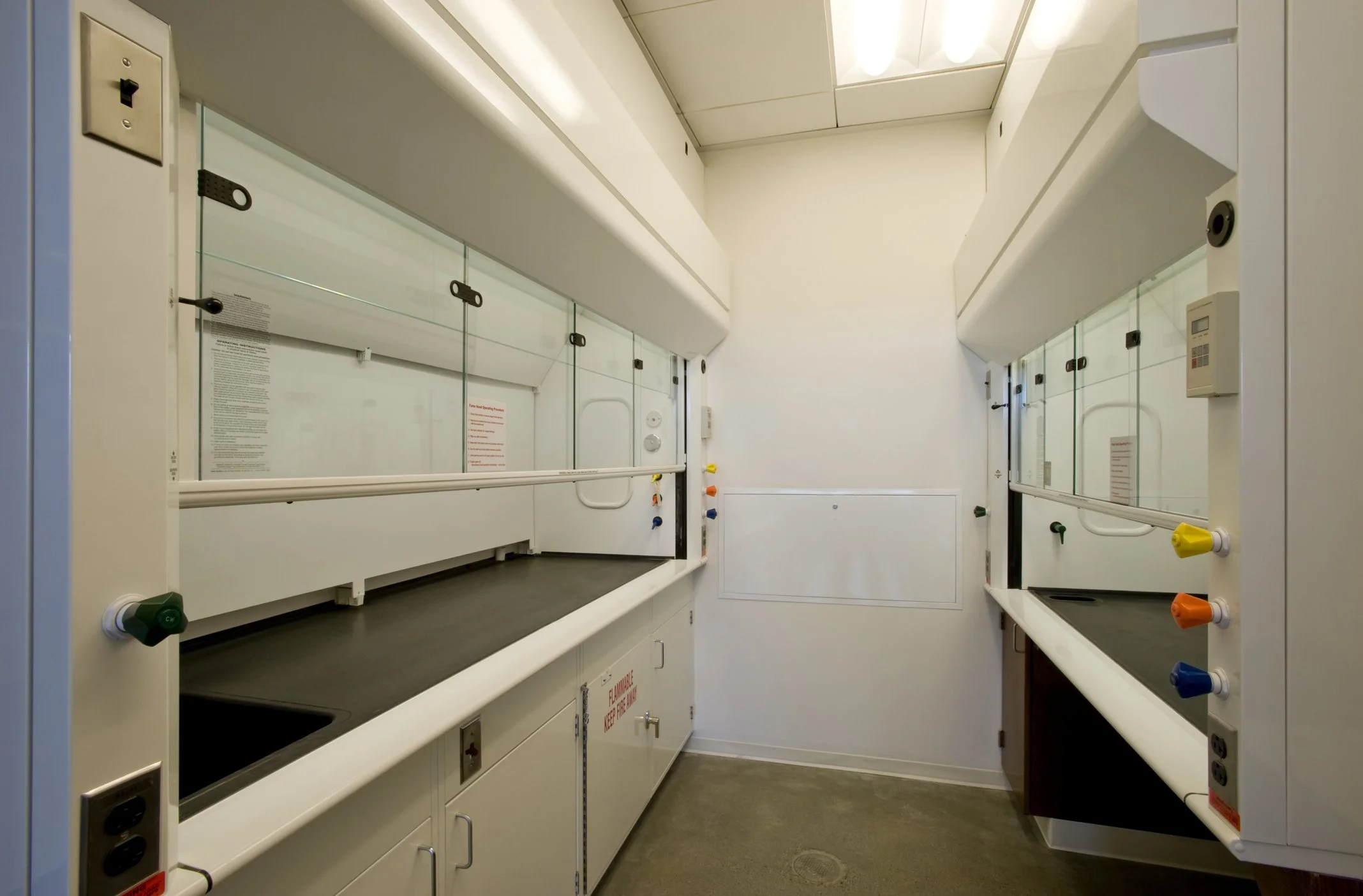
Laboratories are among the most technically demanding environments in any building. Maintaining safe working conditions requires continuous ventilation, pressure control, reliable utility distribution, and integrated safety systems—all of which consume significant amounts of energy. At the same time, laboratory managers face increasing pressure to reduce operating costs and meet ambitious sustainability targets. The challenge is deciding where improvements will have the greatest impact. The answer often seems obvious. Analytical instruments and other laboratory equipment are highly visible and directly support scientific work. Yet much of a laboratory's energy consumption originates in the infrastructure that enables research.
At Harvard University, laboratory space represents only about one-fifth of total building area while accounting for nearly half of overall building energy consumption. Approximately 44 percent of that energy use is directly associated with laboratory ventilation alone(1). These figures illustrate that meaningful improvements often begin not with individual pieces of equipment, but with the systems that support the entire laboratory. For laboratory managers, this changes the focus of decision-making. Effective decisions depend on understanding how building systems perform under real-world conditions. This enables laboratory managers to distinguish between expected energy demand and avoidable inefficiencies while improving sustainability without compromising safety.
More than technology behind the scenes
A laboratory's long-term energy performance is shaped long before research begins. Close collaboration between architects, laboratory planners, mechanical and electrical engineers, and future users helps create facilities that support both operational requirements and long-term efficiency. Laboratory managers contribute essential knowledge about workflows and future operational needs, helping ensure today's design decisions remain effective over time.
Laboratories evolve more rapidly than the buildings that house them. Modern facilities are therefore planned as integrated environments where architecture, building systems, and laboratory operations work together. Changing research priorities, new equipment, or repurposed spaces can then be accommodated more efficiently because flexibility was built in from the outset. Together, these elements form a layer of infrastructure that has long operated in the background.
For many years, it remained largely unexamined as long as laboratory operations functioned reliably. Digital monitoring has changed that. Instead of relying on assumptions or periodic inspections, laboratory managers can now evaluate how technical systems perform in actual use. This makes it possible to identify developing issues before they reduce efficiency, disrupt operations, or require costly corrective action.
Laboratory infrastructure is no longer simply the physical framework that supports scientific work. It has become an operational resource, providing the insight needed for faster, better-informed decisions throughout the laboratory's life cycle.
How intelligent infrastructure improves sustainability
Modern laboratories generate vast amounts of operational data. The challenge is no longer collecting information but turning it into decisions that improve performance.
Advances in digital technologies have transformed the way laboratory infrastructure is managed. Modern building management systems combine data from ventilation, utilities, safety systems, and other building assets to create a comprehensive picture of day-to-day operations. This integrated view reveals how changes in one system affect overall laboratory performance.
A gradual increase in ventilation demand, for example, may indicate that research activities have changed, occupancy patterns have shifted, or a technical component is no longer operating as intended. Managers investigate the underlying cause before increasing airflow across the building.
The same principle applies across laboratory operations. Decisions no longer rely solely on design assumptions or fixed maintenance intervals. They are guided by what is actually happening. Maintenance is planned before system performance declines. Ventilation strategies evolve as laboratory use changes. Resources can be directed to the areas where they will have the greatest operational and environmental benefit. Sustainability results from better operational decisions rather than from isolated technical measures.
Bringing safety and sustainability together
Safety and sustainability no longer need to compete. Intelligent infrastructure enables laboratory managers to improve both through the same operational approach. These choices begin during laboratory planning, where managers define how spaces will be used, anticipate changing research needs, and build in the flexibility to adapt over time. As a result, early planning influences not only laboratory safety, but also long-term energy use and operational efficiency.
Fume hoods illustrate this relationship particularly well. Their primary purpose is protecting laboratory personnel. At the same time, they are among the largest drivers of laboratory energy consumption. Research by Lawrence Berkeley National Laboratory has shown that a fume hood operating at maximum capacity with an open sash can require as much energy as three average homes (2). Modern demand-based exhaust control systems demonstrate that maintaining containment does not require unnecessary airflow. Matching airflow to actual demand reduces energy consumption without reducing protection.
The greatest opportunity, however, lies beyond the fume hood itself. When fume hood controls, ventilation systems, and building management systems operate as an integrated environment, laboratory managers gain the information needed to evaluate whether ventilation strategies still reflect actual laboratory use continuously. If research activities change, airflow can be adjusted accordingly.
Laboratory management becomes proactive. By identifying changing conditions early, managers can adjust building systems before they affect operations. Safety and sustainability become complementary outcomes of this evidence-based approach.
Infrastructure as a strategic asset
Laboratories have long been recognized as energy-intensive environments. What is changing is not their energy demand, but the way laboratories identify opportunities to improve it.
Looking beyond individual technologies, laboratory managers assess how building systems interact in day-to-day reality. Understanding these relationships enables more targeted action—and ultimately better outcomes.
Instead of reacting to rising energy consumption or declining system performance, managers identify emerging trends and determine their underlying causes. Is energy demand increasing because research activities have changed? Has occupancy shifted? Or is a technical system no longer operating as intended? Answering these questions enables corrective action that addresses the source of the problem rather than its symptoms.
This represents a fundamental shift in laboratory management. The laboratory environment no longer simply supports scientific work—it provides the insight needed to continuously improve it. This enables a more evidence-based approach, directing resources where they have the greatest impact without compromising safety or scientific performance.
Ultimately, sustainable laboratories are not created by technology alone. They result from informed decisions enabled by intelligent infrastructure. With continued digital integration, it is evolving from a passive asset into an active partner, enabling laboratory managers to make better decisions that lead to safer, more efficient, and more sustainable laboratories.
References
Gilly, Quentin. Validating Cost and Energy Savings from Harvard's Shut the Sash Program. Cambridge, MA: Harvard University Office for Sustainability. Accessed June 29, 2026. https://green.harvard.edu/sites/green.harvard.edu/files/FumeHoodWhitePaper.pdf
Mills, Evan, and Dale Sartor. “Energy Use and Savings Potential for Laboratory Fume Hoods.” Energy 30, no. 10 (July 2005): 1859–64. https://doi.org/10.1016/j.energy.2004.11.013