
Shared Lab Spaces: Designing for Collaboration, Flexibility, and Innovation
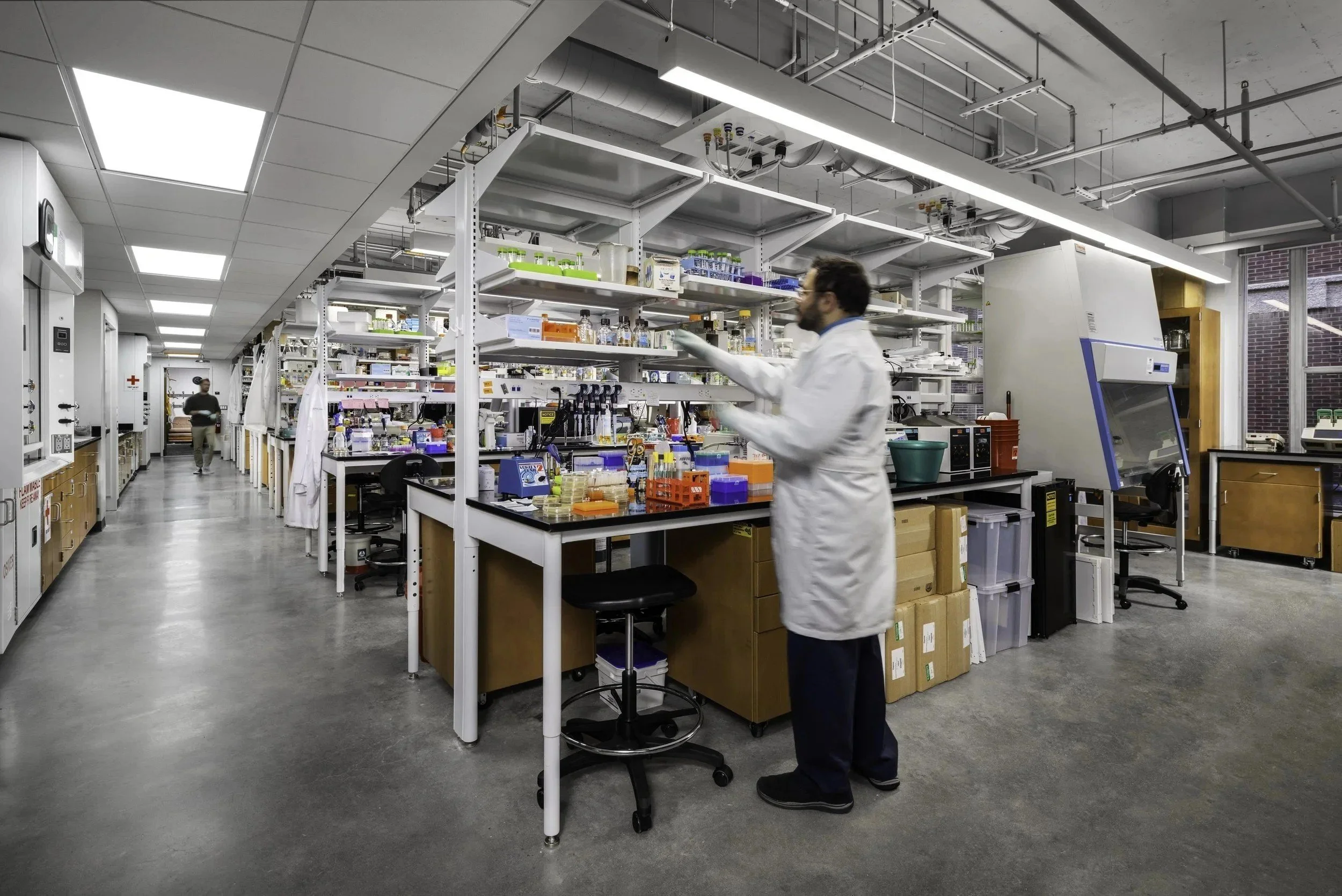
The University of Georgia renovated its 1960s-era Chemistry Building—now Cedar Street Building C—to offer lab users functionality and aesthetic form. Image: Courtesy of KBPhoto
As research becomes increasingly interdisciplinary and collaborative, shared laboratory spaces are emerging as a strategic solution for institutions, start-ups, and companies alike. From flexible bench layouts for small businesses to large academic science centers, modern labs are evolving to support collaboration, innovation, and sustainability—while balancing technical, regulatory, and human-centered considerations.
Rethinking lab functionality
Traditionally, laboratories were highly specialized and siloed. Today, exceptional labs balance high-performance research with flexibility for future needs, fostering cross-pollination of ideas across disciplines. Visual and physical connections—glass walls, open corridors, and shared cores—encourage informal collaboration while maintaining the safety and focus required in technical spaces. Labs are no longer just a place to conduct experiments; they are tools to attract and retain talent, support research-intensive work, and enhance organizational competitiveness.
Further reading: How to Build Flexible and Collaborative Laboratories
Flexibility and adaptability
Modern research demands change rapidly. Shared lab spaces incorporate flexible benching, modular furniture, and overhead service distribution to accommodate evolving workflows. Agile infrastructure—such as scalable chemical fume hood provisions and adaptable mechanical, electrical, and plumbing (MEP) systems—enables labs to expand or reconfigure without costly renovations. For smaller organizations, move-in-ready spaces with preinstalled utilities and shared equipment reduce barriers to entry, allowing researchers to focus on science rather than facilities management.
View our free on demand webinar: Designing Shared Lab Spaces: Balancing Functionality, Collaboration, and Future-Proofing
Collaboration and co-location
Whether in academic or corporate settings, co-locating researchers encourages interdisciplinary collaboration. Shared equipment rooms, distributed office space, and informal “in-between” areas create opportunities for serendipitous encounters that drive innovation. Co-location also benefits smaller organizations by providing access to advanced facilities, shared support staff, and community networks, which can accelerate growth and foster long-term relationships between tenants and operators.
Further reading: Renovating Laboratories: Key Concerns and Challenges in Transforming Existing Spaces
Sustainability and high-performance design
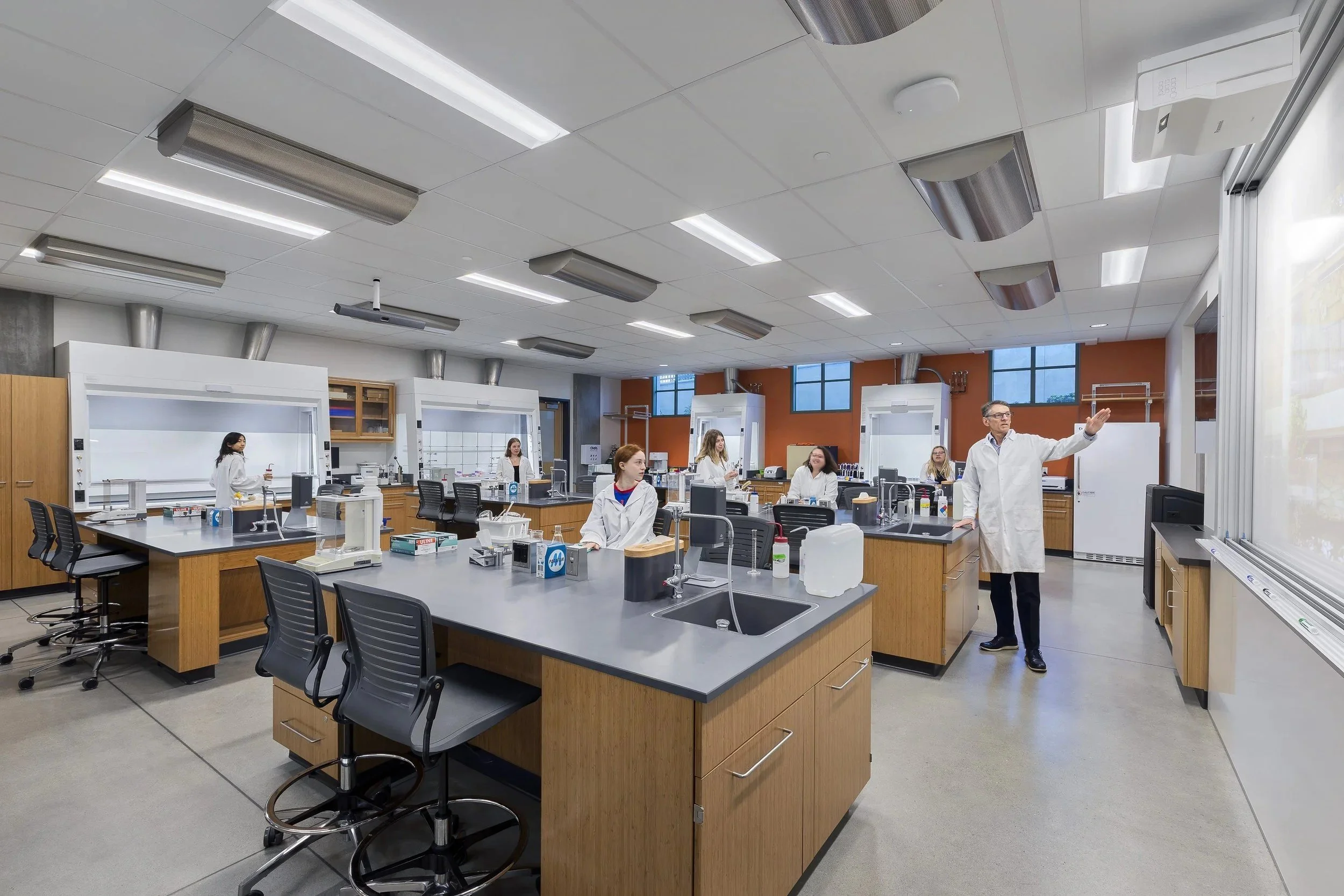
At Nucleus, operable windows and strategic daylighting in non-lab areas enhance comfort and sustainability, creating a healthier, more engaging learning environment for students and faculty. Image: Courtesy of Carrier Johnson + Culture (CJ+C)
Shared laboratories are inherently energy-intensive, but thoughtful design can align high performance with sustainability goals. Projects such as the Nucleus science center at Scripps and Pitzer Colleges demonstrate strategies like shared fume hoods, right-sized HVAC zones, operable windows, and heat recovery loops. Renovation and reuse of existing structures reduce embodied carbon, while early integration of decarbonization and energy tracking strategies ensures buildings are environmentally responsible without compromising research functionality.
Further reading: Designing Science Spaces That Balance Performance and Sustainability
Human-centered spaces
Modern lab design prioritizes the health, well-being, and productivity of occupants. Access to natural light, biophilic materials, ergonomic furniture, and social or decompression areas enhances comfort while supporting high-intensity work. Inclusivity is central: wide corridors, adaptable lab layouts, all-gender restrooms, and informal learning zones create spaces that are welcoming and equitable. Engaging users in design—from students in academic labs to start-ups in shared facilities—ensures that the environment supports real workflows and daily needs.
Further reading: Developing Flexible and Affordable Lab Space for Small Businesses
Navigating technical and regulatory challenges
Shared lab spaces require careful planning to meet technical, regulatory, and operational demands. Structural limitations, vibration control, high air change rates, and specialized containment requirements must be balanced against spatial constraints and budget. Regulatory compliance—including biosafety, GLP, and GMP considerations—requires early coordination with experts to avoid costly delays. Phased construction, prefabricated modules, and detailed sequencing plans minimize disruption, particularly in occupied or partially occupied buildings.
Further reading: Vibrant Lab Spaces for Cross-Pollination
Emerging trends
The design of innovative lab spaces is influenced by several emerging trends:
Multi-disciplinary collaboration across biology, chemistry, engineering, and physics
High-tech integration with IoT, data management, and robotics
Climate-conscious design that reduces energy and water use
Co-located or shared facilities that maximize resources and mitigate compliance challenges
Flexible and adaptive spaces that evolve with research needs
Human-centered environments that prioritize wellness and productivity
Technology-intensive spaces that anticipate future automation and computational demands
Further reading: Today's New Innovation Spaces: Seven Emerging Trends for Research Facility Design
Shared laboratories exemplify the convergence of functionality, sustainability, and human-centered design. By embracing flexibility, collaboration, and cross-disciplinary integration, organizations can create research spaces that are operationally efficient while remaining vibrant, inspiring, and adaptable. Whether renovating an aging facility or developing a new build, success depends on thoughtful planning, early and ongoing stakeholder engagement, and careful consideration of both technical and human needs. Ultimately, well-designed shared labs support the evolving demands of research, promote productivity and well-being, and provide spaces that can continue to serve scientific and educational goals well into the future.