
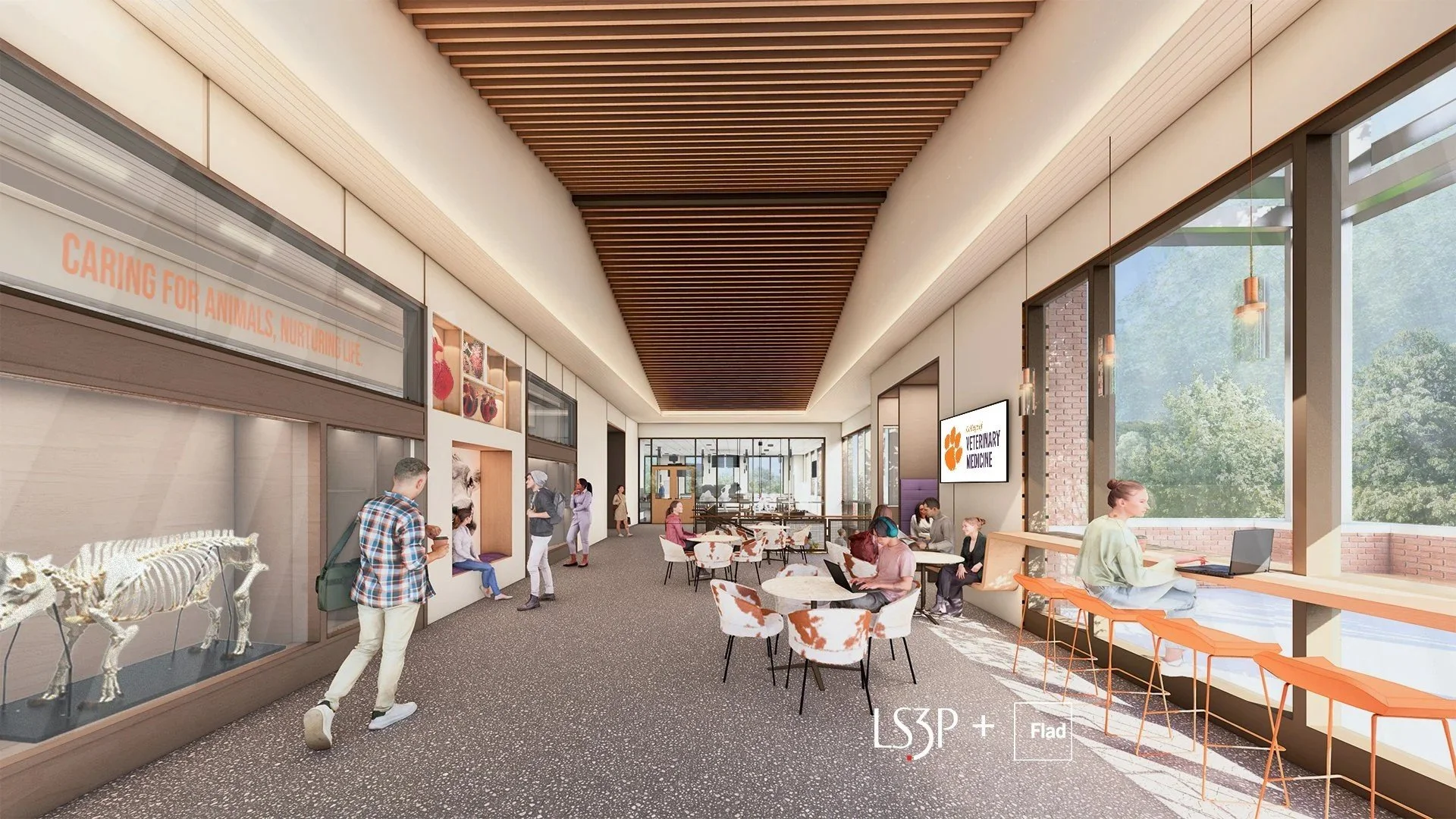
The design of Clemson University's Harvey S. Peeler Jr. College of Veterinary Medicine incorporates the needs of South Carolina's veterinary community, addressing the state's veterinarian shortage and tailoring teaching spaces to prepare students for diverse animal healthcare practices. Image: Courtesy of LS3P + Flad
Veterinary laboratories and research spaces sit at a unique intersection of education, healthcare, agriculture, and public health. Unlike traditional academic or biomedical labs, these environments must safely accommodate students, clinicians, researchers, and a wide range of animal species—often under emotionally charged, time-sensitive, and biosecure conditions. As demand for veterinary professionals grows and disease threats become more complex, the design, construction, and renovation of veterinary facilities are increasingly viewed as strategic investments rather than infrastructure upgrades.
Recent veterinary laboratory projects illustrate how design is evolving to address workforce shortages, underserved communities, animal welfare, and the challenges posed by aging infrastructure. Across academic, clinical, research, and diagnostic settings, facilities are being rethought to support hands-on learning, faster diagnostics, and safer workflows for both people and animals. These projects underscore how thoughtful planning and flexibility can extend a facility’s relevance while responding to shifting educational, healthcare, and community needs.
Addressing veterinary workforce shortages through design
Across the US and globally, veterinary shortages—particularly in rural and agricultural regions—are driving the need for expanded and modernized teaching facilities. At Clemson University, the Harvey S. Peeler Jr. College of Veterinary Medicine was explicitly conceived to meet South Carolina’s critical lack of veterinarians. One-third of the state’s counties have fewer than five practicing veterinarians, a challenge mirrored nationwide.
Facility design plays a direct role in expanding capacity. Purpose-built teaching labs, clinical spaces, and ambulatory service buildings enable larger class sizes, expanded rotations, and hands-on experience across species—from companion animals to livestock. Similarly, renovations at Morehead State University’s Derrickson Agricultural Complex are allowing the veterinary technology program to increase enrollment by freeing up clinical space previously constrained by outdated layouts.
Right-sizing veterinary laboratories for future enrollment growth often depends on early coordination between academic leadership, accreditation requirements, and facility design, with flexibility incorporated into the initial program rather than deferred to later phases.
Human- and animal-centered design is no longer optional
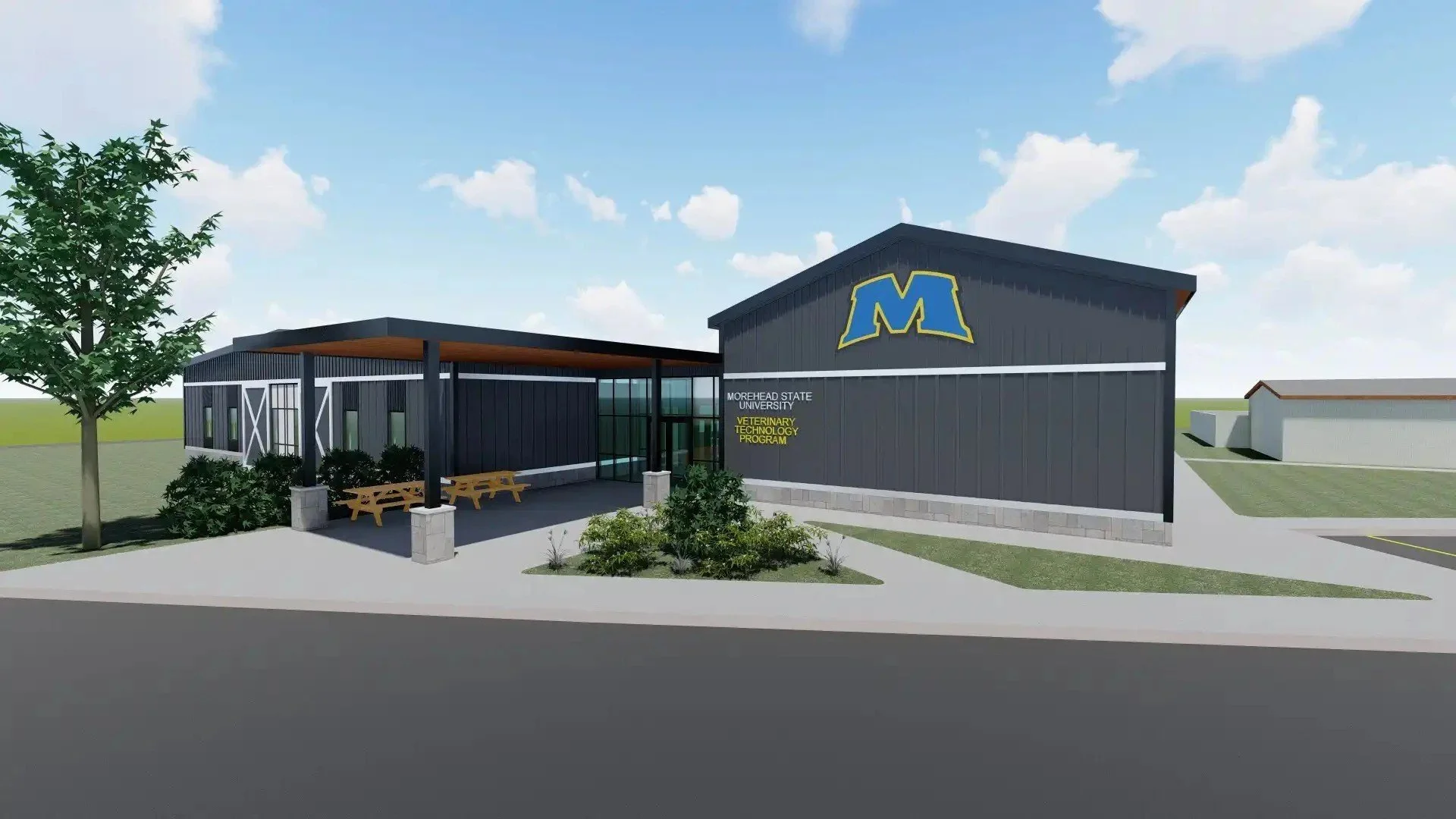
A rendering of the Derrickson Agricultural Complex at Morehead State University. Image: Courtesy of Morehead State University
Veterinary environments are high-stress settings for both people and animals. Modern facilities are increasingly designed around Fear-Free and welfare-focused principles that improve safety, learning outcomes, and care quality.
At Morehead State University’s Derrickson Agricultural Complex, slip-resistant flooring, neutral color palettes, adjustable lighting, and increased spacing between treatment areas were prioritized to reduce animal stress and minimize risks such as patient altercations and compromised aseptic technique. Dedicated spaces for surgery prep and dentistry further reduce cross-contamination and improve workflow clarity.
Massey University’s Tāwharau Ora—School of Veterinary Science takes this concept further, embedding animal welfare, student safety, and cultural context into a comprehensive 10-year redevelopment. Large, open-plan wet and dry teaching labs are paired with sophisticated ventilation strategies, walk-in chillers, washdown systems, and gantry-supported workflows, all while maintaining a human-scaled environment. Importantly, circulation and “in-between” spaces were intentionally designed as functional learning and collaboration zones rather than wasted square footage.
The architects and engineers responsible for Tāwharau Ora—School of Veterinary Science at Massey University were recognized with the Special Merit: Educational Lab Innovation award in Lab Design’s 2024 Design Excellence Awards. Read more about the project here.
The design of veterinary laboratories demonstrates how choices in layout, materials, lighting, acoustics, and spatial adjacencies play a central role in safety while also impacting accreditation and the appeal of the program to students and faculty.
Renovation vs. new build
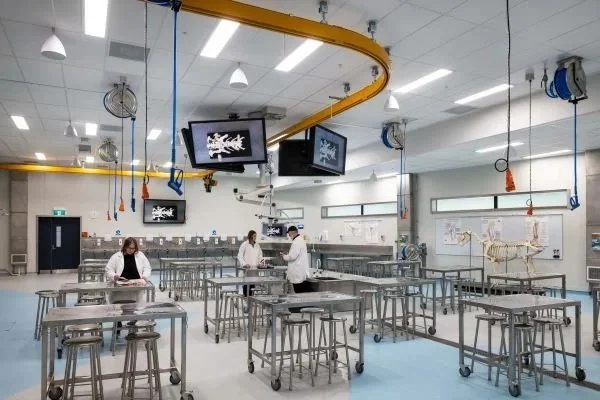
Overview image of wet teaching laboratory at the Tāwharau Ora—School of Veterinary Science at Massey University. Image: Paul McCredie
Veterinary schools and labs often operate in facilities built decades ago, originally designed for different teaching models and technologies. Renovation projects at Morehead State and Massey University highlight the difficulty—and necessity—of upgrading legacy infrastructure while maintaining ongoing operations.
In Massey’s case, post-mortem and production animal hospital facilities had exceeded their serviceable life, yet construction had to be phased to avoid interrupting academic programs. Temporary operations, tight sites, pandemic-related disruptions, and complex material flows required careful staging and close collaboration between designers, contractors, and users.
By contrast, Clemson and UC Davis illustrate the advantages of new-build environments. Clemson’s pavilion-style campus separates energy-intensive research labs from teaching and community spaces, optimizing both operational efficiency and wayfinding. UC Davis’ Veterinary Genetics Laboratory consolidates fragmented, outdated labs into a single high-throughput facility within Sacramento’s Aggie Square innovation district, enabling more efficient workflows and interdisciplinary collaboration.
Across both approaches, a common theme emerges: veterinary labs demand higher-than-average MEP capacity, redundancy, and adaptability, regardless of whether the project is a renovation or a ground-up build.
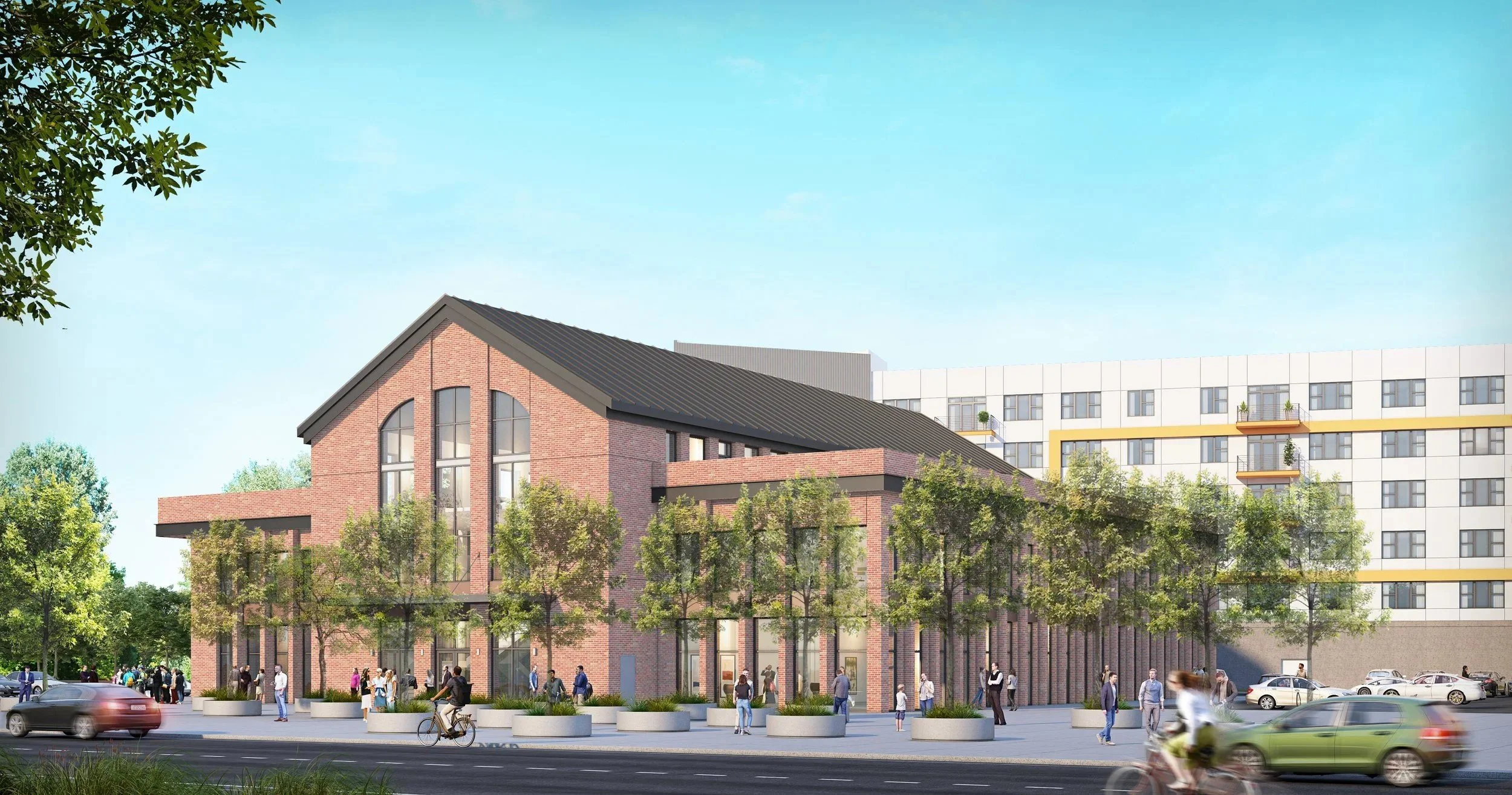
Aggie Square’s “Building on the Square” is home to UC Davis' Veterinary Genetics Laboratory. Image: Wexford Science & Technology LLC
Veterinary lab design increasingly reflects a broader service mission. Clemson’s ambulatory service building enables students to deliver care directly to regional farms, supporting rural communities while reinforcing experiential learning. Similarly, UC Davis’ move into Aggie Square extends veterinary research and education beyond the main campus, embedding animal health expertise within an urban, mixed-use innovation ecosystem.
These examples reinforce that veterinary labs are not isolated technical spaces—they are community assets that support agriculture, conservation, public health, and education.
Sustainability, resilience, and cultural context
Sustainability in veterinary lab design requires balancing energy-intensive operations with environmental responsibility. Clemson’s College of Veterinary Medicine integrates bioretention, forest preservation, and climate-responsive shading while targeting Green Globes certification. Massey University separates high-energy lab zones from passively lit and ventilated areas, supported by intelligent building management systems and durable, low-maintenance materials.
Equally important is cultural and contextual responsiveness. Massey’s project embeds Māori design principles and artwork, reinforcing the institution’s connection to place and community. These strategies demonstrate that resilient veterinary facilities must respond not only to technical demands, but also to environmental, cultural, and social contexts.
Taken together, these projects reveal a profession in transition. Veterinary labs are expanding in scale, complexity, and visibility—serving as pipelines for workforce development, hubs for One Health research, and lifelines for underserved animal populations.
Across recent veterinary facility projects, a number of common characteristics emerge, including early and ongoing user engagement, clear functional separation, flexible and efficient layouts, robust infrastructure, and sustained attention to safety and well-being. As veterinary education and research continue to evolve, the built environment will continue to play an important role in shaping how care, training, and discovery take place.