
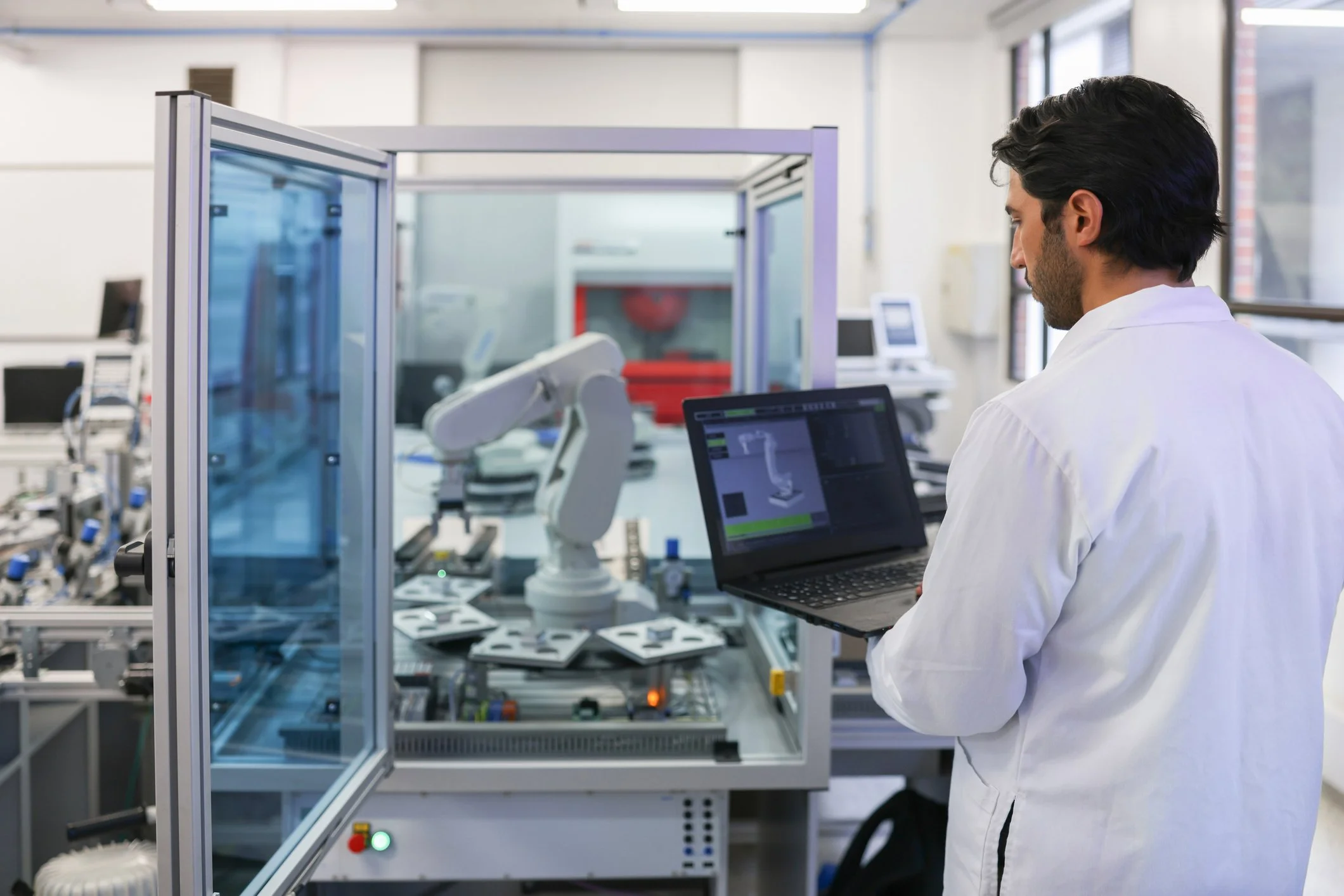
Automation is no longer a niche capability reserved for a handful of high-throughput or specialized facilities. From quantum research and drug discovery to coatings development and clinical diagnostics, robotics, artificial intelligence (AI), and autonomous workflows are rapidly reshaping how laboratories operate—and, critically, how they must be designed. Yet many organizations underestimate the complexity automation introduces into lab planning, particularly when retrofitting existing spaces.
Recent projects—from Microsoft’s quantum fabrication lab in Denmark to Covestro’s fully autonomous materials testing facility and Daiichi Sankyo’s smart research lab—offer a clear message: successful automation is less about the machines themselves and more about how well facilities anticipate the operational, infrastructural, and human implications that come with them.
Automation starts with workflow, not equipment
One of the most common missteps in automation-enabled lab projects is allowing technology to drive design decisions before workflows are fully understood. Across multiple projects, teams emphasized the importance of first mapping existing and future workflows—often using Lean or Six Sigma principles—before introducing robotics.
Automating inefficient processes only accelerates waste. In contrast, facilities that used automation as an opportunity to eliminate unnecessary motion, waiting, and handoffs achieved far greater gains in productivity and reliability. This approach proved especially important in renovation projects, where there is a temptation to replicate existing layouts at a larger scale rather than rethink how samples, data, and people should move through the space.
Takeaway: Before selecting automation platforms, invest time in workflow analysis with end users. Let the workflow define the automation strategy—not the other way around.
Further reading: Incorporating Fully Automated Test Programs in Lab Design and Renovation
Infrastructure is the silent constraint
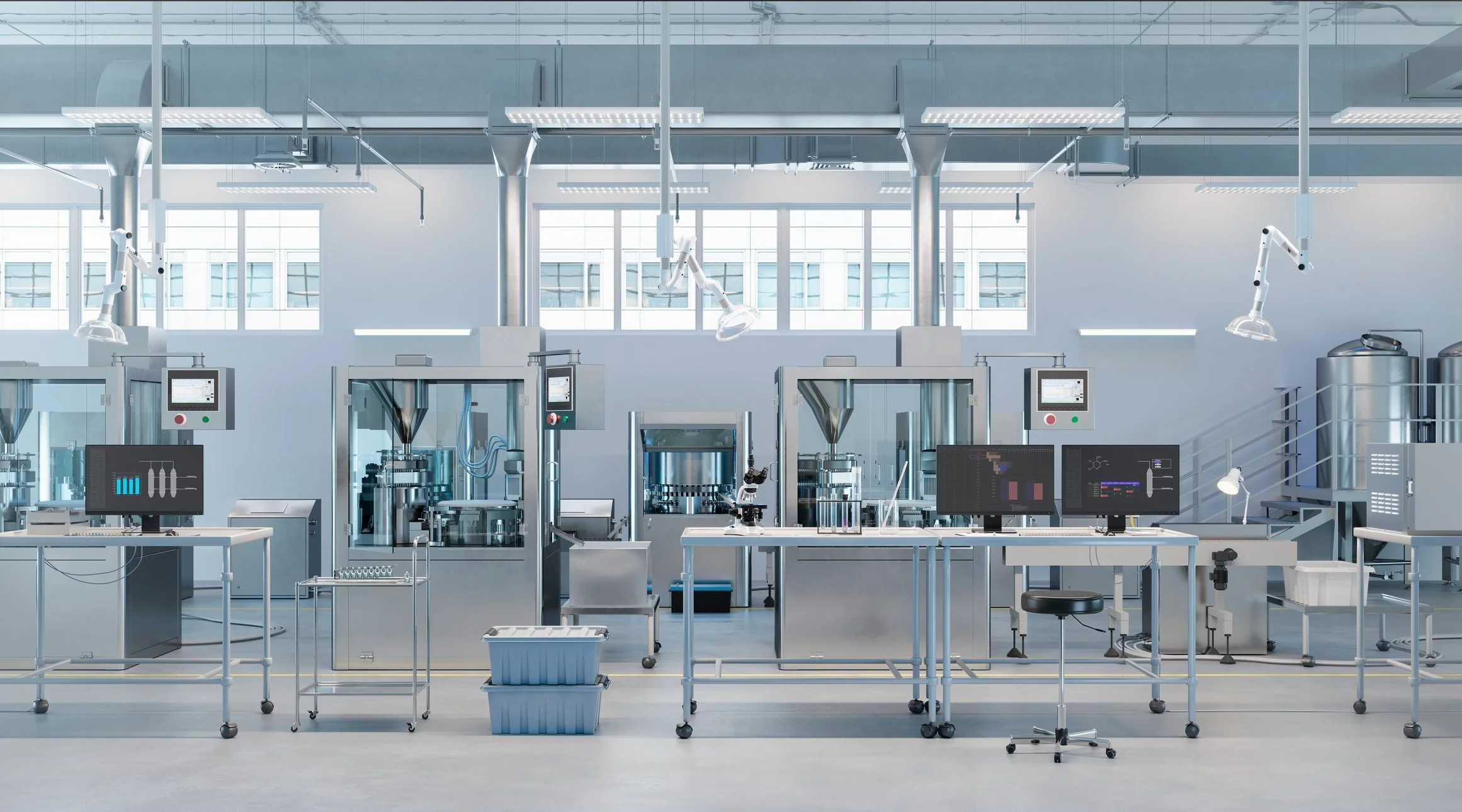
Automation dramatically changes a lab’s relationship with power, heat, ventilation, and data. Automated labs can require up to ten times the electrical demand of traditional wet labs, and that increase cascades into HVAC sizing, heat rejection strategies, backup power, and carbon planning.
Several projects highlighted how infrastructure limitations—not floor area—became the primary bottleneck. Automated systems generate continuous heat loads, operate 24/7, and depend on reliable network connectivity and data bandwidth. In multiple cases, teams found that power distribution, UPS capacity, and cooling redundancy were overlooked until late in design, resulting in costly redesigns.
Forward-looking teams addressed this risk by oversizing central building systems while limiting initial lab buildout, preserving capacity for future automation without committing capital prematurely.
Takeaway: Engage facilities, utilities, and IT teams earlier than feels necessary. Automation readiness is defined by infrastructure capacity long before robots arrive.
Further reading: Lab of the Future Starts Now: Why Modular, Tech-Ready Design is Key to Reducing Downtime
Flexibility beats vendor-specific design
The automation market is evolving rapidly. Vendors are acquired, platforms change, and proprietary systems can become obsolete faster than buildings do. Designing lab spaces tightly around a specific automation vendor may deliver short-term efficiency but introduces long-term risk.
Across both new builds and renovations, the most resilient facilities favored modular layouts, universal IT interfaces, and flexible utility distribution. Movable benches, build-around modular casework, and adaptable robotic cells allowed labs to reconfigure without structural changes. This flexibility also helped facilities accommodate new testing methods, additional robotics, or emerging AI tools without disrupting ongoing operations.
Takeaway: Design for automation categories, not individual products. Flexibility is the strongest hedge against technological uncertainty.
Further reading: Designing the Modern QC Lab: Where Compliance and Efficiency Converge
Automation reshapes space planning—and staffing
Automation does not eliminate the human element in labs; it changes it. As repetitive tasks are handed off to robots, scientists spend more time on experimental design, data interpretation, and collaboration. At the same time, automation introduces new roles—robotic technicians, software engineers, data specialists—each with distinct spatial needs.

This shift is driving a rebalancing of space types. Traditional bench density gives way to enclosed robotic work cells, hybrid lab-office environments, monitoring stations, and collaborative zones. Storage demands also increase, as automated labs rely on large inventories of consumables that must be managed just-in-time, often through automated inventory systems.
Facilities that planned for allied staff and collaboration spaces early were better positioned to support long-term productivity and workforce satisfaction.
Takeaway: Automation changes who uses the lab and how. Plan for new adjacencies, support spaces, and collaboration areas—not just equipment footprints.
View our on demand webinar: How to Build a Sustainable Automated Lab
Data is core infrastructure, not an afterthought
In automated labs, data generation and management are inseparable from physical design. Robots executing experiments autonomously produce vast volumes of structured data that must flow seamlessly into electronic lab notebooks (ELNs), analytics platforms, and AI systems.
Several projects emphasized that minimizing manual data handling was a primary design goal—not only to improve efficiency, but to reduce human error and variability. This priority influenced everything from network architecture and API integration to sample tracking and barcoding strategies.
Labs that treated data infrastructure as a first-class design element—not a layer added post-occupancy—were able to accelerate iteration cycles while maintaining scientific rigor and reproducibility.
Takeaway: Treat data pathways with the same seriousness as air, power, and water. Poor data design can undermine the value of even the most advanced automation.
Further reading: Automated Lab Fuels Data-Driven Path to Circular Coatings and Adhesives
Sustainability tensions must be addressed head-on
Automation can enable sustainability—by reducing reagent use, minimizing waste, and improving experimental precision—but it also intensifies energy demand. High-density robotics, continuous operation, and increased cooling loads challenge traditional sustainability strategies.
Leading projects adopted a layered approach: high-performance envelopes, heat recovery, all-electric systems, and activity-based lab design formed the baseline, while emerging strategies such as in-line cooling, raised-floor distribution, and even carbon capture were explored to close remaining gaps. Importantly, teams acknowledged that carbon neutrality may be achievable at initial automation levels but harder to maintain as automation footprints expand.
Takeaway: Automation and sustainability must be planned together. Energy and carbon modeling should anticipate future automation growth, not just Day 1 operations.
Further reading: The Future of Lab Automation: Opportunities, Challenges, and Sustainable Design Solutions
Continuous improvement doesn’t stop at occupancy
Automation is not a one-time installation—it’s an evolving system. Facilities that defined key performance indicators (KPIs) early and committed to post-occupancy evaluation were better able to refine workflows, validate ROI, and adapt spaces over time.
Metrics such as turnaround time, sample flow efficiency, error rates, and equipment utilization provided objective feedback that guided both operational and spatial adjustments. This mindset reinforced the idea that automated labs are living systems, requiring ongoing tuning rather than static optimization.
Takeaway: Plan for measurement and iteration. If success isn’t defined upfront, it can’t be improved later.
Further reading: Microsoft Builds World-Class Facility to Advance Topological Qubit Research
Designing automation-ready labs with intention
Across sectors, one thing is clear: the facility itself is becoming an active partner in research. Automated labs place greater demands on buildings, but when they’re designed with intention, they deliver major gains in speed, consistency, and insight.
For lab planners, architects, and lab managers navigating automation-driven projects, the real question isn’t whether to automate—it’s how to do it thoughtfully. Balancing flexibility, infrastructure, sustainability, and the human experience is essential. When automation is approached as a connected ecosystem rather than a collection of machines, laboratories are far better equipped to adapt and grow alongside the science they support.