
The Landing: Building an Adaptable, Future-Ready R&D Community on the San Francisco Bay
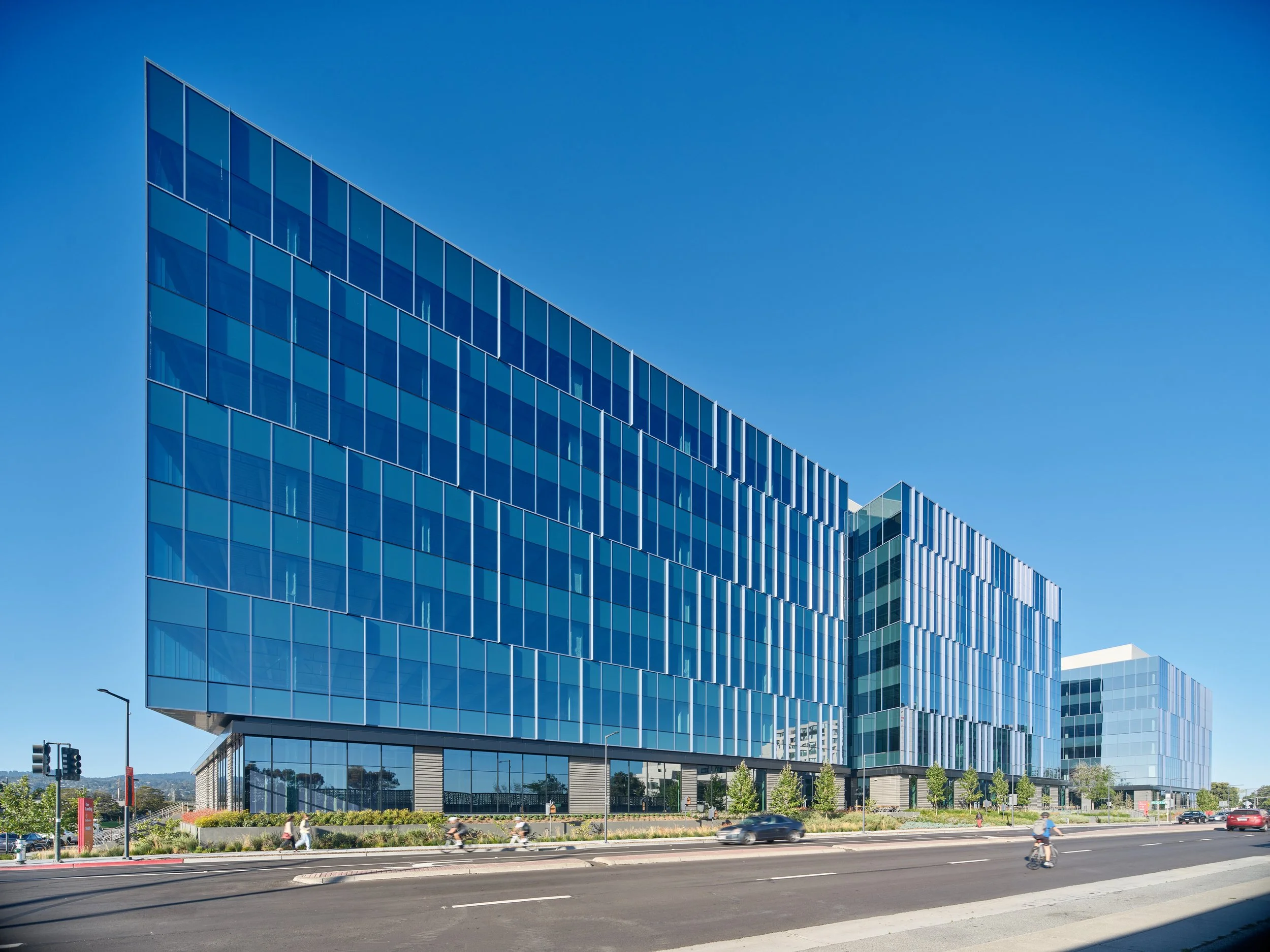
The Landing in Burlingame, CA—a bayside research campus by King Street Properties and Perkins&Will—pairs flexible, future-ready lab design with extra-tall ground-floor spaces to support evolving life science, AI-driven research, and integrated scale-up manufacturing. All images: Bruce Damonte
Bill Harris, AIA, regional director for the US Northeast studios of Perkins&Will, is co-author of this piece.
Contributing authors are Steven Webster, Derek Johnson, and Peter Pfau, all of Perkins&Will.
In Burlingame, CA, The Landing—a new King Street Properties bayside research campus, designed by Perkins&Will—enters the market at a moment defined less by rapid expansion than by rapid shifts. Life science industry growth has become uneven, AI is transforming research pipelines, and tenant needs are changing faster than traditional lab real estate can respond. Once a design feature, flexibility is now a survival strategy.
Yet this climate is also one of opportunity. Tenants are searching for lab environments that won’t lock them into a single mode of working or force costly renovations every time their science changes direction. They want places where multiple kinds of research can coexist, where teams can scale up or down with minimal friction, and where a broader community of thinkers—from biologists and chemists to computational scientists, robotics/automation specialists, and AI coders/researchers—can benefit from proximity. At the same time, biotech research is even more integrated with small scale production and scale-up manufacturing, meaning that the extra-tall ground floor spaces at The Landing are high-value locations.
According to new research from The Landing’s leasing agent JLL, "tighter funding environments are forcing companies to extend timelines and optimize budgets, impacting their space consumption." Life science firms want more efficient space than ever before, highlighted by JLL's finding that the amount of venture capital utilized per-square-foot of life science leasing is at an all-time high, just under $5,000 a foot versus about $2,000 a foot 10 years ago. "Expect this (high utilization) trend to hold as investors insist on capital efficiency." Clearly, life science firms' space requirements—from headquarters campuses to mid-size and start-up spaces—need both flexibility and science compatibility like never before.
This is the environment The Landing was designed for.
A campus that adapts as quickly as the science inside It
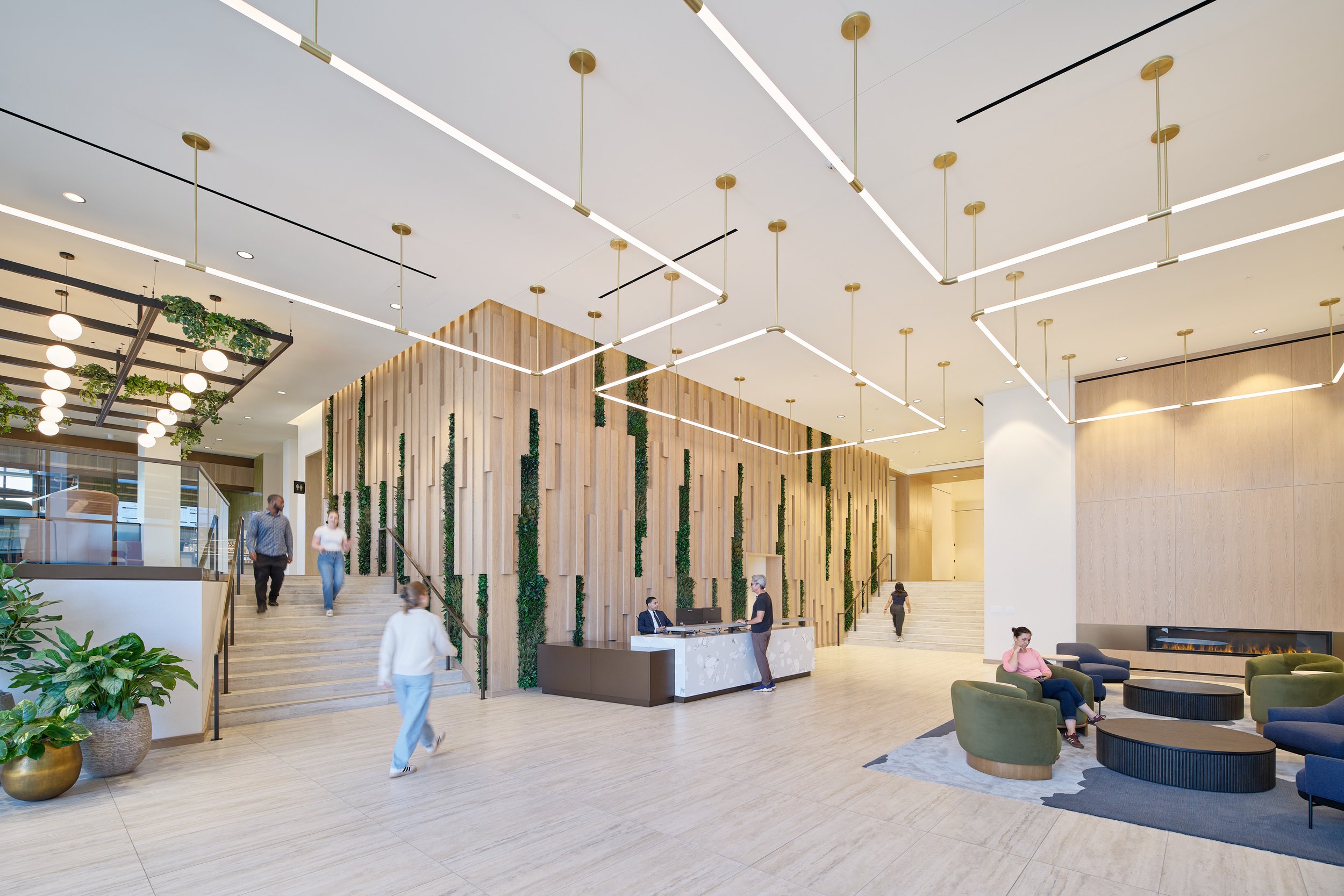
The two-building life science campus is designed to support scientific diversity, offering flexible floor plates, move-in-ready lab suites, and a civic-scale outdoor space anchoring an emerging bayside innovation district.
The Landing’s campus consists of two new life science buildings totaling 503,000 square feet, one six stories and one seven, providing a wide range of tenant options, whether for a large headquarters-type expansion, full-floor availabilities of up to 53,000 square feet and move-in ready spec suites of 8,500 to 17,700 square feet. These buildings and a structured parking facility frame a civic-scale outdoor space as suitable for community gatherings as for quiet reflection.
The development anchors an emerging innovation district overlooking the Bay, just south of San Francisco International Airport. But it isn't the views or location alone that set it apart; The Landing is a response to the understanding that the next generation of research environments must scale and evolve constantly.
The project team started with a question: How do you build a campus that supports scientific diversity?
That question shaped every technical and architectural decision, from the pre-piped tissue culture rooms ready for future gases, to the chemistry-enabled spec suite with infrastructure for additional hoods, to the mobile benching system that can be rearranged without shutting down a floor. Even the office spaces are treated as flexible research platforms, able to shift between private rooms, conference spaces, and expansion zones as startups enter a growth phase. And each of these use groups is supported by a robust infrastructure of power, air, and utility systems. Even the loading docks and internal distribution paths are designed for diverse demands.
The result is a place where a computational biology team can sit next to a chemistry startup, and where both can grow without relocating. In a market where tenant longevity often depends on a company’s ability to pivot, this kind of architectural agility is not a luxury—it’s a competitive advantage.
Meeting the market where it is
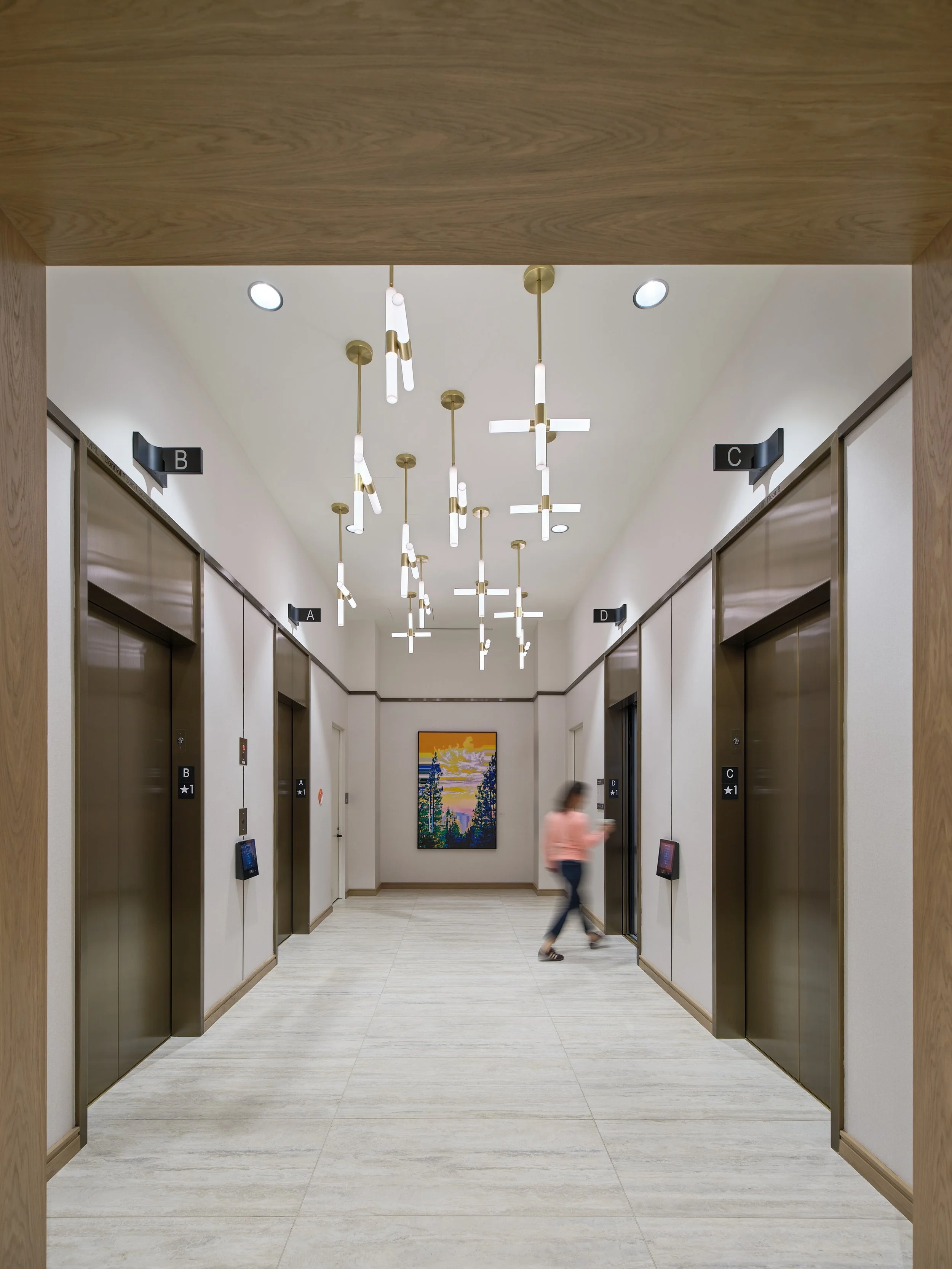
Designed for a highly selective market, The Landing features a flexible lab core and future-ready mechanical systems that allow tenants to reconfigure spaces easily as research needs evolve.
The Landing arrives at a time when demand is highly selective. Tenants want quality and readiness, but they also want optionality. The project addresses these pressures by creating a flexible core that makes change easier and less expensive.
Mechanical systems were designed for a future that changes regularly, allowing the building to support a range of research uses without structural disruption. Centralized sinks and utilities in the lab core free up the open lab for reconfiguration as science evolves.
For a market still finding its equilibrium, this is a meaningful differentiator. The Landing doesn’t assume what the next breakthrough will require, but it ensures the building will be ready for it.
Flexibility as the foundation for a diverse R&D community
If the technical infrastructure makes The Landing adaptable, the campus environment is what makes it magnetic. Research happens at the bench, but innovation is fed by the spaces between formal work—the chance encounters, shared conversations, and moments of stepping away to think differently.
The designers leaned into this reality, creating a series of interconnected social, learning and wellness spaces that encourage teams to spend time on campus and interact with one another. The plaza between the two buildings acts as a natural gathering place: part outdoor meeting room, part café terrace, part community stage. Events that couldn’t happen in a conventional lab setting—markets, charity runs, art fairs—become part of the seasonal rhythm here.
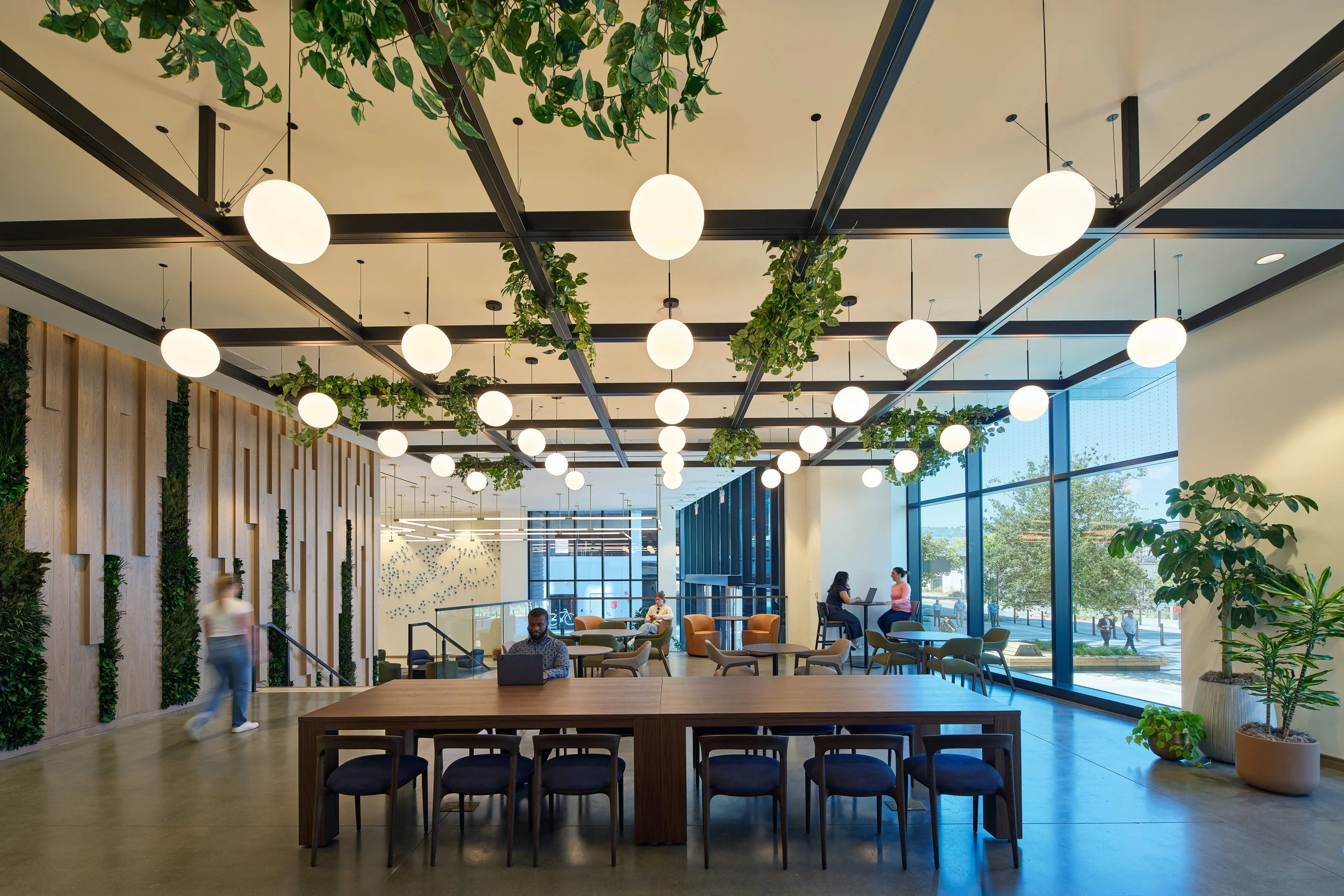
A resilient life science campus transforms a former industrial shoreline with elevated ground floors, a restorative landscape, and LEED Gold–targeted design that reconnects research spaces to the Bay.
Inside, the lobbies function less like pass-through spaces and more like flexible coworking lounges. The Apron, a bistro and coffee bar, gives researchers and visitors a centralized gathering spot that fuels informal exchanges. And amenities like yoga rooms, meditation spaces, and club-style locker rooms support the wellness expectations of a workforce that increasingly values balance alongside productivity.
These elements are part of a philosophy that recognizes innovation as a communal act, strengthened when multiple disciplines share the same landscape.
A regenerative edge to a high-performance campus
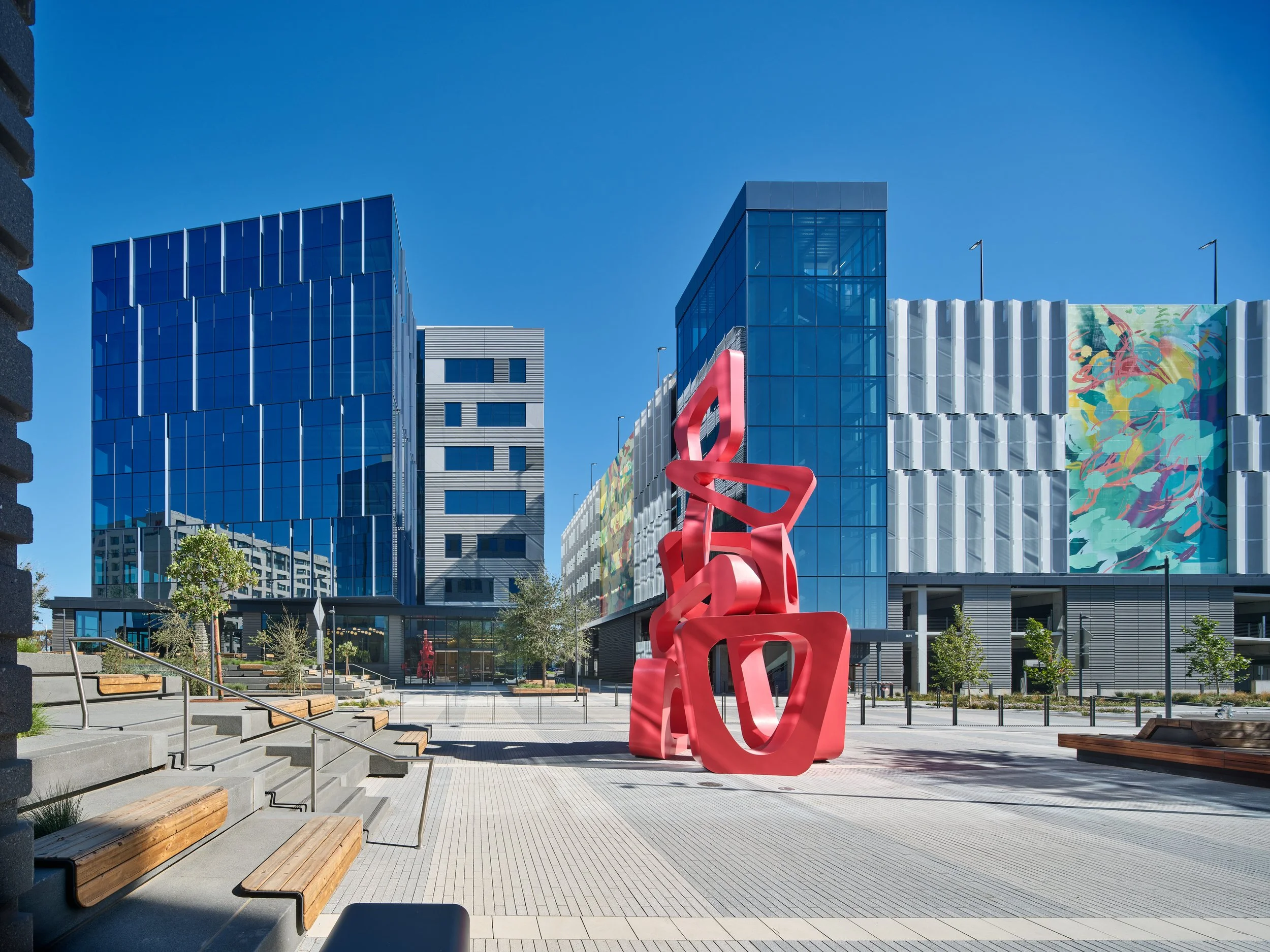
The Landing reimagines the life science campus as a flexible, AI-era research community that fosters cross-disciplinary innovation while restoring a resilient, meaningful connection to the Bay shoreline.
The Landing also sits in a part of the San Francisco Bay shoreline historically shaped by infrastructure and industry. The project team approached the site as an opportunity to demonstrate long-term resilience, restoring ecological diversity to a former industrial site.
Ground floors are elevated to meet long-term resiliency expectations, but the more transformative move is the creation of a two-block-long restorative landscape, turning highway-adjacent hardscape into a living ecological corridor.
Native plantings, beehives, birdhouses, and shaded pedestrian paths stitch the campus back into the shoreline. New crossings improve access to the nearby Bay Trail, inviting employees to experience the waterfront and views as an extension of the research environment that supports creativity and well-being. Targeting LEED Gold, the campus embraces sustainability, wellness, and resilience rather than treating these as add-ons.
A place for what’s next
The Landing represents a shift in how buildings and places can better support the life sciences sector—especially moving into the uncharted influence of AI, robotics, and technology. It creates a community where a range of scientific fields can coexist, cross-pollinate, and develop. And it restores a piece of the Bay shoreline in the process, turning an overlooked edge of the Peninsula into a thriving district of ideas.
In a time when the market is demanding both adaptability and meaning, The Landing responds with both. It meets the industry where it is today—and positions its tenants for wherever science will take them next.

Bill Harris, AIA, regional director for the US Northeast studios of Perkins&Will, is co-author of this piece. A nationally recognized design leader in the life sciences industry, Bill remains active in all aspects of the practice, serving commercial, healthcare, science & technology, and higher education clients nationwide.
Contributing authors are Steven Webster, Derek Johnson, and Peter Pfau, all of Perkins&Will.