
Modernizing a Science Hub to Enhance Lab Safety and Research Infrastructure
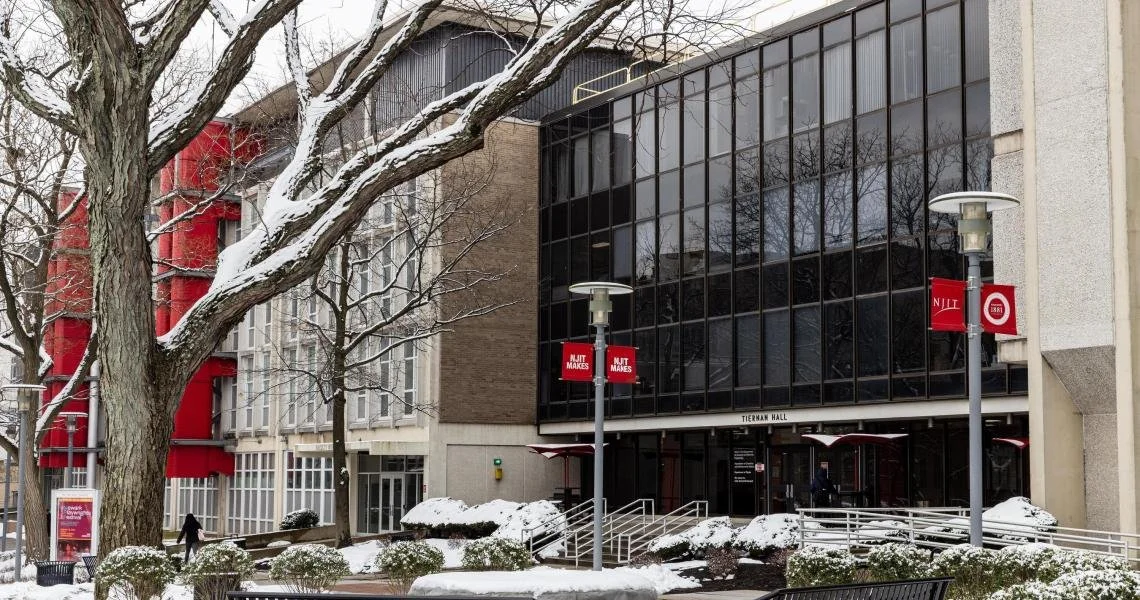
NJIT is investing nearly $20 million to modernize Tiernan Hall’s mechanical, life safety, and laboratory systems, upgrading aging infrastructure to meet current codes, support advanced research, and improve energy efficiency while preserving the building’s legacy. Image: Courtesy of NJIT
The New Jersey Institute of Technology (NJIT) has announced plans to modernize Tiernan Hall, a central hub for science and engineering education on campus, with nearly $20 million in state funding dedicated to comprehensive upgrades of the building’s mechanical and life safety systems. Constructed in 1972, Tiernan Hall has been home to the Otto H. York Department of Chemical and Materials Engineering, the Department of Chemistry and Environmental Science, and the Department of Physics.
The planned improvements are designed to bring the aging facility into compliance with today’s safety standards while providing modern laboratory and instructional spaces that can support advanced research requirements.
“Securing nearly $20 million represents a transformative investment in NJIT’s core academic infrastructure,” says Andrew Christ, senior vice president of university operations. “In partnership with the State of New Jersey, we are committed to providing a safe and appropriate educational and working environment for the Highlander community. This investment reinforces our commitment to proactively protecting our legacy assets while ensuring the safety and quality of our teaching and research facilities—allowing NJIT to produce the STEM-trained workforce our state and nation depend on.”
Modernizing life safety and mechanical systems
The Tiernan Hall project will address both deferred maintenance and the replacement of systems that are original to the building. Funding comes from two state sources: $12.15 million from the State’s Capital Improvement Fund (CIF) for life safety and critical building systems, and $7.75 million from the Higher Education Facilities Trust Fund (HEFT) for laboratory and instructional infrastructure upgrades.
The CIF-funded upgrades are particularly noteworthy because they focus on health, safety, and reliability. The project will expand sprinkler coverage, improve emergency lighting, and replace major components of the building envelope, including the roof and curtainwall system. Electrical service upgrades, including transformer, switchgear, and panels, will ensure the building can support the modern energy demands of research and instructional activities.
Planning a Lab Renovation or Retrofit? Here’s Why You Should Attend the 2026 Lab Design Conference
The HEFT-funded portion of the project will directly impact laboratory environments, such as mechanical systems being modernized to provide reliable and energy-efficient heating, ventilation, and air conditioning in classrooms and labs. Laboratory infrastructure such as compressed air, natural gas, vacuum systems, and specialty water systems will be replaced, ensuring that research activities—from sensitive chemical reactions to high-precision physics experiments—can be conducted safely and consistently. Additionally, emergency power systems, including a backup generator and uninterruptible power supply, will be updated to support both life safety requirements and ongoing research activities.
Supporting cutting-edge research in legacy infrastructure
Tiernan Hall supports nearly $32 million in funded research projects—approximately one-fifth of NJIT’s total research activity. Work conducted in the building spans a diverse set of fields, including telehaptics platforms with AI analytics, machine learning applications to detect PFAS in blood, and flood resiliency initiatives across New Jersey. These efforts are supported by major federal and state agencies, such as the National Science Foundation, NASA, the U.S. Department of Energy, the National Institutes of Health, the New Jersey Economic Development Authority, and the New Jersey Department of Environmental Protection.
For laboratory designers, the challenge lies in upgrading infrastructure without disrupting the complex research ecosystem already in place. Many of the existing systems in Tiernan Hall are approaching 50 years of service, and retrofitting modern safety and mechanical systems into a decades-old structure requires careful planning and coordination. NJIT will also contribute institutional funds for fume hood replacements and retro-commissioning efforts to improve operational efficiency.
Modernizing a building like Tiernan Hall is not without its challenges. Older structures often have outdated electrical, HVAC, and plumbing systems that were never designed to support today’s high-tech research equipment. “We are committed to proactively protecting our legacy assets while ensuring the safety and quality of our teaching and research facilities,” Christ says. This means carefully integrating modern systems into existing architecture while minimizing downtime and maintaining compliance with contemporary safety codes.
Retro-commissioning and air balancing will be essential components of the project. These processes ensure that airflow, temperature, and ventilation rates are optimized for both energy efficiency and occupant safety. For lab planners, this underscores the importance of coordinating mechanical upgrades with laboratory layout and function, especially in spaces where chemical, biological, or high-voltage equipment is used.
NJIT’s approach to the Tiernan Hall upgrades also reflects a commitment to sustainability. By modernizing the existing building rather than constructing a new one, the university avoids the significant carbon emissions associated with demolition and the production of steel and concrete. Energy efficiency measures—including low-flow, variable-volume fume hoods and upgraded mechanical systems—are expected to reduce operational energy consumption while enhancing occupant comfort.
Upgrades to the roof and curtainwall system will improve thermal performance and building resilience, ensuring that Tiernan Hall remains a functional and safe environment for decades to come. The combination of life safety enhancements, mechanical modernization, and laboratory infrastructure improvements represents a comprehensive strategy to support both current and future research demands.
Preparing for a future of innovation
Tiernan Hall continues to serve thousands of students each year, hosting classes in chemistry, physics, calculus, computing, innovation and entrepreneurship, and artificial intelligence. The building’s laboratories also provide hands-on experience in disciplines ranging from nanomaterials and sustainable energy systems to environmental remediation technologies and intelligent transportation systems.
For NJIT, the Tiernan Hall project represents an opportunity to reinforce the university’s role as a leading STEM education and research institution. “This investment reinforces our commitment to proactively protecting our legacy assets while ensuring the safety and quality of our teaching and research facilities,” Christ says. “It allows NJIT to produce the STEM-trained workforce our state and nation depend on.”
Construction is expected to begin once funding is fully available, likely later this year, and the upgrades are designed to minimize disruption to ongoing classes and research activities. For laboratory architects, planners, and end users, the project offers an instructive example of how legacy academic buildings can be brought into compliance with modern safety codes, supported with robust mechanical systems, and optimized to meet evolving research needs.
By investing in Tiernan Hall’s mechanical, electrical, and life safety systems, NJIT is not only addressing immediate infrastructure challenges but also ensuring that the building continues to be a safe, energy-efficient, and research-ready environment for generations of students and faculty.