Lab Design Conference Speaker Profile: Chris Ertl
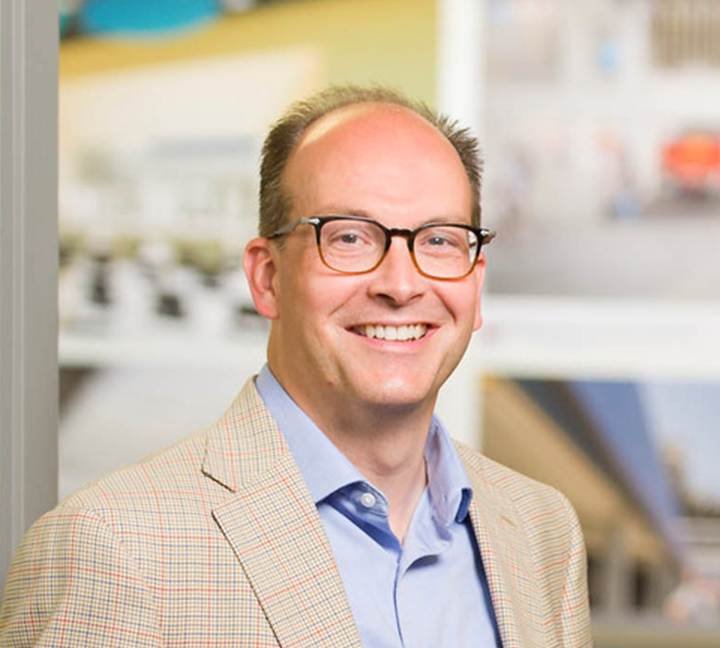
2026 Lab Design Conference speaker—Chris Ertl, global science & technology leader|principal, DLR Group
Chris Ertl, global science & technology leader|principal at DLR Group, will co-lead a special roundtable session at the 2026 Lab Design Conference in Orlando, FL. Chris and his colleague Chen Qin will talk about “Designing Healthier Laboratories through Material Selection” on May 12 from 4:00 to 5:00 pm.
This roundtable goes beyond basic durability to tackle the critical link between lab countertops and occupant wellbeing. Led by Chris and Chen, the session dives into chemical profiles and 'Red List' substances to challenge traditional selection criteria. Success depends on peer-to-peer exchange, so attendees are encouraged to bring their own challenges to the table in order to collectively build evidence-based strategies that prioritize both high performance and human health.
Lab Design News spoke with Chris about optimizing lab space, the "Materials Paradox,” and how running helps him reset. Register now to secure your seat at the Lab Design Conference!
Q: What makes your Lab Design Conference roundtable session especially relevant to the current trends and challenges in laboratory design?
A: Laboratories are uniquely resource-intensive environments where high-touch surfaces must withstand rigorous daily research. Historically, the industry has prioritized a narrow set of criteria, primarily chemical resistance and durability, often at the expense of human health and environmental impact.
Our roundtable session is critical today because it addresses the "Materials Paradox": the very substances that make a lab surface durable (such as certain resins or PFAS-containing components) can pose long-term health risks to occupants and significant carbon debts to the planet. By introducing our Holistic Evaluation Matrix, we are moving beyond simple performance specs to integrate Material Health (Red List transparency) and Embodied Carbon. This aligns with the 2026 industry shift toward "quantifiable sustainability," ensuring that the surfaces supporting tomorrow's breakthroughs do not compromise the safety of the people who use them or the communities that manufacture them.
Q: What practical tips can lab users apply to optimize their current space, without a major renovation or rebuild?
A: To optimize your lab immediately without a renovation, reclaim valuable bench "real estate" by relocating underutilized equipment and chemicals to vertical or secondary storage. This practice reduces the chemical load on high-touch surfaces and improves ergonomics, directly supporting the occupant health and safety goals prioritized in our selection matrix. By focusing on this high-impact organizational shift, you can significantly enhance research efficiency and surface longevity while minimizing environmental risks.
Q: Why should lab design and operations professionals attend your roundtable session, and what will they gain from it?
A: Operating a lab is of key importance to maximizing the results of your work. What may seem like a mundane topic—laboratory worksurfaces—is actually critical to many aspects of successfully operating within the lab. Chen and I will introduce a framework for evaluating lab countertop materials that integrates performance, material transparency, health criteria, and embodied carbon—and we’re equally looking forward to hearing what has worked, and what hasn’t, from the professionals in the room. There are more options than most teams realize, and the tradeoffs are real. This session creates space to compare approaches together and build shared language for communicating those tradeoffs to clients, facilities teams, and leadership.
Q: Is there a piece of advice you received in your career that has shaped the way you approach lab design?
A: For me, my mentor Jerry Kinkade instilled a mission driven approach to laboratory design in me early in my career. My grandfather suffered from Alzheimer’s in his 70s, and having the opportunity to work on the lab design for the University of South Florida Health Byrd Alzheimer’s Center and Research Institute, Jerry helped me channel my pain in losing my grandfather to Alzheimer’s into every detail of that facility. I take that approach of how thoughtful design can improve outcomes in the lab in improving learning outcomes for students, testing outcomes for patients, and research outcomes for our scientists.
Q: What’s your go-to method for unwinding after a busy week?
A: My weekend long runs are my primary reset. They provide the perfect headspace to process the past week’s challenges and strategically map out the next while the physical momentum and endorphins are at their peak.
Q: You’ve attended and spoken the Lab Design Conference before—what’s your favorite aspect?
A: I enjoy several things about the Lab Design Conference. It is always great to learn from experts in the field of laboratory design. I learn so much from my time spend visiting with the exhibitors. Most importantly, I am uplifted to network and share stories of successes and challenges that we face in our profession.
Bring your questions about lab materials to this special roundtable session to discuss with Chris. Get your ticket now—we’re looking forward to seeing you at the 2026 Lab Design Conference!