
Liverpool Accelerate Laboratory Integrates Robotics With High-Containment Research
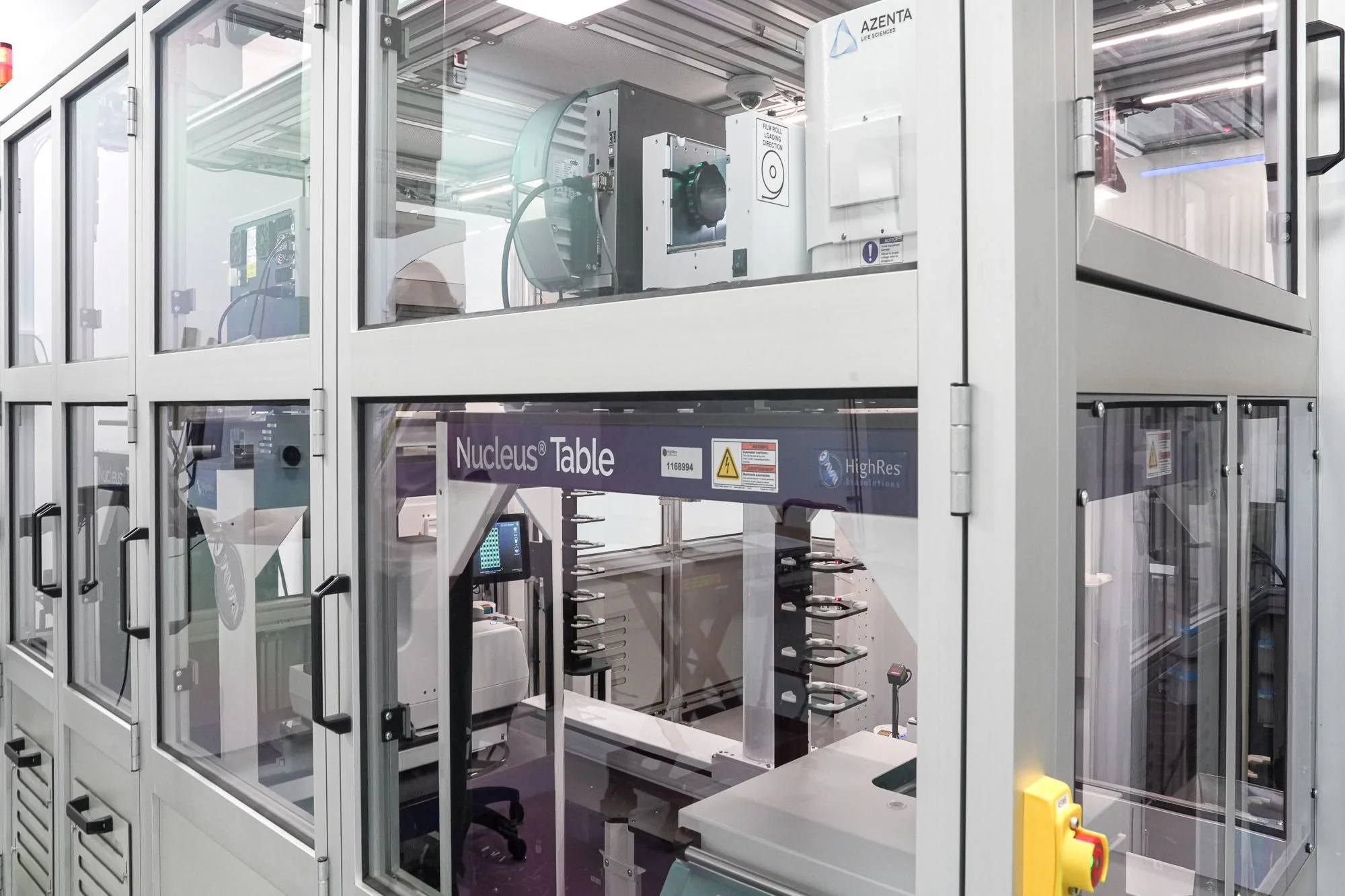
The Liverpool Accelerate Laboratory integrates robotic systems with high-containment research infrastructure. Image: Courtesy of Infection Innovation Consortium (iiCON)
The new Liverpool Accelerate Laboratory in the UK brings together high-containment research, robotics, artificial intelligence, and human organoid technology in a facility designed to accelerate infectious disease research while reducing researchers’ direct interaction with hazardous materials.
Developed through the Infection Innovation Consortium (iiCON), the £20 million facility at Liverpool School of Tropical Medicine is expected to become fully operational in 2027. The laboratory will provide academic researchers and commercial partners with access to automated research infrastructure, including robotic systems and specialist containment capabilities.
For the project team, integrating those technologies into a Category 3 laboratory required the building, containment systems, engineering infrastructure, and automation to be considered as a single system from the beginning.
“Safety, security, and flexibility were the starting points in designing the Liverpool Accelerate Laboratory,” says Michael Egan, PhD, senior business development manager, iiCON. “We were creating a Category 3 laboratory for work with high-consequence pathogens, while also introducing a highly automated research environment intended to reduce direct human interaction with the science.”
Designing containment around automation
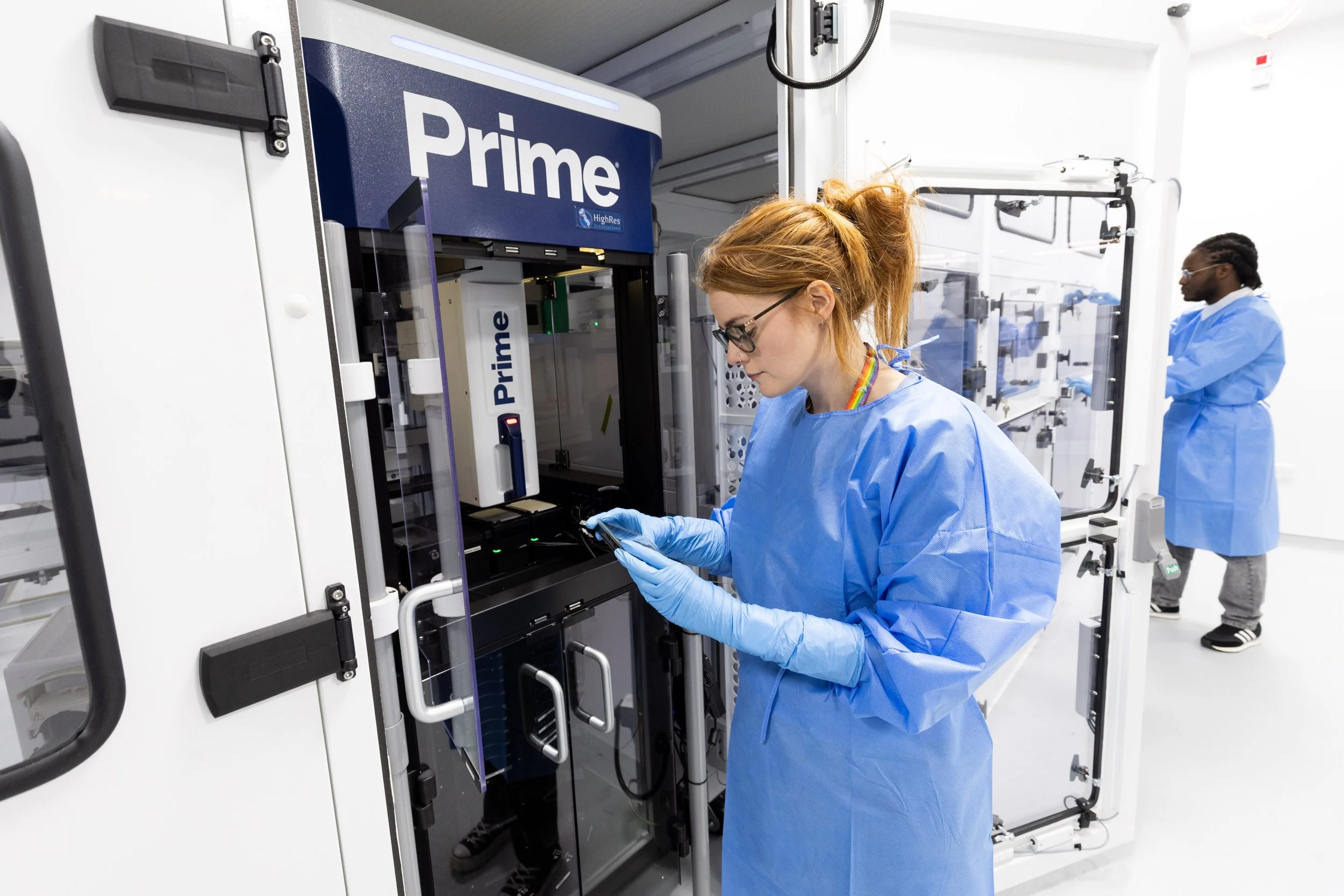
The facility incorporates bespoke contained environments and dedicated extraction systems around its automated research processes. Image: Courtesy of Infection Innovation Consortium (iiCON)
Rather than treating robotics as equipment that would be installed after construction, the team incorporated the automated systems into the facility's design from the outset. Following a formal tender, the project team worked with HighRes Biosolutions to integrate the robotic systems into the building.
That approach introduced structural considerations that might not be present in a conventional laboratory. Because robotic equipment can be heavy, equipment locations were carefully evaluated, with finite element modelling used to confirm that floor structures could accommodate the loads.
Access for maintenance and equipment replacement was another consideration. Slides and carousels within the robotic enclosures allow equipment to be accessed, moved, or replaced without requiring major intervention.
The automation also incorporates collaborative robotics and robot vision, which can help with positional teaching and allow the system to adapt as equipment and research processes change.
The facility's containment strategy similarly had to accommodate the automated workflow. Dedicated extraction systems and bespoke contained environments surround the automation, including specialist Class 2 cabinets. Automated fumigation is provided within the robotic enclosures and, where required, throughout the wider laboratory.
“Together, these measures create multiple layers of protection around the researchers, the process, and the wider facility,” Egan says.
Designing around the sample journey
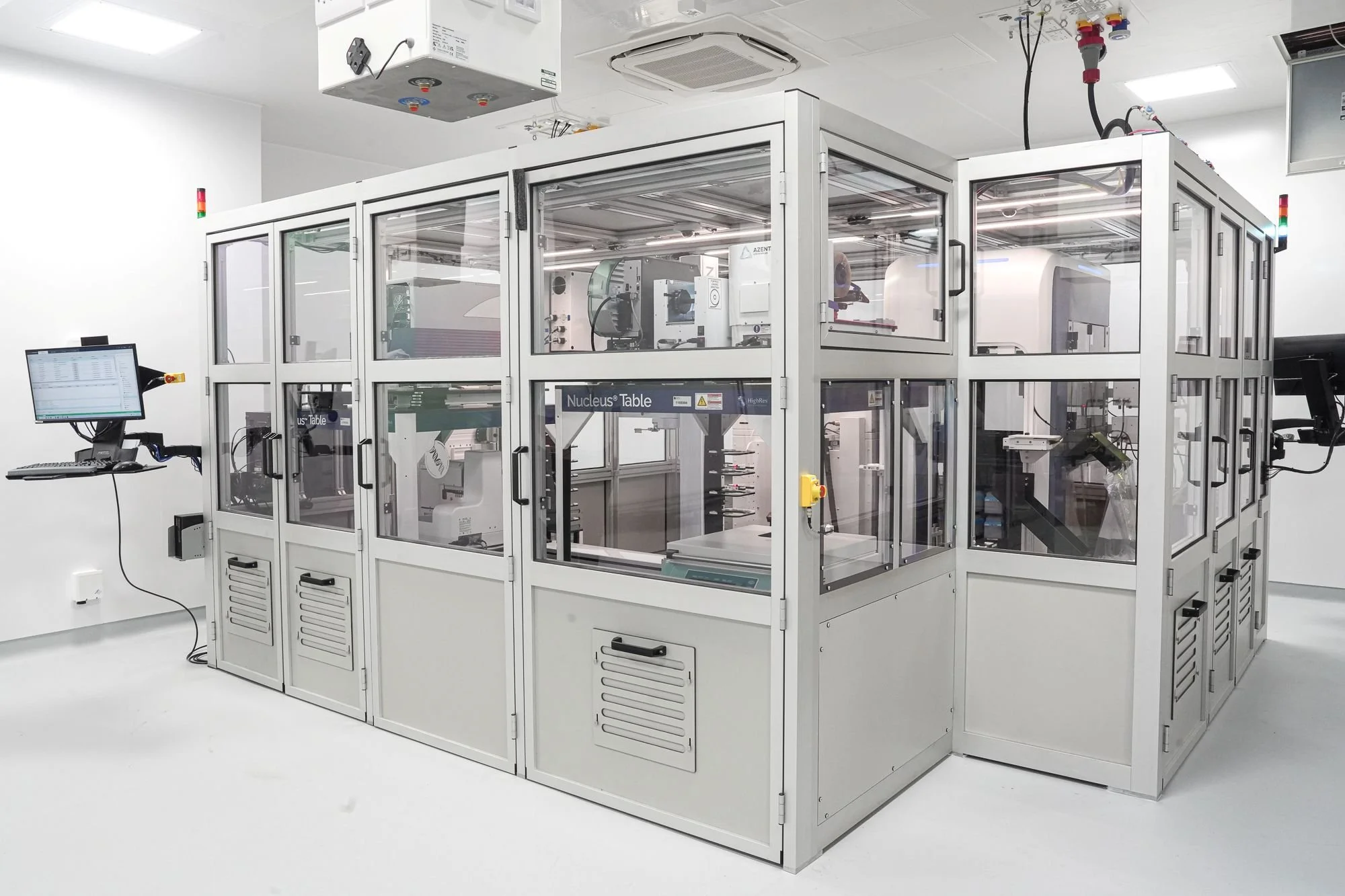
Flexible service infrastructure allows equipment and robotic systems to be repositioned or expanded as research needs evolve. Image: Courtesy of Infection Innovation Consortium (iiCON)
The laboratory's layout was developed around the movement of samples and materials through the research process rather than simply organizing individual laboratory rooms.
“We designed the facility around the complete journey of a sample, rather than simply the rooms in which individual activities take place,” says Egan.
The automated systems include storage for samples and materials under ambient and controlled temperature and humidity conditions. Samples can also be temporarily held at different stages of the process while awaiting the next operation, helping the system maintain throughput without unnecessary movement.
Waste flows were another major consideration. Because waste must be sterilized before leaving the laboratory, the facility includes a dedicated autoclave room and effluent decontamination systems for liquid waste.
The goal was to increase research throughput without creating additional movement that could complicate containment. “Every flow must remain controlled, predictable, and compatible with the overall containment strategy,” Egan says.
Building infrastructure for a changing research environment
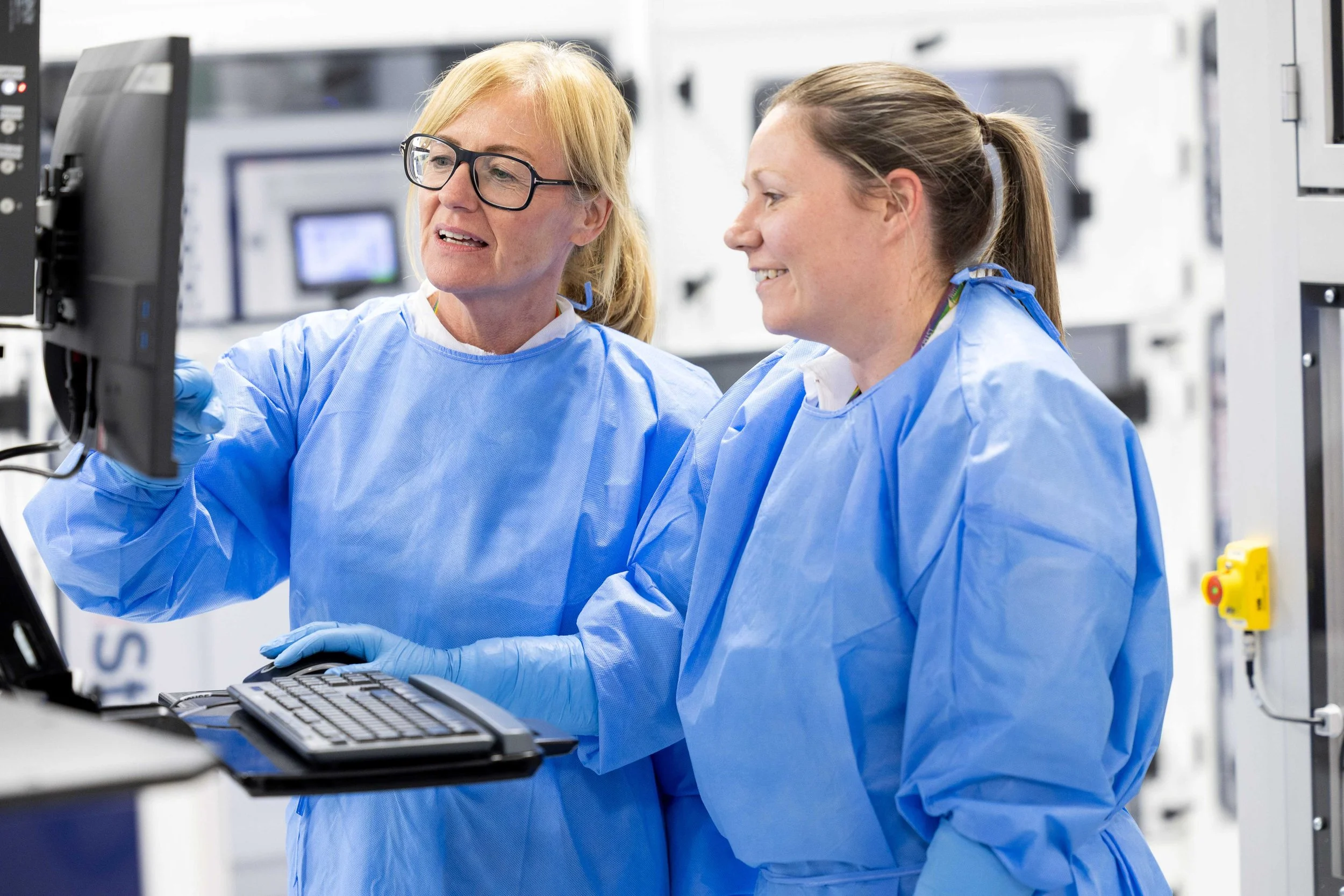
The laboratory's design supports controlled sample and waste flows while maintaining containment and operational efficiency. Image: Courtesy of Infection Innovation Consortium (iiCON)
Supporting the automated laboratory required substantial building infrastructure for power, data, gases, networking, cooling, and environmental control. Single- and three-phase power, data, gases, and networking are distributed through ceiling drops and pendant systems, allowing equipment to be repositioned or added as research needs evolve.
Cooling capacity was also important because of heat generated by specialist equipment and computing systems, while dedicated extraction supports the laboratory's environmental and containment requirements.
The project team also incorporated additional capacity for future data demands, including optical fiber infrastructure intended to support expanding AI and machine-learning applications.
Future flexibility extends beyond individual equipment changes. The laboratory includes spare service capacity and space for additional automation, including the potential introduction of mobile robotics. Additional extraction capacity serves neighboring laboratory areas, while roof space has been reserved for future secondary HVAC systems.
That infrastructure could allow adjacent laboratory spaces to be developed later without major changes to the operational laboratory.
“Flexibility is therefore not simply about providing spare floor area,” Egan says. “It is about creating a building that can adapt around the science as the science changes, while allowing future development without disrupting the research already taking place.”
The project brought together AtkinsRéalis, Tilbury Douglas, HighRes Biosolutions, Contained Air Solutions, Ecolab, iiCON, Liverpool School of Tropical Medicine, and other collaborators to resolve the interfaces between containment, security, engineering, and automation. The result is a research facility designed not around a single robotic configuration or fixed workflow, but around the ability to adapt as infectious disease research and laboratory automation continue to develop.