Hands-On Workshops Kick Off Lab Design Conference
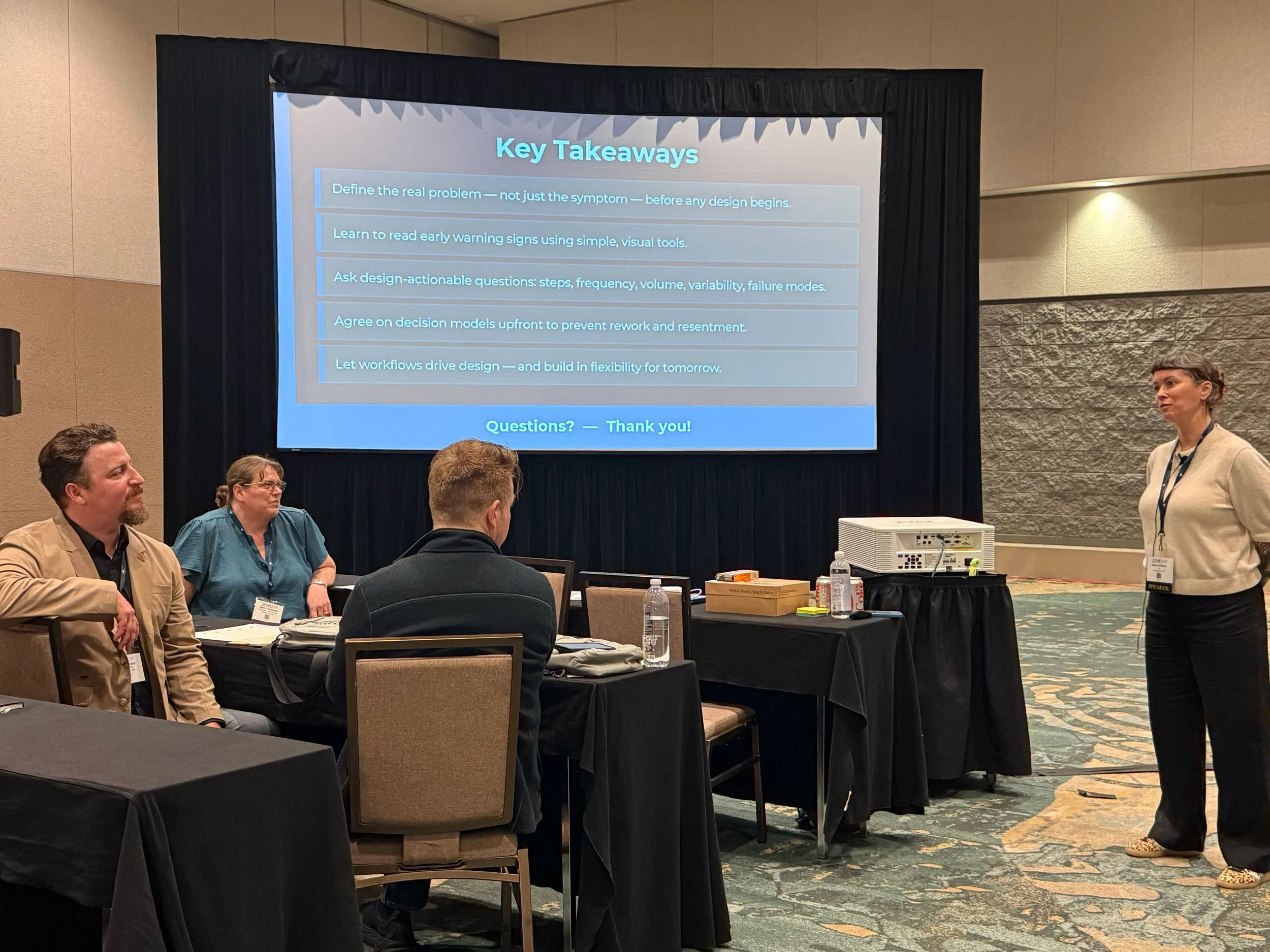
During her Lab Design Conference workshop “Collaborative Lab Planning: Aligning Space Design with Real-World Workflows,” Kelly Sullivan guided participants through practical strategies for translating scientific workflows, user needs, and stakeholder communication into more effective laboratory planning and design decisions.
The 25th annual Lab Design Conference opened May 11 in Orlando, FL with three concurrent workshops that set a highly practical tone for the days ahead, offering attendees an opportunity to go beyond traditional presentations and engage in focused, interactive learning around some of the most pressing challenges in laboratory planning and design. Available as optional add-ons to conference registration, the workshops provided intimate, hands-on environments where attendees could work through real-world scenarios, exchange perspectives, and gain tools they can apply directly to their projects.
Designed for the broad mix of professionals who make up the Lab Design Conference community—including architects, engineers, lab planners, designers, lab managers, scientists, project stakeholders, and industry vendors—the sessions emphasized something increasingly critical in laboratory projects: the need to move beyond theory and translate ideas into actionable strategies.
Through guided exercises, case studies, and expert-led discussion, each workshop focused on a different dimension of risk, performance, and collaboration, while reinforcing the value of interactive formats that allow participants to test concepts in real time and engage directly with peers and instructors. American Institute of Architects members were able to earn two LU/HSW credits for completing a workshop.
In Collaborative Lab Planning: Aligning Space Design with Real-World Workflows, instructor Kelly Sullivan, PhD, global director of operations & labs at CIC, led participants through strategies for bridging the gap between lab users, designers, and project stakeholders. The workshop focused on aligning laboratory spaces with the realities of scientific workflows, helping attendees better understand how user needs—ranging from safety practices and storage constraints to operational variability—can be translated into planning decisions.
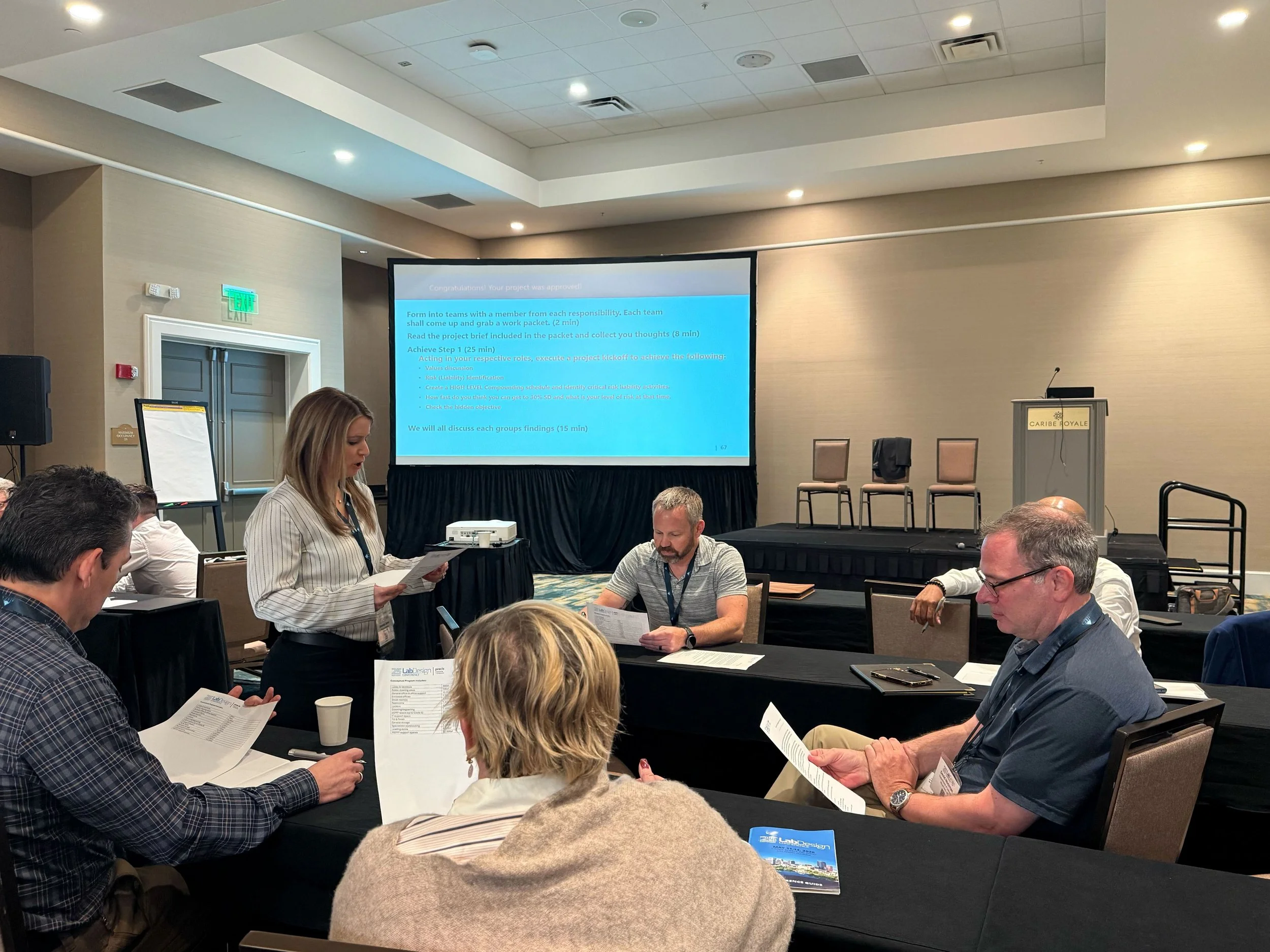
In “Minimizing Risk: Liability-Aware Lab Design Strategies,” Amanda Jones led participants through practical approaches to reducing liability and improving safety in laboratory planning and design.
Through realistic planning scenarios and guided exercises, participants explored how to map workflows, identify bottlenecks, define shared and private zones, and improve communication across disciplines. A central theme was the importance of asking better questions early in the planning process to uncover hidden risks and avoid common pitfalls caused by communication gaps.
The session offered particular value for both project teams and end users by emphasizing structured communication as a design tool. Designers gained practical methods for translating qualitative user input into actionable criteria, while lab managers and scientists were equipped with ways to more effectively articulate operational needs. Vendors and business development professionals also benefited from the discussion around stakeholder engagement and operational discovery as a way to strengthen client relationships and support better project outcomes.
In Minimizing Risk: Liability-Aware Lab Design Strategies, Precis Engineering + Architecture’s Kevin Hollenbeck, director of life sciences, and Amanda Jones, director—project management, addressed another critical dimension of laboratory projects: how design decisions can affect liability, regulatory compliance, and occupant health, safety, and welfare.
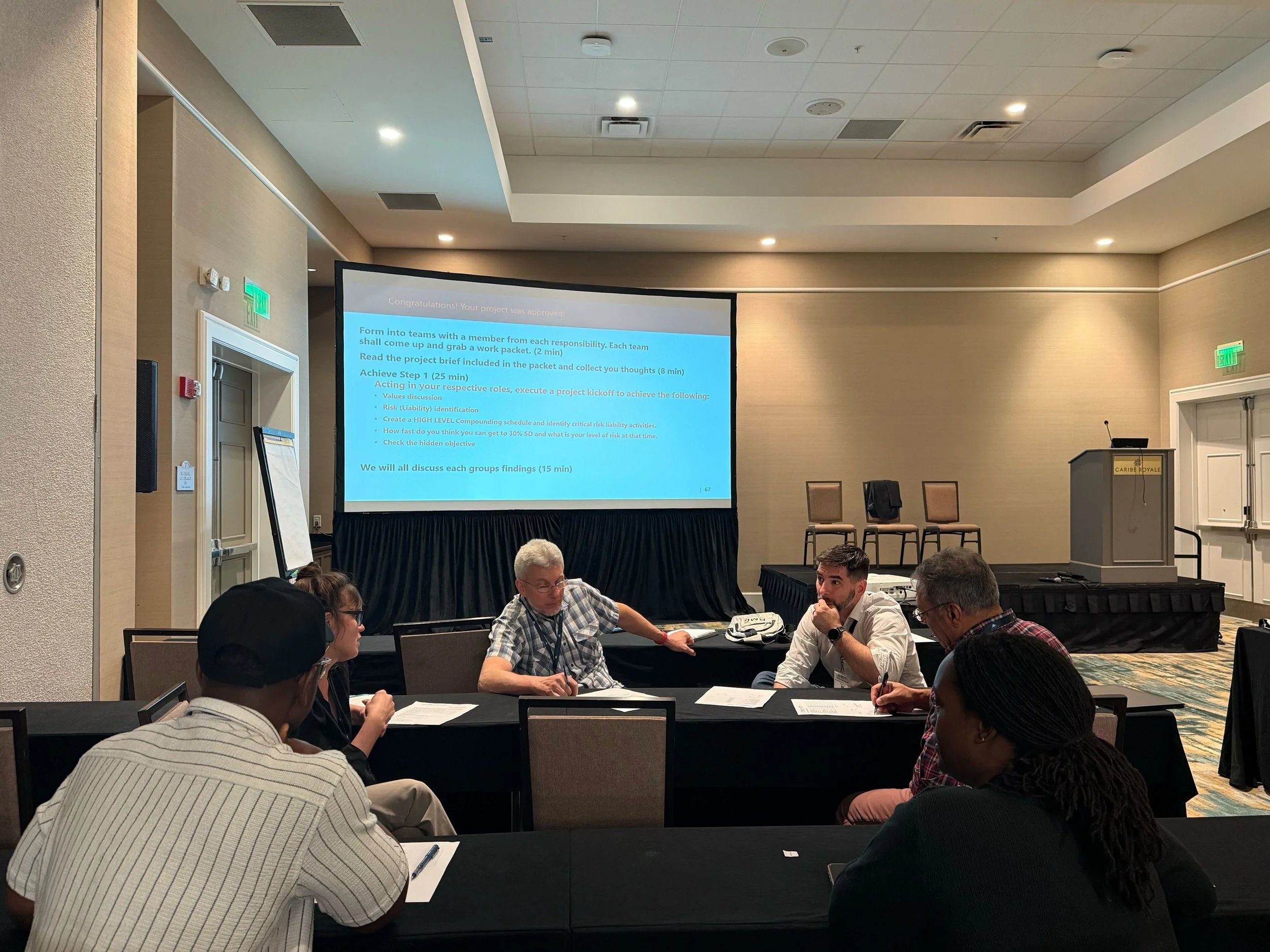
Through case studies and collaborative exercises, Kevin Hollenbeck explored how laboratory design decisions—from workflow and equipment placement to safety systems and compliance planning—can help prevent costly risks and support healthier, safer project outcomes.
Using case studies, small-group exercises, and discussion, the workshop examined how decisions related to layout, workflow, equipment placement, and safety systems can create or mitigate risk throughout planning, design, and construction. Participants explored practical approaches to documenting design decisions, working collaboratively with stakeholders and authorities having jurisdiction, and identifying hazards before they become costly problems.
The workshop resonated across audience segments because liability awareness touches every participant in a lab project. For architects and engineers, the session reinforced proactive strategies for reducing exposure while improving safety and resilience. For facility managers and end users, it offered insight into how risk management can be integrated into project decision-making from the outset. For manufacturers and suppliers, the discussion underscored the role products and systems can play in supporting compliance and safer outcomes.
In Navigating Code Conflicts in Lab Design, instructor Jeremy Lebowitz, senior director + market leader at Jensen Hughes, focused on one of the industry’s most persistent challenges: resolving conflicts among overlapping codes and standards while maintaining safe, high-performing lab environments.
Participants worked through real-world scenarios involving requirements from IBC, NFPA, NIH, ASHRAE, and local codes, examining how conflicts can arise and how teams can navigate them through collaboration, documentation, and performance-based thinking. The workshop also explored the limitations of “code minimum” approaches, emphasizing that compliance alone does not always equate to optimal safety or operational performance.
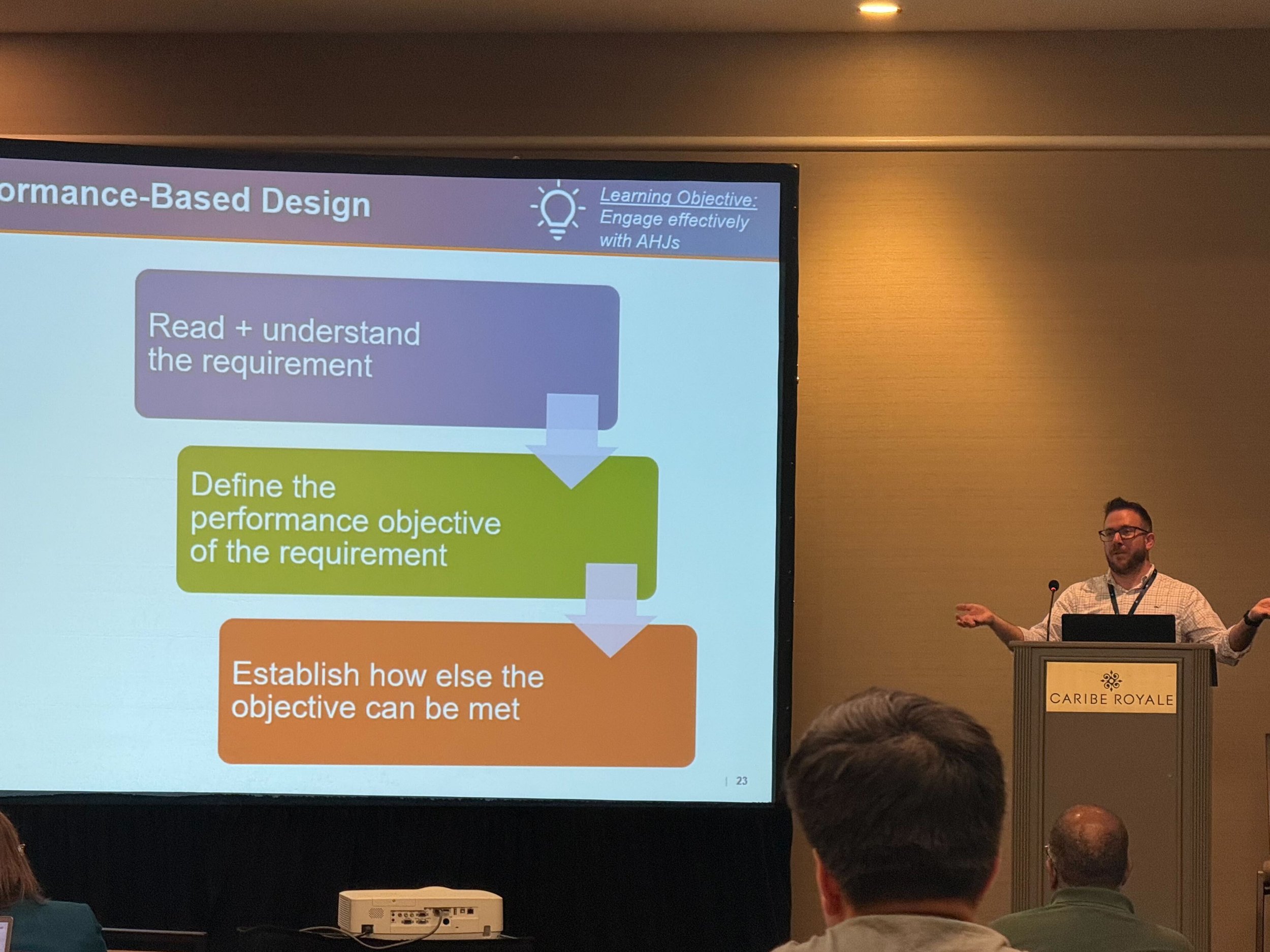
In “Navigating Code Conflicts in Lab Design,” Jeremy Lebowitz guided participants through real-world strategies for resolving conflicting laboratory codes and standards while advancing safety, compliance, and operational performance.
The session delivered practical value for designers, contractors, lab operators, and scientists alike, particularly through its focus on working effectively with AHJs (Authority Having Jurisdiction) and using emerging tools, including AI, to streamline code review and inform decisions. Attendees came away with actionable strategies for turning code challenges into opportunities to improve both compliance and lab performance.
These three workshops highlighted why interactive learning continues to be a valuable component of the Lab Design Conference. While conference sessions provide broad perspectives and thought leadership, these workshops created space for deeper problem-solving, peer exchange, and application in ways traditional presentations often cannot.
Just as importantly, they reinforced the interdisciplinary nature of successful lab projects. Whether the focus was workflow planning, liability reduction, or code navigation, each session emphasized that better outcomes depend on stronger collaboration among project teams, end users, and industry partners.
As a kickoff to the conference, the workshops delivered more than education—they equipped attendees with practical methods, frameworks, and conversations they can bring back to their organizations. For many participants, that direct connection between learning and application is precisely what makes these hands-on sessions such a valuable part of the Lab Design Conference experience.
Lab users and design/build professionals interested in more hands-on learning opportunities should plan to be in Dallas, TX, for the 2027 Lab Design Conference, where another lineup of interactive workshops will offer lab users, project teams, and industry partners practical strategies, peer collaboration, and focused problem-solving around today’s most important lab design challenges. Register for conference updates to be among the first to learn when the workshop topics are revealed and registration opens.