2026 Lab Design Conference Workshop: Minimizing Risk in Design Decisions
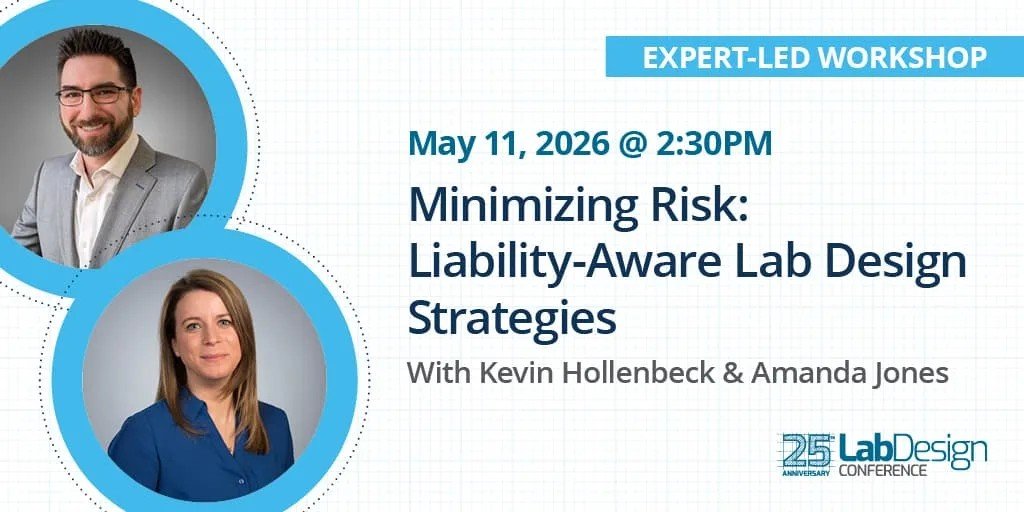
Laboratory design isn’t just about functionality—it’s also a critical factor in managing legal liability and ensuring occupant safety. At the 2026 Lab Design Conference in Orlando, attendees can explore these issues in the two-hour workshop, Minimizing Risk: Liability-Aware Lab Design Strategies, led by Kevin Hollenbeck, director of life sciences at Precis Engineering + Architecture, and Amanda Jones, director—project management at Precis.
Scheduled for May 11, from 2:30 to 4:30 pm, this interactive session is designed for architects, engineers, lab planners, facility managers, lab directors, scientists, legal advisors, and equipment suppliers.
AIA continuing education credits will be available for those who complete this workshop.
Seats are limited, and participation requires a workshop ticket in addition to a regular conference pass. Regular conference tickets are available at a $200 discount until December 31, 2025. Click here to register!
Addressing liability early in design
“Early recognition and engaging the right stakeholders and consultants is certainly key to avoiding liability issues. You also need cohesion and shared strategy amongst the team, all the team,” say Hollenbeck and Jones. “A major focus of this workshop will be helping people to think strategically about how they structure their design processes to get information early enough, and focus the discussion in the right areas, so as to enable early recognition of risk.”
Many liability challenges in laboratory projects are preventable. By addressing potential issues during planning and early design, teams can resolve minor concerns before they escalate. The workshop provides practical tools and activities that participants can integrate into existing processes, fostering a culture of proactive risk management.
Lab layout, equipment placement, and workflow choices can directly affect safety and liability. Hollenbeck and Jones explain, “Shortcomings in the design forethought given to daily operations is one of the greatest contributors to unsafe lab design. An unsafe task has a greater liability risk the more it is performed, and seasoned laboratory users quickly become comfortable with unsafe conditions when it becomes their daily norm. So, at its base, it is a ‘numbers game’ where poor design thinking and processes increases your risk and it can become difficult to break the cycle.”
Participants will explore operational flows for scientific processes, vetting hazards and applying strategies to enhance safety. The session emphasizes shared knowledge and leveraging team expertise to create safer, high-performing labs.
Documenting decisions to mitigate risk and liability
Proper documentation is crucial for managing liability. “Proper documentation is a nebulous topic as it can take many forms depending on a project’s unique characteristics,” Hollenbeck and Jones say. The workshop will review common shortfalls and provide strategies for early design documentation, cohesive recordkeeping, and knowledge sharing to reduce liability.
Case studies allow participants to apply theory to real scenarios. Hollenbeck and Jones say, “Real-world examples are the closest thing to personal experience and will help the team understand how to implement theory into real-world action.” Attendees will analyze scenarios familiar to seasoned professionals, learning how collaboration and a proactive team mindset can prevent hazards and improve project outcomes.
Read more about the Lab Design Conference workshops!
Building codes set minimum standards, but liability extends further. “Building codes, like many other design regulations, are meant to establish a minimum criteria for the safety and welfare of the inhabitants of any space or structure. But liability in design, especially in the life science market, is a much more encompassing subject which must address the operational, financial, and legal implications within any design process,” the speakers explain.
The workshop will guide participants on identifying lab-specific liability concerns and implementing design solutions that exceed code requirements. Clear documentation of project goals and decision-making ensures occupant safety and operational value while reducing legal risk.
Register early—seats are limited
This hands-on workshop provides actionable insights, practical tools, and real-world lessons that participants can apply immediately. “This overall strategy takes many forms and this workshop will focus on several tools and activities which can be applied by every member on any project to incorporate risk mitigation into their existing processes such that those issues get resolved early on and minor issues easily resolved during design don’t turn into problems,” Hollenbeck and Jones emphasize.
For professionals invested in safe, functional, and legally resilient lab environments, this workshop is an unmissable opportunity to learn from experts and enhance your lab design practices. Register now to add this workshop onto your main Lab Design Conference ticket. AIA continuing education credits will be available for those who complete this workshop. An early bird discount for your conference ticket is available until December 31, 2025.