2026 Lab Design Conference Workshop: Navigating Code Conflicts in Lab Design
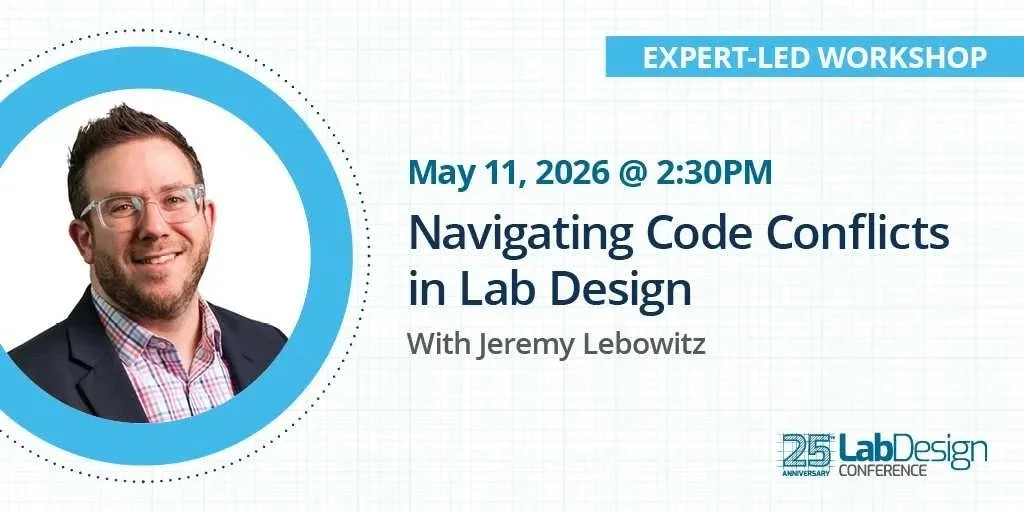
At the 2026 Lab Design Conference in Orlando, Jeremy Lebowitz, senior director and market leader at Jensen Hughes, will lead the two-hour workshop Navigating Code Conflicts in Lab Design.
Scheduled for May 11, from 2:30 to 4:30 pm, this interactive workshop equips architects, lab planners, contractors, facility managers, and scientists with strategies to identify, navigate, and resolve overlapping codes while ensuring health, safety, and compliance.
Attendees will gain practical tools to address code gaps, streamline decision-making, and create safer, higher-performing laboratory environments—saving time and reducing costly rework during lab projects.
AIA continuing education credits will be available for those who complete this workshop.
Seats are limited, and participation requires a workshop ticket in addition to a regular conference pass. Click here to register!
Turn code challenges into safer, high-performing labs
Complex laboratory projects often involve overlapping building, fire, and safety codes, creating challenges for both designers and lab users. This interactive workshop offers participants a framework to recognize code conflicts, collaborate effectively with authorities, and implement solutions that go beyond minimum compliance.
“The longer the design team waits to address a conflict, the more expensive and challenging it can be to identify and incorporate feasible solutions,” Lebowitz notes. He cites the example of upgrading a lab to accommodate more solvent, which can trigger costly structural and fire-rating changes if addressed too late in the construction process.
Read more about the Lab Design Conference workshops!
Attendees will leave with actionable skills to translate code requirements into high-performing lab environments. The session covers performance-based and prescriptive compliance approaches, strategies for working with authorities having jurisdiction, and documentation practices that reduce risk while maintaining operational efficiency. Participants will also explore how health, safety, and welfare principles can drive smarter, more flexible lab designs.
Lab owners, managers, and end users will benefit from this workshop as well. “Communicate and ask questions! Very rarely is anyone trying to avoid code compliance,” Lebowitz advises. Understanding code intent early allows small adjustments—like reconfiguring equipment or hazardous materials—to achieve compliance more efficiently than retrofitting an existing lab.
Don’t miss out—seats are limited!
This workshop is essential for anyone navigating the complexity of modern laboratory codes while designing safer, more functional spaces. Attendees will learn to identify code conflicts, resolve them proactively, and turn minimum requirements into high-performing lab designs that protect occupants, assets, and research operations.
Participants will gain practical techniques that any member of a lab project team can apply to manage compliance, minimize risk, and transform code challenges into opportunities for safer, more effective labs.
For architects, lab planners, facility managers, lab end users, and project stakeholders committed to creating compliant, functional, and safe laboratory environments, this workshop is a must-attend. Register now to secure your spot and add this workshop to your main Lab Design Conference ticket. AIA continuing education credits will be available for those who complete the session.