
From Baked Beans to Scientific Breakthroughs: Northeastern’s Roux Institute
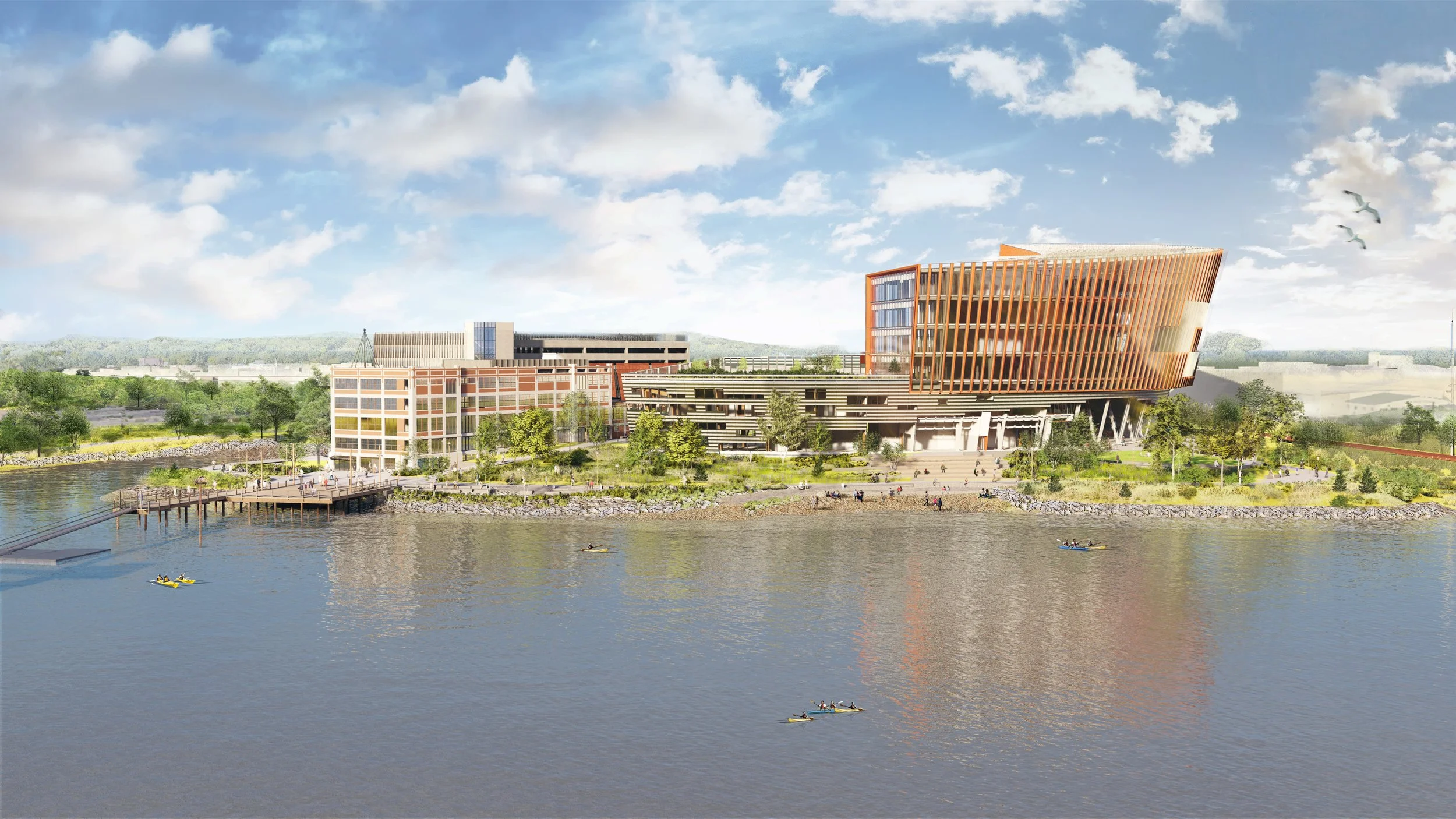
On Portland’s waterfront, the former B&M Baked Beans factory is being transformed into Northeastern University’s Roux Institute, where the historic 1913 facility is repurposed as the Lunder Innovation Labs alongside the new Alfond Center to create a flexible, sustainable hub for digital engineering and life sciences. Image: Courtesy of CambridgeSeven
On the waterfront of Portland, ME, a century-old industrial site is being reimagined as a hub for digital engineering and life sciences. The transformation of the former B&M Baked Beans factory—an iconic facility that operated for more than a century—into Northeastern University’s Roux Institute showcases how adaptive reuse, advanced digital design tools, and forward-thinking lab planning can merge historic context with cutting-edge innovation to create a flexible, sustainable research environment.
At the heart of the redevelopment is a dual strategy: preserve and repurpose the historic 1913 factory as the Lunder Innovation Labs while constructing the new Alfond Center, an academic and laboratory building designed to support evolving research needs.
Rather than demolish the historic factory, the design team embraced adaptive reuse as a core strategy. This decision not only preserves a culturally significant structure but also establishes a physical and symbolic bridge between Portland’s industrial past and its technological future.
Adaptive reuse as a catalyst for innovation
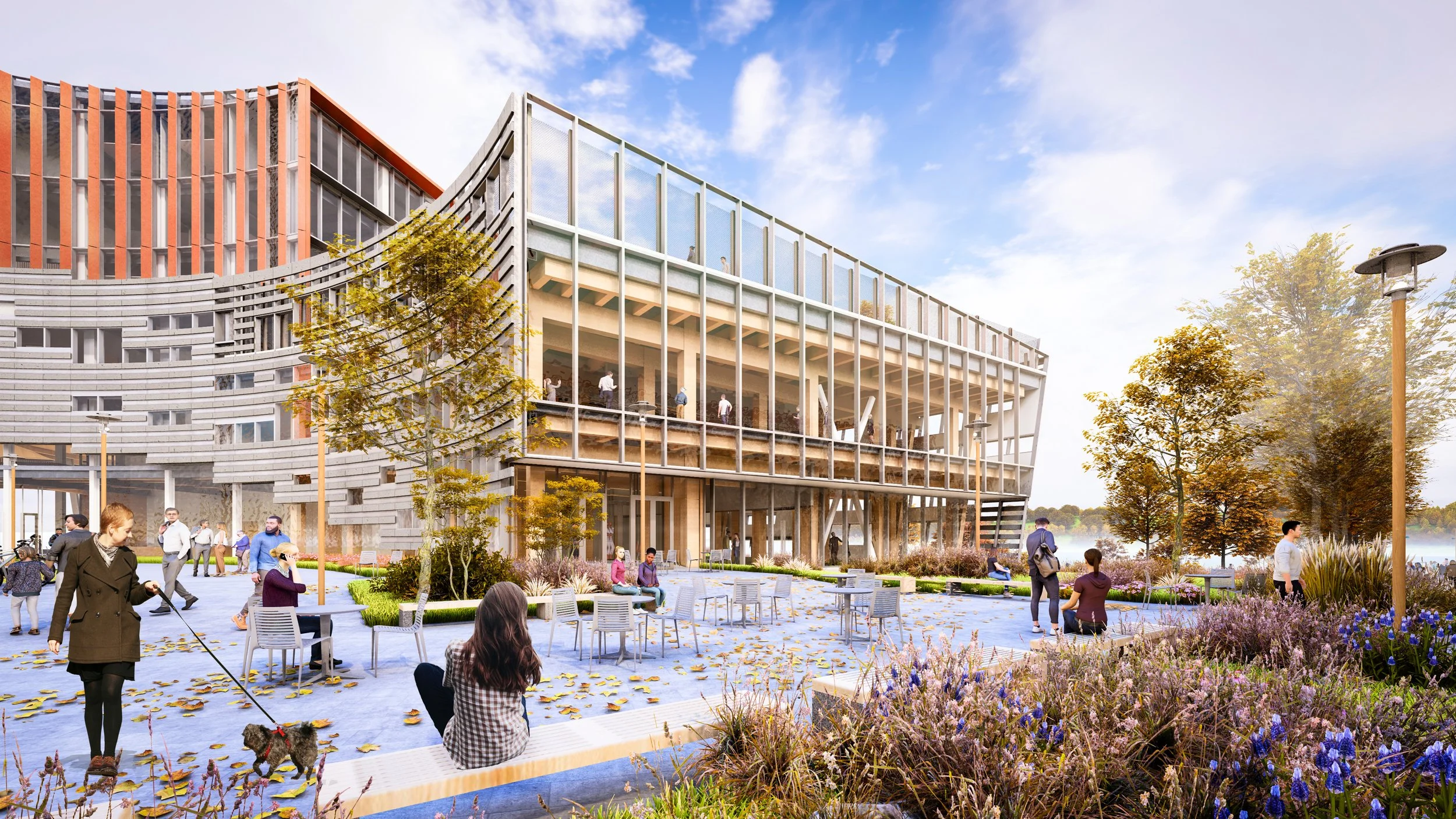
Originally established through a 2020 partnership between Barbara and David Roux and Northeastern University, the Roux Institute is transforming the former B&M Baked Beans factory into the Lunder Innovation Center—paired with the new Alfond Center—to create a flexible, collaborative ecosystem linking historic industrial innovation with next-generation research and education. Image: Courtesy of CambridgeSeven
As Timothy Mansfield, CEO, president, and principal-in-charge at CambridgeSeven, explains, the project is rooted in both legacy and ambition. In 2020, philanthropists and entrepreneurs Barbara and David Roux partnered with Northeastern University to establish the Roux Institute, committing to finding a suitable local site. The former B&M Baked Beans factory, which ceased production in 2021 and was designated a Portland landmark in 2022, ultimately became available as the institute's site. The 13-acre site was acquired by the Roux Institute, which “would be retained and restored and brought back to life as an innovation center that would collaborate with the academic center,” says Mansfield. “The bean factory is going to be the home to all these young, talented technology accelerators and incubator companies, and they will then partner with Northeastern and the faculty and students of Northeastern. It's a great synergy that's happening.”
The current use of the facility draws a “direct line between what was originally on the site … and the technology and innovation that’s happening today,” Mansfield says. The original factory itself was considered advanced for its time—particularly as a “daylight factory” that maximized natural light, an early example of performance-driven design.
The bean factory retrofit, now known as the Lunder Innovation Center, makes up “part one” of the project, says Mansfield. “Part two is the design of the new academic building [the Alfond Center], which is going to be a research and laboratory building.”
“As the project has evolved, the design objectives have remained focused as originally planned,” he adds. “Both David and Barbara Roux and Northeastern set forth an objective of flexibility. Understanding that the world of artificial intelligence, computer and data sciences, digital engineering, and advanced life sciences progress so rapidly, they envisioned a flagship academic building [The Alfond Center] that would support an ever-evolving pedagogy. How that translates in design is creating a framework of infrastructure that allows swift, efficient and flexible systems that can change quickly and accommodate a variety of lab environments for both research and teaching.”
Flexibility as a core principle
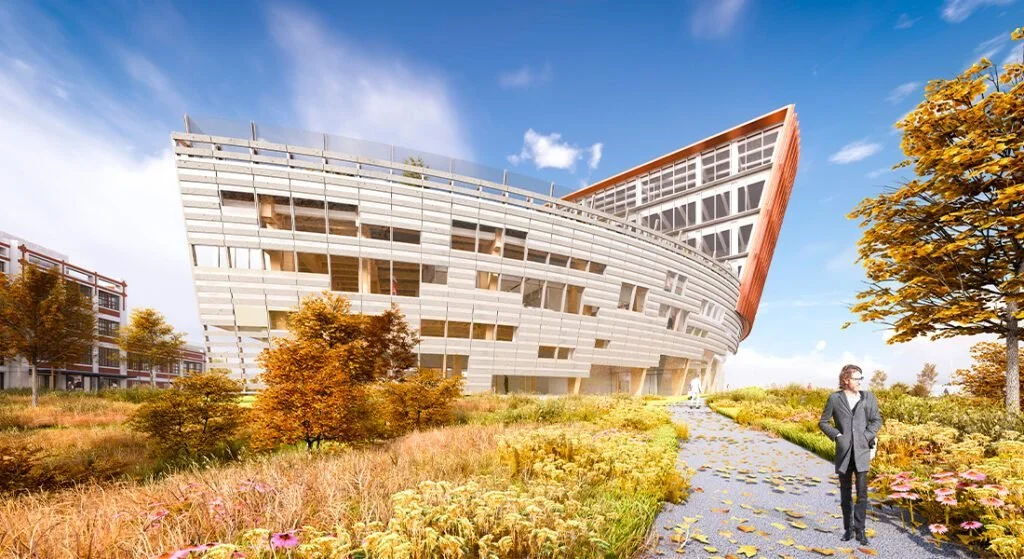
Designed for a promising scientific future, the Roux Institute incorporates distributed infrastructure, reconfigurable lab modules, and built-in shell space to enable rapid adaptation across a wide range of evolving research needs. Image: Courtesy of CambridgeSeven
One of the most critical lessons from the Roux Institute project is the emphasis on flexibility. The building was designed not only for today’s lab needs, but also for an uncertain future.
“We really don’t know what the future of lab science is going to be,” Mansfield says, referencing guidance from Northeastern leadership.
This uncertainty drove the development of highly adaptable lab infrastructure capable of supporting a wide range of uses—from wet labs to dry labs, and from low- to high-intensity research environments.
To achieve this, the design team implemented distributed infrastructure systems (mechanical, electrical, and plumbing) across the floor plate, and flexible lab modules that can be reconfigured with minimal disruption. Shell space is built into the initial construction to accommodate future growth
This approach allows entire lab configurations to be modified during short downtime windows. As Mansfield notes, “We're starting to get an idea of what we're doing tomorrow, but it's the day after tomorrow that we don't know.”
Locally sourced materials with high-performance intent
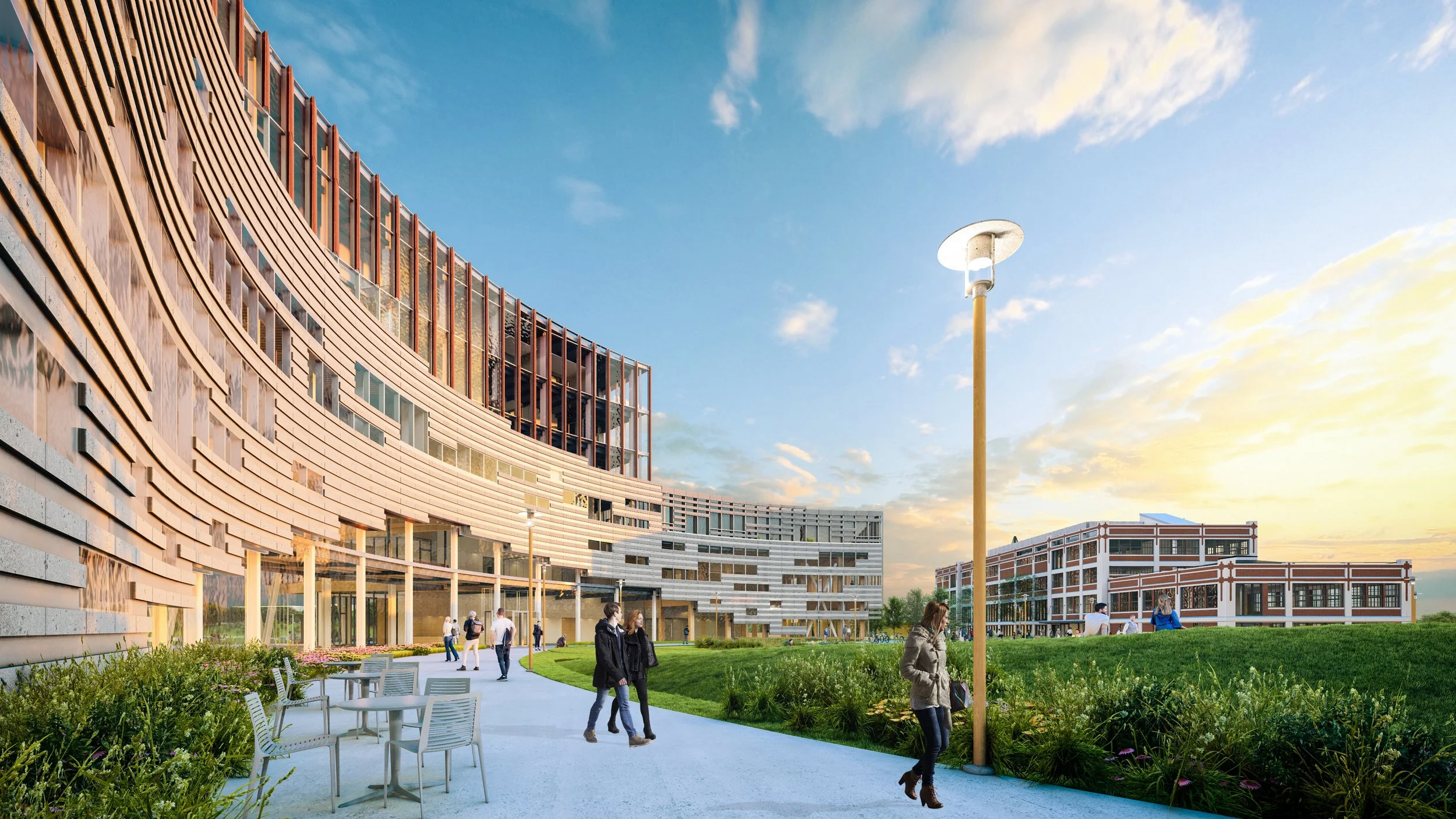
The Roux Institute blends locally sourced materials like granite and mass timber with an all-electric design and parametric façade optimization to create a high-performance, low-carbon research facility rooted in Portland’s industrial heritage. Image: Courtesy of CambridgeSeven
The Roux Institute’s material palette is another defining feature, balancing regional identity with modern performance. The building incorporates locally sourced granite, mass timber, glass, and copper—materials that reflect Portland’s industrial and coastal heritage.
Mansfield emphasizes the importance of sourcing materials locally, particularly granite. “I wanted this building to have as much brought or built in Maine,” he says, noting the team’s commitment to working with a local quarry despite cost pressures.
The use of mass timber—particularly in the lower-level maker spaces—adds both aesthetic and environmental value. Beyond its visual warmth, mass timber significantly reduces embodied carbon compared to steel or concrete. “It also has a significant effect on reducing our carbon footprint,” Mansfield adds.
Perhaps most notable from a sustainability standpoint is the building’s all-electric design—an ambitious goal for a laboratory facility.
“For a laboratory building to be all-electric is pretty significant in terms of sustainability,” says Mansfield. Achieving this required reducing overall energy demand through a high-performance building envelope and advanced façade design.
Using parametric design tools such as Grasshopper, Rhino, and Ladybug Tools, the team optimized the façade to balance daylighting, solar heat gain, and glare control. Vertical “copper” fins (aluminum with a copper finish) were strategically sized and spaced according to solar exposure, creating a responsive skin that enhances both performance and aesthetics. This underscores the growing importance of integrating computational design early in the process, as parametric modeling not only improves building performance but also accelerates decision-making and reduces risk.
Site strategy and team planning
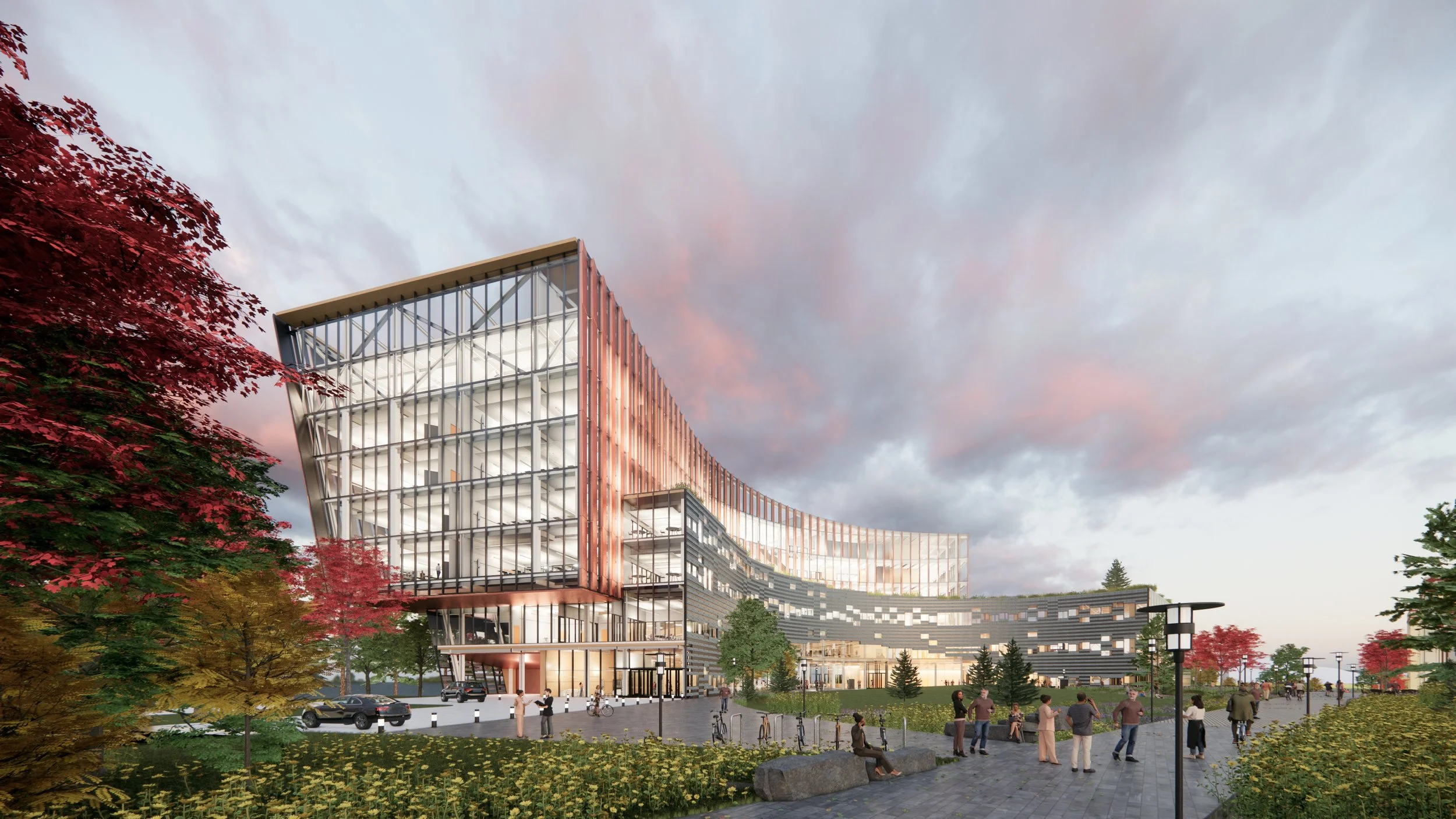
On a 13.5-acre waterfront site in Portland, the Roux Institute’s curvilinear academic building responds to the peninsula’s geometry while forming a central gathering space known as “The Round.” Image: Courtesy of CambridgeSeven
The 13.5-acre waterfront site presented both opportunities and constraints. In response, the design team developed a curvilinear academic building that reflects the peninsula’s geometry while creating a central gathering space known as “The Round.”
Digital tools such as BIM platforms, file-sharing systems, and project management software played a critical role in maintaining alignment throughout design and construction—reinforcing the value of early and continuous collaboration, particularly when integrating complex systems.
“Our initial design prioritized panoramic views of Portland’s Casco Bay, featuring a fully glazed façade to celebrate the site’s unique location. But detailed performance analysis revealed significant downsides: excessive glare and solar heat gain that compromised both occupant comfort and energy efficiency. To address this, we built parametric scripts in Rhino and Grasshopper, introducing external shading fins and fine-tuning façade transparency based on environmental performance.”
Using Ladybug Tools, the design team identified a 60:40 window-to-wall ratio as the optimal balance between energy efficiency and transparency. They then used Galapagos within Grasshopper to test hundreds of variations, refining the façade by strategically placing solid and transparent elements to maximize solar gain while minimizing glare and discomfort.
The broader campus plan also includes future expansion zones for additional lab buildings, housing, and academic facilities. These were incorporated into the master plan from the outset, ensuring long-term scalability.
Large, complex projects succeed or fail based on team coordination, and the Roux Institute is no exception. From the outset, the project team—including CambridgeSeven, Consigli Construction, Thornton Tomasetti, Arup, HERA Laboratory Planners, and Northeastern University—aligned on schedule, scope, and expectations.
“As a team with the established timelines, we all worked very hard to meet each deadline,” Mansfield says.
Navigating tariffs and supply chain disruptions
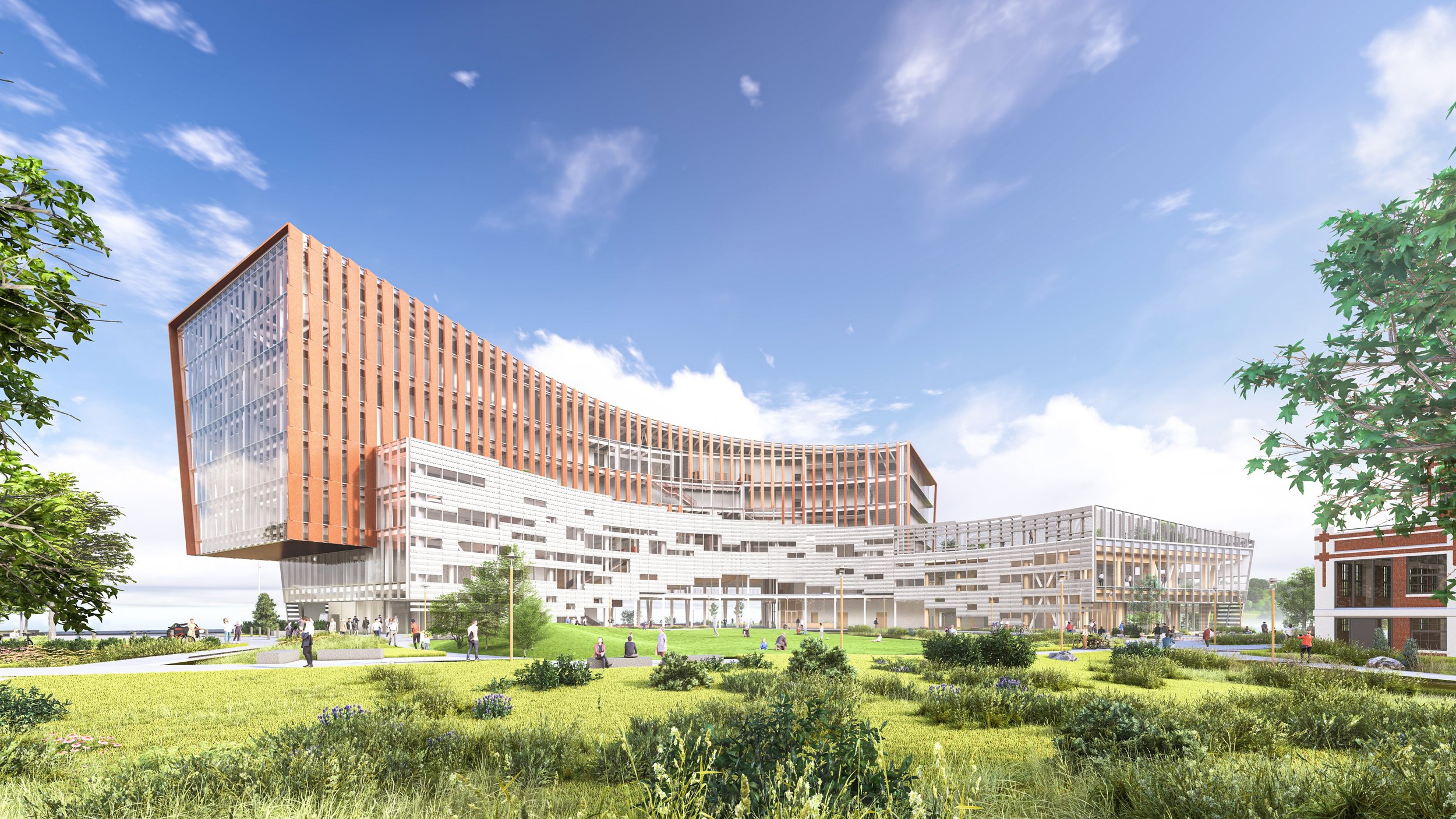
The Roux Institute project navigated tariff and supply chain volatility through early procurement planning, contingency funding, and close stakeholder coordination, underscoring the importance of resilience in both design and delivery. Image: Courtesy of CambridgeSeven
Like many large-scale projects in recent years, the Roux Institute faced challenges related to tariffs and supply chain volatility. The team mitigated these risks through proactive planning and strategic decision-making.
“The team that has been together from the very beginning communicated early about the risk management of tariff costs and supply chain disruption to the site,” Mansfield says. “I have to say, one of the most brilliant things we ever did was we got the steel out of Canada into Maine, before any of the tariffs went into effect.”
Additionally, Northeastern built contingency funding into the project budget, allowing flexibility in response to fluctuating costs. Open communication between stakeholders ensured that risks were identified and addressed early.
For project teams, the lesson is clear: resilience must be built into both the design and the delivery process. This includes financial planning, procurement strategies, and strong contractor relationships.
A model for future lab development
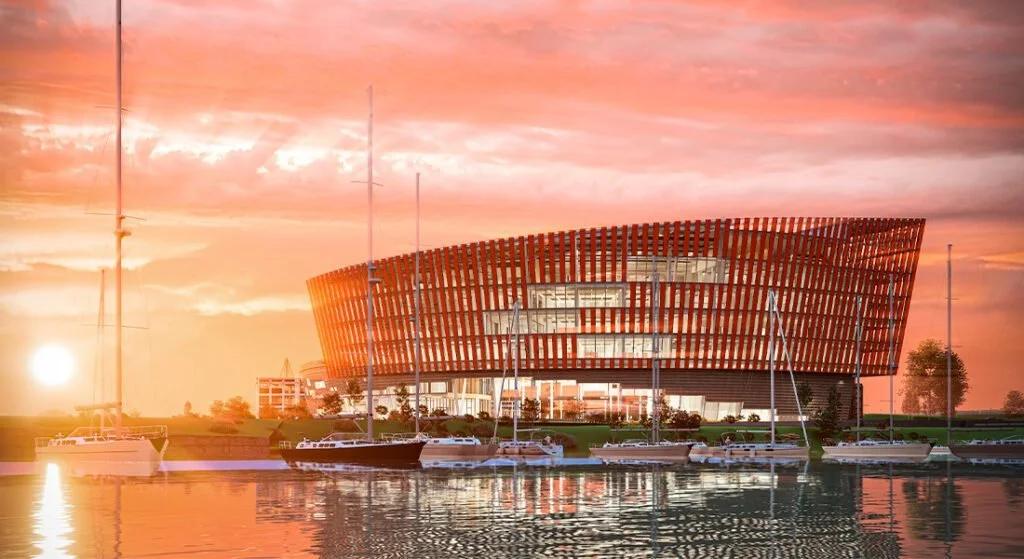
The Roux Institute transforms a former baked bean factory into a modern research campus, demonstrating how adaptive reuse, flexible design, sustainable materials, and digital tools can create a forward-looking model for future laboratory environments. Image: Courtesy of CambridgeSeven
The Roux Institute project exemplifies how laboratory environments can evolve to meet the demands of modern science while remaining grounded in local context. By integrating adaptive reuse, flexible design, sustainable materials, and advanced digital tools, the project offers a roadmap for future lab developments.
Ultimately, the transformation from a baked bean factory to a cutting-edge research campus is more than a change in function—it’s a continuation of a legacy of innovation. As Mansfield says, “We’re simply bringing that notion of innovation and advancement to our new century here.”
For architects, planners, and lab users, the Roux Institute serves as a powerful reminder: the most successful lab environments are those designed not just for today’s science, but for the discoveries yet to come.