
Colorado’s First: Pioneering Net-Zero Energy and All-Electric Life Sciences Design
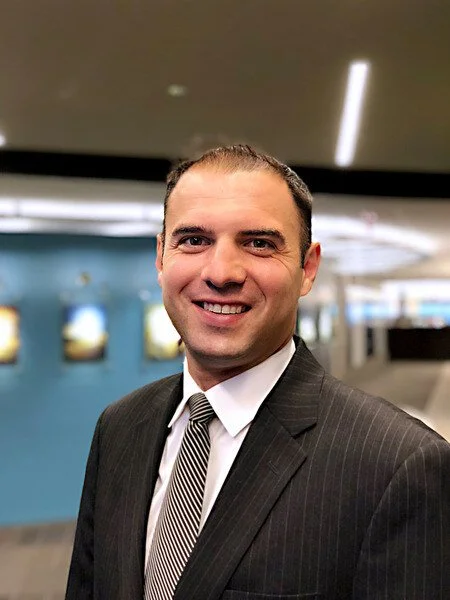
2025 Lab Design Conference speaker—Brandon Fortier, director of science and technology, IMEG Corporation
The 2025 Lab Design Conference in Denver, CO, featured a forward-thinking presentation about an in-state lab facility, “Colorado’s First Net Zero Energy and All-Electric Life Sciences Building.” Delivered by Brandon Fortier, director of science and technology, and Ken Urbanek, senior principal and client executive—both from IMEG Corporation—the session explored the design and engineering of Ridgeway Science & Technology, a speculative core-and-shell life sciences facility planned for downtown Boulder.
At just over 100,000 sf, the project is designed to achieve net-zero energy and all-electric operation, with LEED Platinum and WELL Gold certification targets. Once complete, Ridgeway will set a new benchmark for sustainable laboratory infrastructure in a state already known for its rigorous energy conservation standards.
The challenge: designing a speculative net-zero lab
The project presented a unique challenge for IMEG and the developer, Conscious Bay: creating an aggressive net-zero, all-electric lab facility without a tenant or defined program. As Fortier noted, “there was no tenant, there was no program or building occupant that we were working with.”
This meant the design team had to define the Owner Project Requirements (OPR) from the outset, ensuring the zero-energy goal remained at the center of every decision. The building program ultimately balanced 60 percent lab space and 40 percent office space, with the laboratories configured for conventional biology, chemistry, and dry lab functions.
For lab planners and designers at the Lab Design Conference, several key takeaways emerged:
Scalability and modularity: Systems were designed for easy expansion and adaptation as tenants move in, allowing renovations without interrupting operations.
Flexible air change rates: The HVAC system can support up to eight air changes per hour, with controls to scale back to six, four, or even two during unoccupied periods—significantly reducing energy use.
Piped utilities on demand: Rather than overbuilding for unknown tenants, space and infrastructure pathways were reserved for future installation of compressed air, purified water, and gas systems.
The 80/20 Rule: The base building accommodates typical lab tenants, while reserved mechanical zones and power pathways make it possible to support specialized uses—such as vivaria, cleanrooms, or radiochemistry—without pre-installing the infrastructure.
Engineering toward net-zero: a four-step strategy
Urbanek outlined IMEG’s four-step process for achieving the ambitious net-zero target—reducing a typical lab’s energy use intensity (EUI) from over 250 kBtu/sq. ft. to roughly 100 kBtu/sq. ft.
Optimize exterior loads: The design for the 40 percent office area includes a high-performance envelope, passive shading, and enclosure commissioning to minimize heat gain and infiltration.
Optimize interior loads: Since airflow is the largest energy driver in laboratories, a demand-response control system was introduced to monitor contaminants and adjust air change rates and fume hood sash positions automatically.
Optimize MEP systems: The building will employ all-electric systems, including:
Heat recovery chillers and heat pumps
High-efficiency energy recovery for treated exhaust air
Active chilled beams for efficient space conditioning
Low-pressure-drop duct and piping layouts to reduce fan and pump energy
Offset with renewables: Remaining energy demands are addressed with on-site and off-site renewable sources.
Innovation spotlight: Borehole Thermal Energy Storage

Ken Urbanek, senior principal and client executive, IMEG Corporation
A highlight of the project is the use of Borehole Thermal Energy Storage (BTES)—an advanced geo-exchange system that actively stores thermal energy for both seasonal and daily (diurnal) exchange.
Seasonal exchange: In summer, excess heat is pushed into a “hot” bore field; in winter, cooling energy is stored in a “cold” field, allowing the system to shift energy use across seasons.
Efficiency gains: Coaxial piping and shallow wells enable a greater volume of thermal storage, supporting faster energy response.
Hybrid solar integration: The system pairs with hybrid photovoltaic-thermal (PVT) panels, which are roughly 15 percent more efficient at producing electricity. The thermal component preheats the ground bores, improving the panels’ performance and leveraging Boulder’s abundant sunlight.
Key takeaways for future lab tenants and managers
While Ridgeway is still in development, the team has already considered how operational practices will support its sustainability goals. Here is what they told the Lab Design Conference audience:
Resiliency: Despite its all-electric design, the building includes an emergency generator to meet life safety requirements and provide heating during extended winter outages. Power systems are layered to protect mission-critical lab functions.
Energy management: Advanced metering ensures that “you can’t have one tenant using 90 percent of the infrastructure,” Urbanek explained. This transparency will help balance energy use among multiple occupants.
Tenant requirements: Lease agreements will require lab users to install Energy Star-rated equipment and adhere to efficiency guidelines that align with the building’s net-zero objectives.
A model for the future
The Ridgeway Science & Technology project demonstrates how proactive, data-driven collaboration can make net-zero achievable even in the high-energy context of life sciences research. Through careful planning, flexible systems, and an innovative approach to energy storage, IMEG and Conscious Bay are setting a new precedent for what’s possible in sustainable laboratory design.
Continue the conversation about sustainable labs and net-zero design at the 2026 Lab Design Conference in Orlando, FL, on May 11–14! Explore how data-driven design strategies and integrated delivery approaches are advancing high-performance, energy-efficient laboratory environments. Get updates on the agenda, networking events, workshops, and lab tours at https://www.labdesignconference.com/.