
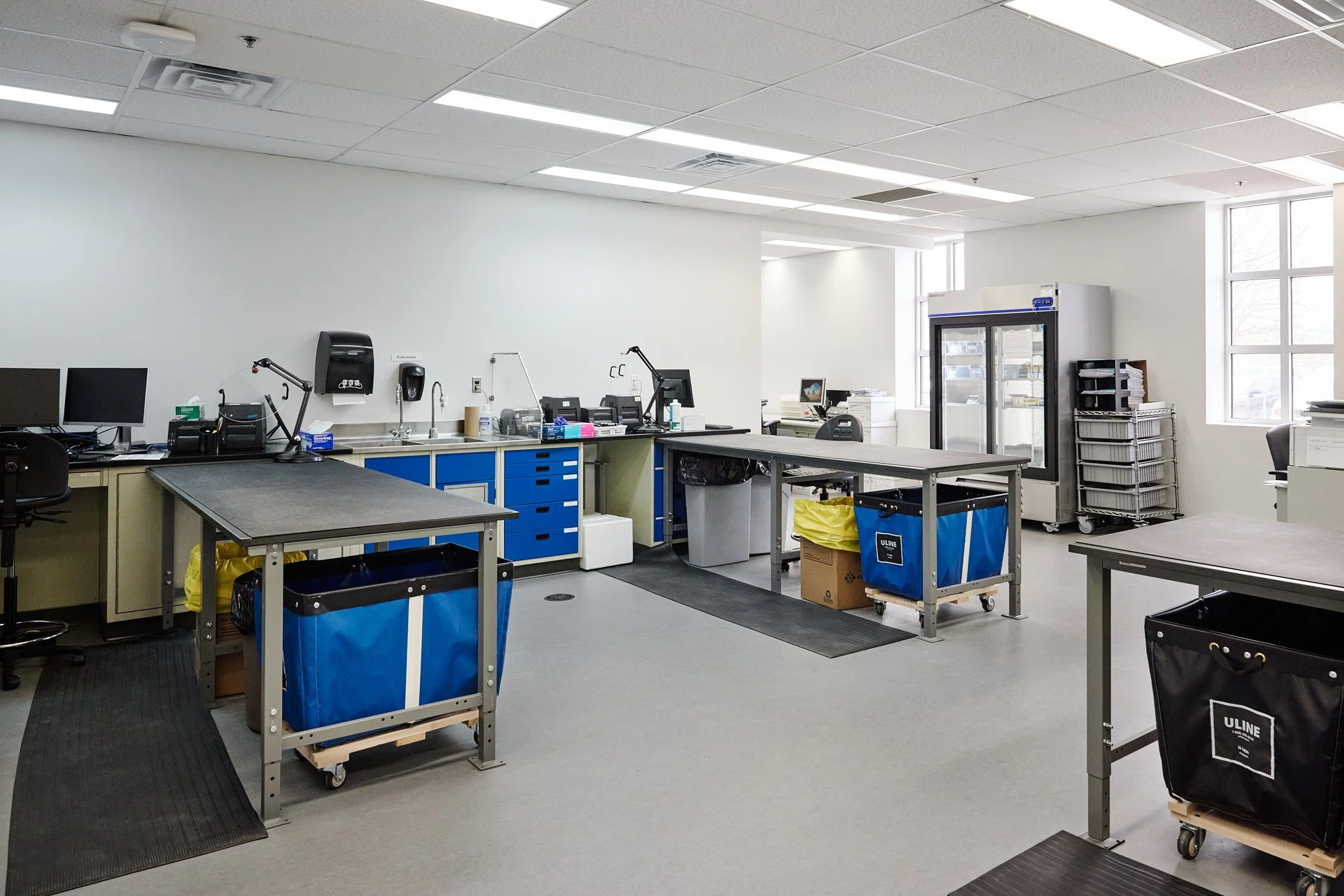
Dynacare’s precision medicine laboratory in Laval’s Biotech City, Québec, Canada, brings together more than 160 STEM professionals in a purpose-built facility to unify diagnostics and genetics operations, enhance collaboration, and deliver more efficient, patient-centered care. Image: Virginie Ngo
In Québec’s rapidly growing life sciences sector, the opening of Dynacare’s new diagnostic and precision medicine laboratory in Laval’s Biotech City represents more than a facility upgrade—it signals a strategic investment in integration, efficiency, and patient-centered care. Backed by a $5+ million investment over three years, the project consolidates the company’s diagnostic and genetics divisions into a single, purpose-built environment designed to enhance collaboration, streamline workflows, and support advanced testing capabilities.
The facility brings together more than 160 STEM professionals under one roof. The move marks a significant operational shift for Dynacare, which had previously operated across multiple sites. By unifying these functions, the organization aimed to eliminate silos and create a more cohesive, responsive diagnostic ecosystem. Ombrage handled construction for the project.
Shubh Khiala, continuous improvement professional/engineer with Dynacare, served as project manager, lab consolidation and construction for this project. He oversaw all construction activities, managed the project timeline and budget, and finalized laboratory workflows to ensure smooth operations. Additionally, he coordinated cross-functional teams throughout the consolidation to deliver the new lab efficiently and on schedule.
“At Dynacare, our design priorities revolved around our patients and employees,” says Khiala. “Our goals were to further improve speed, accuracy, and reliability of results while prioritizing ergonomics for the health and safety of staff working onsite.”
Designing for integration and efficiency
A central driver of the project was the seamless integration of diagnostic and genetic testing workflows—two highly specialized functions that are often separated in traditional laboratory environments. The design team addressed this challenge through a combination of spatial planning, operational alignment, and advanced engineering systems.
“Highly efficient workflows that minimize sample movement and help reduce turnaround times and error risks” were a core priority, Khiala says. This emphasis on Lean principles informed everything from room adjacencies to circulation paths, ensuring that samples move through the lab quickly and with minimal handling.
At the same time, strict zoning strategies were implemented to maintain safety and contamination control. “Strict zoning that co-locates diagnostic and genetic operations clearly separated by clean and contamination-controlled zones” ensures that sensitive processes remain protected while still benefiting from proximity and shared resources, he says.
The result is a hybrid environment that balances separation and connectivity—allowing teams to collaborate more effectively without compromising the integrity of their work.
Shared core facilities and collaboration
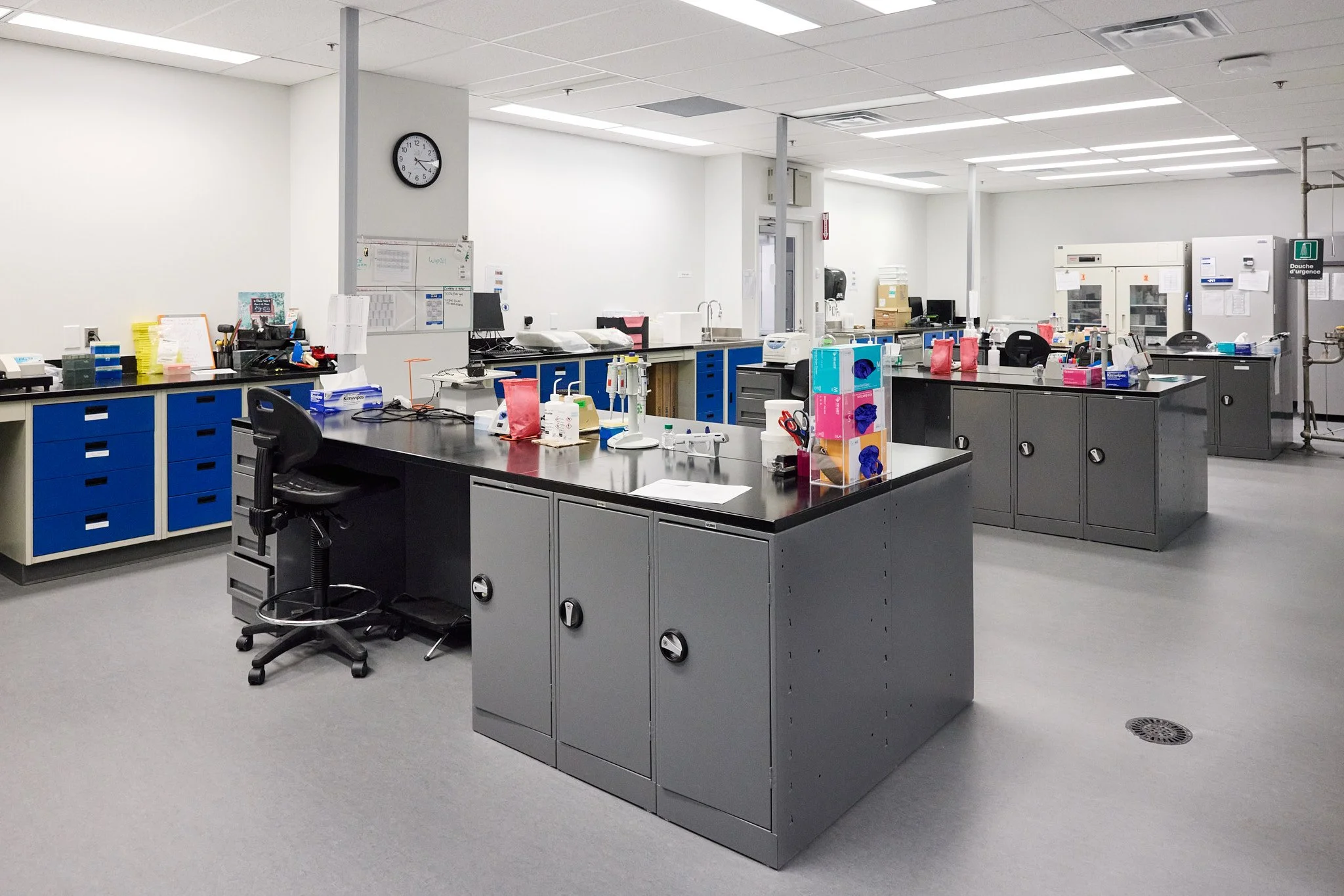
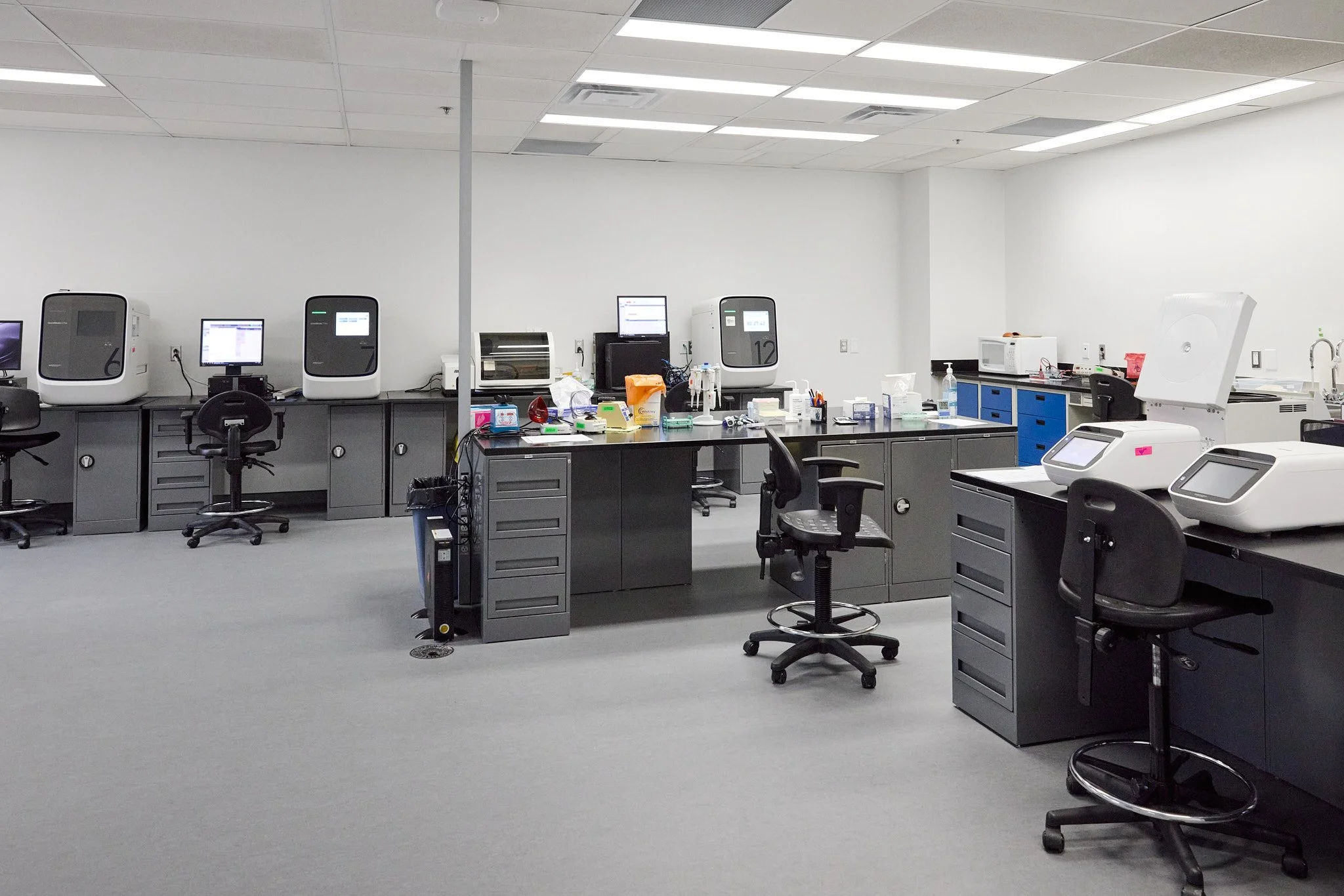
Shared core facilities and integrated digital systems unite Dynacare’s diagnostic and genetics teams, reducing redundancy, breaking down silos, and accelerating turnaround times for complex precision medicine testing. Image: Virginie Ngo
One of the most impactful design decisions was the creation of shared core facilities that serve both diagnostic and genetics teams. This approach not only reduces redundancy in equipment and infrastructure but also fosters a more collaborative culture.
“By intentionally bringing together the diagnostic and genetics teams around shared core facilities, we’ve enhanced collaboration, streamlined decision making, and significantly improved turnaround times for test results,” Khiala explains. “In other lab environments, these functions are often separated, creating operational silos.”
Unified digital systems and automation platforms further support this integration, enabling seamless data exchange and standardized processes across disciplines. These systems are critical for handling complex testing programs such as pharmacogenomics and non-invasive prenatal testing, both of which require high levels of coordination and precision.
Upgrading infrastructure and reimagining space
The project team selected the Laval site in part for its existing laboratory infrastructure, which provided a foundation for the new facility. However, significant upgrades were required to meet the demands of modern diagnostic and genetic testing.
“Where it made sense, we upgraded core structural elements and base utilities including power distribution, HVAC systems, and plumbing to support the new lab,” says Khiala. “At the same time, we reimagined the interior layout to improve workflow and efficiency.”
This reconfiguration included the removal of non-structural partitions to create a more open laboratory environment. The design maximizes natural light, improving visibility and contributing to a more comfortable and engaging workspace. The open layout also enhances operational clarity, allowing staff to better understand and interact with adjacent processes.
Advanced engineering controls and safety
A user-centered design process—driven by staff input, workflow mapping, and iterative mock-ups—shaped the laboratory into an ergonomic, efficient environment that directly supports day-to-day operations and reduces unnecessary movement. Image: Virginie Ngo
Given the sensitive nature of diagnostic and genetic testing, the facility incorporates a range of advanced engineering controls that go beyond traditional laboratory design.
“The facility includes advanced engineering controls, such as dedicated negative pressure zones and a highly sophisticated air filtration system, that are critical for contamination control and staff safety,” Khiala says. These systems help maintain strict environmental conditions, reducing the risk of cross-contamination and ensuring the integrity of test results.
Additional features include a centralized humidity control system integrated into the HVAC infrastructure, which improves both process stability and employee comfort. Noise mitigation strategies—such as acoustic ceiling tiles and strategic equipment placement—further enhance the working environment by reducing fatigue and supporting concentration.
User-centered design in practice
A defining characteristic of the project was its user-centered design approach. Rather than imposing a top-down layout, the design team engaged staff throughout the process to ensure the facility reflects real-world workflows and needs.
“We took a user-centered design approach to ensure the facility directly supports how teams work day-to-day,” Khiala says. Through workshops, interviews, and workflow-mapping sessions, staff identified inefficiencies in existing processes and helped shape the new design.
Mock-ups played a critical role in this process, allowing users to physically test proposed layouts and provide feedback. This iterative approach led to meaningful improvements, particularly in ergonomics.
“Our medical laboratory technologists in hematology, who work at benches every day, identified ergonomic concerns in the initial mock-up,” Khiala says. “Based on their feedback, we adjusted bench heights, increased spacing to reduce strain and congestion, and repositioned key instruments within easier reach.”
These changes not only improved staff comfort but also enhanced efficiency by reducing unnecessary movement.
Phased construction and operational continuity
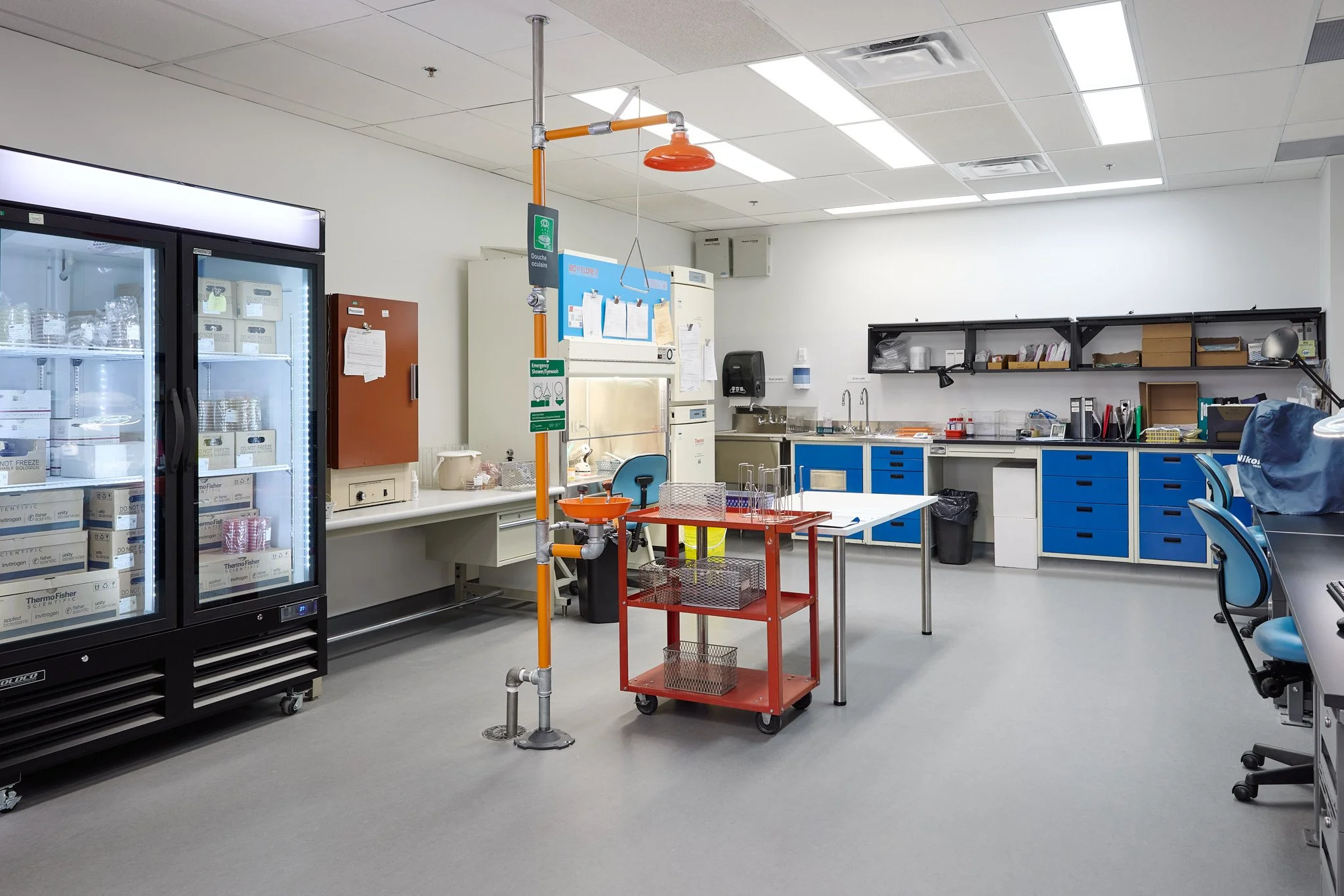
Through a carefully phased consolidation strategy and tightly coordinated construction process, Dynacare’s Laval laboratory maintained uninterrupted diagnostic services while transitioning operations—demonstrating how Lean design, real-time problem-solving, and user-focused planning can deliver both efficiency and continuity. Image: Virginie Ngo
One of the most significant challenges of the project was maintaining uninterrupted diagnostic services during the transition. To address this, the team implemented a carefully phased consolidation strategy.
“Maintaining business continuity was the most significant challenge,” Khiala says. A dedicated workstream focused on transitioning equipment and workflows, while parallel operations were maintained across the old and new sites.
Critical equipment was relocated first, with rigorous validation and performance testing conducted before going live. Lower-use equipment remained at legacy sites until the transition was complete, allowing staff to adapt gradually and minimizing disruption to ongoing services.
On the construction side, tight coordination was essential. “Design deviations were reviewed and resolved within 24 hours to maintain momentum,” Khiala says. Daily onsite meetings with the general contractor ensured that issues were addressed in real time and that the project stayed on schedule.
With its emphasis on integration, efficiency, and user engagement, Dynacare’s Laval laboratory offers a compelling model for future laboratory projects. The combination of Lean workflow design, shared core facilities, and advanced engineering controls demonstrates how thoughtful planning can deliver both operational and human-centered benefits.