
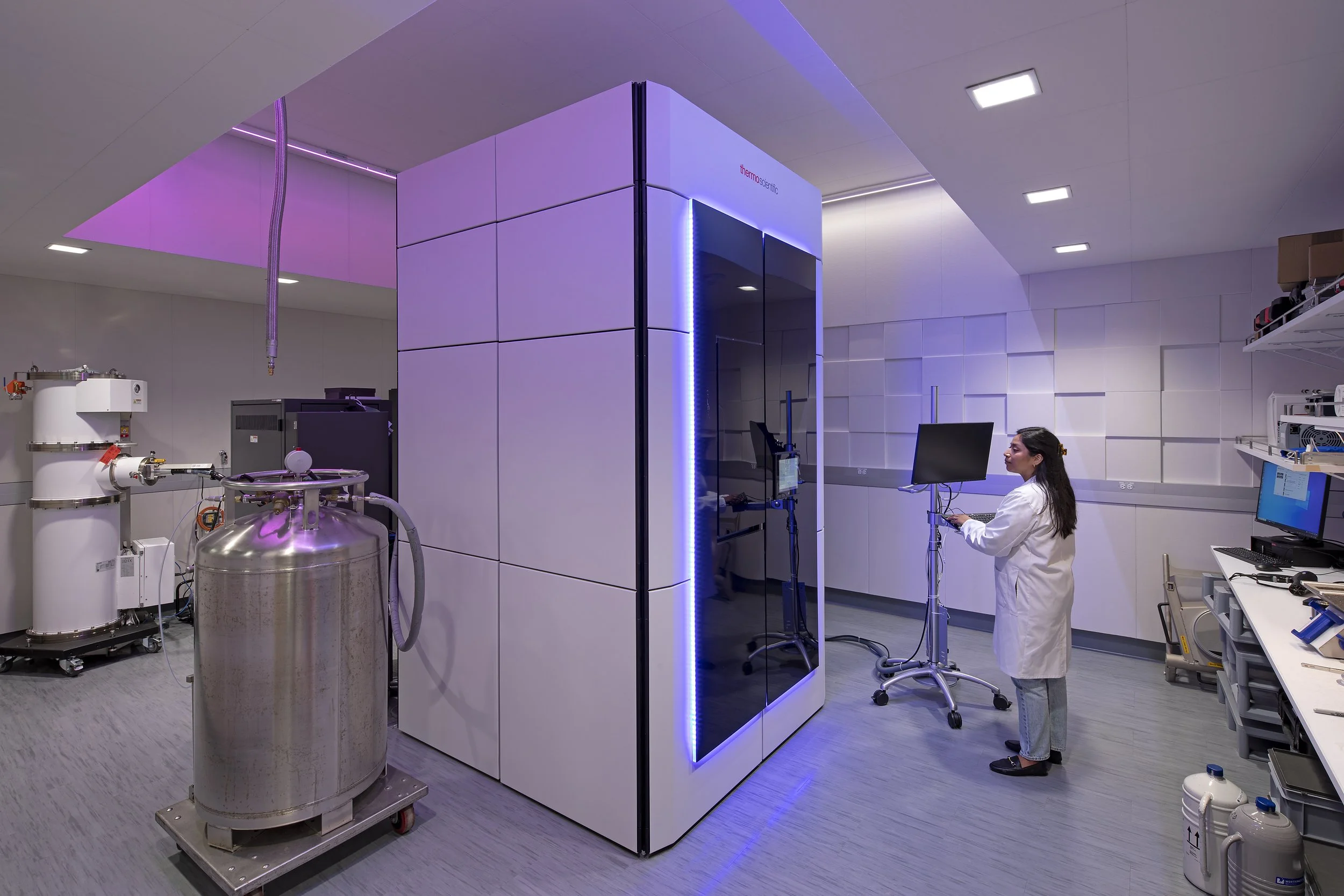
After completing the cryo-EM lab and several others for UC San Diego (including a recent Biosafety Level 3 fit-out), the university selected CO Architects as one of two subject matter expert design firms. CO is included in the professor-recruiting process to define the lab needs and identify if any existing spaces and equipment might be reconfigurable or sharable. Photographer: Tom Bonner
Nobel-caliber researchers are coveted by leading universities. Competition can be fierce, as renowned scientists elevate a university’s prestige, attracting grants, donations, and high-achieving students. Reductions in public funding for research have also pushed universities to seek opportunities for their research faculty to form partnerships with private industry in pursuit of revenue-generating discoveries.
To gain a competitive edge, many universities lure in-demand science professors with offers of purpose-built research labs. Creating these custom labs has different challenges from more conventional laboratory projects. While some of these new hires may be assigned space in new facilities, lab designers are often tasked with leveraging older existing buildings with aging infrastructure to house some of the most advanced futuristic technologies and apparatuses. Plus, acclaimed professors, sometimes afforded celebrity treatment in their respective fields, can be less receptive than other faculty members to suggestions and compromises that often arise when conducting research in aging spaces. Of course, budgeting is always a top concern—both for lab designers and university administrators, who need to factor in the construction costs of personalized laboratories for “rockstar” professors into their recruiting budget.
This custom work is a substantial part of our science and technology practice, along with general labs for university departments and bioscience firms. The lessons we learn from designing both bespoke and general laboratories continuously inform each other. Among the most valuable lessons is that, to fully realize the benefits of customization, and satisfy the needs of the researchers and the university, the entire process—including the way we collaborate and communicate—must also be custom designed, whether according to the stage of the recruitment process, the personality of researchers themselves, the type of research they will conduct and the instrumentation they will use, and the conditions and circumstances of the existing building.
Mitigating risk during recruitment
Not far from the Salk Institute, the University of California, San Diego, is a current client with a proactive researcher-recruiting process. CO Architects is one of two firms that serve as UCSD’s lab-design subject-matter experts. We are sometimes involved at the recruiting stage, helping UCSD administrators estimate the total cost of hiring top researchers and creating custom labs that help advance their work. This proactive approach is better for all parties, particularly for the universities, so they can offset the risks of making commitments before ascertaining whether existing facilities can be adequately reconfigured. By involving architects early, UCSD makes informed decisions, potentially saving costs and ensuring that the labs meet the specific needs of incoming researchers.
Techno-speak communication
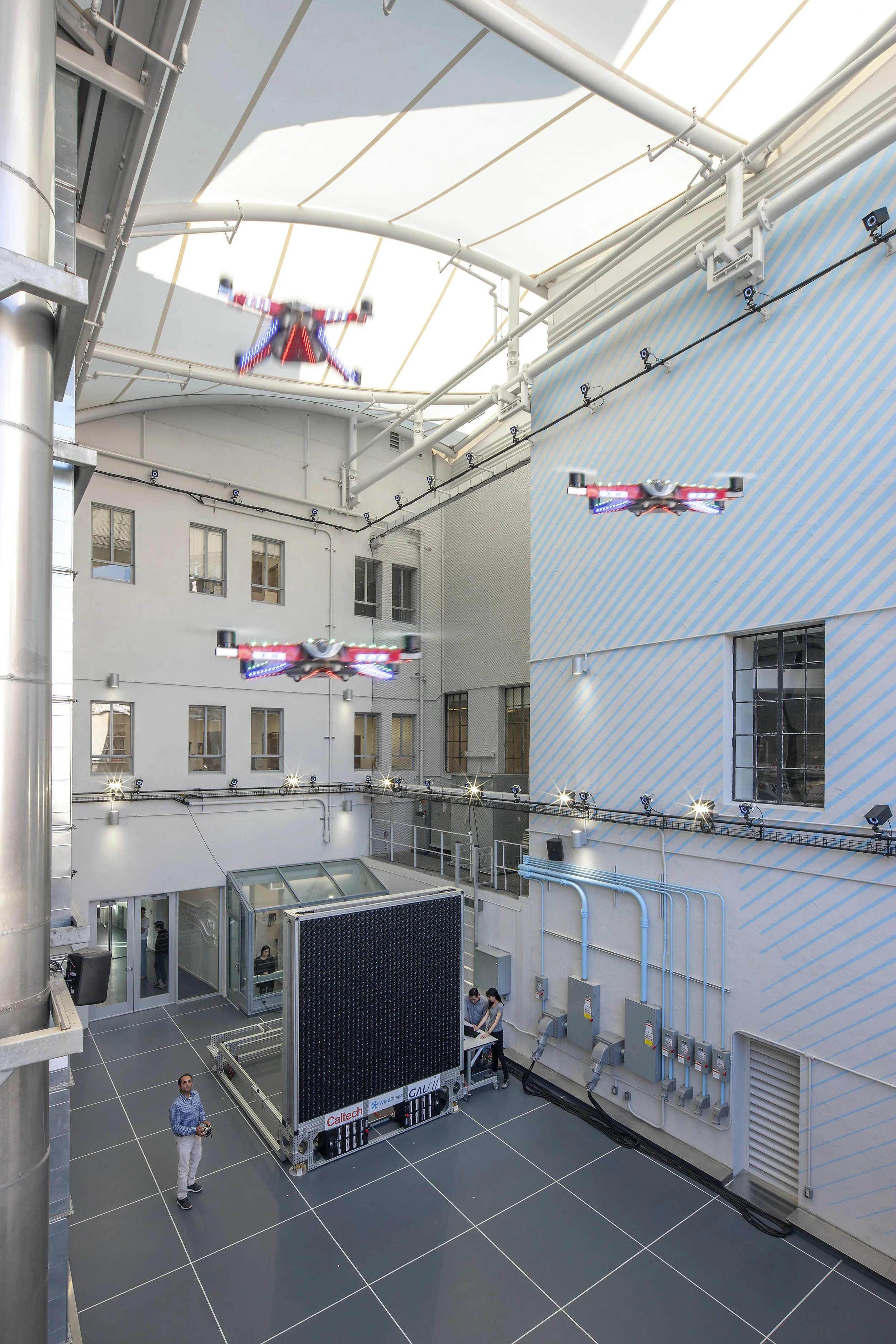
Caltech’s CAST lab had an incredible amount of back-and-forth between the faculty and design team to update a 1940s building for robotics and autonomous technologies. The building’s courtyard was converted into an outdoor wind tunnel, complete with movable fan wall for simulating autonomous drone navigation in inclement weather. Photographer: Tom Bonner
Once the new researcher is recruited, successful lab-design collaborations with professors require translating their highly technical descriptions of specimens, workflows, and equipment into architects’ language of space, light, and function. Each scientific discipline has its own idiosyncratic jargon, and high-performing researchers tend to communicate with each other on an elevated technical level. Keeping that in mind, we like to start each project by asking them to explain their work to us as if they were talking to their grandparents so that we can quickly get to a common level of language and more effectively translate their unique research needs into physical space. This effort goes both ways, and we purposefully eliminate “archi-speak” from our vocabulary, adjusting our language to their level of interest and engagement.
The professors we get to work with are often the best in their fields, and we have also learned that their creative intelligence varies. Some are hyper-focused and accustomed to doing things in their very particular way, while others are highly adaptable, often changing their processes and equipment before construction of their lab is even finished. To help them more effectively conduct their work and maximize the benefits of a customized approach, we strive to apply their specific way of thinking to the spaces we design for them. For some, that means precisely locating and aligning every valve and fitting, while for others, an overhead grid of movable utility services works. We also glean valuable operational insights from interviewing graduate students and post-doctoral researchers who are often the day-to-day users of the labs. By engaging with these frontline researchers, we can better focus on scientifically based needs while considering the professor’s personal preferences. This approach ensures that our lab designs support both innovative thinking and practical implementation.
It’s an interesting balance between how the two professions process information: an architect’s knowledge is said to be a mile wide and an inch deep, whereas a research professor’s is the opposite. For our part, we need to understand their science and its related equipment and processes well enough to know what kinds of spaces and environmental conditions the professors need. We must also translate those needs to other people on the design teams as well as to the engineers, contractors, and cost estimators, in the languages they each understand.
Themes in custom design and collaboration
Reflecting on our work to date, we have found that the decision to commission a custom-designed laboratory is often necessitated by project-specific circumstances that often fall within a few themes:
Adapt “standard” labs to a “non-standard” building
Adapt 21st-century labs to Cold War-era buildings
Design around a novel engineering apparatus or technology
Design for tightly controlled environments
The following examples of custom-designed laboratories were selected from our portfolio to illustrate the broad range of collaborations and customizations that are sometimes necessary when adapting existing, aging buildings and infrastructure to the increasing demands of next-generation research.
Finding a suitable building
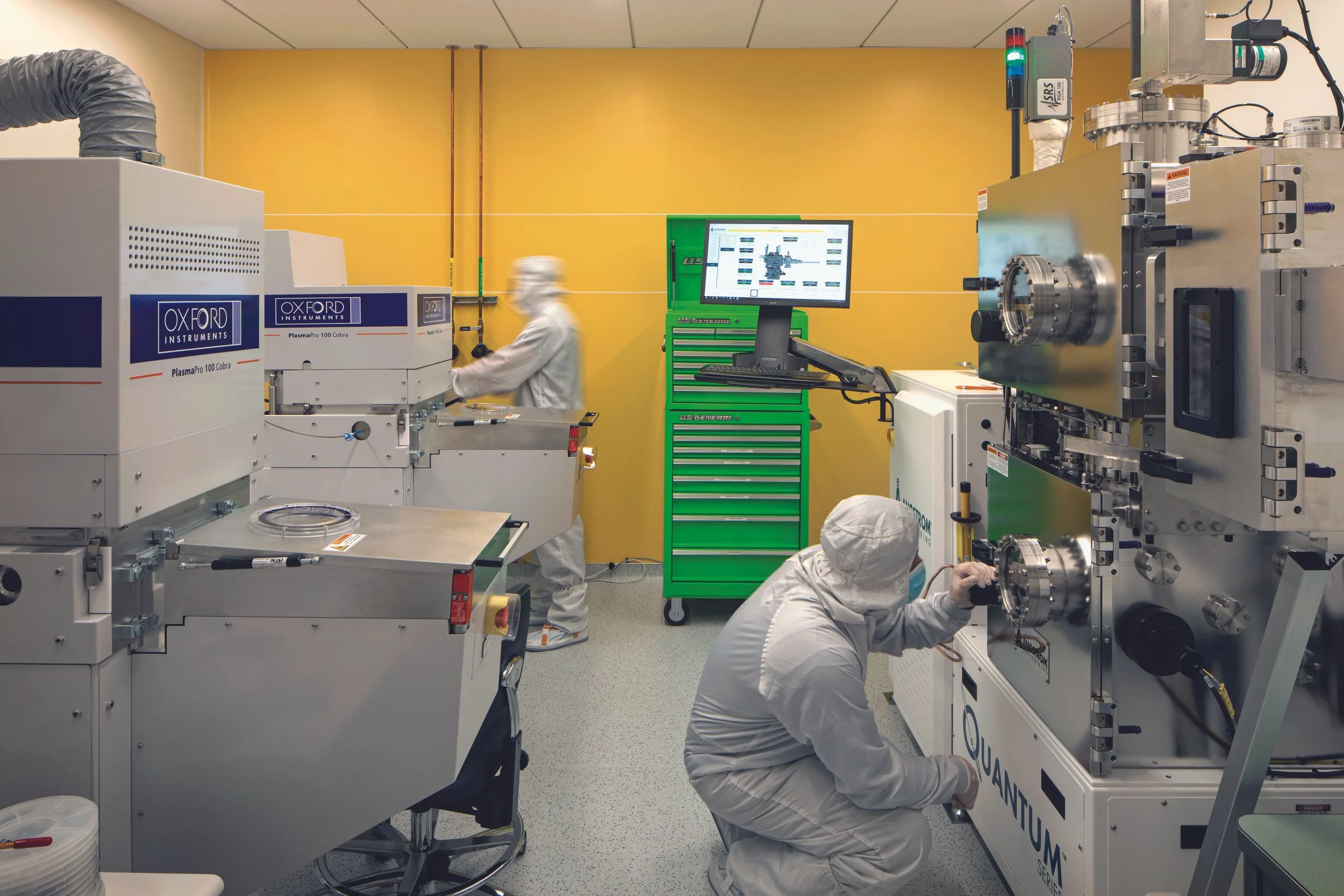
For this ultra-cold lab, we started with the cleanroom design and then configured the surrounding space to accommodate equipment, such as cryofridges and liquid helium tanks. These labs also challenge the engineers to understand and optimize the older building’s capabilities. Photographer: Tom Bonner
In most cases, by the time we come onto a project, a specific space for the recruit has already been assigned. Sometimes, however, we are tasked with evaluating the suitability of various spaces on campus to accommodate highly sensitive research instrumentation. The Cryo-electron-Magnetic Imaging (cryo-EM) suite at the University of California, San Diego, provides the entire campus with the tools and expertise necessary to visualize the three-dimensional structure of biological molecules at near-atomic resolution, which is particularly useful in developing patient-specific cancer and virological therapies. CO began by studying the feasibility of locating a Titan Krios 3G, a high-performance electron microscope costing roughly $8 million, at three sites in two different Cold War-era buildings. In this project, the instrument itself was the recruit, and the focus of our collaboration was to clearly communicate the technical differences between the sites to university decision-makers in a way that was clear and understandable.
After surveying the infrastructure in detail, including analyses of acoustics, electromagnetic interference, vibration, overhead clearance, and availability of existing utilities, we presented our results on a scorecard, assigning numerical values for each category according to uniform criteria. As a result, the building that offered a ground-floor location, which is inherently resistant to vibration, was selected. Adapting that building to meet the manufacturer’s specifications for strict temperature tolerances and low humidity for this new suite (which includes the main cryo-EM laboratory, a control room, and a sample prep room with a robot that freezes samples in ice) also required carving out space for a new dedicated air handling unit, chilled water, and liquid nitrogen systems.
Enabling bleeding-edge technology
Caltech’s Center for Autonomous Systems & Technologies (CAST) lab is possibly our most esoteric and collaborative lab project to date. It updated part of a 1940s building originally used to design submarines into two specialized enclosures to test and train autonomous vehicles in simulated environmental conditions. The first is a test bed to simulate scenarios on land, sea, and air, such as a Mount Everest rescue using a helicopter drone in inclement weather. In the building’s courtyard, we created an outdoor wind tunnel to enable what Caltech refers to as “in-vivo” testing in controlled, but realistic, conditions. Collaborating with Caltech professors and researchers, we designed the space to fit the equipment and the equipment to fit the space. The back-and-forth process involved numerous rounds of our exchanging sketches with the researchers who were still designing their test apparatus while we were designing the test area, resulting in concurrent changes to the design of both. The eventual solution was a portable fan wall with 1,200 individually controllable fans to simulate a variety of weather conditions.
The second area we designed is a test bed to simulate scenarios in zero gravity for autonomous satellites, which required an ultra-flat floor on which satellites on air-skids would float above—think of a reversed air hockey table—with their movements tracked using motion-capture cameras. In this case, our role was to implement the researchers’ very specific and innovative vision for the test floor. We used a self-leveling liquid resin built up in layers, which was significantly easier to build and less expensive than mechanically leveled, metal plate floors used in the aerospace industry.
The quantum space race
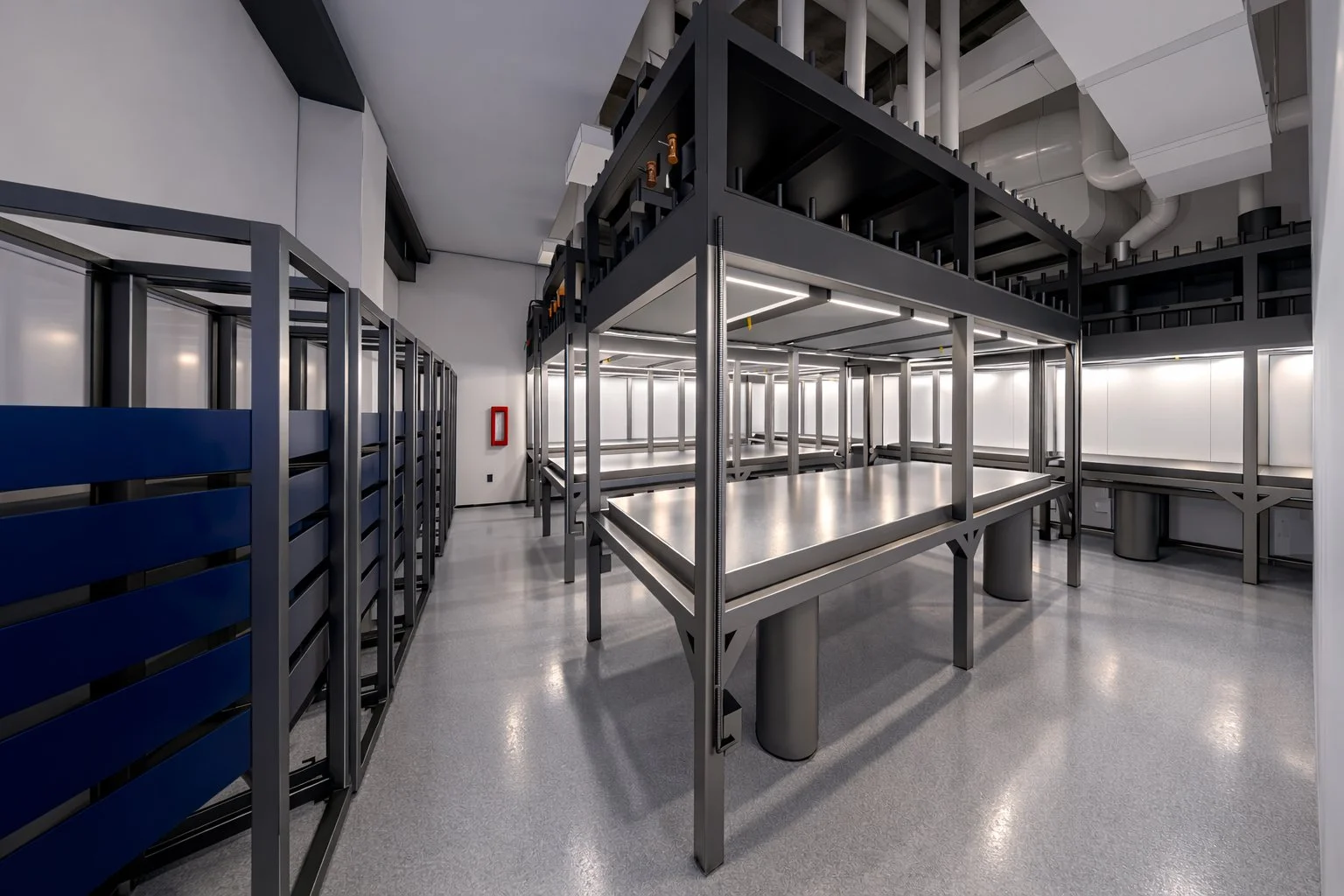
At the apparatus scale, custom enclosures enable precise temperature control for laser-directed computation. Rendering: CO Architects
Many research universities are committing physical and recruitment resources to quantum computing, often with a corporate partner, in the race to develop commercially viable systems at scale. Even within a discipline as specific as quantum research, the design solutions for three professors whose labs we are currently working on at Caltech vary widely, depending upon the activity and whether the demanding environmental conditions required are at the scale of the room or the apparatus. At one end of the spectrum are researchers who use established instruments. They work with us to ensure that they are laid out efficiently and trust us to ensure that their needs are accounted for. Their innovations take place inside the instrument or are uniquely laid out on a conventional optical table. At the other end are researchers who are developing new quantum materials and devices, as well as manufacturing these chips and devices in their labs using custom fabrication tools. For them, the innovations also include the very process of making, which means that they will often change the tools, layouts, and utilities during design and construction in response to an increasingly rapid cycle of discovery, mirroring their industry partners.
Room Scale: This multi-phased, multi-year project converted the basement of a 1960s-era lab into a chip fabrication cleanroom facility, reorganizing the plan to convert the main corridor into an ISO 7 airlock serving a series of bay-and-chase suites designed to ISO 5 and ISO 6, respectively. This project required close collaboration with researchers who periodically changed specific fabrication tools during design and construction. Weekly meetings with equipment manufacturers, lab managers, and the construction team were arranged to 3D-model each instrument, and to locate and construct physical mock-ups in the field of each type of utility connection serving them.
Apparatus Scale—Ultra Cold: If there is a “traditional” quantum laboratory, it is designed around cryofridges, which are the iconic devices that contain a chandelier-like assembly of gold-plated circuits suspended within what is essentially a giant thermos cooled with liquid helium to near absolute zero, creating the quiet environment needed for fragile quantum bits (qubits) to function and maintain their quantum states. This lab surrounds a pair of cryofridges, custom fabricated in Iceland, with their associated laser tables and student workstations. Collaboration required surveying the proposed space for potential interference both to and from adjacent research labs, and intensive 3D modeling to ensure that this “Swiss watch” would fit within the constrained available footprint.
Apparatus Scale—Room Temperature: Recent discoveries and novel materials are enabling the design of quantum computers that can operate at room temperatures, but still within tightly controlled conditions. In this approach, multiple tiers of customized lasers and electronic components are assembled onto optics tables contained within light-tight enclosures (essentially a room-within-a-room). These are custom-designed in collaboration with the researchers and our engineers to provide clean HEPA-filtered air at 72ºF that is maintained within +/- 0.1ºF. Achieving this extreme level of environmental precision in a lab containing as many as eight enclosures requires that each be served by a dedicated air handling unit, with a separate thermostatic control for each enclosure.
We have learned that accommodating a broad range of activities, particularly in Cold War-era buildings, takes patience, forethought, adaptability, and creative MEP engineers who dive into the details of each research instrument and aren’t afraid to climb up on a ladder or get dirty to investigate existing conditions.
Designing custom labs requires a more deft balancing act between client (the learning institution) and user (the scientist) than most other architectural projects do. It’s a gratifying typology, as we’re working with people who don’t limit how and what they think, giving us license to stretch our design talents.
As a final challenge, one Caltech administrator said part of its mission is to assemble Nobel-caliber scientists in each discipline to integrate fundamental understandings of nature with applied solutions to our most pressing problems. Our mission is to design facilities that accelerate the potentially life-changing work of brilliant people.