
Helping Lab Tenants Start and Scale with Confidence
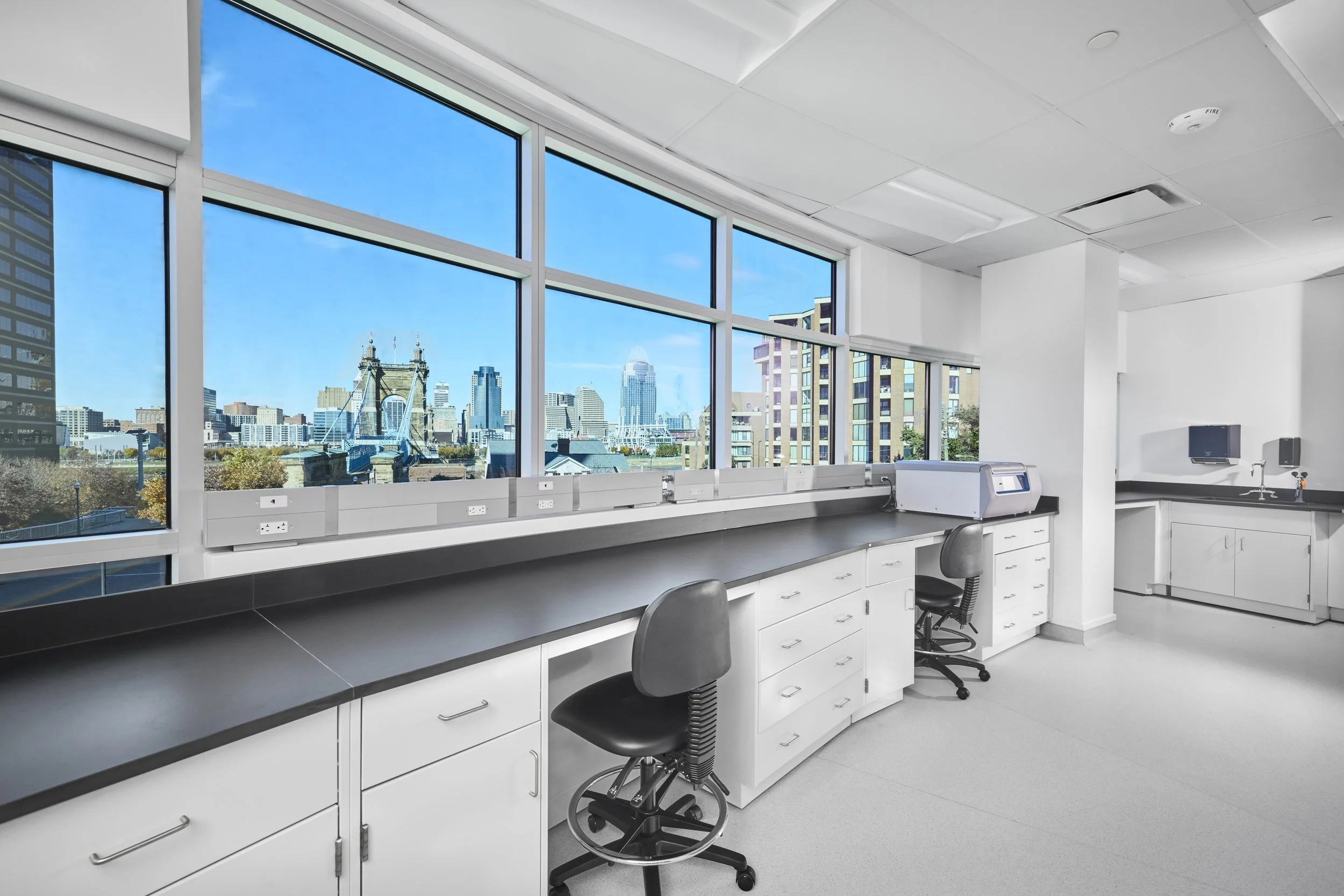
The OneNKY Center in Covington, KY, features a flexible, shared lab environment designed to lower barriers for early-stage life science companies while maintaining the standards of a professional biotech facility. Image: Courtesy of LifeSciKY
LifeSciKY, located within the OneNKY Center in Covington, KY, represents a deliberate shift in how incubator laboratories are designed, built, and operated to support the next generation of life science companies.
Developed by Corporex and designed by Phoenix Architecture, with Hemmer Construction as the prime contractor and Lab Builders, Inc. supporting the lab buildout, the facility brings together flexible infrastructure, shared resources, and an intentional user experience aimed at both startups and established international firms entering the US market.
Lowering barriers with a shared lab model
At the heart of the project is LifeSciKY’s 15,000-sf lab and innovation space, located on the second floor of the 47,000-sf Class A office building. From the outset, the design team focused on reducing the traditional barriers to entry that often prevent early-stage companies from accessing high-quality laboratory environments. As Christin Godale, PhD, executive director of LifeSciKY, explains, “From the beginning, the priority was to create a modern shared laboratory environment that lowered barriers for emerging companies while maintaining the compliance, safety, and operational standards expected in professional biotech facilities.”
This balance—between accessibility and rigor—is central to incubator lab design. Early-stage companies often lack the capital to build fully customized labs, yet still require environments that meet strict regulatory and operational standards. To address this, LifeSciKY incorporates a hybrid model that combines shared infrastructure with private, customizable spaces.
A dual model: shared infrastructure and private suites
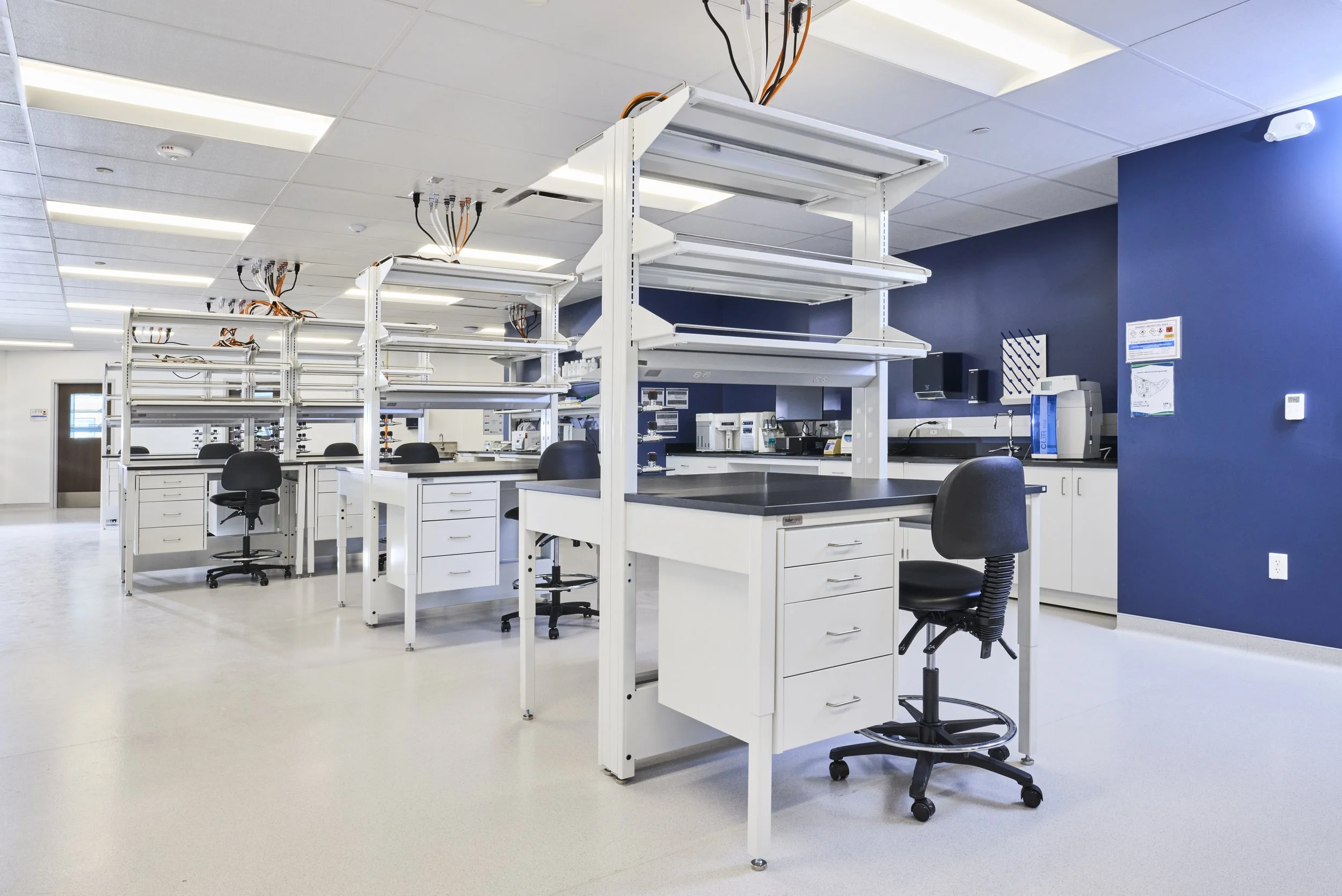
LifeSciKY’s dual model of shared infrastructure and customizable private lab suites allows tenants to tailor research spaces to their specific needs while avoiding the cost and time of building from scratch. Image: Courtesy of LifeSciKY
“LifeSciKY was intentionally designed around a dual model: shared infrastructure for efficiency and private suites for companies that require dedicated environments,” says Godale. This approach allows tenants to choose how they engage with the space, whether through bench memberships or fully enclosed lab suites. For companies like Mitsui Chemicals America, Inc., which recently joined the incubator, this flexibility is particularly valuable. “We offer private lab suites in multiple sizes that can be configured around a resident’s workflow, staffing model, and technical requirements,” she notes.
This ability to tailor research environments is a defining feature of the facility. Rather than forcing tenants into rigid layouts, the lab is equipped with reconfigurable benching systems and adaptable workstations that can evolve alongside a company’s scientific and operational needs. At the same time, shared access to core infrastructure—such as cold storage, tissue culture facilities, fume hood work zones, and utilities—ensures that even highly specialized tenants can operate efficiently without incurring unnecessary capital expenses.
For Mitsui Chemicals America and its InnoCell brand, which focuses on advanced cell culture products, this means access to a turnkey research environment that can be customized without the delays and costs of building from scratch. As Godale explains, “This approach gives companies privacy and control where needed, while avoiding unnecessary capital expenditures and lengthy facility buildouts.”
Designing to attract talent and tenants
Architecturally, the OneNKY Center also distinguishes itself through its use of space and natural light—elements not always prioritized in traditional lab environments. The building’s curved footprint presented both a challenge and an opportunity for the design team. “Because of the building’s curved footprint, the space required a more creative approach than a conventional rectangular lab plan,” says Godale. “Rather than fight the architecture, we used it to create an open, bright, and highly adaptable environment.”
This emphasis on openness and daylighting contributes to a more engaging and attractive workplace, which is increasingly important for attracting and retaining talent in the competitive life sciences sector. The riverfront location and views of downtown Cincinnati further enhance the appeal. Godale says, “We also wanted the environment to feel energizing and forward-looking. The riverfront location, natural light, and views of downtown Cincinnati create a setting that feels different from a traditional enclosed lab space and reflects the momentum of our region’s innovation economy.”
Built for scalability and speed
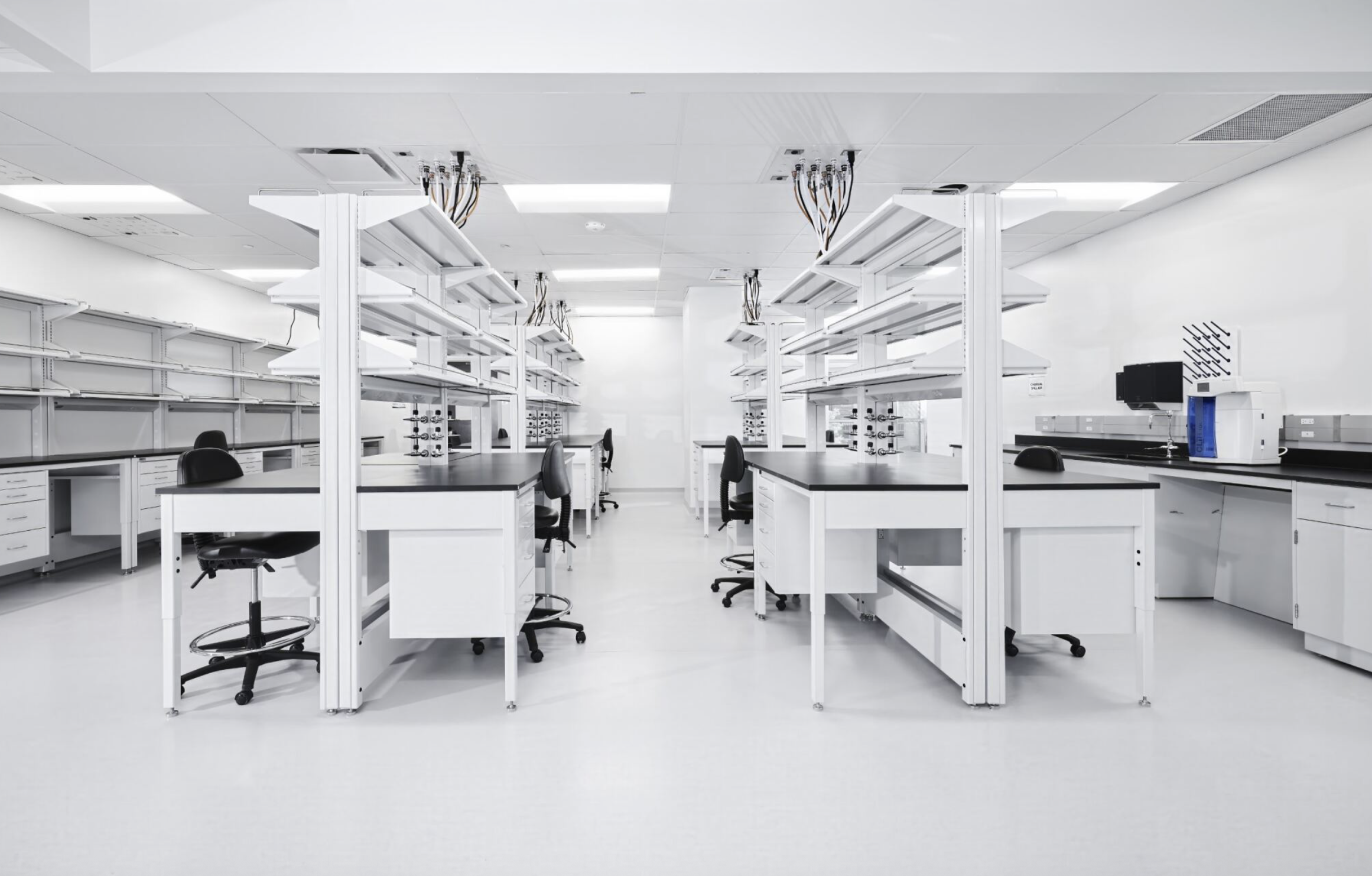
Designed for scalability, the OneNKY Center allows startups to grow from shared bench space to larger lab suites while accessing advanced equipment without upfront investment or delays. Image: Courtesy of LifeSciKY
Beyond aesthetics, the facility’s design is deeply rooted in scalability. Startups often experience rapid growth, and the inability to expand within an existing space can disrupt operations and strain resources.
To address this, the LifeSciKY lab was designed to accommodate companies at every stage of development. “Scalability was a core design principle,” Godale says. “Companies can begin with bench access or a smaller private suite and expand into larger footprints as headcount, programs, or funding milestones progress.”
This phased growth model is supported by the facility’s shared equipment strategy, which allows tenants to access advanced instrumentation without upfront investment.
“Our equipment-sharing model also allows residents to access sophisticated infrastructure immediately rather than purchasing it prematurely,” says Godale. “Startups need speed, not six months of facility buildout.”
Shared amenities that support innovation
Equally important are the shared amenities that foster collaboration and innovation. In addition to core laboratory resources, the facility includes conference rooms, collaboration areas, and support spaces designed to encourage interaction among tenants, mentors, and investors. “Beyond the lab, collaboration areas, conference rooms, and resident support spaces were intentionally designed to create opportunities for connection across companies, mentors, investors, and partners,” Godale notes.
This integration of technical infrastructure with community-building spaces reflects a broader trend in incubator design, where success is measured not only by the functionality of the lab but also by the ecosystem it supports. By combining flexible lab environments, shared resources, and a vibrant, well-designed setting, the OneNKY Center positions itself as a hub for innovation in the Northern Kentucky region.
Ultimately, the facility demonstrates how thoughtful design and construction can enable life science companies to focus on what matters most: advancing research and bringing new technologies to market. As Godale says, “Our goal is to let companies focus capital on science, talent, and commercialization while we provide the operational platform to grow around them.”