
From Warehouse to Scale-Up Facility
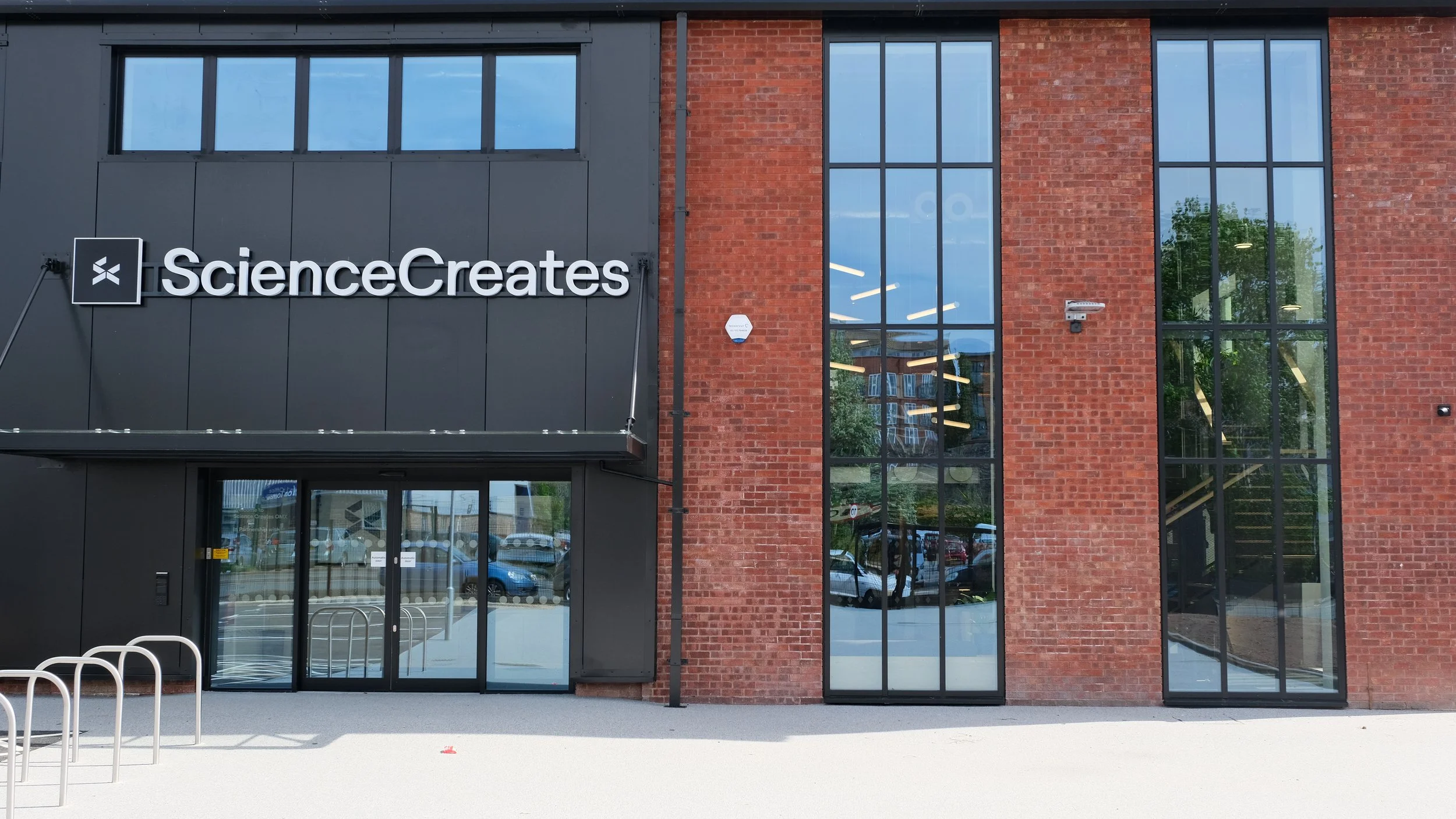
OMX transforms a former warehouse in Bristol’s St Philip’s district into a 30,000-square-foot laboratory and scale-up facility, expanding the Science Creates–University of Bristol partnership and strengthening the city’s role as a leading UK deep tech hub. Image: Courtesy of OA Architecture
In Bristol’s St Philip’s industrial district, a former warehouse has been converted into a new laboratory and scale-up facility designed to support the next stage of the UK’s deep tech sector. OMX (Old Market Extension), a 30,000 sf lab development, opened in March 2026 and represents a significant addition to the region’s scientific infrastructure.
The project is the third collaboration between Science Creates and the University of Bristol, following earlier incubators at St Philips (2017) and Old Market (2021). With OMX, the partnership now spans more than 75,000 sf of specialist lab space, strengthening Bristol’s position as a leading deep tech hub outside the UK’s “Golden Triangle.”
A user-led development approach
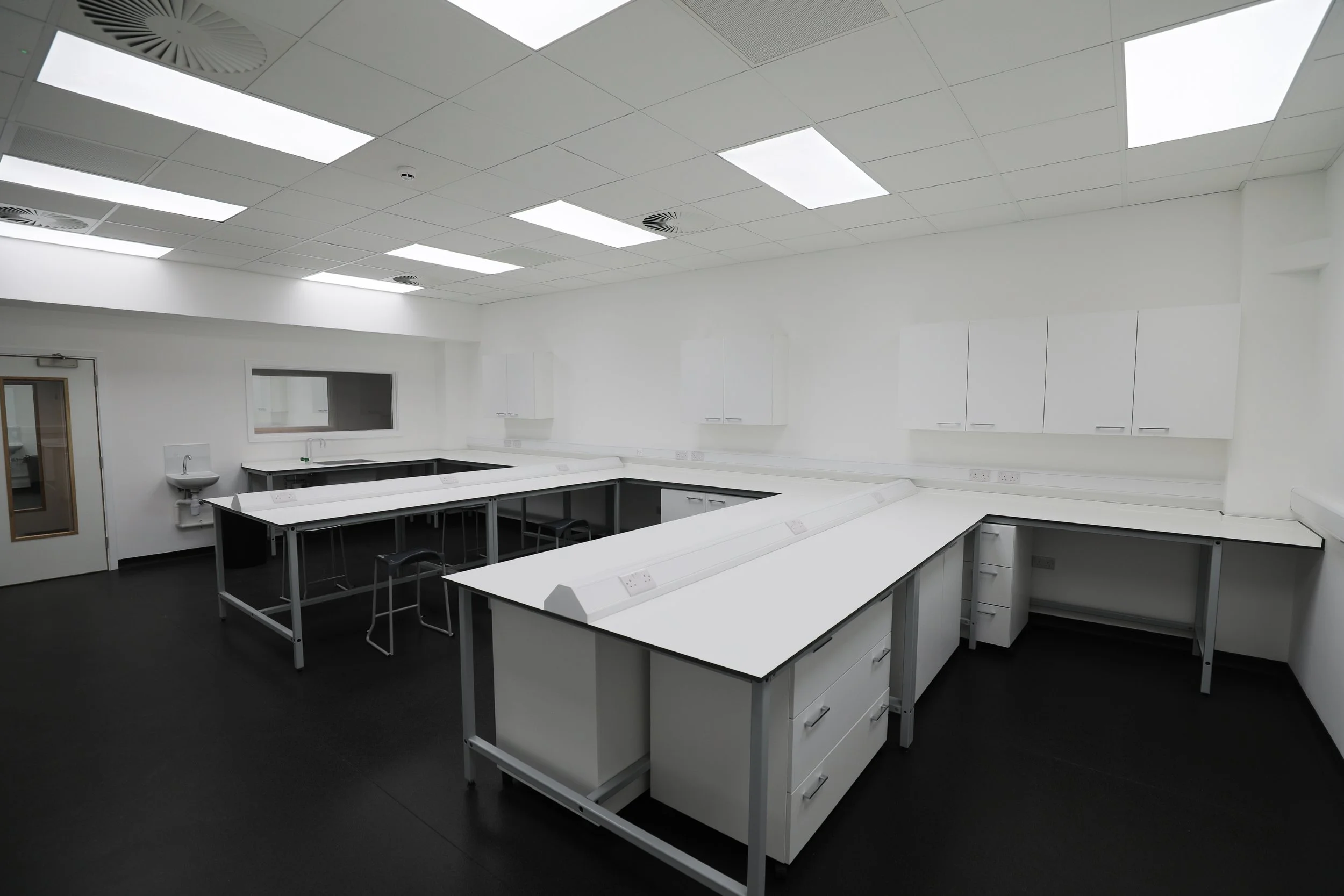
Science Creates’ OMX facility in Bristol reflects a user-driven approach to lab development, born from founder Harry Destecroix’s experience of scarce research space and shaped by operational insights into how scientists actually work, from circulation to adaptable lab layouts. Image: Courtesy of Science Creates
Science Creates’ origins are rooted in practical need rather than speculative development. Patrick Fallon, head of development at Science Creates, traces the project back to founder Harry Destecroix’s experience as a researcher-turned-entrepreneur.
"Science Creates was born out of a problem of the lack of lab space in Bristol,” says Fallon, detailing how Destecroix was conducting his PhD studies at the University of Bristol and required lab space. Fallon was part of a small team that was tasked with sourcing this lab space, but there wasn’t any available. “Science Creates began, really, around this feasibility work—looking for lab space,” Fallon says. “And Harry thought, ‘Why not build a kind of incubator space for more than just me? Build it for all the great research that's coming out of the University of Bristol, University of Bath, University of West of England at the time.’ So that's how we started.”
That early focus on user needs has continued to shape OMX. The facility was developed by teams with direct experience in laboratory environments, with design decisions informed by operational requirements ranging from circulation and waste handling to adaptable lab configurations.
Retrofitting constraints and vertical planning
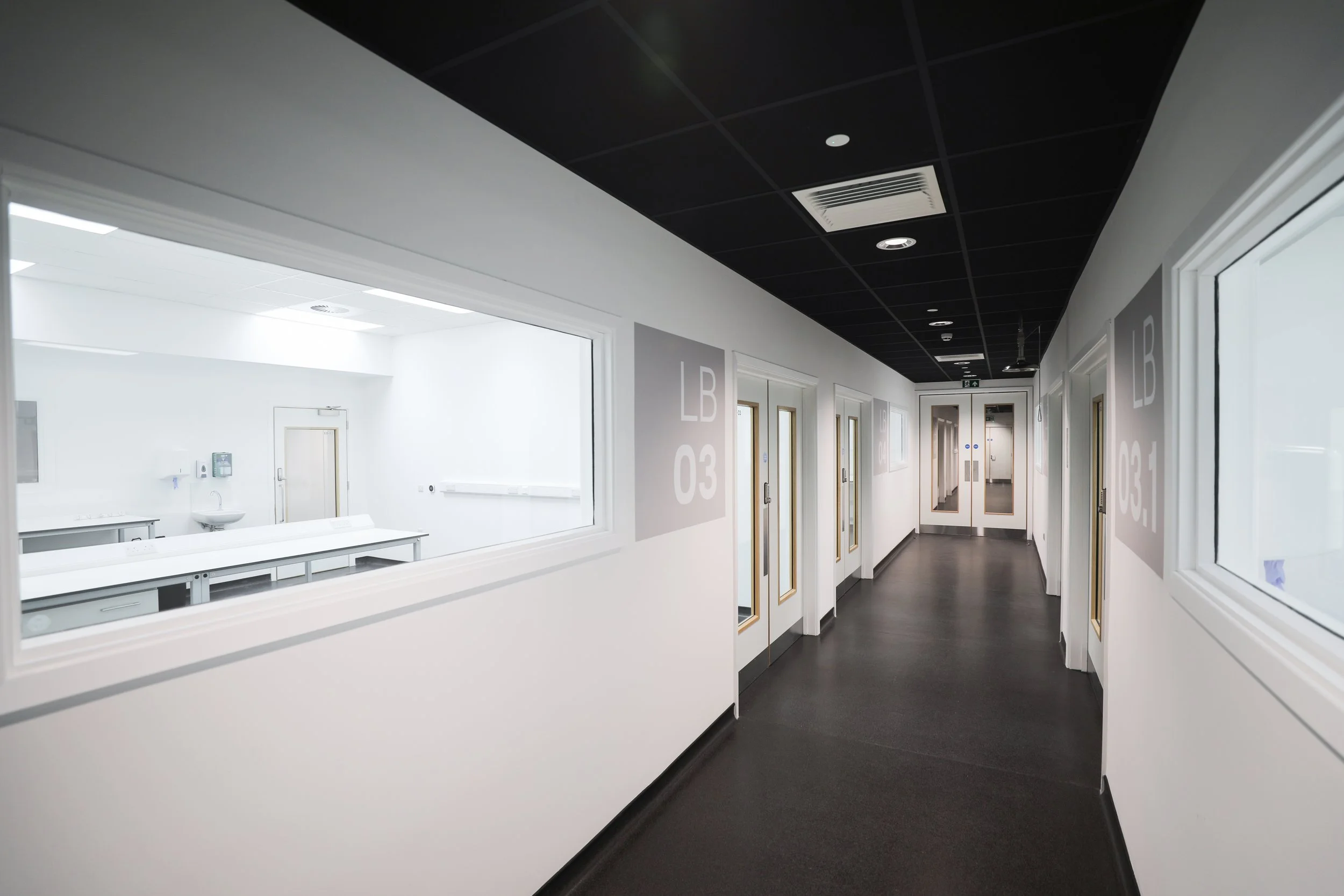
Converting a former industrial warehouse into OMX required inventive engineering solutions, including a vertically integrated “lab within a warehouse” strategy that maximized limited height while organizing services along primary routes, ultimately overcoming structural, cost, and fire-safety constraints to deliver a highly functional multi-level laboratory. Image: Courtesy of Science Creates
Transforming an existing industrial building into a multi-level laboratory presented significant engineering challenges. One of the key constraints was introducing two levels of lab space within a structure with six-meter eaves.
This led to a vertically integrated “lab within a warehouse” concept, with services and mechanical systems organized along primary routes to optimize usable space and functionality.
Since mechanical systems require a lot of space, Fallon says, "we managed to come up with a design that had a mechanical plant along these two primary routes across the scheme which allowed us to provide the adequate space needed.”
Pushing the engineering to its limits, Fallon adds, made the design actually work out better. “When you're really constrained and you're really challenged, you can kind of come out of some really good design outcomes.”
The project also had to accommodate inflationary pressures during procurement, updated post-Grenfell fire safety requirements for composite materials, and the challenges associated with adapting an older structure. Original plans for full façade replacement were revised in favor of a more targeted upgrade to the building’s North elevation to improve street-facing presence along a heavily used cycle route.
Flexible infrastructure for scale-up science
OMX was designed to fill a critical gap in Bristol’s lab market by offering larger, modular lab suites—ranging from 1,000 to 5,000 square feet—organized on a six-meter grid to support growing deep tech companies transitioning from early research to commercial-scale operations. Image: Courtesy of Science Creates
OMX was developed to address a gap in Bristol’s laboratory market, particularly for companies transitioning from early-stage research into commercial scale operations. While earlier Science Creates facilities focused on smaller 500 to 700 sf labs, OMX provides larger suites ranging from 1,000 to 5,000 sf.
The building is organized around a modular six-meter grid, allowing tenants to expand incrementally or reconfigure spaces for larger equipment, including bioreactors and advanced instrumentation.
Key program areas include:
Engineering Biology: CL2-ready laboratories with negative pressure systems designed to prevent cross-contamination into shared corridors
Quantum and Photonics: Windowless “dry labs” designed to minimize interference in laser and microelectronics work
Advanced Materials: Reinforced flooring and upgraded power infrastructure to support heavy automation and robotics
Workflow-driven laboratory design
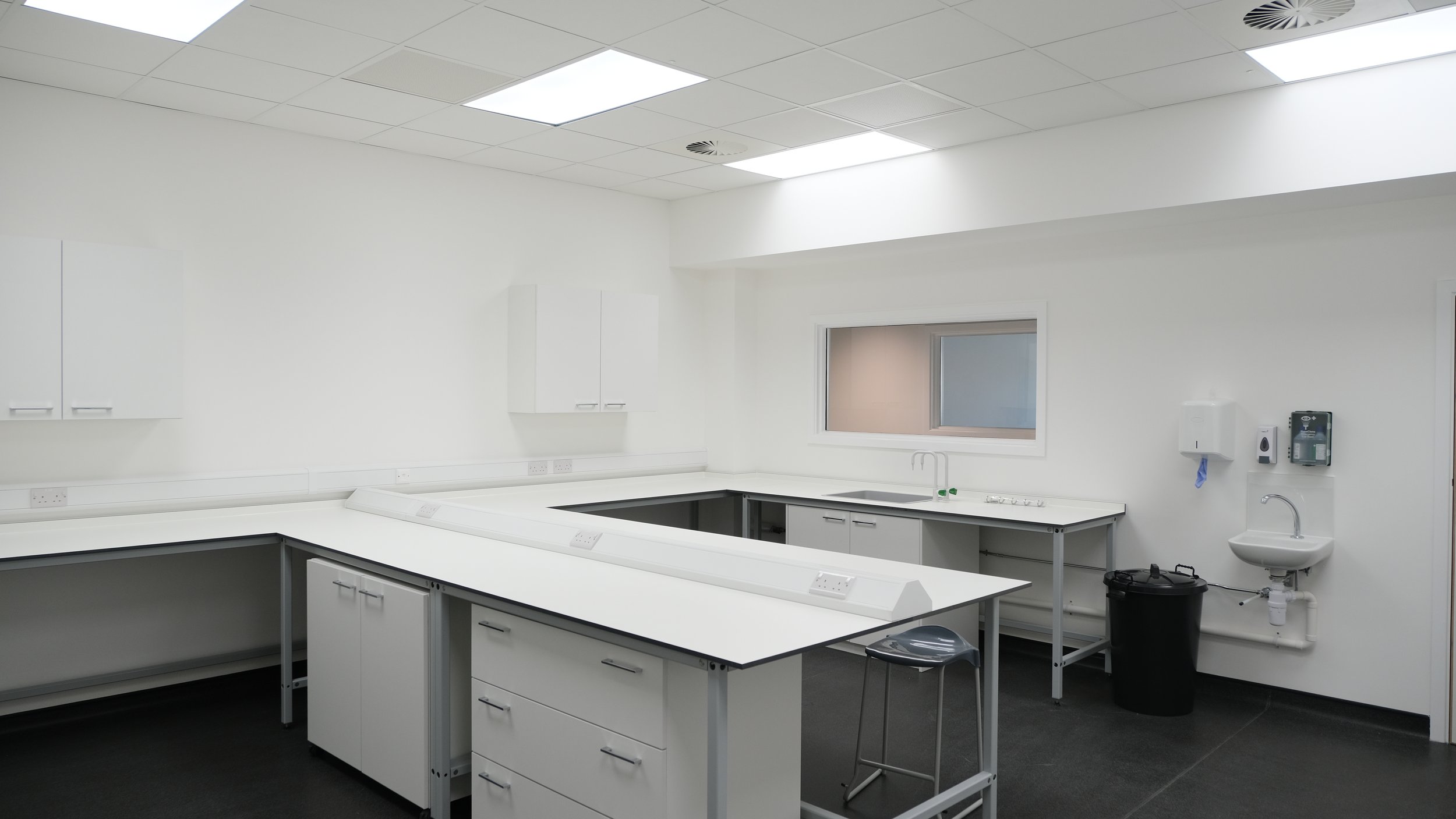
OMX combines flexible “plug-and-play” laboratories with customizable fit-out options, enabling scientists to move quickly into fully equipped spaces while also adapting environments over time, all supported by carefully designed workflows that streamline everything from goods-in and waste handling to day-to-day experimental work. Image: Courtesy of OA Architecture
Operational efficiency was a central driver in the building’s layout, particularly in separating clean and contaminated flows. A dedicated service corridor system was used to isolate hazardous materials such as nitrogen, solvents, and waste from office and communal areas.
Scientists in the facility are moving between highly flexible “plug-and-play” lab spaces and more customized fit-outs depending on how quickly they need to get started and how specific their research requirements are. The idea, says Fallon, is to support both immediate occupancy with fully equipped lab areas and deeper customization through adaptable café-style or shared spaces that can be tailored over time.
At the same time, a strong emphasis was placed on designing the full user journey—from efficient goods-in and back-of-house workflows to optimized daily lab routines—so scientists can move seamlessly between tasks like handling materials, managing waste, and working at the bench.
“It's all about making those workflows just easy, simple, flexible science first,” Fallon says.
The user experience extends beyond laboratory spaces. Science Creates also emphasizes arrival and shared environments, positioning the facilities with a hospitality-inspired approach intended to support collaboration and investor engagement. This includes informal amenity spaces such as the 372.2K tea room, referencing the Kelvin equivalent of an ideal tea temperature.
Strengthening the regional ecosystem
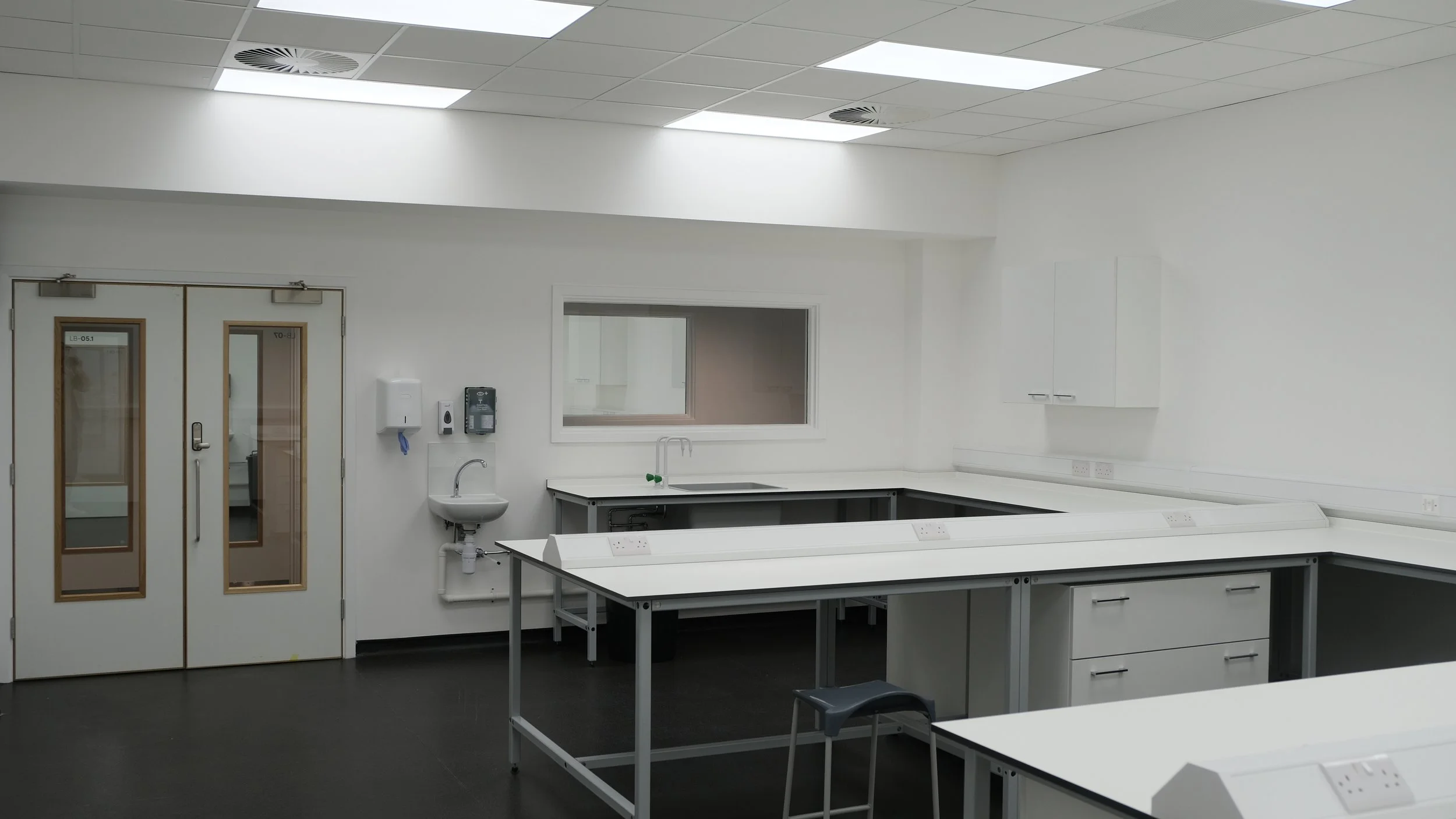
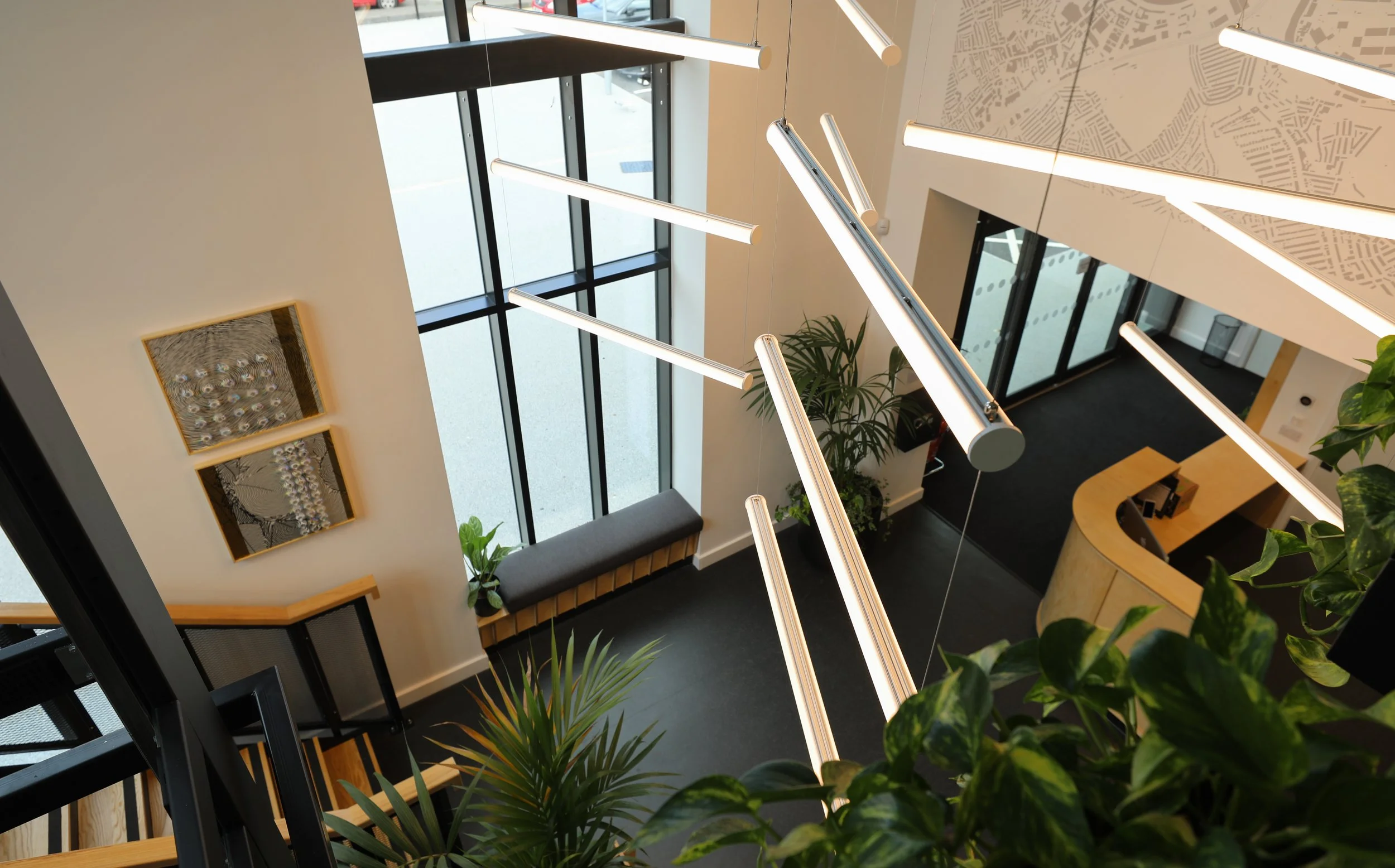
OMX strengthens Bristol’s innovation ecosystem by helping retain scaling deep tech companies and talent in the region, while combining retrofit industrial architecture with purpose-built, inspirational lab environments designed to support the next generation of science and technology ventures. Image: Courtesy of OA Architecture
Beyond the building itself, OMX is intended to support regional retention of talent and intellectual property by reducing the need for companies to relocate as they scale. Historically, Bristol spinouts have often moved elsewhere during growth phases due to limited local infrastructure.
The broader ecosystem now includes more than 90 university spinouts in the region, with Bristol ranked among the UK’s strongest centers for quantum-related venture creation.
It is important to position scientific infrastructure in a way that is both functional and engaging, says Fallon. “Just because it's science doesn't mean it can't be an exciting, motivating, funky place to work,” he says. “Scientists also love to work in inspirational places where they feel inspired, and the buildings kind of reflect the ambition of the science that they're trying to they're trying to undertake.”
The project “wouldn’t have been possible” without investors, the design/build team, and partnerships with organizations like Research England and the University of Bristol, Fallon notes. “Build a great team, understand the science, make something inspirational,” he says.
As OMX opens, it adds a significant new layer to Bristol’s innovation ecosystem—combining retrofit industrial architecture with purpose-built laboratory planning to support the next generation of scale-up science in healthcare, climate, and advanced technology.