
Hides to Hearts: Historic Mill Transformed into Advanced Biotech Engineering Facility
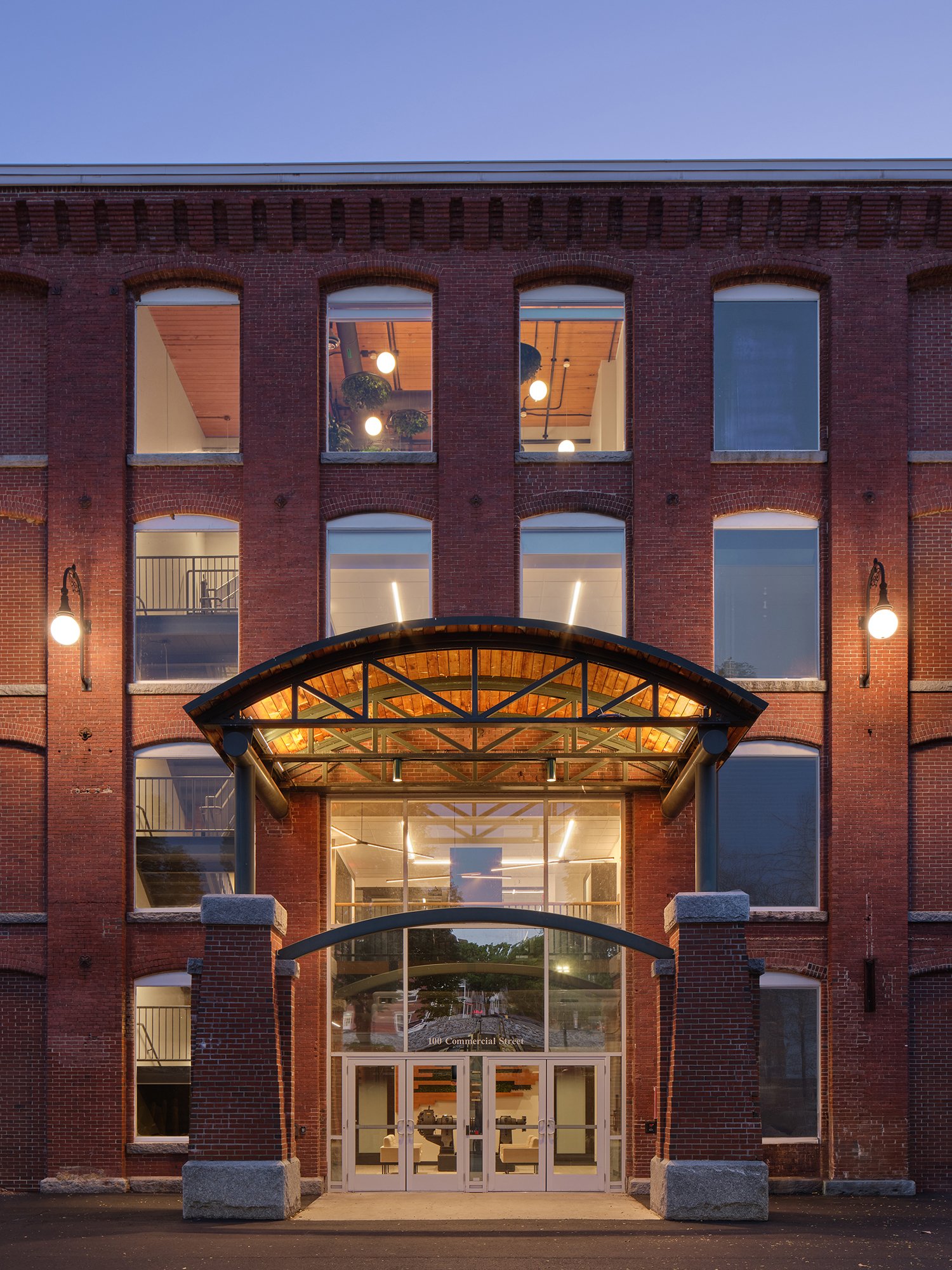
Manchester’s historic Seal Tanning Building is being reimagined as a state-of-the-art biotechnology facility where United Therapeutics is advancing technologies that could one day 3D print human organs. Image: Halkin/Mason Photography, LLC
The Amoskeag Millyard in Manchester, NH, once stood as the largest textile mill complex in the world, stretching for more than a mile along the Merrimack River. Deeply tied to the industrial revolution of the 19th century, these massive masonry and timber buildings fueled economic growth while also carrying a heavy environmental footprint.
Today, one of those historic structures—the Seal Tanning Building—is undergoing a very different kind of transformation. Instead of processing animal hides, it now houses a cutting-edge biotechnology facility focused on manufacturing human organs. United Therapeutics (UT), a Public Benefit Corporation dedicated to expanding the availability of transplantable organs, partnered with EwingCole to deliver a 98,000-sf expansion for its Organ Manufacturing Group. The team is working on technologies that could eventually 3D print lungs and other organs for patients with end-stage disease.
The project team also included Milestone Construction, LLC (general contractor/contract manager) and Fuss & O’Neill (civil engineer). Lead design firm EwingCole also provided structural engineering, MEP, lighting design, and life safety/fire protection services.
Preservation meets cutting-edge innovation
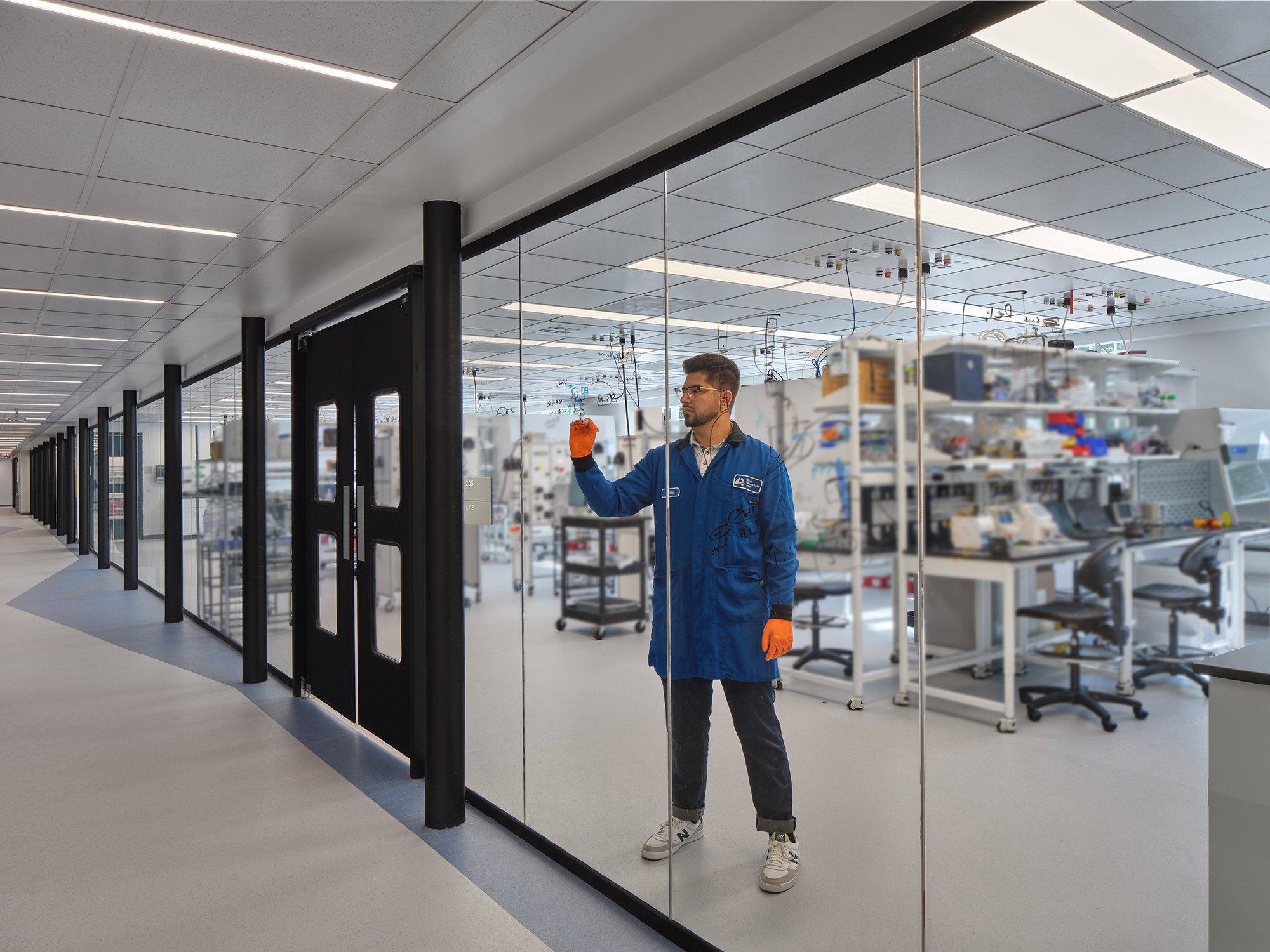
Open lab showing mobile casework and benches and multi-purpose ceiling utility panels for flexibility. Image: Halkin/Mason Photography, LLC
United Therapeutics needed a highly controlled environment capable of supporting extremely sensitive lab processes, including ink production, cellularization, tissue culture, analytics, cell isolation, and 3D organ printing. When it came time to expand beyond its original 10,000-sf footprint, the company chose a sustainability-first approach: adaptive reuse of vacant floors within its historic brick-and-beam building.
That decision aligned closely with UT’s broader mission and avoided the significant embodied carbon impact of new construction. But turning a late-19th-century mill—originally built for heavy industrial use and later converted for general office space—into a highly specialized Biosafety Level 2 (BSL-2) research facility came with a long list of architectural and engineering hurdles.
One of the biggest challenges in adaptive reuse like this is fitting modern mechanical, electrical, and plumbing (MEP) systems into a building that was never designed for them. Labs require large volumes of fresh air and constant single-pass ventilation, which means oversized ductwork and rooftop air handling equipment.
Michael Ramus, AIA, principal at EwingCole, says structural reinforcement was unavoidable from top to bottom. "We had to place a series of brand new air handlers on the roof,” he says, “which in some ways are straightforward, except we had to do a lot of reinforcing of the structure for the roof to accommodate those loads as we added on the air handlers. So that was a big, big issue. And then that air had to be distributed down through the building—they did not have a central riser going through the building, so we had to add one for the air."
That added vertical air shaft quickly triggered strict code requirements. In a multi-story timber building, any vertical penetration has to be carefully fire-protected to limit spread. As Ramus explains, "The problem is those shafts typically are rated depending on the building construction classification, so we needed a shaft wall to our rating on those. The problem is, in the code, a two-hour shaft has to be self-sustaining—meaning that in the event of a fire, that shaft could still be sustained for two hours. So, to do that, we had to bring new steel in and build a concrete deck platform that then supported the riser going all the way up through the building."
Confronting low ceilings and environmental control
Modern labs are typically designed with generous floor-to-floor heights—often 13 to 16 feet—to accommodate complex infrastructure. The Seal Tanning Building offered just 12 feet on the lower levels, which made routing everything a tight exercise in coordination.
"Ceiling height was a constant issue with it, because we couldn't obviously change the floor to floor heights, so we had to do some unique things with duct routing and piping and air vent," says Dan Hazell, PE, principal at EwingCole.
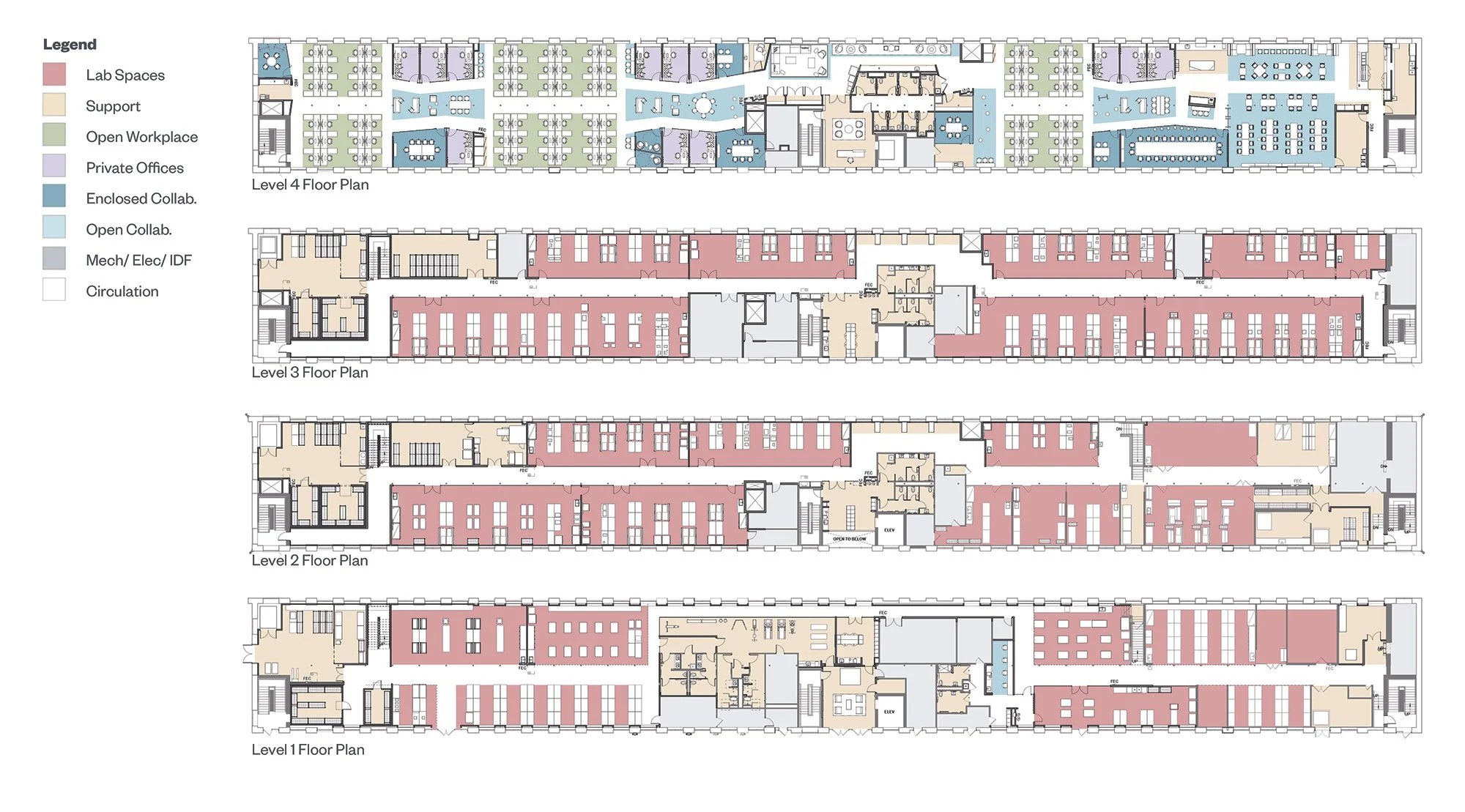
Image: EwingCole
The team relied on tight coordination within joist spaces, consolidated piping strategies, and careful zoning of HVAC systems to make it all work without compromising lab function.
On top of space constraints, the organ printing suites also demanded very strict environmental control. Temperature and humidity had to stay within narrow ranges—even during increasingly variable New England summers.
Hazell describes the challenge: "I would say, engineering- or MEP-wise, the printers had a huge heat output off of them, so we had to figure out how to provide cooling again. [It had] a tight space with a limited rooftop and just limited mechanical space overall, and it also [needed to] maintain temperature and humidity that would be normal for a lab. It had even stricter requirements for 3D printing area, so that was a challenge."
Vibration and energy efficiency challenges
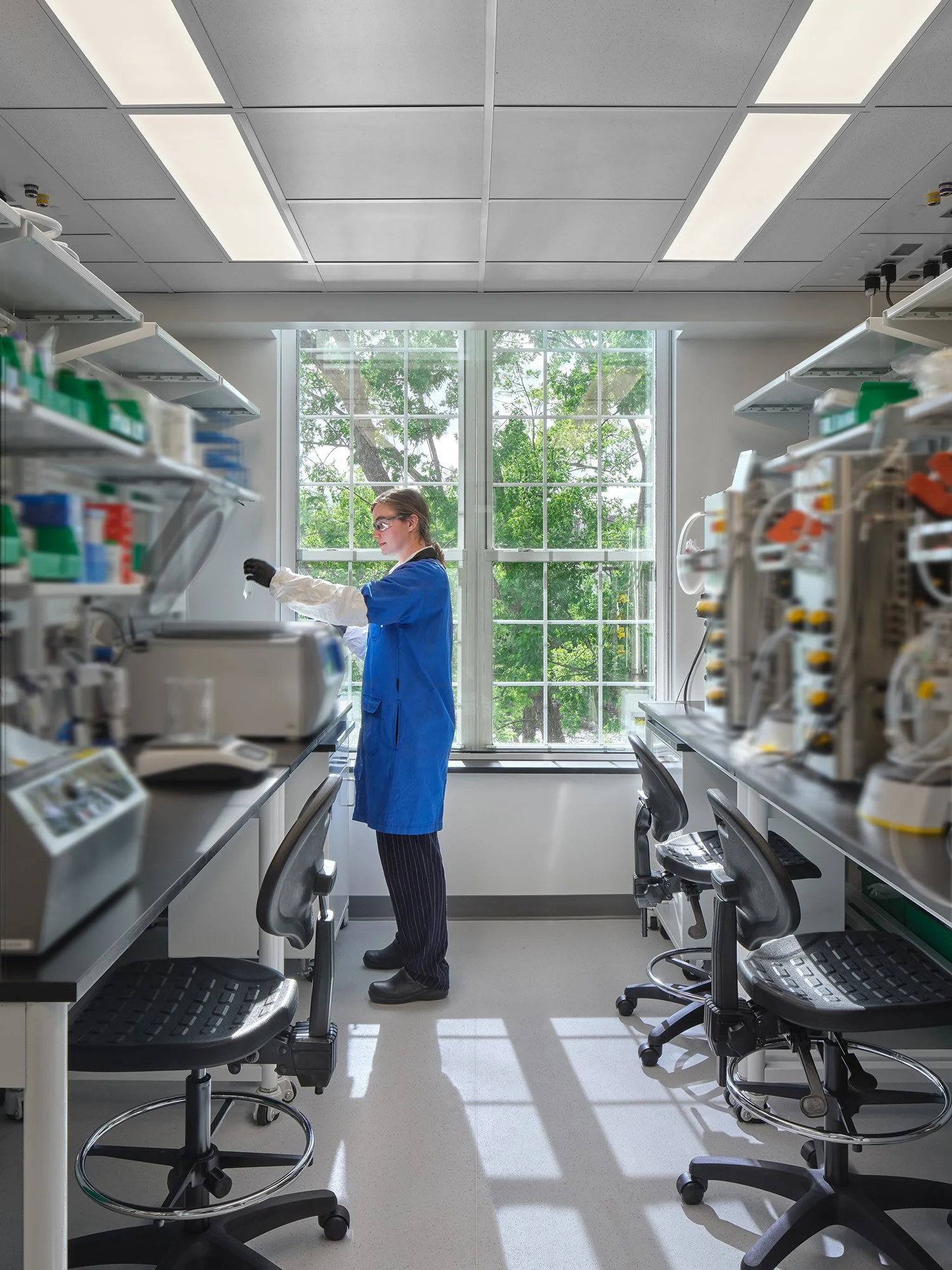
Finished lab space showing build-out of finished wall from masonry with additional storm window for cleanliness and seal. Original window offers daylight and views to adjacent review and trees. Image: Halkin/Mason Photography, LLC
At the cellular scale, vibration becomes one of the most critical design constraints. Even small floor movements can disrupt a print, making certain parts of the building unusable for sensitive equipment. Originally, printing suites were planned for upper floors. But structural analysis showed that controlling vibration to the required tolerance in those timber floor plates would have been extremely difficult and expensive. As a result, the team shifted all printing operations to the ground floor slab-on-grade. That solved the vibration issue—but introduced another challenge tied to the building’s history as a tannery, where subgrade contamination risks meant disturbing the ground was off the table.
To work around this, ejector pumps were used to move waste systems upward and tie into existing utility paths, avoiding any subgrade disruption.
United Therapeutics has long been known for its sustainability focus, including previous collaborations with EwingCole on a net-zero headquarters in Maryland. Hazell describes UT as one of the most sustainable clients he’s worked with, and notes that adaptive reuse delivered immediate environmental benefits.
Preserving the building’s heavy timber and brick structure locked in a significant amount of embodied carbon that would otherwise have been lost through demolition. That said, operating a 100 percent outside air system across multiple floors comes with an energy penalty. To help offset that, the team implemented an advanced air-to-air energy recovery system using an enthalpic plate heat exchanger.
Phased execution and a flexible layout
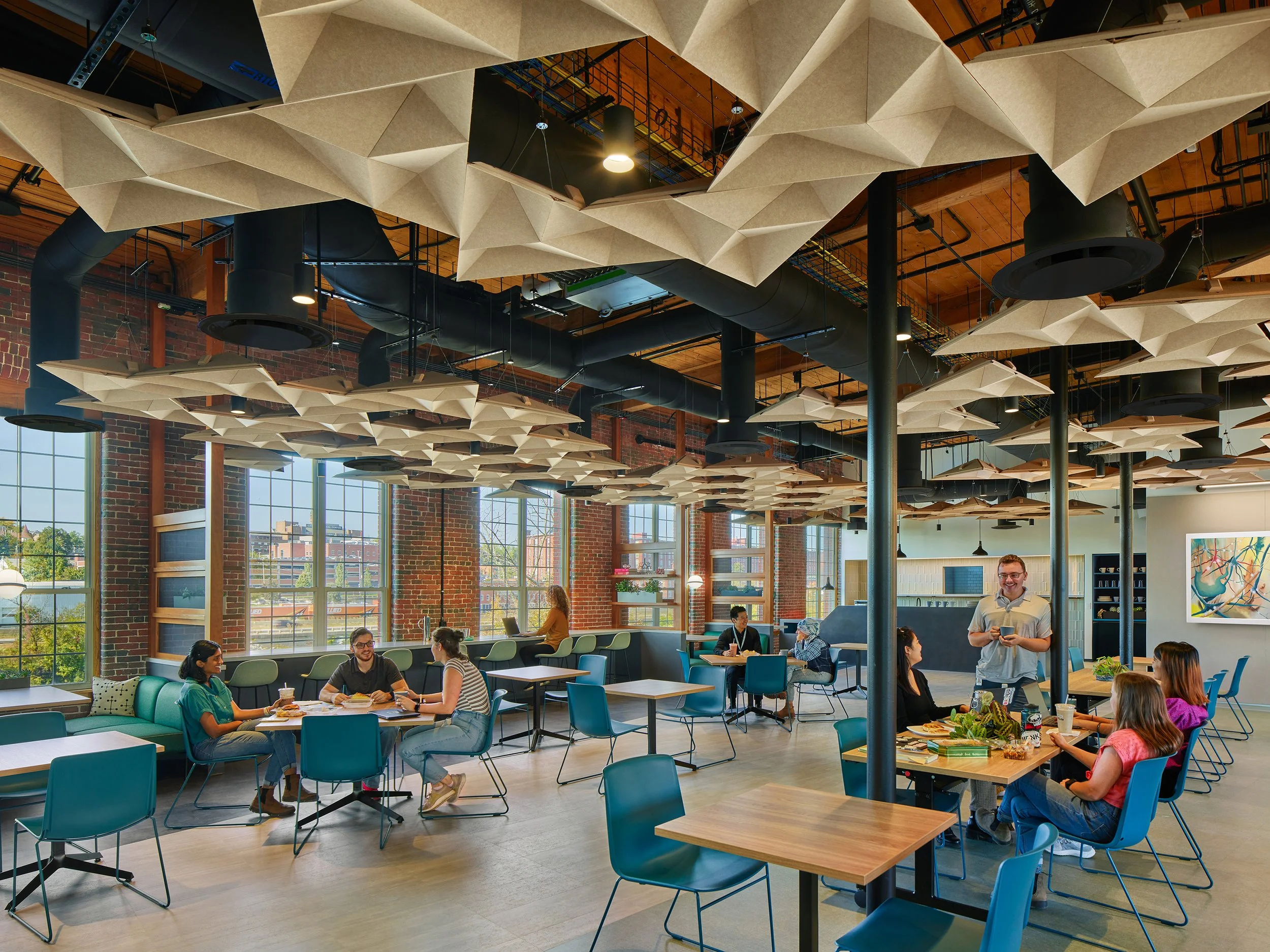
The Café serves breakfast and lunch daily, and doubles as a Town Hall space with moveable furnishings and large motorized projection screens for lectures and meetings. Image: Halkin/Mason Photography, LLC
The renovation also had to happen while UT’s research operations remained fully active next door. That meant no margin for error, as vibration, dust, or power interruptions could directly impact ongoing scientific work.
To manage this, the project was completed in three carefully sequenced phases between July 2022 and May 2024. Temporary barriers separated construction zones from active labs, and critical shutdowns were scheduled during off-hours to avoid disruption. Close coordination between the construction manager and UT team was key to maintaining uninterrupted operations.
Beyond the technical complexity, the finished facility is designed to support flexibility, collaboration, and long-term adaptability. Open lab layouts, mobile benches, and quick-connect ceiling utilities allow spaces to evolve as research needs change.
The upper floors bring in more of the building’s historic character, with exposed brick, heavy timber ceilings, and custom furnishings incorporating salvaged mill components. Biophilic elements—including a green wall at the entry and window-lined workspaces overlooking the Merrimack River—connect the interior environment back to the surrounding landscape.
For UT, workplace wellness is also part of the strategy for attracting and retaining talent. Amenities like an on-site fitness center, bike facilities, wellness rooms, and a staffed cafeteria help support teams working through long and highly technical research cycles.
The project bridges past and future in a very literal way, by preserving a piece of Manchester’s industrial history while turning it into a facility aimed at one of medicine’s most advanced frontiers.