
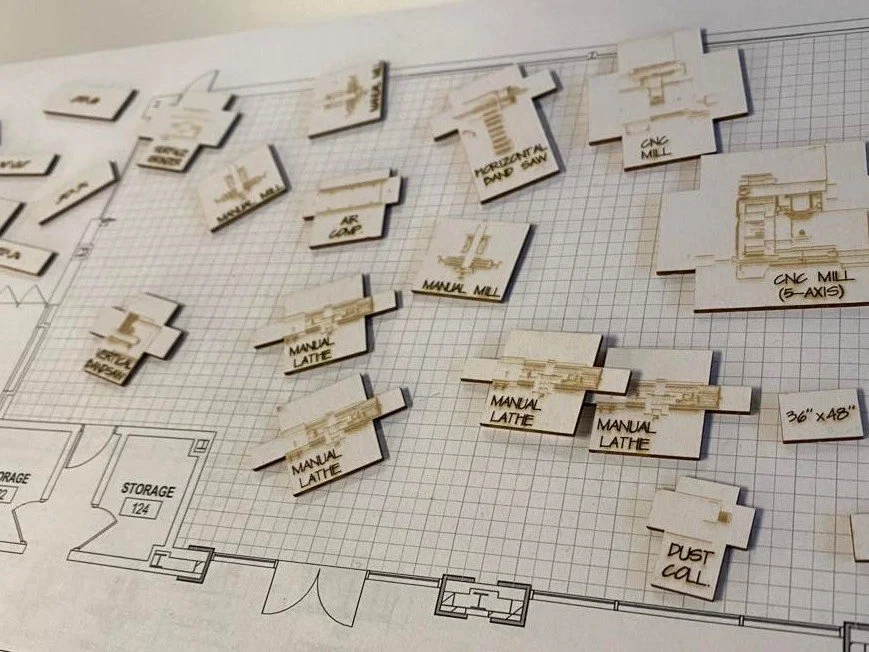
By introducing hands-on programming exercises to define workflows and spatial relationships for equipment and bench space components, design teams and end users collaborate to uncover specific needs and concerns that directly inform design decisions. Image: Courtesy of IKM Architecture
Kate Whitmore, senior architect with IKM Architecture, is co-author of this piece.
Laboratory projects are notoriously complex, but renovating active labs presents an added challenge: upgrading facilities, workflows, and equipment without interrupting critical services. As new technologies continue to enhance the precision and efficiency of research and testing processes, companies are motivated by competitive pressure to upgrade and expand their lab environments. Navigating these challenges requires an operations-centered approach, where staff input, workflow continuity, and long-term functionality drive every decision.
As companies search for strategic ways to minimize costs while keeping up with the latest innovations, renovation presents significant advantages. A 2026 analysis by Loan Analytics found that, depending on lab complexity and existing building condition, retrofits cost around $300-$800 per square foot compared to $1,000-$1,800 for new builds, which is about 50 percent cheaper due to sitework, structural, and envelope savings.
However, renovations carry the risk of disrupting ongoing operations. For labs that operate around the clock, any interruption can pause revenue streams and delay time-sensitive patient care. Strategic planning protects operations by balancing the minimum disruption possible with the lab’s maximum tolerance. To prevent costly disruptions while supporting long-term operational efficiency, design teams follow a user-centered framework that translates valuable stakeholder input and physical constraints into a seamless design and implementation plan.
Co-author Brian Roth and colleagues will speak on “Challenges and Opportunities for Your Next Laboratory Renovation” at the Lab Design Conference in Orlando, FL, May 11–14, 2026. This interactive session will draw on real-world project experience to explore strategies for navigating the technical, operational, and structural complexities of renovating active lab environments. Attendees will gain practical insights into stakeholder engagement, workflow optimization, and overcoming common constraints to deliver successful, high-performing laboratory spaces. Get your ticket now!
Establishing stakeholder priorities and concerns
The initial engagement phase is not just about gathering input; design teams collaborate with lab workers and leadership to identify and resolve conflicting priorities that directly impact lab operations. Leadership often brings a high-level perspective focused on visibility, growth, and cost control, while lab staff provide crucial insight into efficiency, safety, and uninterrupted workflows. By engaging these groups separately, design teams identify gaps between strategic goals and day-to-day operations, translating that input into practical decisions such as process adjacencies and consolidated equipment.
Hands-on planning: Using tactile, scaled representations of individual lab components, end users arrange equipment and bench space to physically map out their workflows. Rather than refining a specific floor plan, this exercise is designed to reveal pain points that directly inform design decisions, such processes that must be separated to prevent sample contamination, or areas that require flexible power connections for future equipment upgrades.
Workflow mapping: By shadowing the movement of people, samples, and equipment, designers validate workflows and uncover discrepancies between documented processes and actual behavior. This activity allows teams to observe critical adjacencies and circulation paths that must be preserved or improved, ensuring long-term lab functionality by aligning connected processes and establishing an efficient flow of staff and materials through the facility.
Identifying risks: Onsite observation allows teams to verify safety requirements and building system constraints early, from the placement of emergency measures like drench showers and eye wash stations to existing infrastructure capacity. This early alignment ensures compliance and prevents costly late-stage redesign that could disrupt operations.
While final decision-makers differ from client to client, design teams translate these insights into data-driven recommendations that balance leadership priorities and day-to-day operations to preserve continuity. These engagement tools build consensus and inform layouts that improve efficiency, mitigate safety risks, and protect processes during and after renovation.
Right-sizing for current and future operations
By right-sizing program areas, facilities align available space with actual operational demand. Teams can apply engagement input, such as sample volumes, equipment utilization, and staffing patterns, to identify processes that require more or less space than currently occupied, workflows with strict spatial needs, and areas that demand flexibility for anticipated changes. When faced with a constrained footprint, workflow mapping verifies actual space needs and reveals redundant processes that can be consolidated while fostering interdisciplinary collaboration.
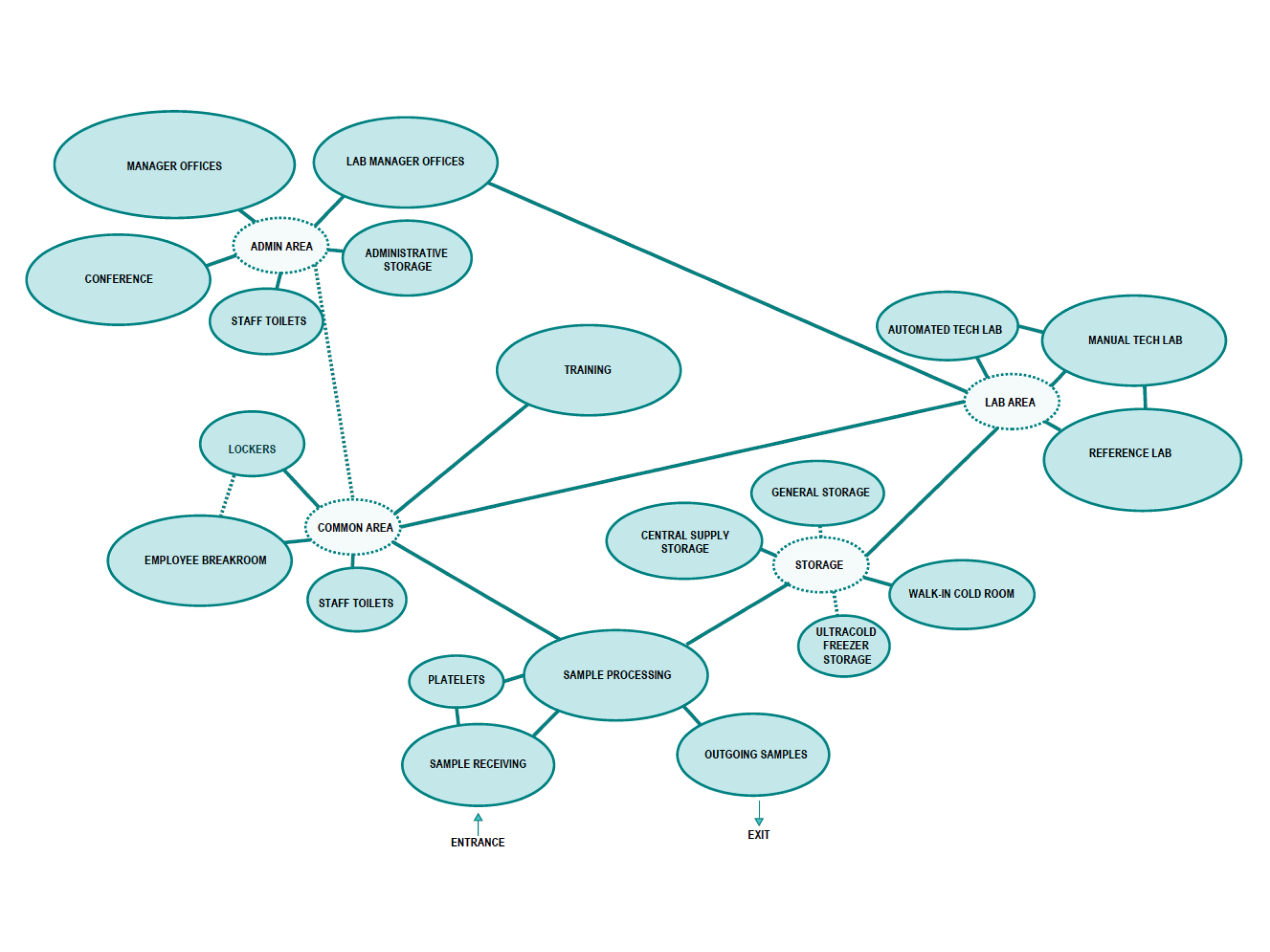
Workflow mapping allows designers to identify critical processes and adjacencies, minimizing the risk of separating associated functions during phased renovations and disrupting operational continuity. Image: Courtesy of IKM Architecture
Engineer input during programming helps teams identify inflexible factors like large equipment with dedicated infrastructure, anchoring labs and departmental layouts in relation to mechanical, electrical, and plumbing (MEP) services. At the same time, flexibility should be integrated into building systems like power and data connections to support anticipated equipment upgrades. This preserves current lab functionality while minimizing the cost and complexity of future work.
Optimizing existing building resources
When renovating labs in place or moving into existing facilities, building conditions and infrastructure constraints can quickly inflate project costs. Teams must align user-informed program needs with available resources, for example, by locating chemistry labs near ductwork to avoid adding chases that limit future flexibility, or by isolating sensitive microscopes from vibration sources like elevators that compromise the quality of work.
Designers must verify installation pathways for new equipment, including elevator capacity and door widths, or arrange alternate solutions like craning through a window. These decisions happen in design to prevent unexpected delays during construction. By understanding the building’s limitations, teams can tailor layouts and implementation plans to the available footprint and infrastructure, minimizing expensive interventions like new ductwork chases.
Navigating equipment constraints and timelines
Equipment integration is rarely as simple as connecting the appropriate MEP services. Each component comes with unique physical constraints, such as maintenance clearances and drain access, that must be documented early to prevent operational and compliance issues requiring expensive rework.
Phased renovations rely on precise sequencing to decommission, relocate, and reinstall equipment while operations continue. Facilities that lack alternate space to temporarily accommodate relocated activities require more and smaller phases to shuffle equipment within the existing footprint, as well as inspections at each phase to ensure safe operations.
With user input, teams identify lab processes with the highest tolerance for disruption and relocations that free up the most flex space, prioritizing moves to minimize the total number of phases and overall operational impact. Equipment with complex infrastructure is moved directly to its final placement to minimize temporary service connections, while closely related equipment, such as sample analyzers and supporting instruments that facilitate common analyses, are moved together to reduce staff steps and operational inefficiencies during renovation.
Equipment can greatly impact schedules with time for recertification or vendor-conducted moves that require advance coordination and extensive recalibration. Extended material lead times, such as steel for lab casework, can delay construction, but solutions like prefabrication help to offset this by accelerating onsite installation. By engaging the construction manager early in design, teams leverage current material insights and coordinate complex timelines to mitigate the risk of late-stage complications.
Applying the operations-first framework
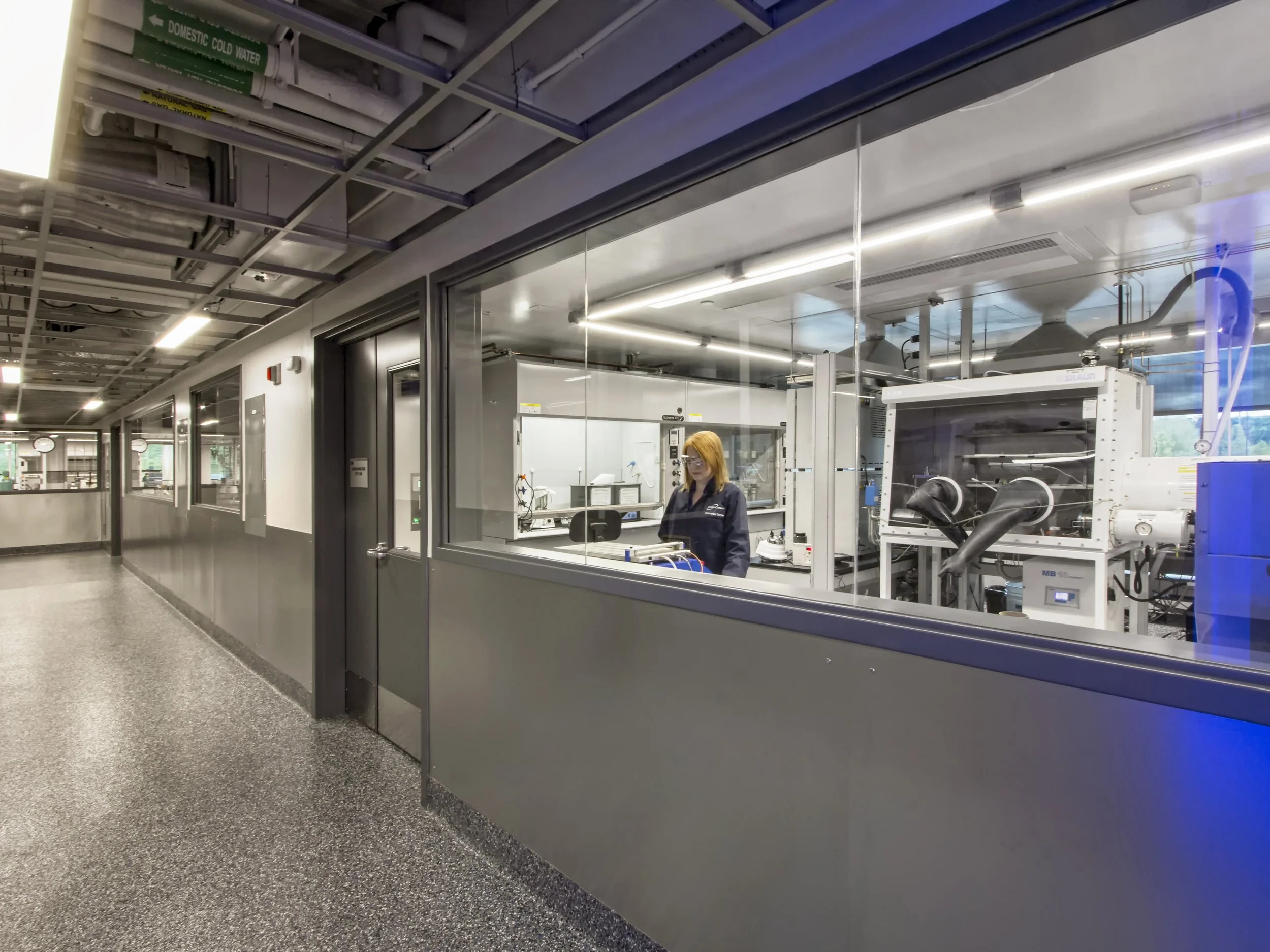
In Calgon Carbon’s Innovation Center, the design team balanced conflicting priorities by integrating visitor circulation paths with strategically positioned interior glazing to showcase innovation to investors while hiding proprietary processes from view. Image: Courtesy of IKM Architecture
The benefits of this framework are demonstrated by successful renovations like the Calgon Carbon Innovation Center and the lab analyzer upgrades at University of Pittsburgh Medical Center (UPMC) St. Margaret.
The $4.1 million Calgon Carbon Innovation Center project converted 15,500 sf of existing office space into a research and development laboratory. The renovated facility had two conflicting goals: supporting proprietary lab processes while showcasing the company’s innovation to potential investors.
The design team addressed this by engaging leadership and lab workers separately. Leadership discussions focused on plans for investor tours, while end users identified specific operations that could be safely displayed. The designers used this information to map visitor circulation paths and develop a layout with interior transparency for strategic sightlines. This allowed the company to showcase its work to potential investors while keeping proprietary processes hidden from view.
At UPMC St. Margaret, the challenge was to replace analyzers with new automated equipment in an existing 1,800 sf clinical lab with 24/7 operations and no access to alternate space. To integrate the large automation system without downtime, the design team planned a meticulous nine-phase renovation that gradually shifted workflows and casework to accommodate the new equipment.
This implementation plan minimized the risk of disruptions to patient diagnostics and hospital revenue by moving key equipment directly to its final placement, integrating dedicated phases for equipment calibration, and constraining construction activities to a manageable footprint. The resulting layout is anchored by the automation system and informed by user input on space needs and adjacencies.
Designing labs for long-term value

Kate Whitmore, senior architect, IKM Architecture, is co-author of this piece.
As lab processes and technologies evolve, companies continue to leverage renovations to maximize budgets. With limited opportunities to invest in expensive upgrades and the inherent challenge of active workflows and building constraints, it is vital that these projects succeed in supporting lab functions and paving the way for future work. Design teams bring value by understanding and mitigating the unique risk of lab renovations: interrupted patient care and revenue streams.
This operations-first framework provides a structured approach strengthened by tools and activities for focused risk mitigation. By leading a user-centered design process, teams protect critical operations and revenue, enhance current workflows, and support future upgrades to maximize long-term investment.
Kate Whitmore, co-author of this piece, is a registered architect and project designer at IKM Architecture with more than a decade of experience delivering technically complex science and technology and healthcare environments. She specializes in laboratory planning and design, leading user group engagement, programming, and coordination of highly technical spaces, including research, good manufacturing practice (GMP), and imaging environments. Kate has contributed to major projects for clients such as the University of Pittsburgh Medical Center (UPMC), Calgon Carbon, Vitalant, and Krystal Biotech, as well as international work including the Abu Dhabi Stem Cell Center, where she supported the planning and design of advanced laboratory and vivarium spaces. Her detail-oriented approach ensures that the environments she designs are high-performing, adaptable, and aligned with evolving research and clinical needs.