
Construction Begins on Hasselt University’s New Biomedical Research Complex
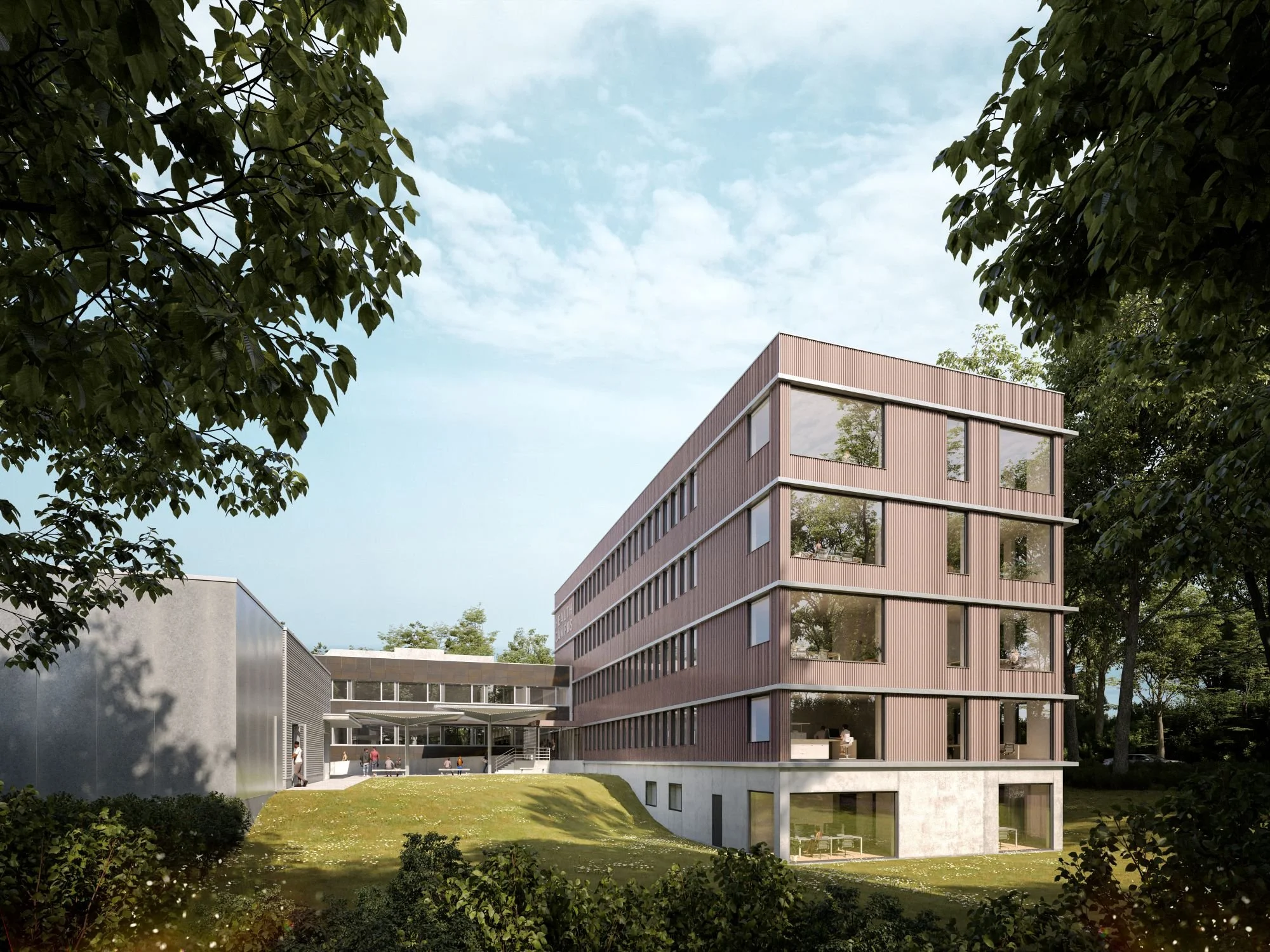
Construction begins on Hasselt University’s €12 million Biomed-Vision biomedical research complex in Diepenbeek, expanding its Health Campus with a five-story hub for biotechnology, clinical research, and industry collaboration, scheduled for completion in 2027. Image: Courtesy of Hasselt University
Hasselt University officially began construction of its new biomedical research complex, Biomed-Vision, on March 2, 2026. This marks a significant expansion of its Health Campus in Diepenbeek, Belgium. The five-story facility, located adjacent to the existing Biomed building on the university’s Limburg campus, is designed to meet rising demand for advanced research space and to strengthen collaboration between academic researchers, clinicians, and industry partners. Completion is expected by the summer of 2027.
The project represents a €12 million ($13.9 million USD) investment supported by university funds, the European Union through the European Regional Development Fund, and the Flemish government’s Fund for Innovation and Entrepreneurship. Beyond expanding physical infrastructure, Biomed-Vision is intended to function as a multidisciplinary hub for biotechnology, medical research, and clinical innovation.
The project team includes Cordeel and IMTECH (construction), POLO Architects (design), EXILAB (engineers), SWECO (stability), and ESSA Architects (supervision construction).
A campus-driven vision for interdisciplinary research
The development of Biomed-Vision is closely tied to the broader master planning strategy for the Limburg Diepenbeek Campus, which integrates education, research, and innovation zones into a unified ecosystem.
As Roeland Buckinx, manager, Health Campus Limburg DC, explains, the project is part of a larger vision: “The development is part of the masterplanning on the wider university campus named ‘Limburg Diepenbeek Campus’ with a core higher education environment and two innovation zones: one aimed at healthcare, one aimed at the construction industry. Both are linked to research institutions on the campus.”
The new complex is designed to support more than 200 researchers and staff members and to act as a bridge between academia, healthcare providers, and industry.
“The guiding design vision for the Biomed-Vision complex is to create a future-oriented, interdisciplinary research hub, mainly in the field of (bio)medical research that fosters innovation, collaboration, and scientific excellence,” says Buckinx.
This emphasis on connectivity is not limited to internal research teams. The building is also intended to strengthen links with external partners and applied healthcare environments, reflecting a broader shift toward translational biomedical research.
“A key ambition is to strengthen the connection between research and the broader field, such as primary healthcare, industry, and education,” says Buckinx. By integrating state-of-the-art laboratories, shared core facilities, and collaborative workspaces, the building will not only support UHasselt’s expanding research activities but also facilitate interaction with first-line healthcare providers, industrial partners, and educational programs.”
Engineering precision for advanced biomedical technologies
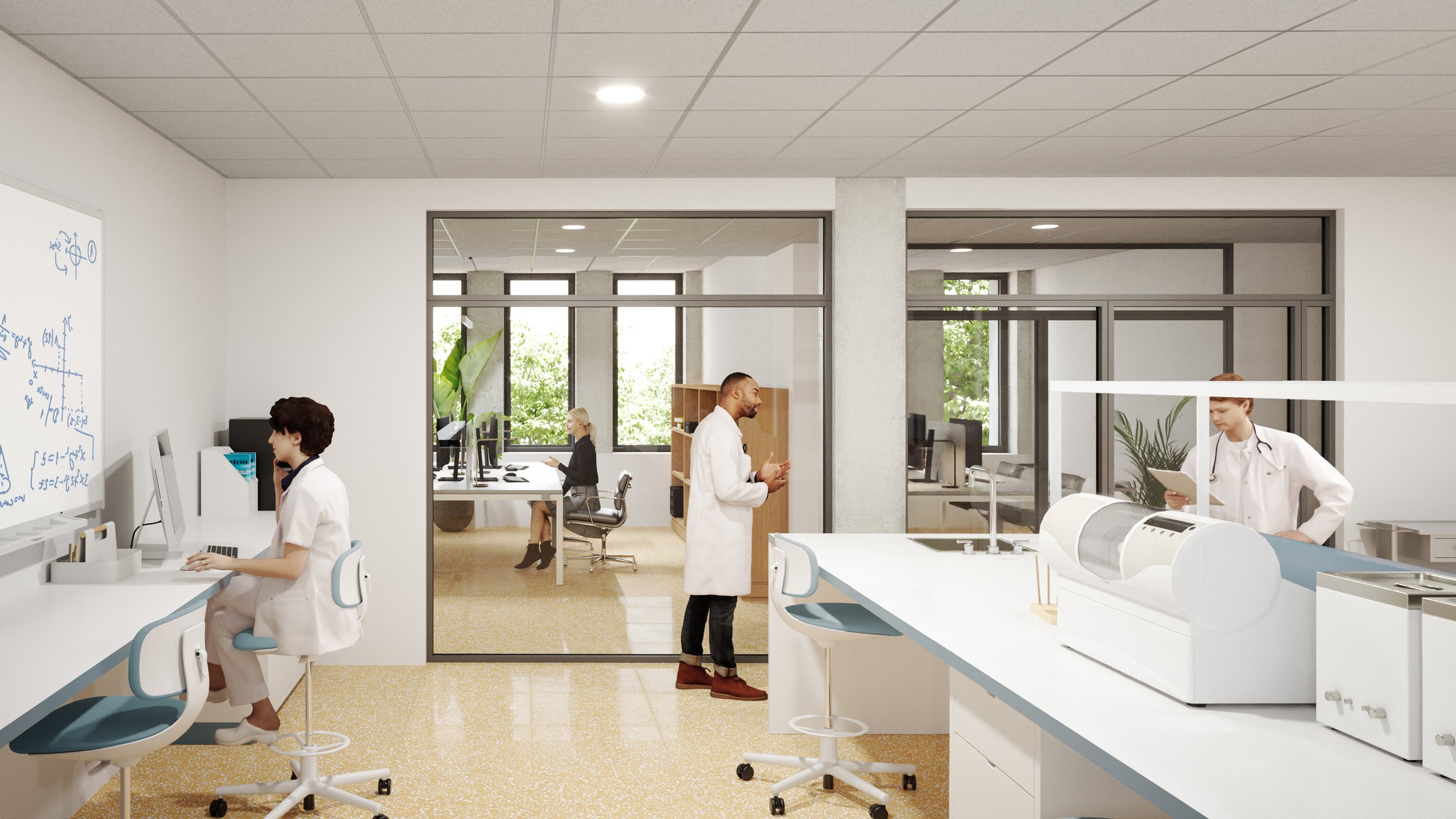
Hasselt University’s Biomed-Vision facility is being engineered with precision-controlled environments for microscopy, cellular analysis, and data science, including BSL-2 compliant labs, vibration control, and climate-stabilized subterranean spaces integrated into the site’s natural landscape. Image: Courtesy of Hasselt University
The facility will house specialized platforms for microscopy, complex cellular analysis, and data science—each requiring highly controlled environmental and technical conditions. These requirements have significantly influenced the building’s engineering approach.
Ann Vanderheyden, construction & renovation projects specialist at Hasselt University, highlights the level of precision needed for these research environments: “The design must account for stringent technical requirements associated with advanced research technologies. For microscopy and cellular analysis, vibration control, precise climate regulation (temperature, humidity, and air quality) and stability platforms for highly sensitive equipment are essential.”
To meet these needs, the design incorporates partially subterranean laboratory levels, taking advantage of the natural landscape to enhance both environmental stability and user experience.
“By making use of the already undulating landscape, the basement and lowest level is half embedded in the ground, but has one side that has a wide large window opening up to the green environment behind the building,” says Vanderheyden.
In addition, certain laboratories are designed to meet biosafety Level 2 (BSL-2) standards, ensuring compliance with strict containment and safety requirements.
“Part of the laboratories a designed in compliance with BSL-2 standards, as defined by Belgian biosafety regulations,” says Vanderheyden. “Cleanroom-like conditions are required. This includes specific requirements for containment, controlled access, appropriate air pressure differentials, and the safe handling and storage of biological agents.”
Designing for long-term flexibility
Beyond technical precision, Biomed-Vision is being built with adaptability as a core principle. As biomedical research evolves rapidly, the facility must be capable of accommodating new technologies, workflows, and even future changes in use. This includes a flexible base grid of the casco environment (“casco” is Dutch for "shell" or "hull"), floors that are changeable and adaptable, and support structures such as beams that are kept to a minimum to give wide casco spaces.
The structural system is designed as a modular grid, enabling laboratories and offices to be reconfigured as needed over time.
“The casco is composed of a grid structure that technically and functionally can house any combination of lab spaces and office spaces, or could in the long run even be converted into teaching facilities, since the owner is a university (there are no teaching facilities in the research building in the current design),” notes Vanderheyden.
Technical infrastructure has also been engineered for adaptability, with accessible ceilings and vertical service shafts running through all five floors. “These shafts provide space for the distribution and future adaptation of building services, significantly facilitating modifications or upgrades to technical installations as research needs evolve,” says Vanderheyden.
Ventilation and heating systems are similarly designed for flexibility, allowing modifications without major structural disruption.
Strengthening collaboration across sectors
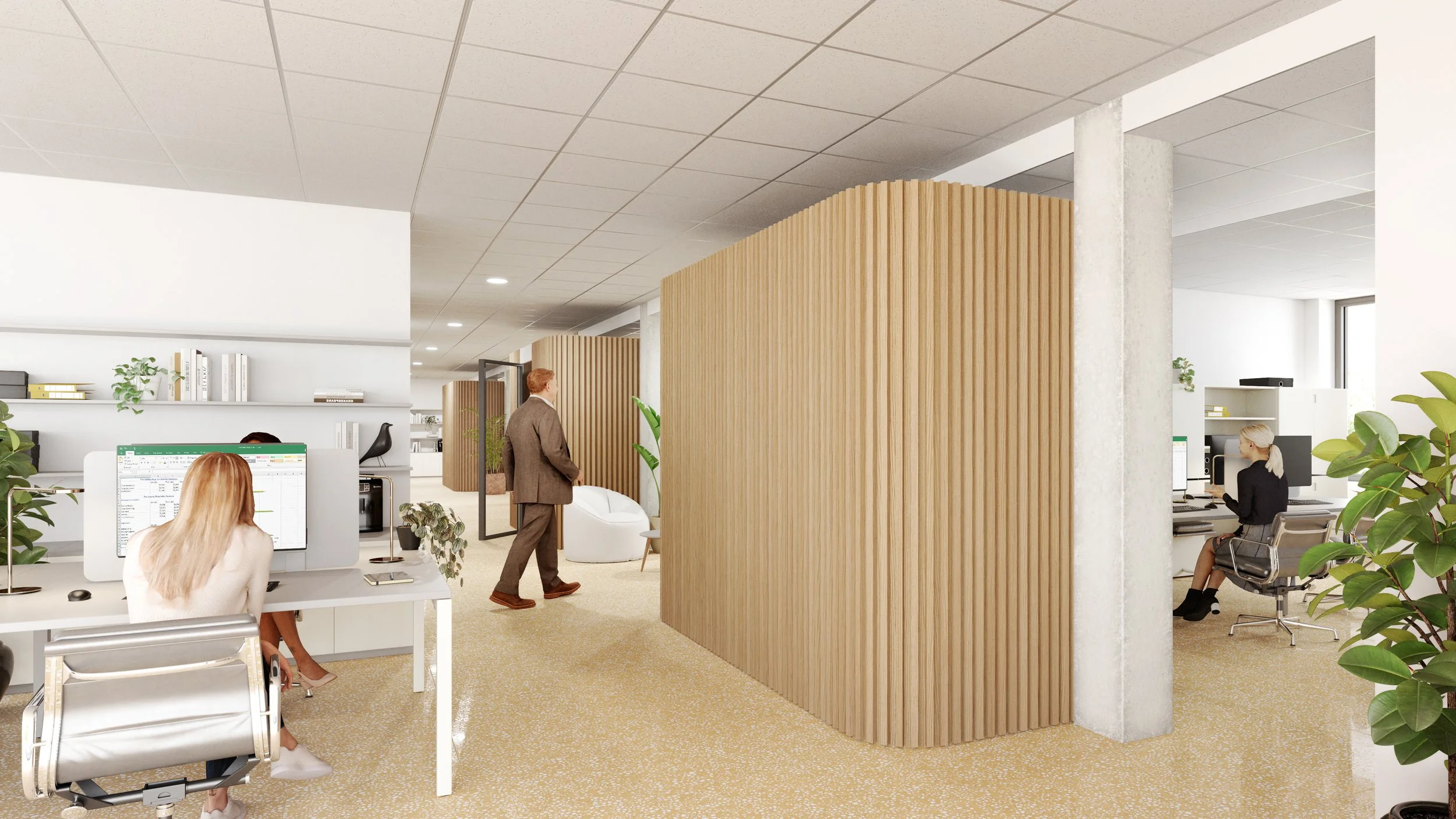
Biomed-Vision is designed as a connected innovation hub integrating university, clinical, and biotech partners, featuring third-space collaboration areas and a separate, privacy-focused clinical research floor alongside adjacent incubator and life sciences facilities. Image: Courtesy of Hasselt University
A defining feature of Biomed-Vision is its role within a wider innovation ecosystem that includes university researchers, clinical partners, and biotechnology companies. The facility is closely connected to surrounding innovation infrastructure, including the adjacent BioVille incubator and planned multi-tenant life sciences buildings. This model supports startups and smaller companies that may not have the resources to invest in advanced laboratory infrastructure independently.
Collaboration is also reinforced at the campus level through physical connectivity between buildings and shared spaces designed to encourage informal interaction.
“The design incorporates so-called ‘third spaces’—informal, transitional areas such as lounges, coffee corners, and open circulation zones—where spontaneous encounters between different users of the site can occur,” says Vanderheyden.
These spaces are intended to reduce barriers between disciplines and institutions, fostering innovation through proximity and chance interaction.
The new building will also house the Limburg Clinical Research Centre (LCRC), marking the first time the center will have a dedicated physical presence on campus alongside Biomed research platforms.
Clinical functions are carefully separated from laboratory zones to ensure privacy, safety, and operational independence where necessary.
“The clinical research floor of the building can operate completely separate from the biomedical research floors,” says Vanderheyden. “For evening activities with patients (if the central reception desk is not staffed), or to increase privacy of patients when needed, there is a separate entrance to the clinical research floor.”
These spaces are designed for outpatient-style clinical studies rather than inpatient care, with appropriate facilities for exercise testing and consultations.
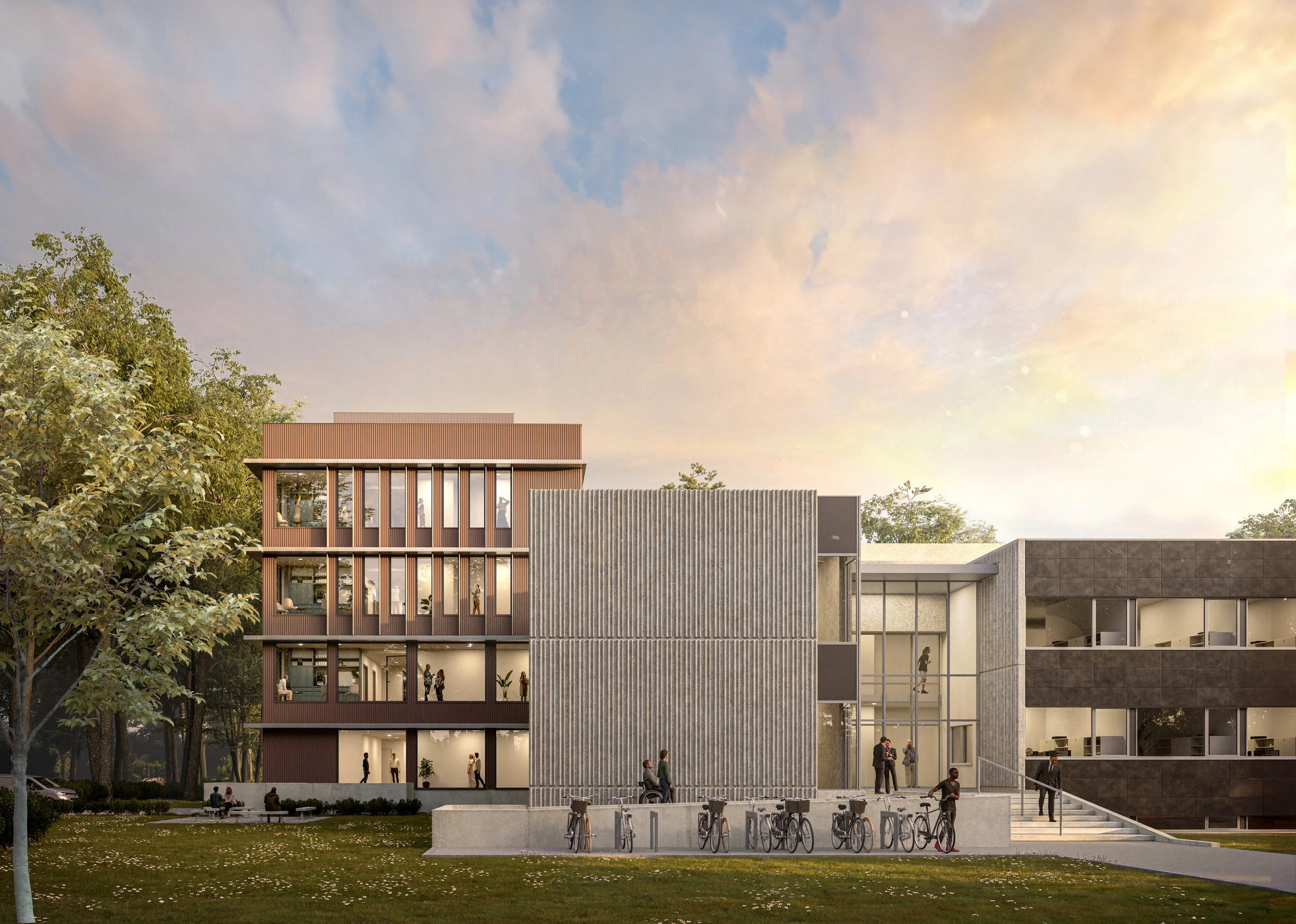
Biomed-Vision, scheduled for completion in 2027, is a flexible, interdisciplinary research hub at Hasselt University that integrates advanced labs, clinical research, and collaborative spaces within a broader regional life sciences ecosystem. Image: Courtesy of Hasselt University
Sustainability is a central component of the project’s engineering strategy. The building incorporates energy recovery systems, heat pumps, and renewable electricity generation to reduce environmental impact.
“First, the energy demand is reduced by recovering energy from the indoor air in the air handling units and using it to condition the incoming outdoor air,” says Vanderheyden.
The facility will operate without fossil fuels for heating and cooling, relying instead on advanced heat pump systems. Additional sustainability measures include LED lighting, daylight-responsive controls, and rooftop solar panels. Water conservation is also integrated into the design through rainwater harvesting systems that support non-potable uses such as toilet flushing.
A foundation for future biomedical innovation
As construction progresses toward a 2027 completion, Biomed-Vision represents more than an infrastructure expansion. It is a strategic investment in a connected, flexible, and interdisciplinary research ecosystem designed to evolve alongside biomedical science itself.
By combining advanced laboratory environments, clinical research integration, and open collaborative spaces, the new complex positions Hasselt University as a growing hub for life sciences innovation in Belgium. Situated within a broader network that includes the BioVille incubator and regional healthcare partners such as the Jessa Hospital and ZOL Hospital, Biomed-Vision is set to play a key role in shaping the next generation of biomedical discovery and translational research in the region.