
Bridging Education and Innovation at Niagara University’s Research Institute
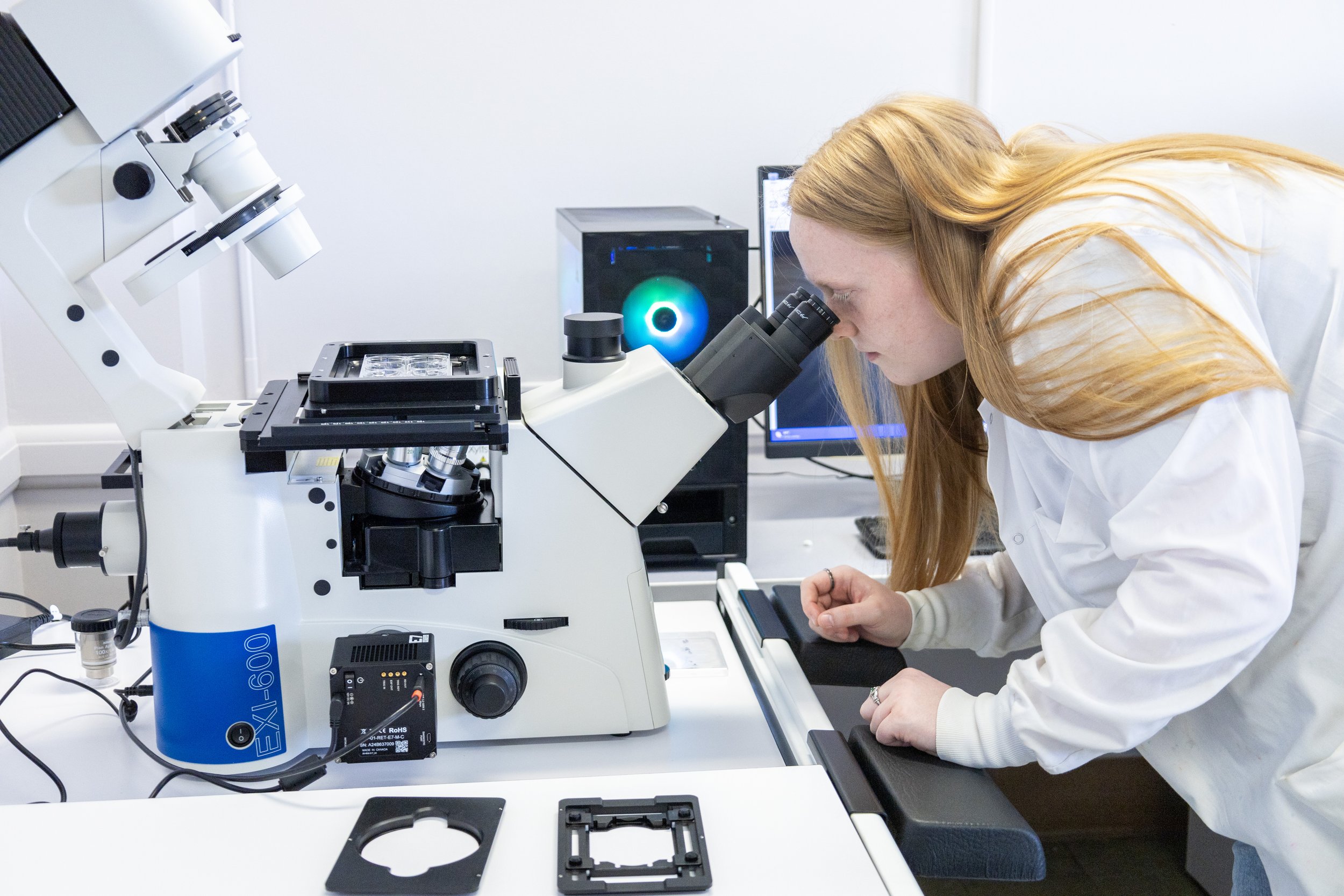
The Niagara University Biomedical Research Institute Laboratory anchors students and faculty within Buffalo’s life sciences corridor, advancing research, hands-on training, and pathways to commercialization in an industry-connected academic setting. Image: Courtesy of Niagara University Biomedical Research Institute
The completion of the Niagara University Biomedical Research Institute Laboratory in Buffalo, NY marks a strategic investment in both academic research and workforce development. Located on the Buffalo Niagara Medical Campus, the facility places students and faculty within one of the region’s most active life sciences ecosystems, reinforcing a growing trend of embedding academic labs within industry-adjacent environments.
From the outset, the project was guided by a clear mission. “The purpose of the lab was to develop a space for expanded biomedical research for Niagara University—to position the university in the Medical Research Corridor in Buffalo, to provide students with enhanced training, and to enhance tech transfer from university research to commercial opportunity,” says Dr. Mary McCourt, Michael and Aimee Rusinko Kakos Endowed Chair in Chemistry, Director, Niagara University Biomedical Research Institute.
These goals shaped both the layout and functionality of the lab, ensuring it could support advanced research while remaining accessible to undergraduate users.
Designing for a dual purpose
Balancing education with active research was central to the lab’s design. The program includes analytical instrumentation space, a dedicated cell culture facility, a chemistry lab with a fume hood, and a central shared benching area. Rather than adopting a single open lab concept, the design organizes these functions into distinct yet interconnected zones.
“The laboratory is carefully designed into separate units: cell culture, chemical formulation, and instrumentation,” McCourt says. “Specialized work is carried out in these identified areas. Training and general technique development occurs in the main laboratory space which is central to the entire laboratory.”
“The students start their training in their freshman year with their studies and fundamental research training in the Golisano Center for Integrated Sciences at the Lewiston Campus,” she adds. “Once initial training occurs, the students are able to develop more advanced skills at the Research Institute.”
This structure supports a progressive learning model, where students move from foundational training into more advanced research activities. The central lab acts as a hub for instruction and collaboration, while adjacent spaces enable focused, technical work.
Designing for workflow and interaction
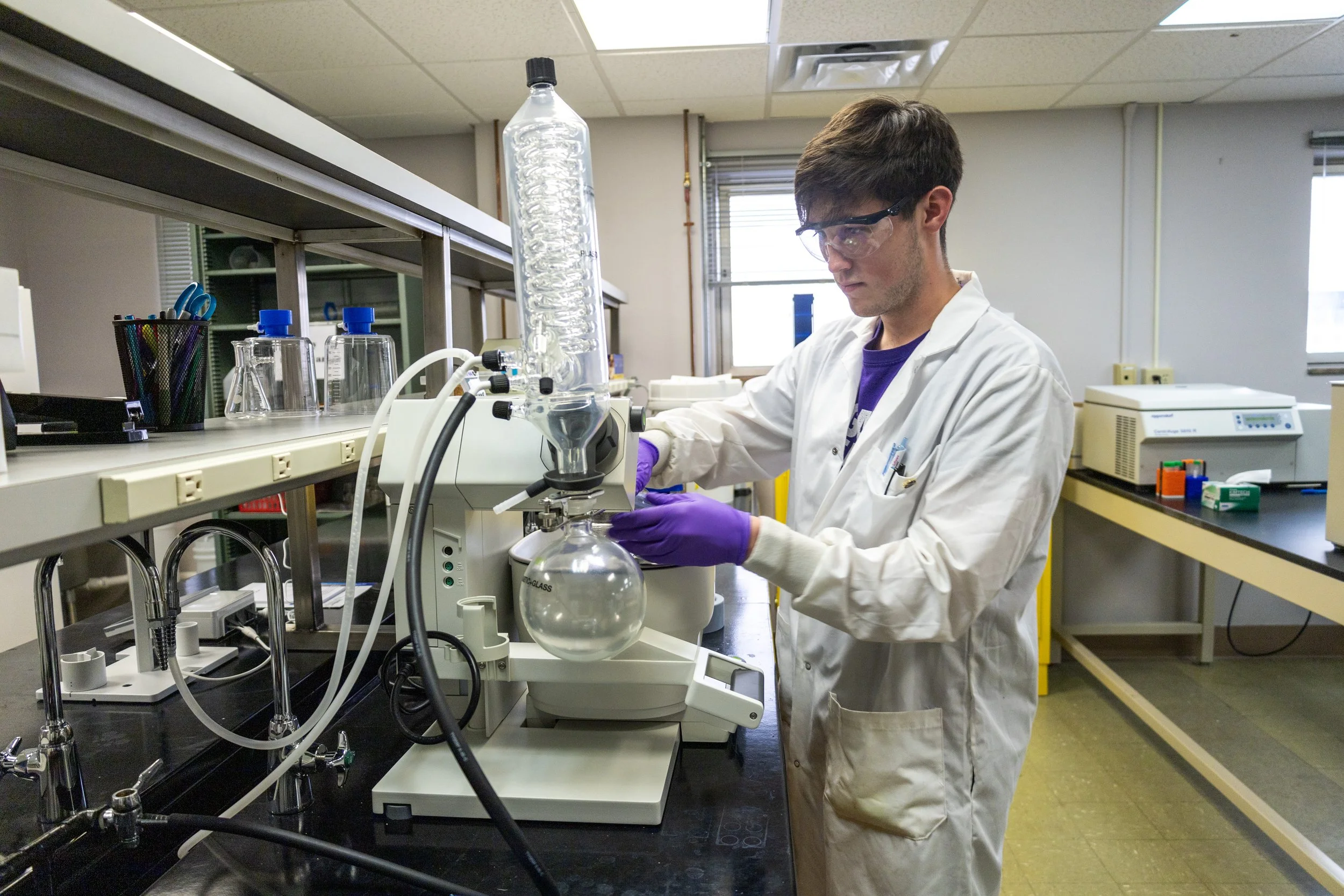
Designed around a central training hub with adjacent technical spaces, the Niagara University Biomedical Research Institute Laboratory balances collaboration and workflow efficiency while overcoming infrastructure and budget challenges to modernize an existing facility. Image: Courtesy of Niagara University Biomedical Research Institute
A key design priority was ensuring that the lab supports both efficient workflows and meaningful interaction. Individual technical areas branch off from a central training space, allowing users to transition seamlessly between learning and experimentation.
“The design of the lab was such that individual technical working areas were built off of the main space, and the main space is the general training area for student researchers,” McCourt explains. “There is a common gathering area and conference rooms adjacent to the laboratory space which allows for meaningful exchanges. This allows for a flow of people and processes and links training to specific technical components.”
This emphasis on adjacency and circulation reinforces collaboration without compromising safety or specialization.
Unlike ground-up laboratory projects, this facility required the adaptation of an existing building—bringing both opportunities and challenges. Updating infrastructure to meet modern lab standards was a critical component of the project.
“The infrastructure had to be updated/modified to reflect 2026 laboratory standards,” McCourt says. “The institute used existing laboratory space and updated it to reflect the design.”
However, the process was not without complications. “Budget constraints are always an issue,” she adds. “The surprise was the retooling of the infrastructure costs. Since the lab had been empty for a time, there were unexpected issues with plumbing and HVAC.”
These challenges underscore the importance of flexibility and contingency planning when renovating older lab environments.
Leveraging location for collaboration
The lab’s placement on the Buffalo Niagara Medical Campus significantly enhances its impact. Surrounded by leading healthcare and research institutions, the facility offers immediate access to a network of potential collaborators.
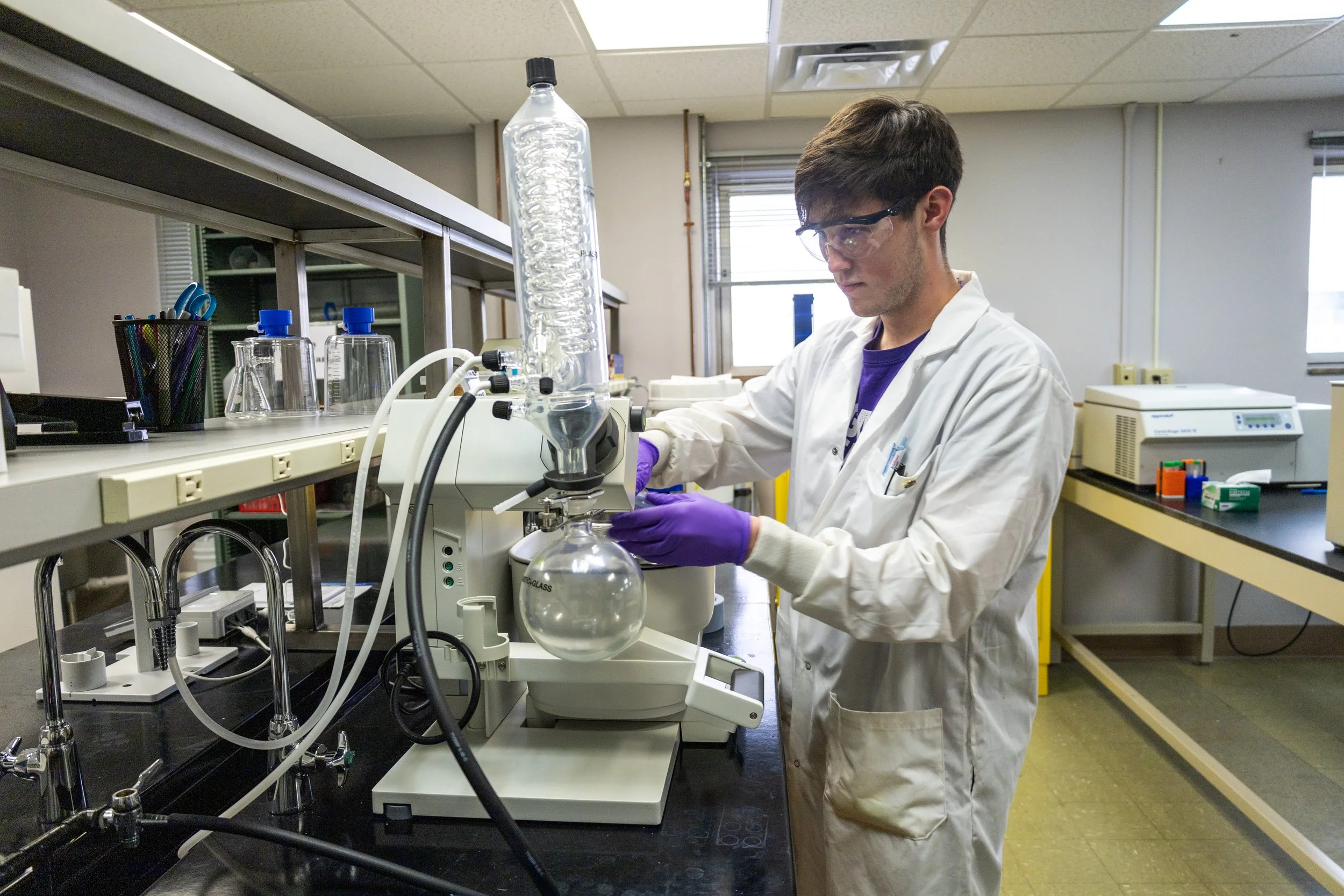
Drawing on lessons from prior campus projects, the Niagara University Biomedical Research Institute Laboratory transforms an existing building into a compact, high-impact environment that supports research, collaboration, and hands-on student innovation. Image: Courtesy of Niagara University Biomedical Research Institute
“The Niagara University Biomedical Research Institute is located in the center of the Buffalo Niagara Medical Campus, with institutions within walking distance from the lab,” McCourt says. “The presence of the Institute in this space introduces us to the community of researchers from Roswell Park, Hauptman Woodward, Buffalo General Hospital, Golisano Children’s Hospital, Jacobs Institute, and Jacobs School of Medicine. We can connect and collaborate in common spaces.”
This proximity transforms the lab from a standalone academic facility into an integrated part of a broader research ecosystem.
Flexibility was also a guiding principle in planning for the lab’s long-term use. Rather than designing for a fixed set of programs, the facility was conceived as a starting point for future growth.
“The lab was designed to be the start of an evolving institute which would expand into additional research areas in the building,” McCourt explains.
This forward-looking approach ensures the space can adapt to new technologies, research directions, and institutional priorities over time.
A model informed by experience
McCourt’s prior involvement in the design of Niagara University’s Golisano Center for Integrated Sciences informed key decisions in the project. Lessons learned from that new-build facility—particularly around workflow and usability—were applied to this adaptive reuse project, helping create an efficient and intuitive layout.
Ultimately, the Niagara University Biomedical Research Institute Laboratory demonstrates how thoughtful design can deliver significant impact without requiring a large footprint. By integrating specialized lab environments, collaborative spaces, and upgraded infrastructure within an existing building, the project creates a dynamic platform for both education and innovation.
As universities continue to expand their role in translational research, facilities like this one highlight the value of aligning design with mission—creating spaces where students don’t just learn science, but actively participate in shaping its future.