
Project Profile: Roche’s Institute of Human Biology, Building 92
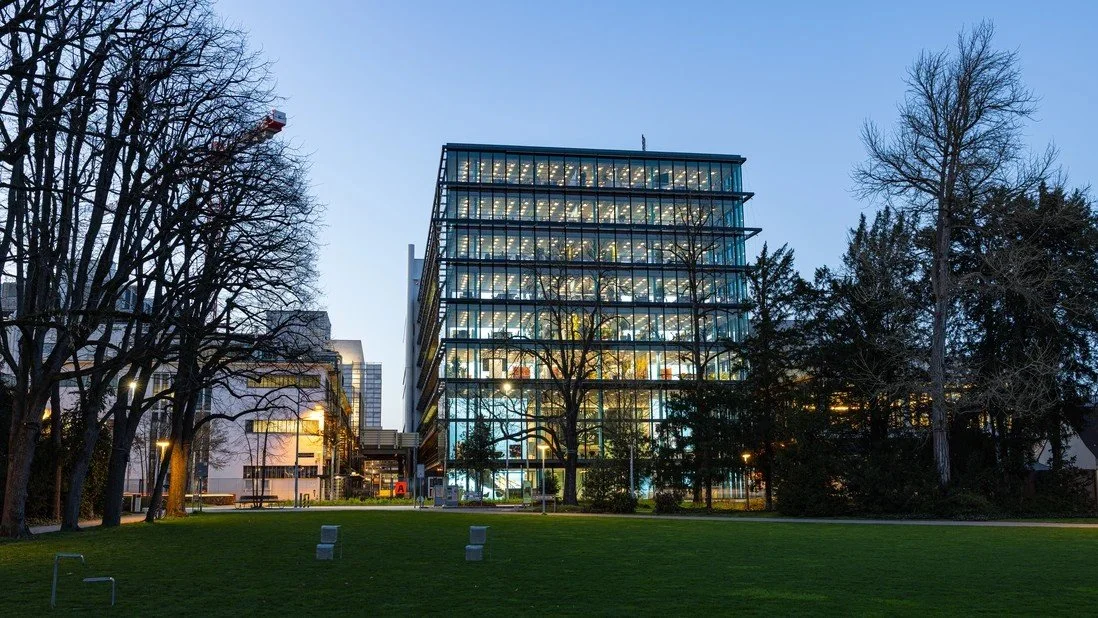
Roche’s new Institute of Human Biology Building 92 in Basel is a state-of-the-art research facility designed to advance drug discovery through human-relevant model systems, flexible laboratory spaces, and integrated computational and bioengineering platforms. Image: Courtesy of Roche
Roche has officially inaugurated its new research home for the Institute of Human Biology (IHB) in Basel, Switzerland, marking a major milestone in the company’s CHF 1.4 billion ($1.7 billion USD) site development program and reinforcing its long-term commitment to life sciences innovation in one of Europe’s most important biotech clusters. The new Building 92 is more than a laboratory facility—it is a purpose-built research ecosystem designed to accelerate drug discovery by integrating human model systems, advanced bioengineering platforms, and computational biology within a highly flexible and collaborative architectural framework.
At the core of the IHB’s mission is a fundamental shift in how biomedical research is conducted. Rather than relying primarily on traditional animal models, scientists at the institute will leverage human-relevant systems such as organoids, organ-on-chip technologies, and in silico modeling to better predict how therapies will perform in humans. This scientific ambition directly shaped the building’s design, influencing everything from spatial organization and infrastructure planning to interior aesthetics and sustainability strategies.
Designing for a new scientific paradigm
The architectural concept for Building 92 was driven by the need to support rapidly evolving research methodologies that blur the boundaries between biology, engineering, and computational science. According to a Roche spokesperson, the design process was structured around a clear separation between a standardized technical “base build” and customizable laboratory environments. This modular strategy allows research teams to adapt spaces quickly without requiring major structural interventions, ensuring the building remains relevant as technologies evolve.
A key innovation in this approach is the incorporation of “last-mile” flexibility—pre-installed infrastructure placeholders that anticipate future upgrades. These allow new instrumentation, data systems, or experimental platforms to be integrated seamlessly, minimizing downtime and reducing the cost and complexity of retrofits. This forward-looking strategy reflects a broader industry trend toward laboratories designed as long-term, adaptable assets rather than fixed-purpose facilities.
One of the most distinctive features of the IHB building is its aesthetic connection to the science conducted within it. The complex structures of organoids (miniature, lab-grown representations of human organs) served as a conceptual inspiration for interior design elements. Corridor walls throughout the facility feature artistic interpretations of organoid cell structures, transforming scientific imagery into a visual identity for the building.
These installations are not merely decorative. Designed in compliance with BSL-2 standards, they reinforce biosafety requirements while also strengthening the sense of connection between researchers and their work. This integration of art and science contributes to a more engaging and intellectually stimulating environment, supporting Roche’s goal of fostering innovation through both functional and emotional design elements.
Collaboration through spatial design
Collaboration is central to the IHB’s research model, and the building’s layout was explicitly designed to encourage interdisciplinary exchange. The facility houses up to 250 researchers working across biology, engineering, and computational science, requiring a spatial strategy that breaks down traditional departmental silos.
An “open corridor” concept defines the internal organization of the building, creating transparent, flexible laboratory zones that encourage spontaneous interaction. Rather than isolating teams in closed-off areas, the design promotes visibility and movement across disciplines, enabling researchers to share insights more easily. At the same time, carefully engineered fire compartmentation ensures safety and regulatory compliance without disrupting connectivity.
Visible building systems and exposed technical infrastructure further reinforce this philosophy by demystifying the operational backbone of the facility. Researchers can more easily understand and engage with the building systems that support their work, strengthening the integration between science and engineering.
Infrastructure for data-intensive science
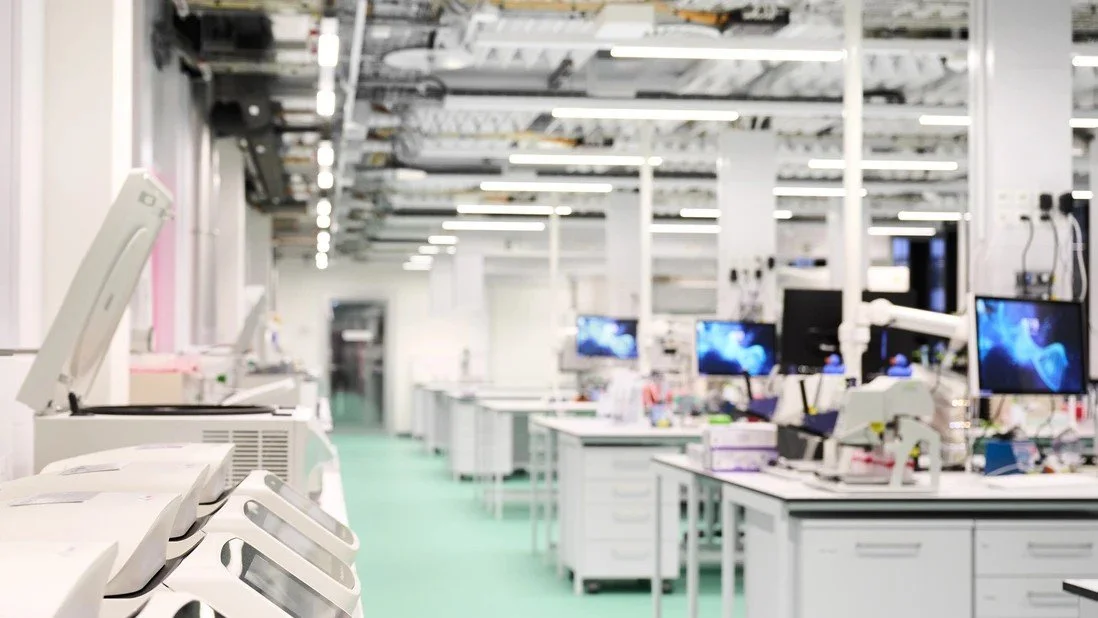
Roche’s Building 92 integrates high-performance computing infrastructure, decentralized server rooms, and specialized cleanroom environments to support advanced organ-on-chip research, precision microfluidics, and data-intensive biomedical modeling. Image: Courtesy of Roche
Modern biomedical research increasingly depends on high-performance computing and large-scale data analysis, and Building 92 was engineered with this reality in mind. Each floor of the facility is equipped with its own dedicated server room, enabling decentralized yet scalable data management. This configuration supports the intensive computational demands of modeling biological systems, processing imaging data, and running predictive simulations.
In addition to data infrastructure, the building includes specialized environments such as cleanrooms tailored for precision chip manufacturing and microfluidic applications. These spaces are engineered to support advanced organ-on-chip technologies, requiring strict environmental controls and highly specialized engineering solutions. Vibration control, airflow management, and precision utilities were all integrated into the design to ensure experimental accuracy and reproducibility.
As with many highly specialized research facilities, the project encountered regulatory and technical challenges during construction. Regional compliance requirements introduced additional coordination steps, while the integration of advanced research technologies required close collaboration between engineers, architects, and end users.
Rather than causing delays, these challenges were addressed through a highly collaborative project structure. Continuous engagement with regulatory authorities ensured smooth approvals, while ongoing dialogue between scientific teams and design professionals allowed technical solutions to be refined in real time. This iterative approach helped maintain project momentum while ensuring that the final facility met both current and future research needs.
Sustainability and circular construction
Sustainability played a defining role in the design and construction of Building 92. Roche positioned the project as a flagship example of circular construction principles in action, earning recognition through a company sustainability award. The design prioritizes material reuse and lifecycle thinking, aiming to minimize embodied carbon and reduce reliance on virgin resources.
Existing building components—including terrazzo flooring, partition walls, doors, ceilings, and laboratory furnishings—were reused or repurposed wherever possible. This approach not only reduced material waste but also preserved elements of the original architecture, including work by Herzog & de Meuron and integrated artistic installations.
By extending the life of existing materials and designing for disassembly, the building functions as a material loop rather than a linear consumption model. This significantly reduces environmental impact while demonstrating how high-performance laboratory environments can align with ambitious sustainability goals.
The project also leveraged advanced digital tools to streamline planning and execution. A digital twin of the facility, combined with 4D construction planning, allowed teams to simulate building processes before construction began. This enabled early identification of potential conflicts and improved coordination across disciplines.
These digital methods contributed to a remarkably efficient delivery timeline of approximately 2.5 years for a highly complex research facility. Supply chain risks were mitigated through early procurement planning and long-term supplier agreements, ensuring stable access to critical materials and components despite global disruptions affecting the construction sector.
A model for future laboratory design
The Institute of Human Biology’s new building represents a convergence of scientific ambition and architectural innovation. By integrating modular design principles, advanced infrastructure systems, and sustainability-focused construction methods, Roche has created a facility that is both highly specialized and inherently adaptable.
More importantly, Building 92 reflects a shift in how research environments are conceived—not as static infrastructures, but as dynamic platforms that evolve alongside scientific discovery. As human model systems and computational biology continue to transform drug development, the architecture supporting these breakthroughs will need to be just as innovative as the science itself. In Basel, Roche has delivered a facility that rises to that challenge.