
Project Profile: Berry College's Morgan-Bailey Hall
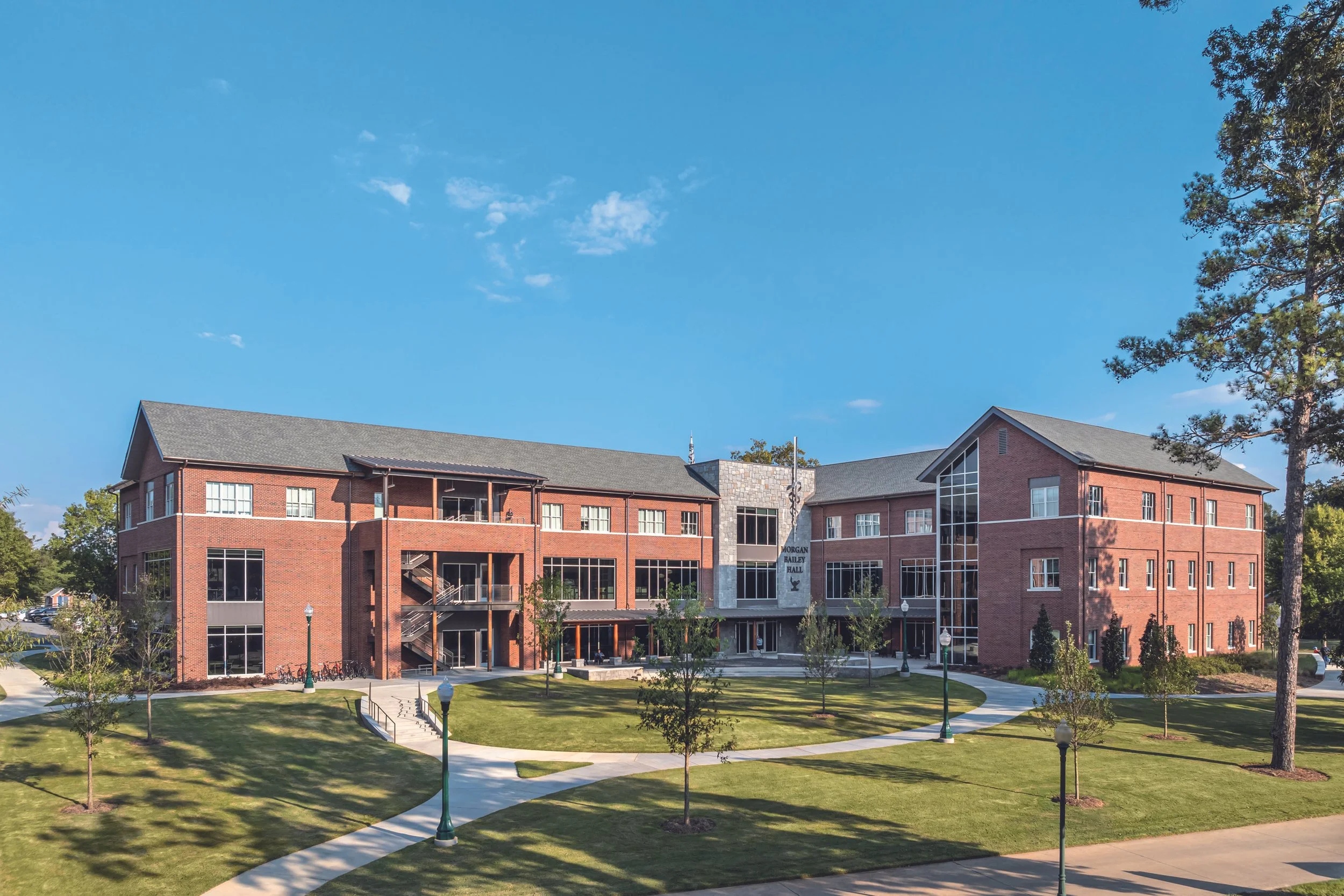
Berry College’s Morgan-Bailey Hall supports the Nursing and Physician Associate Programs with a dynamic, interdisciplinary design centered on community and wellness, featuring a central courtyard, timber-anchored porch, and calming, indoor-outdoor-connected materials. Image: Courtesy of Cooper Carry
Berry College’s 55,000-sf Morgan-Bailey Hall is a health sciences building designed to support the expansion of the Nursing Program and the launch of a Physician Associate Program, emphasizing a dynamic, interdisciplinary environment. The design centers on community and wellness, featuring a central courtyard, a timber-anchored porch, and calming materials that blur the line between interior and exterior spaces. The first two floors house flexible academic spaces, including multipurpose skills labs and a prominent communicating stair that encourages interaction, while shared lounges provide informal areas for collaboration and relaxation. The third floor offers student housing with shared rooms and community restrooms to foster camaraderie, collectively supporting Berry College’s mission of experiential learning and community-focused education.
The project cost is $26,700,000. The building includes a variety of wet labs to support hands-on learning, including multipurpose skills labs for teaching and demonstrations, a high-fidelity simulation lab replicating a hospital room with mannequins and control rooms, private exam rooms for standardized patient interactions, an operating room suite, and kinesiology labs for exercise physiology, biomechanics, and sports performance education and research.
The project team included Cooper Carry (interior design, architecture, programming + predesign), Brewer Engineering (civil engineer), HGOR (landscape architect), Uzun+Case (structural engineer), and NBP Engineers (MEPFP engineer).
Lab Design News spoke to Tim Fish, principal at Cooper Carry, about the design strategies, interdisciplinary goals, and hands-on learning features that shaped Morgan-Bailey Hall.
Q: What were the primary design goals for creating an interdisciplinary health sciences environment, and how did those goals influence the layout and material choices for Morgan-Bailey Hall?
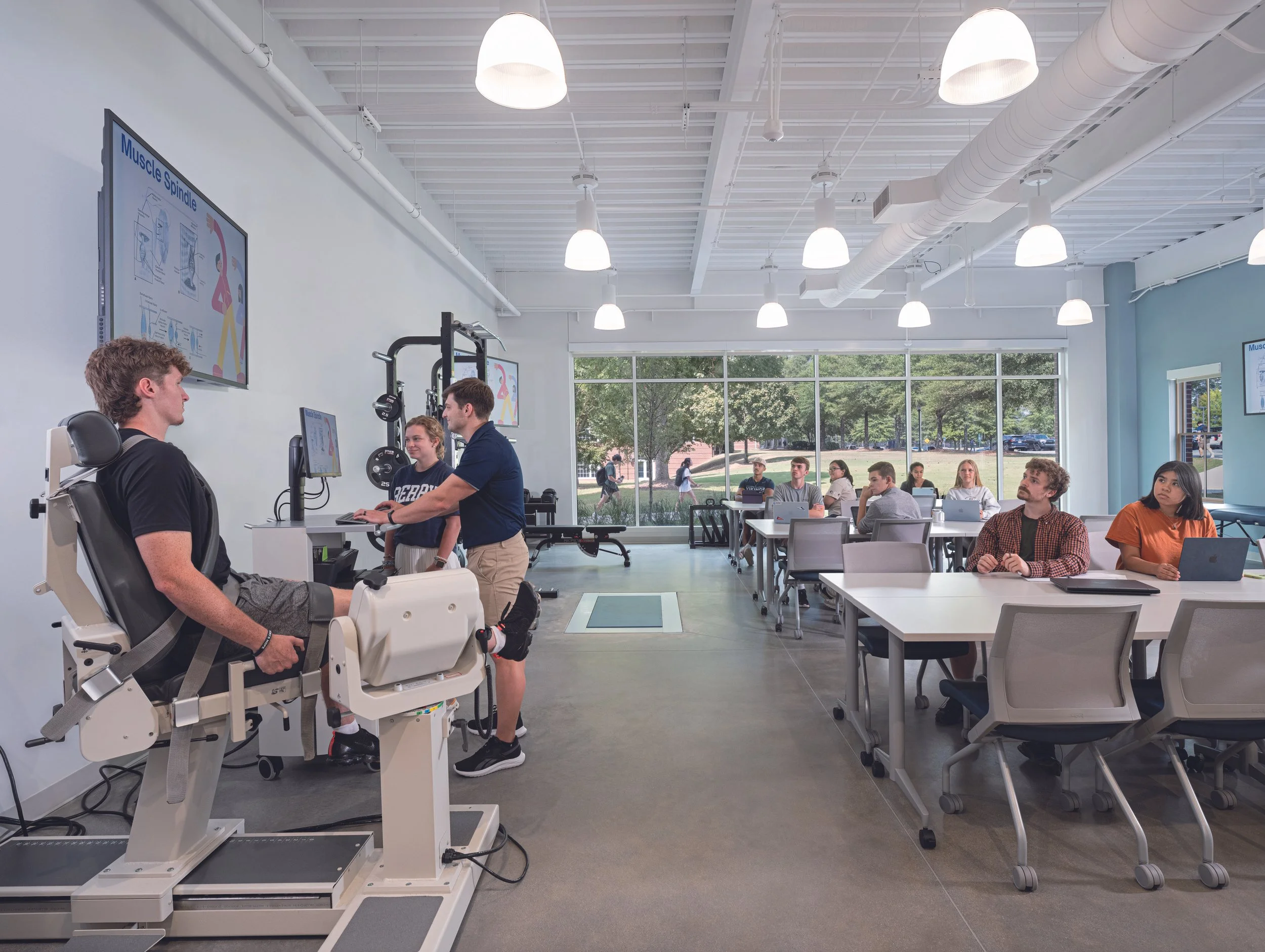
Morgan-Bailey Hall’s design fosters collaborative learning and interdisciplinary connections, blending hands-on skills labs with instructional spaces across Berry College’s 27,000-acre “Head, Heart, and Hands” campus. Image: Courtesy of Cooper Carry
A: Berry College is an extraordinary place with a breathtaking 27,000-acre campus and a “Head, Heart, and Hands”-inspired academic approach. The critical need for health science professionals and the rigor of the program inspired the design in many ways. Hands-on skills labs were combined with instructional space to inspire collaborative learning. Program spaces were carefully sequenced to facilitate encounters between nursing, physician assistants, faculty, and staff for mutual support and wellbeing.
Q: The building incorporates flexible, multipurpose skills labs—what specific design strategies or technologies were used to ensure these spaces can seamlessly support both lecture-based learning and hands-on training?
A: Design strategies focused on maximizing flexibility, comfort and functionality. Spaces were optimally sized to leverage value while creating open spaces with abundant natural light and exterior views. Digital technology was embraced for teaching anatomy and was seamlessly incorporated into instructional spaces, reducing infrastructure costs while expanding instructional methods.
Q: The central courtyard and heavy timber porch play a major role in shaping the building’s character. How did the team balance aesthetics, durability, and functionality when integrating these outdoor/indoor threshold spaces?
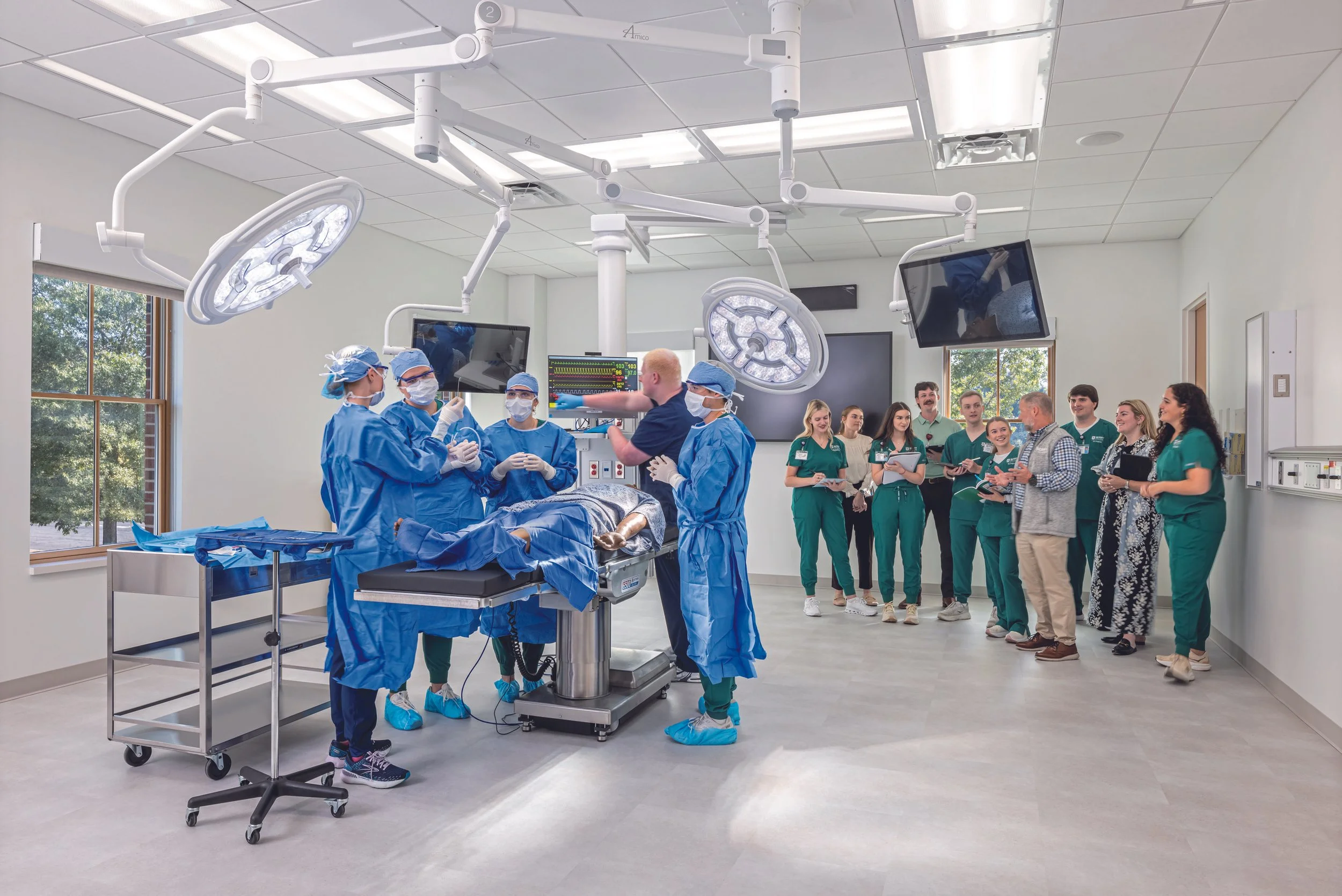
Morgan-Bailey Hall’s flexible, light-filled instructional spaces integrate digital technology for anatomy teaching, combining functionality, comfort, and cost-effective design. Image: Courtesy of Cooper Carry
A: The building was sited to define exterior space while creating a central campus edge. The architectural character respected the traditional campus aesthetic, while expressing a warm and welcoming presence consistent with Berry’s Head, Heart, and Hands mission and values. Carefully detailed and crafted wood columns, beams and purlins framed a common porch for gathering, reflecting and enjoying views of the unique and extraordinary campus.
Q: Student housing is included on the third floor—how did you address the operational, safety, and acoustical considerations of combining residential and academic/lab spaces under one roof?
A: The mixed-use approach of incorporating student housing on the upper floor of the project was inspired by need, value and aesthetic. A single double-sided elevator was centrally located to provided safe and secure access to the Health Science Floors as well as the upper residential floor. A floating acoustical floor slab was included to address vibration and sound from the residential laundry to instructional spaces below. The proportional massing of the building and exceptional views from the third-floor residential units contribute to the quality of the campus living and learning experience.
Q: What lessons did you learn during design and construction—whether related to stakeholder engagement, interdisciplinary program needs, or construction challenges—that might benefit other institutions planning new health sciences or laboratory facilities?
A: We invested time early on engaging with campus stakeholders to right-size the program, create effective adjacencies and define the architectural aesthetic. The construction manager was engaged throughout the process to maximize value as cost considerations were balanced. Perhaps most importantly, the entire team shared a common mission to create an exceptional project, in an exceptional place for an exceptional purpose.