From Vision to Reality: USU Eastern Opens New Paleontology Lab
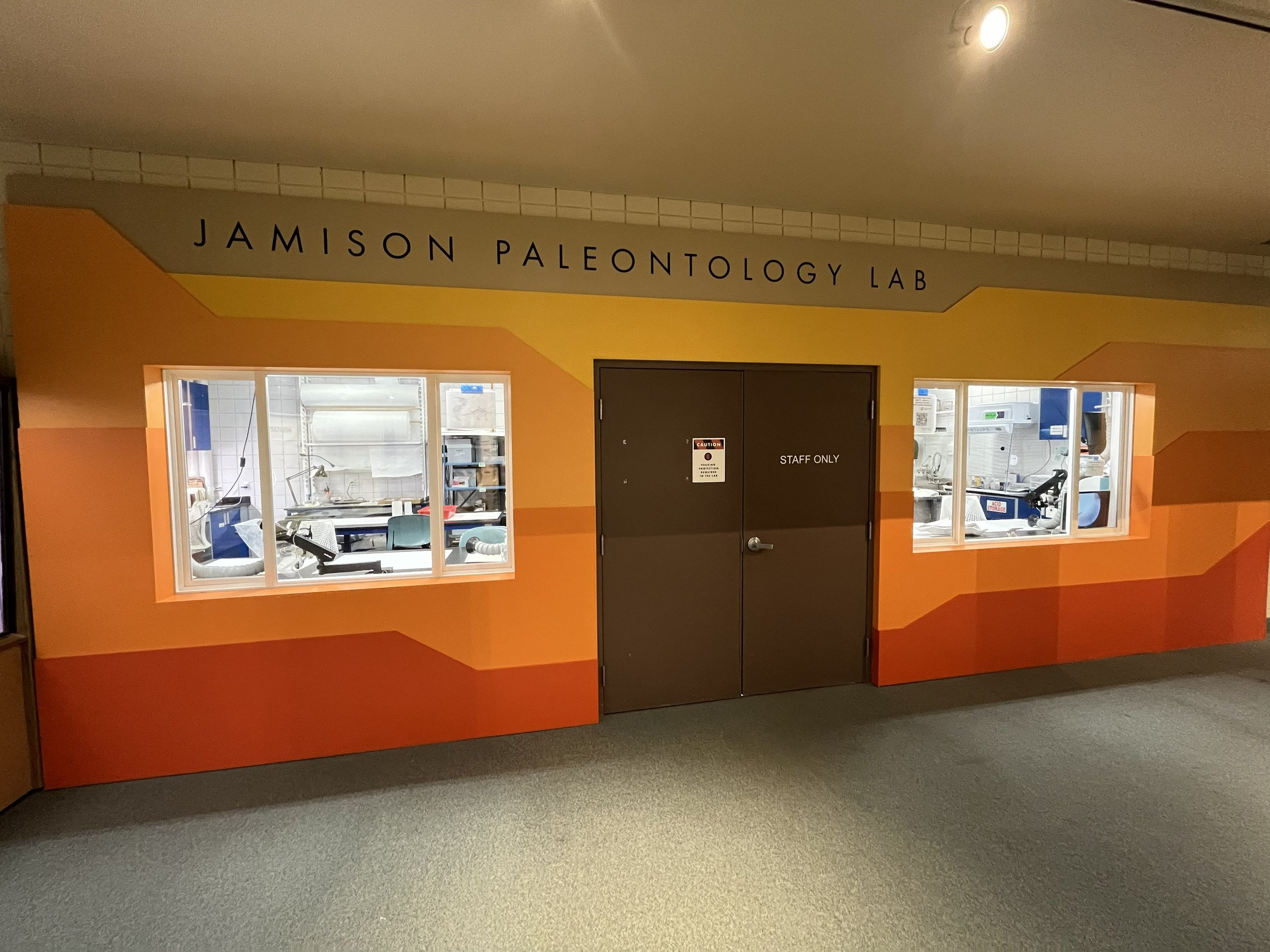
USU Eastern has unveiled the newly modernized Jamison Paleontology Lab, a community-supported transformation creating a safer, more adaptable space for fossil preparation, research, and public engagement. Image: Courtesy of Jamison Paleontology Lab
In an earlier Lab Design News feature on the Utah State University Eastern Prehistoric Museum’s fossil preparation lab renovations, Preserving the Past: Fossil Prep Lab Renovations at USU’s Prehistoric Museum, the focus was on a space in transition—an aging but active lab being reimagined through phased improvements, community fundraising, and a user-driven design process. That vision has now become reality.
On March 25, 2026, USU Eastern officially unveiled its newly completed paleontology lab, marking a major milestone for the museum and the region’s scientific community. The transformed facility—now named the Jamison Paleontology Lab in recognition of donor support from Paul Jamison and his family—represents a complete modernization of a workspace that once struggled with spatial constraints, dust exposure, and outdated infrastructure.
What began as a targeted effort to improve safety and functionality ultimately grew into a nearly $60,000 community-backed transformation. The result is a purpose-built lab designed not only for fossil preparation but for long-term adaptability, research expansion, and public engagement.
From “blank slate” to working lab
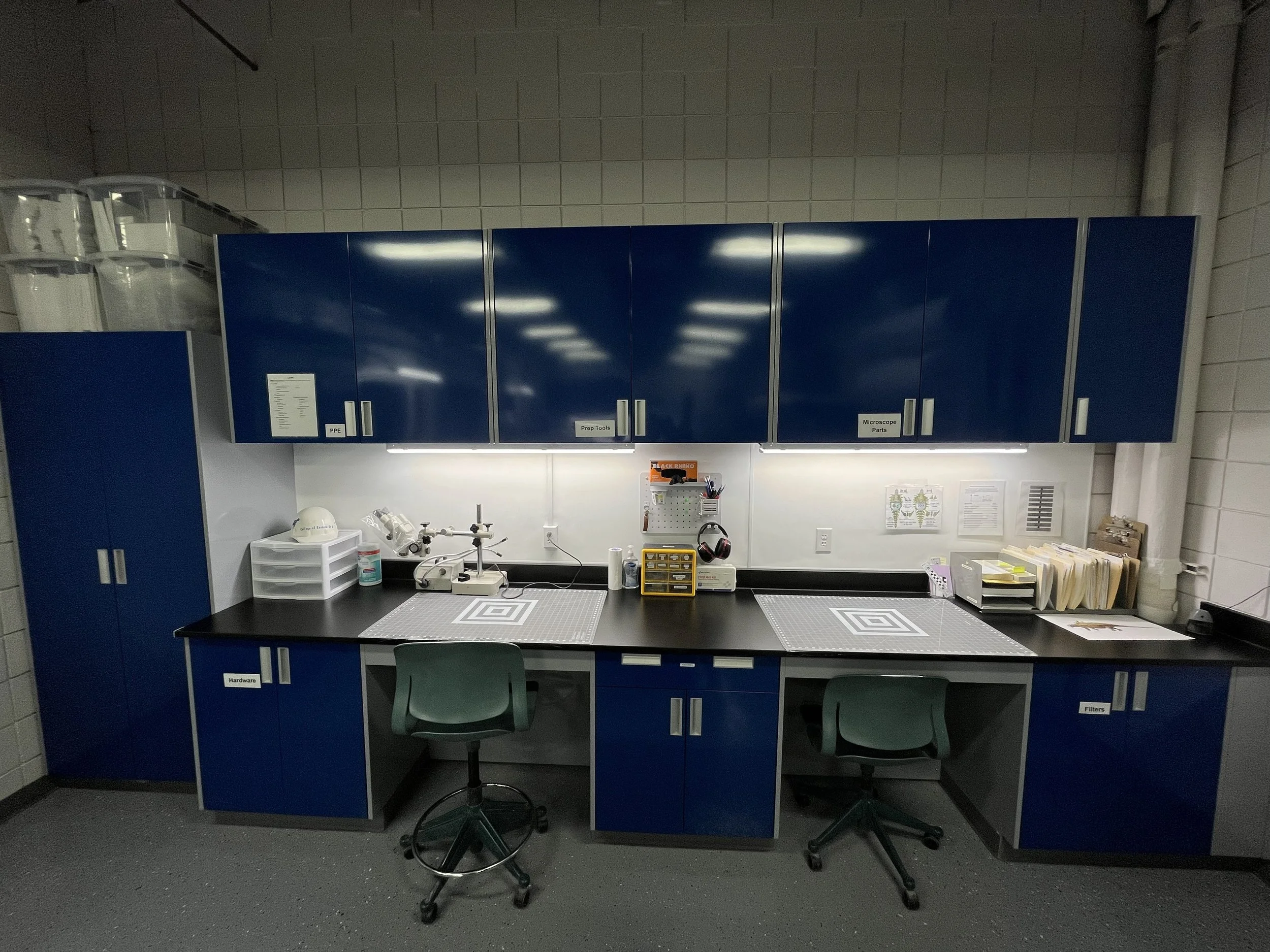
Guided by a “blank slate” approach, the lab manager played a hands-on design-build role in shaping the space, refining details during construction while keeping the final space closely aligned with the original vision. Image: Courtesy of Jamison Paleontology Lab
The project was led by curator of paleontology Josh Lively and paleontology lab and collections manager Matthew Mers, whose hands-on approach shaped both the design and execution of the renovation.
As Mers explains to Lab Design News, the guiding philosophy was simplicity and adaptability from the outset: “When Josh told me to treat it like a blank slate, I did.”
That mindset carried through construction, with Mers taking on an unusually active design-build role. He not only designed the layout but also completed significant portions of the installation work himself, resulting in a lab that closely mirrors the original vision developed during planning.
Looking back, Mers notes that the outcome remained largely consistent with early expectations, though the process allowed for refinement along the way. “The lab for the most part ended up being incredibly close to the original vision,” he says. “I was able to improve certain aspects of the lab more as the construction progressed. I saw small details that I had missed during planning that I could then improve or add.”
Safety, flexibility, and modern workflow
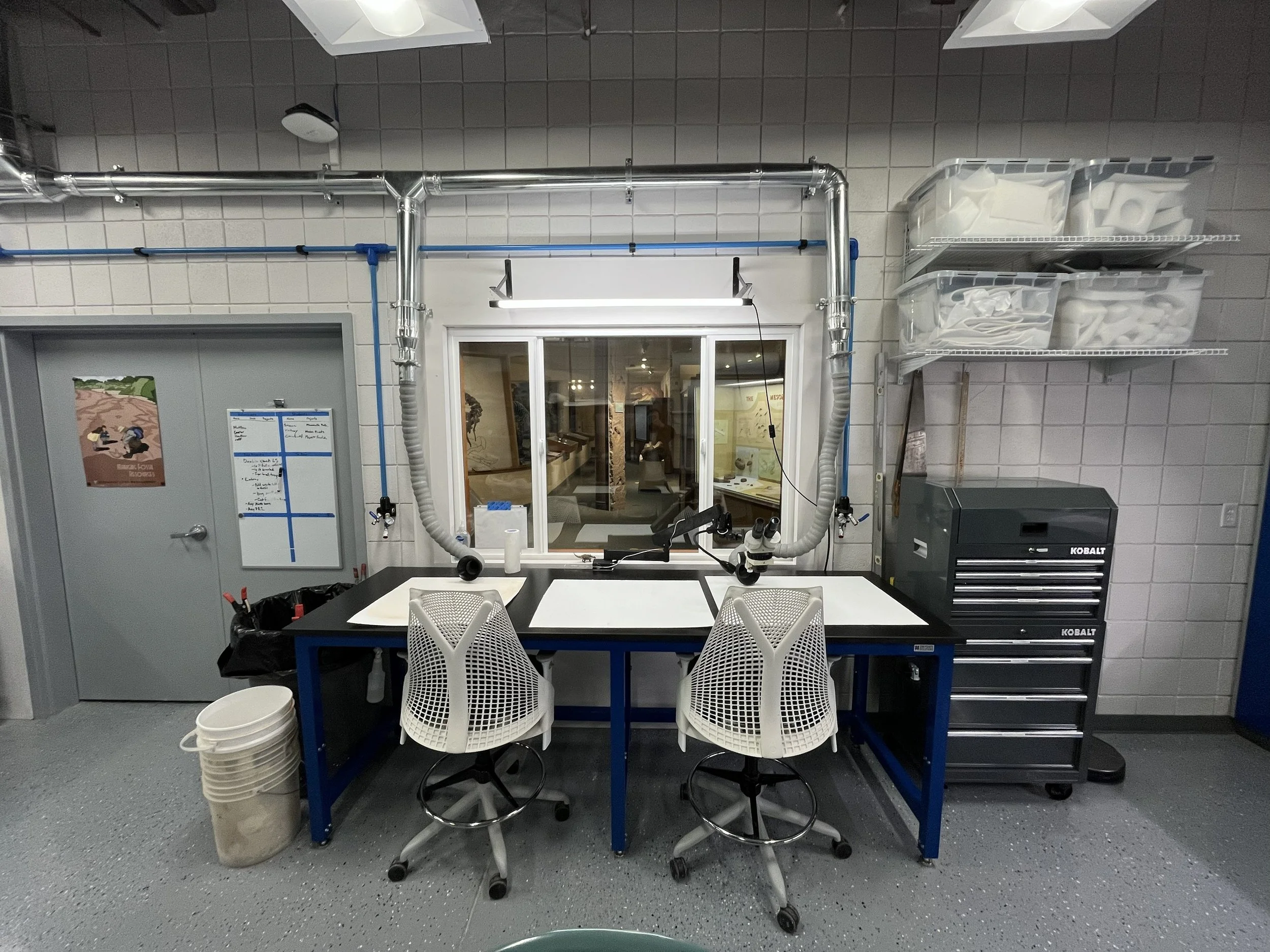
The renovated lab improves safety and efficiency through upgraded ventilation and dust control systems, while introducing a more flexible layout with mobile workstations and adaptable infrastructure to support a wider range of fossil preparation and research methods. Image: Courtesy of Jamison Paleontology Lab
A central goal of the renovation was addressing long-standing safety concerns, particularly airborne dust and chemical fumes generated during fossil preparation. The updated facility now includes improved ventilation systems, dust mitigation infrastructure, and a redesigned workflow intended to reduce exposure risks while increasing efficiency. These changes directly address the challenges outlined in the original renovation proposal, which identified silica dust and solvent fumes as key hazards.
Mers says that fossil preparation inherently produces hazardous particulates: tools such as air scribes—which he describes as “mini jackhammers”—generate significant dust during use. The updated lab layout introduces more targeted extraction and containment systems to mitigate these risks at their source.
The new design also improves flexibility. Adjustable tables, mobile carts, and overhead utility drops allow large or delicate specimens to be worked on in multiple areas of the lab, rather than being restricted to fixed stations. This flexibility supports a wider range of research activities, from traditional fossil preparation to emerging techniques like histology and acid preparation.
Designed for both science and visibility
One of the lab’s most distinctive features remains its public-facing design. The museum’s fossil preparation space has long been a draw for visitors, offering a rare view of science in progress.
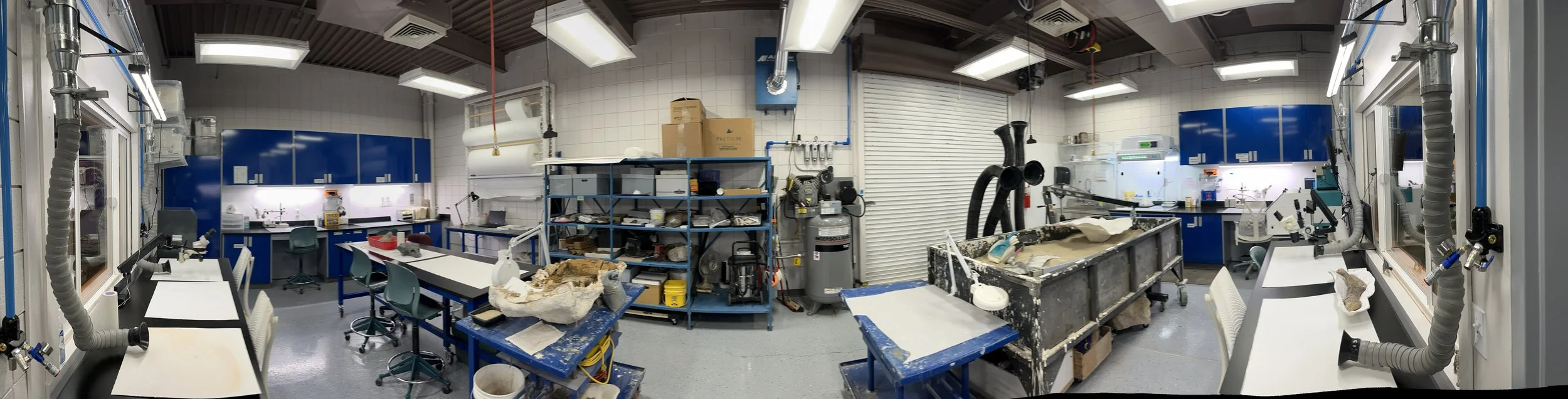
The lab retains its signature public-facing design, continuing to give visitors a rare opportunity to observe fossil preparation and scientific work in progress. Image: Courtesy of Jamison Paleontology Lab
However, balancing transparency with environmental control required redesigning the viewing interface. The original sliding glass windows were replaced with sealed viewing panels to reduce dust and noise transfer into the museum gallery, while still preserving visibility.
The updated design maintains visitor interaction without compromising lab conditions, says Mers. “We also made sure these windows open so that if the public is particularly interested, they can give us a knock, and we can answer any questions they have.”
Lab users who require more privacy can opt for a more secluded working space, he adds. “Another aspect is providing some workstations that are not in front of the windows, [allowing] for a less distracting environment which may be necessary for some work and training.”
The result is a more controlled working environment that still preserves the educational value of live fossil preparation.
Constraints, craftsmanship, and compromise
Like many academic facility upgrades, the project was shaped by practical limitations. Budget and space constraints played a significant role in determining what could be achieved within the existing footprint.
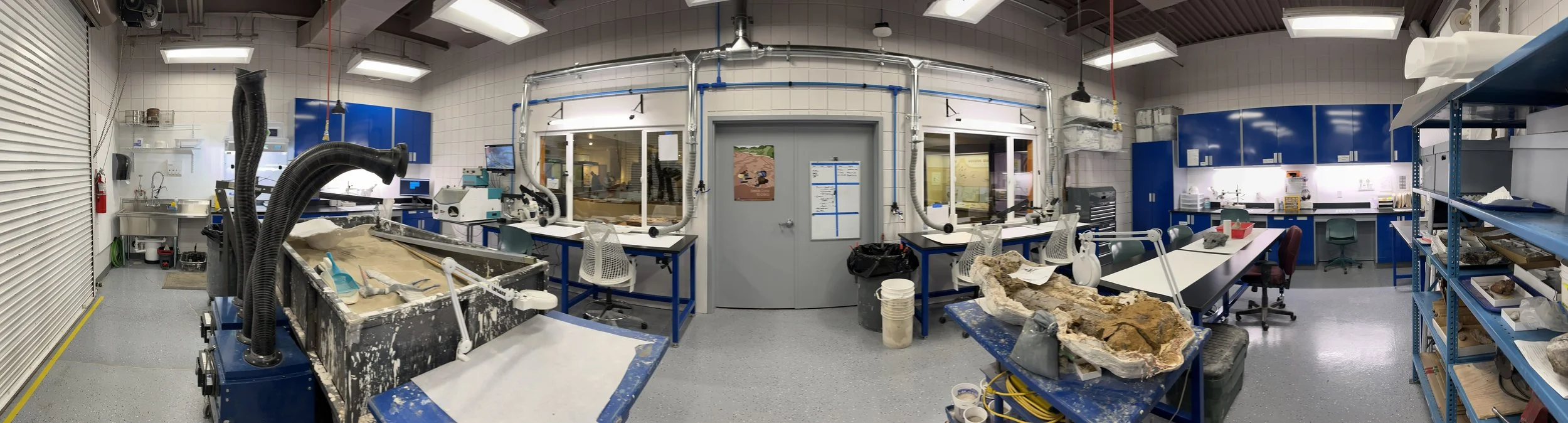
Driven by budget and space constraints, the project relied on extensive hands-on installation work by lab management, extending the timeline but ultimately producing a more functional, cost-efficient lab that closely reflects the original design vision. Image: Courtesy of Jamison Paleontology Lab
To keep costs manageable, Mers undertook much of the installation work himself, including flooring, cabinetry, plumbing, and electrical systems. While this approach extended the timeline, it ensured that the final space closely aligned with the original design intent.
“Designing and building it myself was certainly a limitation when it came to time,” he says. “This was opted for so we could save as much money as possible. This resulted in the renovation taking longer but resulted in it being very close to the vision of the original lab.”
Despite constraints, the final result delivers a significantly more functional and professional environment for staff, students, and volunteers.
A lab built for the next generation of discovery
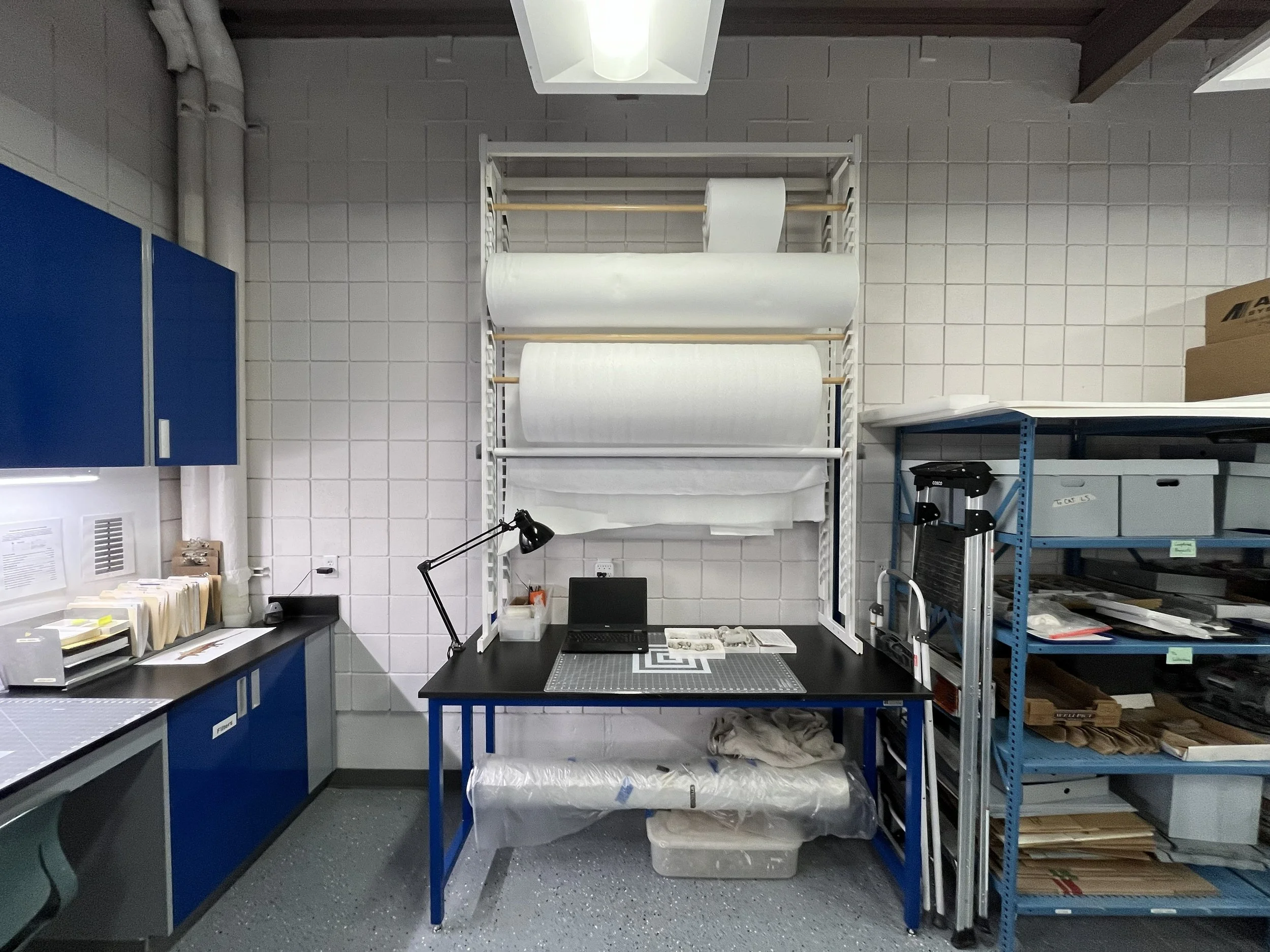
The new Jamison Paleontology Lab has streamlined workflows and increased engagement, enabling a more linear, efficient process from fossil preparation to collections while supporting expanded research activities within a clearly organized, purpose-built layout. Image: Courtesy of Jamison Paleontology Lab
Beyond infrastructure improvements, the Jamison Paleontology Lab is already changing how work flows through the museum. Fossils now move more efficiently from preparation to collections, and the space has seen increased engagement from volunteers and students since reopening.
The workflow has become more optimized, says Mers. “Since the lab has been completed, I am able to spend much more time there rather than in collections since more of the process can happen there,” he says. “I think the overall flow—new fossil material coming in, preparation, and fossils going to collections—to be very linear and streamlined. Everything has a logical place in the lab. There is now that region that is more focused on chemistry-related things with the fume hood, acid and flammable cabinets, consumable storage, and the sink. This area will soon be used for stuff that the old lab could not do.”
The lab also opens the door to future capabilities, including potential upgrades for paleohistology and advanced analytical techniques. While no formal next phase is currently funded, the foundation now exists for expanded research capacity.
The upgraded facility reinforces USU Eastern’s commitment to experiential learning and regional scientific outreach. It supports students, researchers, and the public alike—continuing the museum’s legacy of bringing paleontology into the open.
What was once a constrained and aging workspace is now a modern, adaptable laboratory—built not only to preserve fossils, but to expand how they are studied, shared, and understood.