
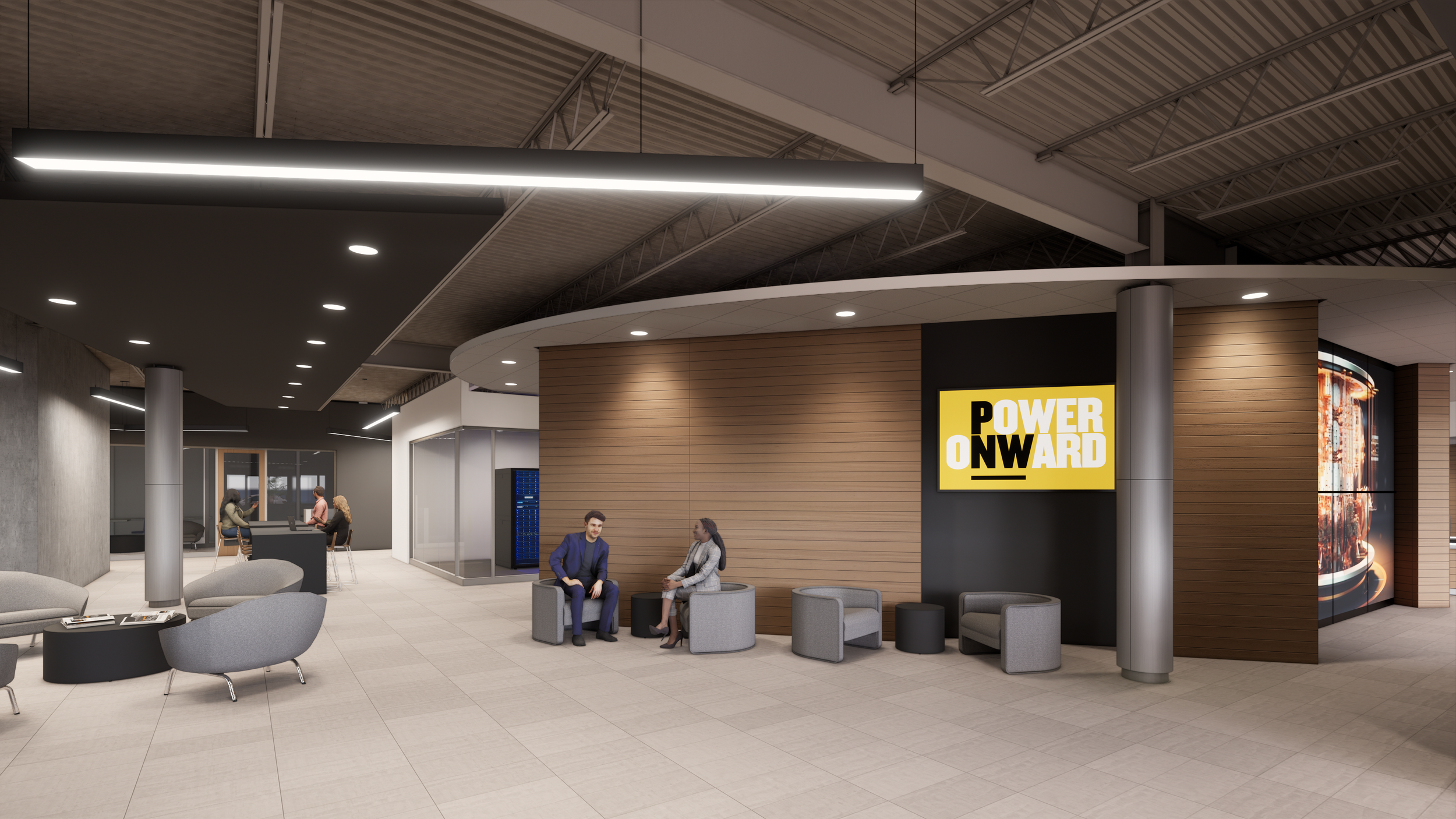
Purdue University Northwest’s Roberts Impact Lab will be a modern, collaborative hub designed to connect, inspire and power ideas forward. Image: Shive Hattery Architecture + Engineering
When laboratory renovation projects reach the point of formal board approval, much of the most complex work has already taken place. Programming discussions, feasibility studies, procurement strategies, and budget development must align before a proposal can move forward.
The recently approved renovation of the Roberts Impact Lab at Purdue University Northwest (PNW) illustrates how institutions can navigate that process—especially when adapting an existing building for emerging technologies.
In December 2025, the Purdue University Board of Trustees approved plans to renovate approximately 13,000 sf on the first floor of the Roberts Impact Lab facility in downtown Hammond, IN. The project will involve a complete interior demolition and repurposing of space within a former hospital building to create an innovation hub focused on advanced technology sectors. The $10 million renovation is scheduled to begin construction in September 2026 and conclude in June 2027.
Beyond the physical transformation of the building, the project provides a useful case study in how institutions develop renovation plans, assemble project teams, establish budgets, and coordinate timelines—particularly for facilities intended to support rapidly evolving research fields.
From concept to project proposal
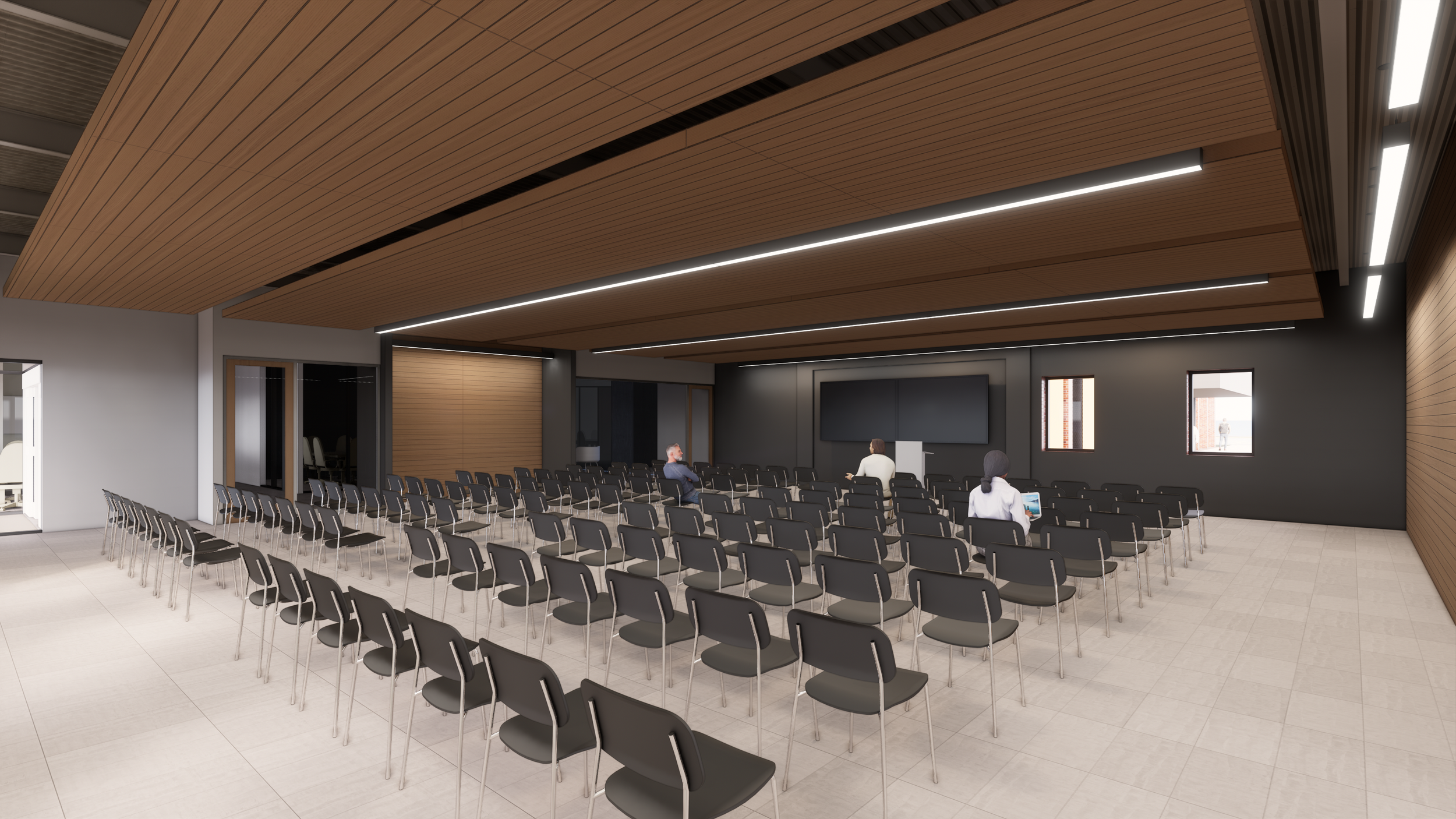
A conference room in Purdue University Northwest’s Roberts Impact Lab will serve as a flexible space for presentations and events. Image: Shive Hattery Architecture + Engineering
The Roberts Impact Lab did not begin as a conventional laboratory renovation. Instead, it grew out of a broader institutional strategy to create an innovation ecosystem supporting startups, technology development, and industry partnerships.
According to Jacob Lenson, assistant vice chancellor for campus planning, infrastructure and facilities at Purdue University Northwest, the concept has evolved over several years.
“The ‘Impact Lab’ has been an evolving strategic initiative at Purdue University Northwest for several years,” Lenson explains. “The original vision centered on the development of a dedicated facility designed to support and accelerate startup ventures while also providing resources to help scale existing businesses.”
The early concept envisioned a flexible facility offering laboratory space, collaboration areas, and entrepreneurial resources. As planning progressed, however, a new opportunity significantly shaped the project’s direction.
“While the foundational mission of the Impact Lab remains consistent—fostering innovation, entrepreneurship, and regional economic growth—the vision was further refined when the university was presented with the opportunity to access a newly installed quantum fiber network serving the Chicago and Northwest Indiana region,” Lenson says.
That infrastructure connection led the university to focus the facility’s program around three emerging technology areas: cybersecurity, artificial intelligence, and quantum computing. The shift illustrates how programming for laboratory renovations often evolves as institutions respond to new research opportunities and regional partnerships. By aligning the facility with emerging technology sectors, PNW positioned the project as both a research initiative and an economic development asset.
Translating research goals into facility requirements
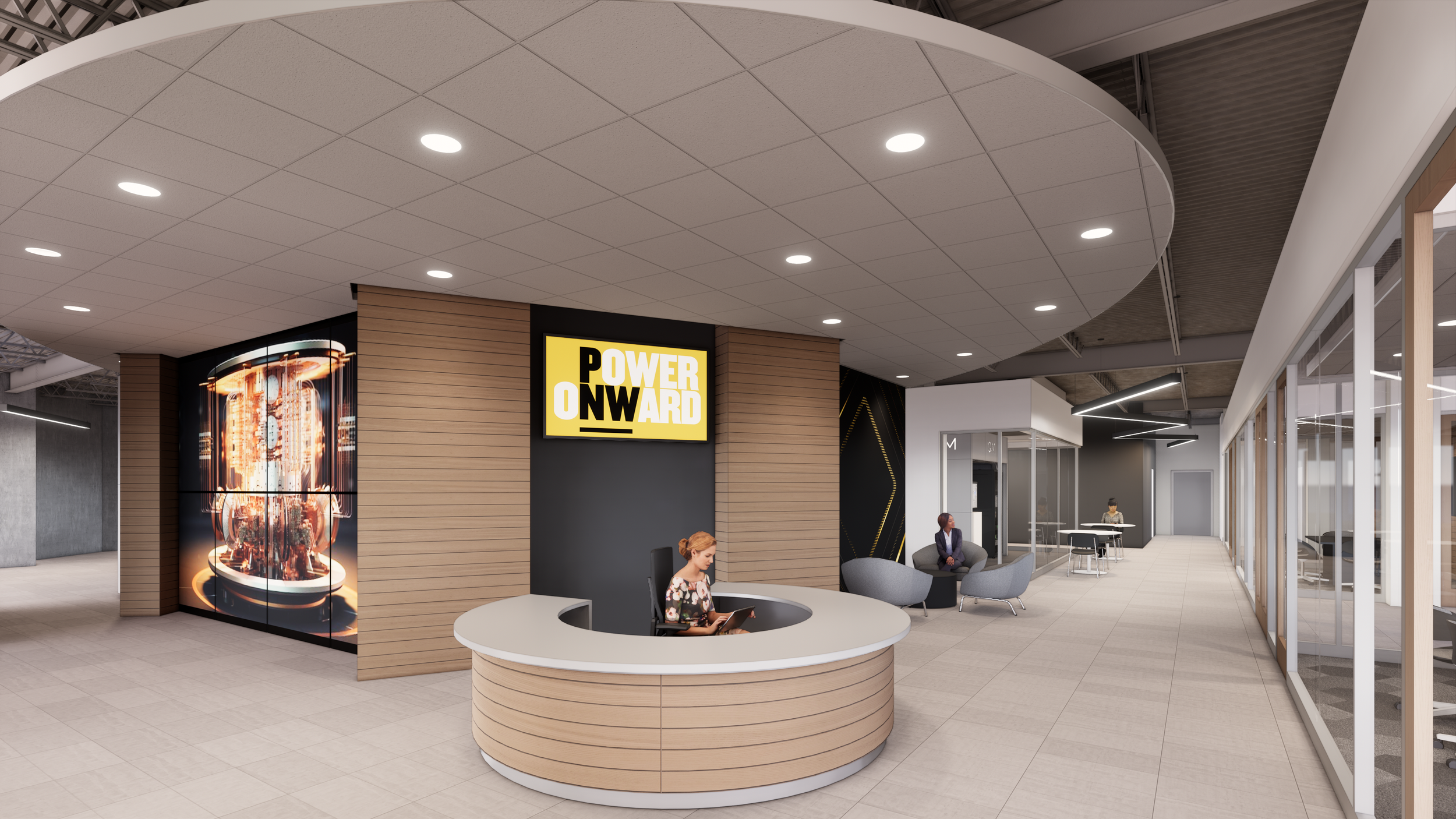
Purdue University Northwest’s Roberts Impact Lab will include a reception area with a large format digital display. Image: Shive Hattery Architecture + Engineering
For renovation projects tied to emerging technologies, defining spatial and infrastructure requirements early can be particularly challenging. Fields such as quantum computing and artificial intelligence evolve rapidly, making it difficult to predict future equipment and facility needs.
Lenson emphasizes that flexibility became a core design principle early in the planning process.
“When planning and designing facilities intended to support rapidly evolving fields such as artificial intelligence, cybersecurity, and quantum computing, flexibility must be a foundational principle,” he says. “These technologies advance at a pace that often exceeds the traditional building design and construction cycle.”
To accommodate that uncertainty, the project team prioritized adaptable infrastructure systems.
“The facility’s design prioritizes maximum flexibility to accommodate the installation, modification, and replacement of critical infrastructure systems over time,” Lenson says. “Power capacity and cooling requirements, in particular, can vary significantly depending on specific research and operational needs within these sectors.”
At the Roberts Impact Lab, those goals translated into design strategies that allow the building to evolve as technologies change.
“This approach is reflected in the strategic use of exposed utilities and modular infrastructure components that allow for efficient upgrades and reconfiguration,” Lenson says.
Assembling the project team
Purdue University Northwest’s Roberts Impact Lab will feature flexible quantum labs that accommodate evolving research. Image: Shive Hattery Architecture + Engineering
Selecting the right project partners is another critical step in the renovation planning process. For the Roberts Impact Lab, Purdue University Northwest engaged design professionals early in the building evaluation phase.
“For this project, the university did not issue a formal Request for Qualifications (RFQ) for the architectural and engineering team,” Lenson says. “Instead, the architect and engineer were engaged early in the site evaluation process to assist with due diligence across multiple existing building options under consideration.”
The project team ultimately included Shive Hattery Architecture + Engineering as architect, Millies Engineering Group as engineer, and Pangere Corporation as construction manager.
Because Purdue University Northwest operates as a public higher education institution in Indiana, procurement procedures also shaped the project delivery method. The university ultimately selected a Construction Manager as Constructor (CMc) delivery model, which allows the construction manager to participate earlier in project planning and cost estimation.
The evaluation process focused on several factors beyond cost, says Lenson. “Key evaluation criteria included proposed project schedule, recommendations for schedule and budget optimization, current workload and capacity, and demonstrated experience with comparable renovation projects.”
Establishing a realistic budget
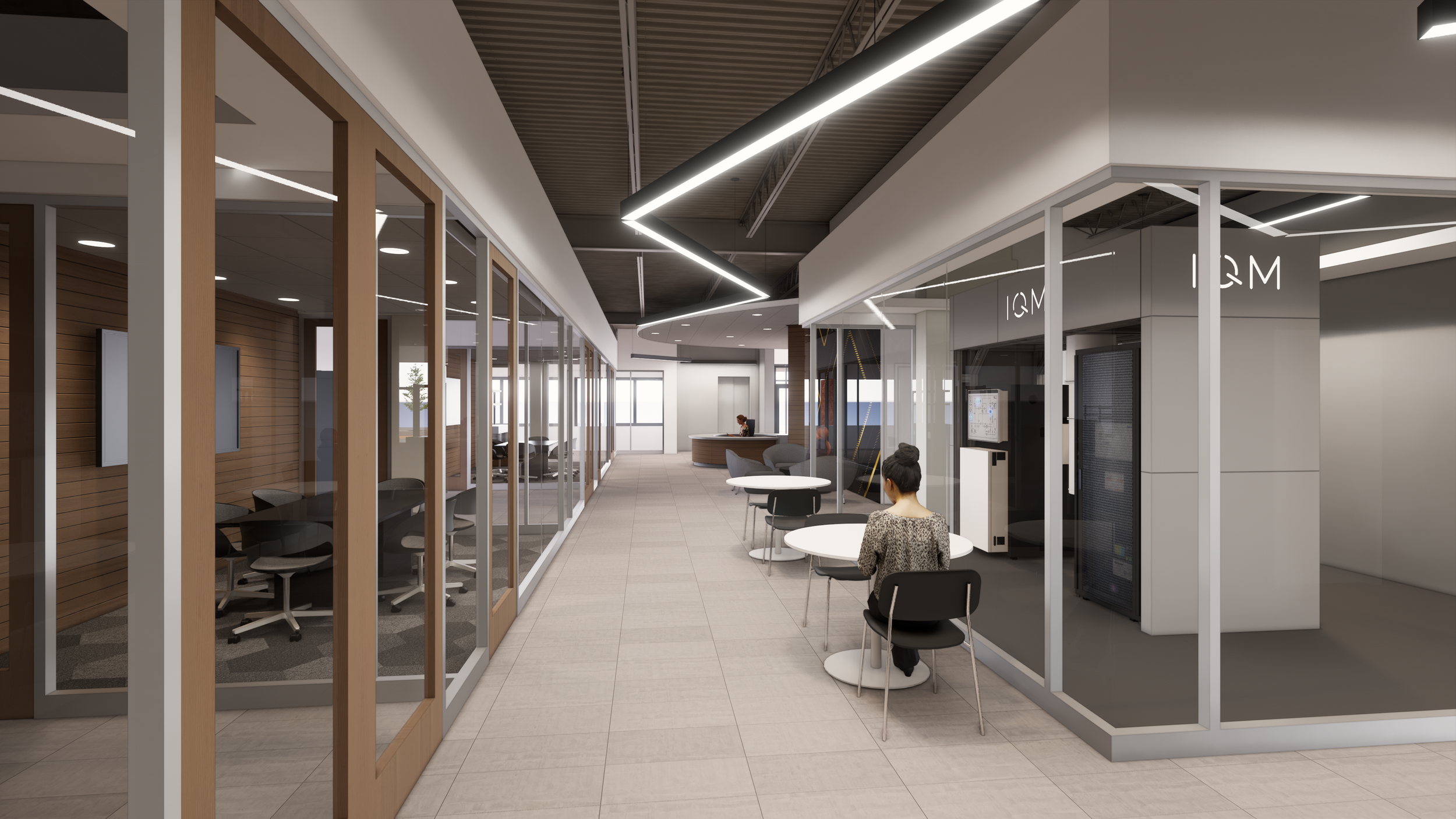
Purdue University Northwest’s Roberts Impact Lab will feature an advanced quantum computing corridor with collaborative workspaces. Image: Shive Hattery Architecture + Engineering
Budget development is often one of the most challenging aspects of renovation planning, particularly when working within existing buildings where hidden conditions can introduce uncertainty.
“The publicly referenced $10 million budget applies specifically to the second phase of construction within the building and does not include the cost of property acquisition,” Lenson says.
Rather than attempting to fully define the entire project at once, the university chose to deliver the facility in stages.
“The overall project is intentionally being delivered in smaller, strategic phases, which allows the university to remain flexible as the full building program continues to evolve,” Lenson says.
“This phased approach is particularly important given the emerging nature of the quantum industry,” he adds. “The university is developing a facility that supports technologies and research models that are still taking shape.”
Funding for the project reflects a diversified financing strategy, Lenson notes, with acquisition and renovation being supported through a combination of grant funding, university reserve funds, and donor funds.
Managing the complexities of renovation
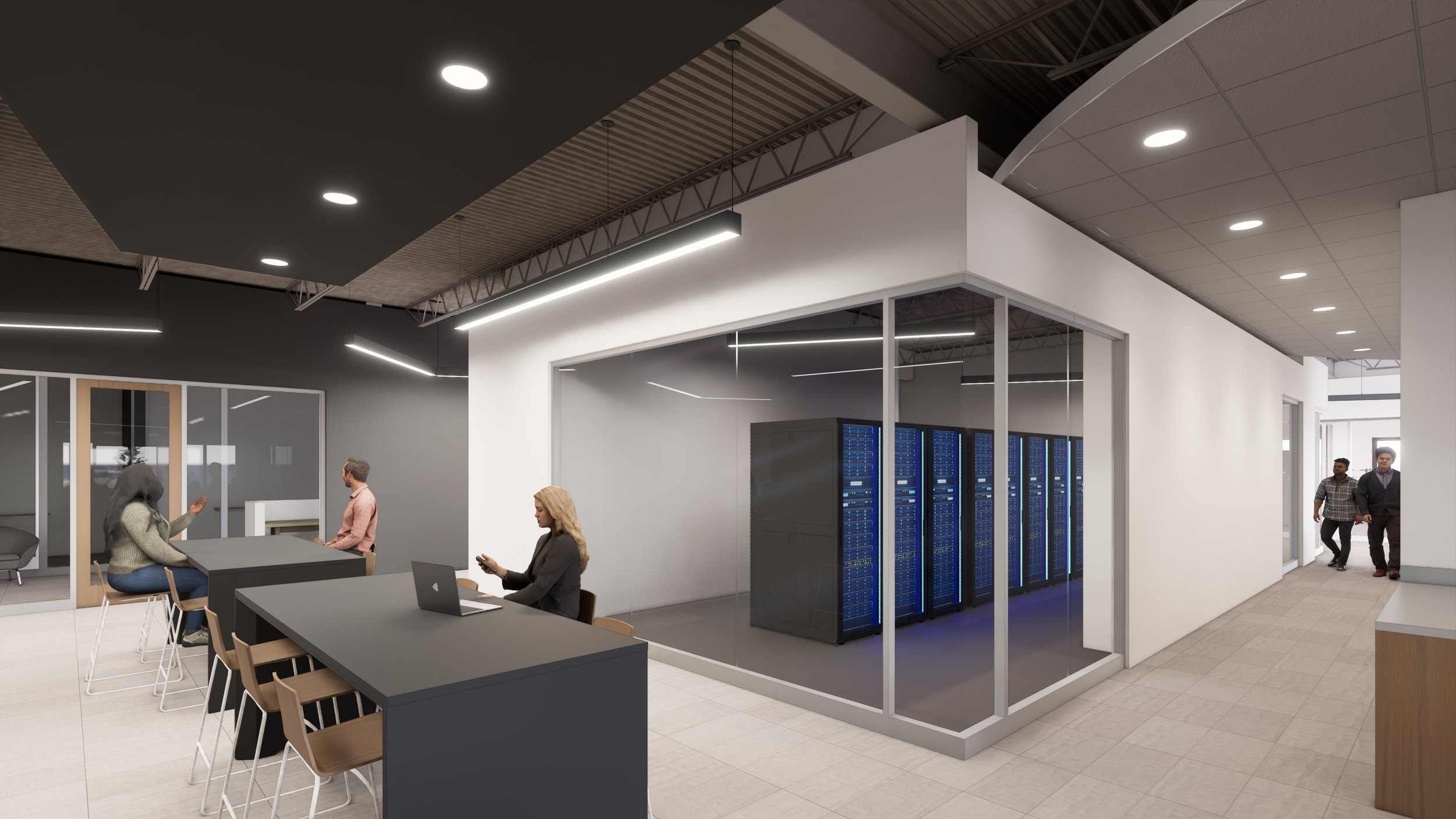
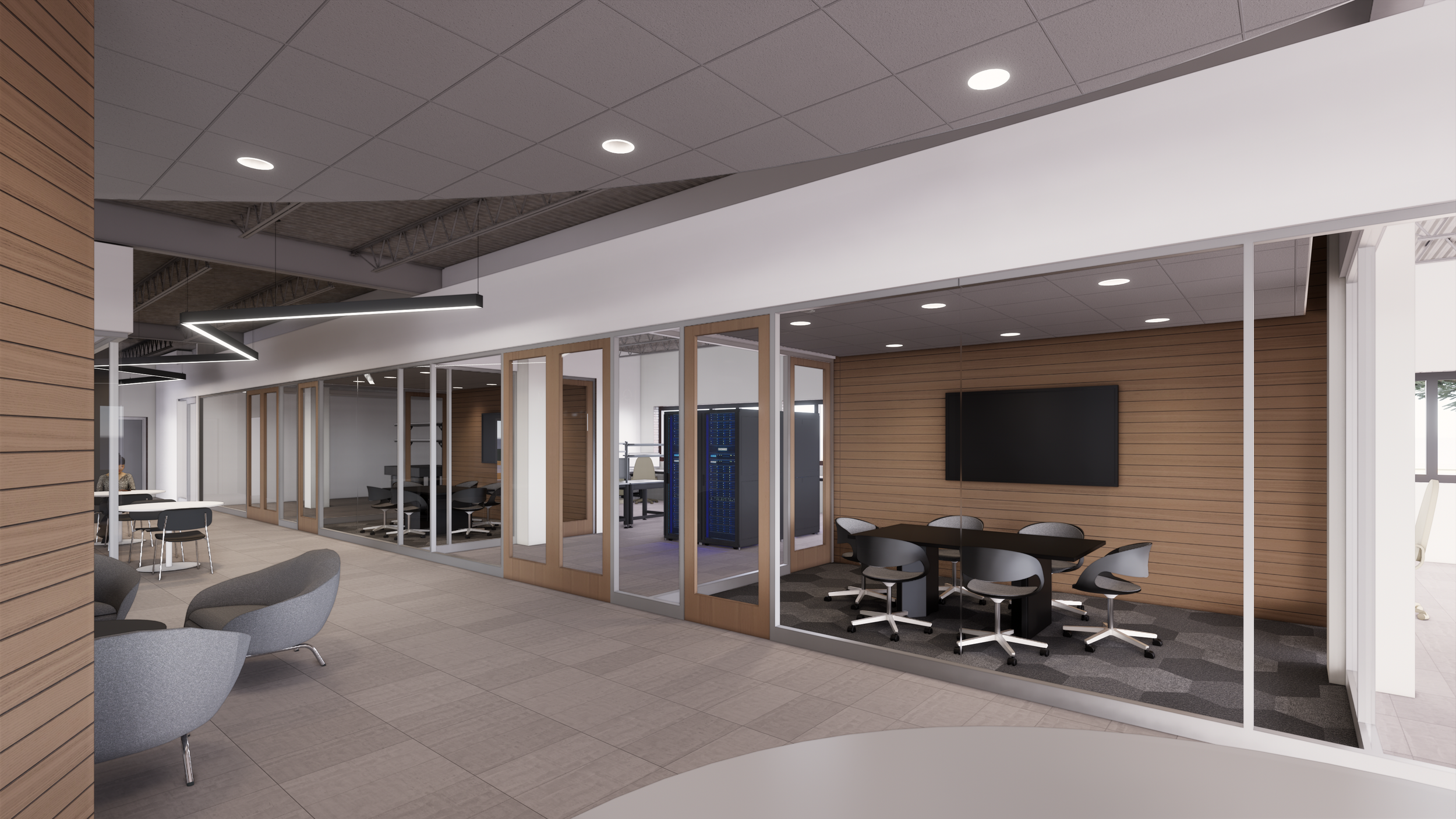
Purdue University Northwest’s Roberts Impact Lab will also include a secure server room with adjacent collaboration space. Image: Shive Hattery Architecture + Engineering
Renovating existing buildings introduces a range of challenges that rarely appear in new construction projects. Even thorough building assessments cannot always reveal every condition hidden within walls, ceilings, or infrastructure systems.
“When acquiring or renovating an existing facility, it is common to encounter unforeseen conditions despite conducting comprehensive due diligence,” Lenson says. “This project is no exception.”
Despite conducting detailed pre-acquisition assessments, additional issues surfaced once work began.
“Following acquisition and during early construction activities, additional unforeseen conditions were identified that required further evaluation and engineered solutions,” he says.
Among the discoveries were code-compliance issues and conflicts with existing building systems.
“During Phase 1 construction, we also uncovered non-compliant wall assemblies that lacked proper insulation or did not extend to the structural deck as required by code,” Lenson explains. “Additionally, we encountered conflicts with existing mechanical, electrical, and plumbing (MEP) systems that affected ceiling heights and aspects of the intended design aesthetic.”
For design teams looking to proactively address these kinds of code conflicts, the 2026 Lab Design Conference is offering an intimate, hands-on workshop—“Navigating Code Conflicts in Lab Design”—where participants will gain practical strategies to enhance lab safety, efficiency, and compliance in real-world renovation and retrofit projects. Add this workshop to your Lab Design Conference ticket—hurry, spots are limited!
To mitigate similar surprises in later phases, the university elected to issue an early demolition package for Phase 2, Lenson says. “By exposing existing conditions earlier in the process, we can reduce the likelihood of change orders, improve cost certainty, and better maintain the overall project schedule once final documents are approved and construction proceeds.”
Coordinating stakeholders and decision-making
Another common challenge in complex renovation projects is coordinating communication among stakeholders.
“Communication on a project of this scale and complexity presented meaningful challenges,” Lenson says. “The program for the building was developed through input from a large university committee, external partners, and industry experts.”
Early in the process, however, the design team struggled with unclear decision authority. The university eventually refined the communication framework by appointing a single representative to coordinate design direction.
“A designated committee spokesperson was empowered to represent the collective vision and establish clear direction with the architects and engineers,” Lenson says. That structure helped streamline communication and reduce conflicting feedback during later design phases.
Designing for an uncertain future
Ultimately, the Roberts Impact Lab renovation highlights one of the most important principles in modern laboratory design: buildings supporting innovation must themselves be adaptable. Facilities intended for emerging technology sectors cannot rely on static infrastructure or rigid planning assumptions.
“The most significant lesson is recognizing that facilities supporting emerging industries—particularly quantum technologies, artificial intelligence, and cybersecurity—must be designed with the expectation of continuous evolution,” Lenson says.
Rather than attempting to predict every future need, the project team focused on creating a flexible platform that can adapt over time.
“A successful project is not one that attempts to anticipate every future need, but one that is structured to accommodate change over time with minimal disruption and maximum long-term value,” he says.
For universities and research institutions planning renovation projects, the Roberts Impact Lab offers a clear takeaway: successful laboratory facilities are not just designed for today’s research—but for the discoveries that have yet to emerge.