
The Science of Today’s Lab Design: Creating Shared and Versatile Spaces
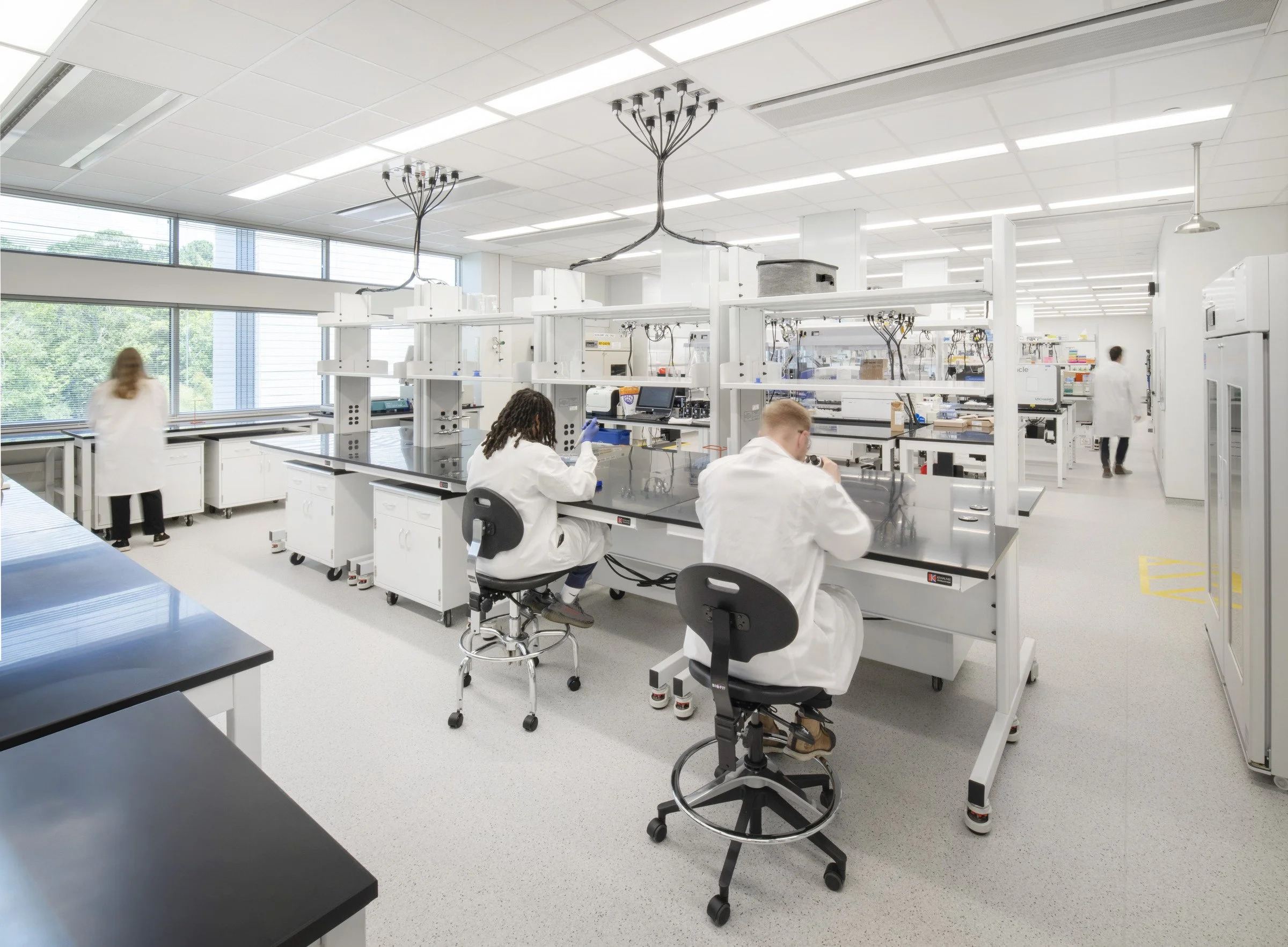
Shared benching, mobile casework, and overhead utility distribution support a flexible laboratory environment that can adapt as research needs and technologies evolve. Image: Courtesy of Hanbury
Chris Small, PE, LEED AP, principal and science market leader at Hanbury, is co-author of this piece.
Today’s laboratories and other scientific research environments are evolving at a rate that often exceeds the intent of standard facility design. As a result, more organizations are conceptualizing the layout and functionality of their spaces as long-term assets that are inherently adaptable. This shift in mindset is accelerating the adoption of planning models that prioritize shared equipment zones, modular lab configurations, and infrastructure sized for unknown future needs.
Central to this concept is a “long life, loose fit” (LLLF) approach, in which base-building systems are designed generically rather than serving a single research discipline or user. This methodology allows reorganization with minimal disruption as new scientific priorities emerge. Additionally, the rise of multi-tenant research establishments is reshaping expectations for how daily workspaces operate.
Evolving factors impacting lab design
The default expectation for labs is to serve a constantly changing industry that supports boundary-pushing research and advancing technology. Future-proofing has become necessary, and the current revolution driven by artificial intelligence (AI) adds a new dimension to what it means to maintain a flexible design. AI has quickly established itself as a continuous driving force of change as a component of instrumentation, processes, and analyses, all of which require integration through versatile infrastructure. Facility power loads are rising, energy demands are increasing, and the role of information technology (IT) is expanding to the point that many niche differences affect equipment management and research space, ultimately influencing design.
Automation also drives change in the life sciences with the increasing presence of robotics. Robotics is expected to become more standard throughout labs as more pharmaceutical companies lean into AI-driven research and automated manufacturing systems. The integration stage is rapidly moving from infancy to a phase defined by the data currently being collected. Many companies already deploy robots in their labs to perform repetitive and routine tasks that increase efficiency and improve user comfort. The prevailing challenge is how to best navigate which types of machines can be accommodated within individual labs based on their size and the space they occupy as labs transition into modular environments. One important differentiator is anticipating power and data demands based on whether labs are intended to be more analytical or computational, with less need for larger equipment and a more robust IT infrastructure. This leads to reliance on digital technology and the subsequent need for amenities such as server rooms and tools for data processing and security.
Making assessments based on the geographic market will also aid overall adaptability. Regions including San Francisco, San Diego, New York, and Seattle are among those that have become more notable for hosting startups that might require less infrastructure. Meanwhile, the Midwest and Great Lakes are better known for manufacturing and research and development (R&D) activities closer to commercialization.
Conceptualizing LLLF
Although the theory was not widely embraced when British architect Alex Gordon first proposed it in the early 1970s, LLLF gained momentum over the past decade as a way to develop resilient, adaptable architectural designs from both literal and figurative perspectives. The idea today is that, with appropriate infrastructure in place, any space should be able to accommodate any necessary equipment and bench requirements. Anything that is designed and installed can be removed if circumstances necessitate adaptation, removal, or reconfiguration, rather than creating a carbon footprint through construction.
The versatile “open dance floor” blueprint is expanding to include portable, mobile, and self-contained sinks rather than integrating permanent fixtures into plumbing and cabinetry. A recent report projects that the global market for lab sinks will grow nearly 8 percent by 2033, reaching more than $20.93 billion.
The LLLF mindset is not specific to the actual work setting. As the pace of technological advancement intensifies, larger companies are more aggressive in pursuing smaller, innovative organizations to secure greater market share. At the same time, the increasing number of startup ventures is more likely to seek out merger and acquisition (M&A) activity. Versatility is essential across all business facets to avoid costly, time-consuming renovations. According to McKinsey & Company’s recent analysis, there’s renewed optimism for M&A dealmaking following some volatility shaped by geopolitical and macroeconomic tensions and regulatory uncertainty. This market reached $372 billion in 2025, and an upward trajectory is anticipated in 2026. With appropriate infrastructure, long-term capital and operational risks are reduced, even as investors and facility management change.
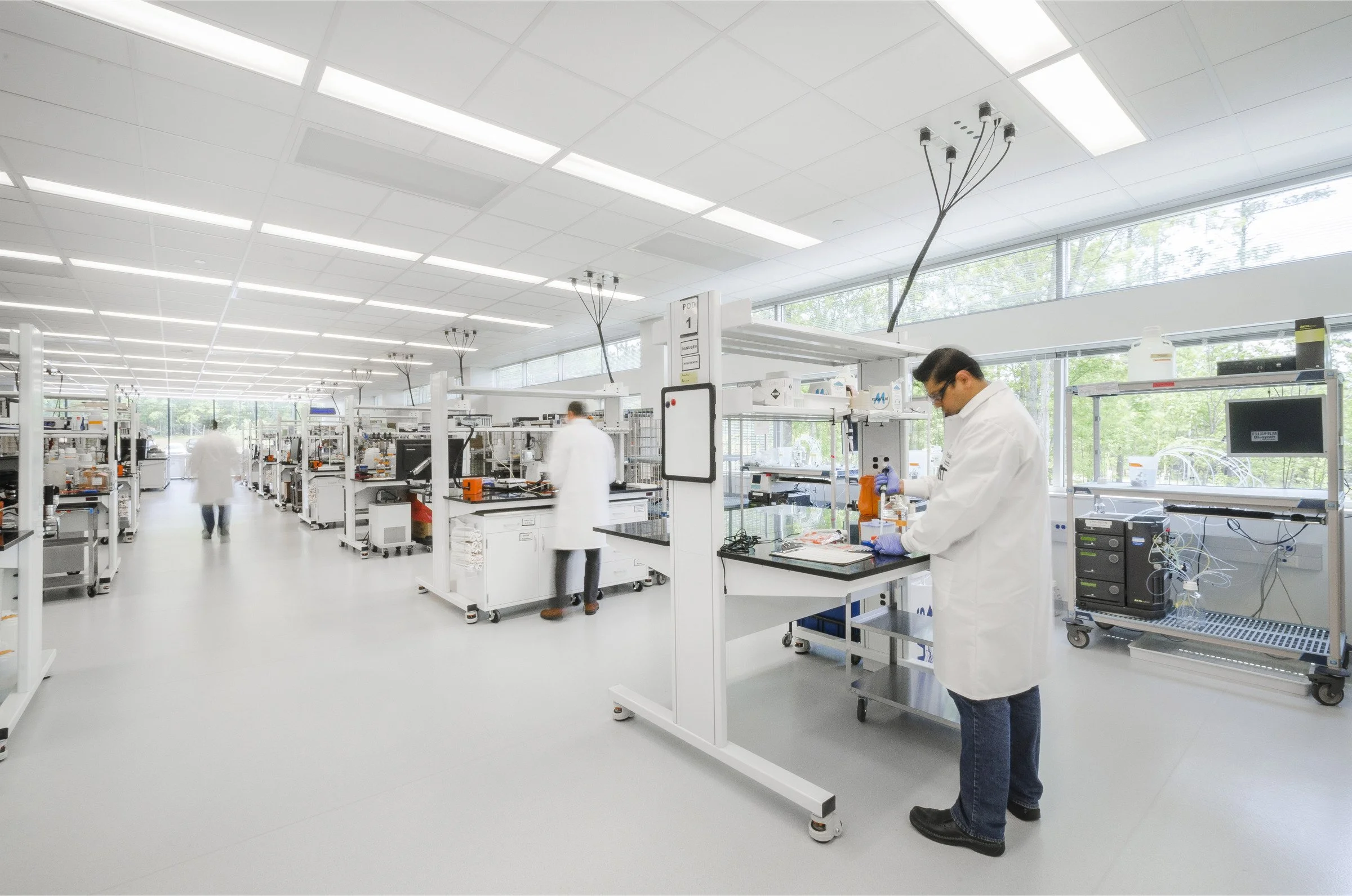
Open planning and modular workstations create a versatile lab environment that supports changing workflows, emerging technologies, and long-term adaptability. Image: Courtesy of Hanbury
There are challenges to maintaining LLLF in multi-tenant environments. For example, the National Fire Protection Association (NFPA) limits the quantity of flammable and combustible materials and the Occupational Safety and Health Administration (OSHA) chemical hygiene plan requirements must align with “control area” compliance based on floors or units, not per individual company. It’s essential to address factors such as fire separation, chemicals, floor occupancy, and the sharing of corridors, elevators, and stairs in leases and contracts. Protecting the integrity of intellectual property is also a significant issue in this setting, particularly where business is discussed openly.
Design elements are catching up through various strategies, including intentionally building walls or visual and acoustic privacy barriers to make specific zones more secure by creating physical separation, and installing pods that require keycard access. Storage areas with lockers, cabinets, and other containers that can be securely locked are also popular options. Security can be maintained while other communal practices for autoclaves, deionized water systems, and other expensive items can succeed in tandem.
Another risk-reward tradeoff for multiple tenants includes reduced capital expenditure. Spec labs are an increasingly popular recent trend, as startups require R&D space but don’t have access to capital or financing. These labs include the minimum infrastructure, including casework, sinks, and a modest number of fume hoods, installed by landlords so tenant R&D companies avoid the significant capital investment in exchange for increased monthly operating costs.
Establishing metrics and measurables
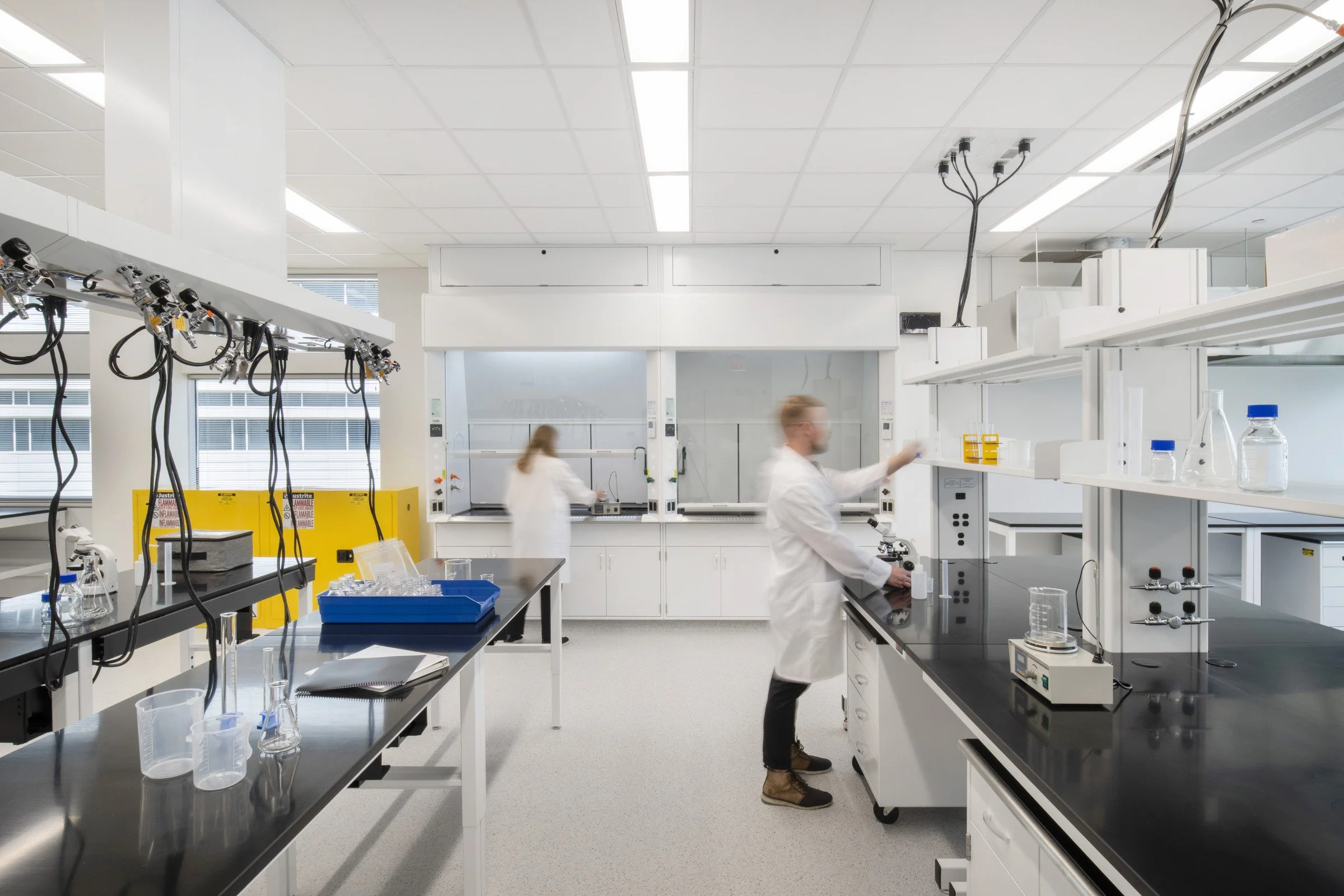
Integrated utilities, flexible bench systems, and specialized work zones help laboratories balance adaptability with the infrastructure demands of modern research. Image: Courtesy of Hanbury
Confirming the legitimacy of a future-proofed lab environment can be accomplished through key performance indicators (KPIs) and other metrics that measure effectiveness, including:
Compliance and safety. Integrating various strategies into plans that collectively adhere to appropriate regulatory boards, internal environmental, health, and safety standards, and other authorities with jurisdiction mitigates the risk of violations.
Cost of future renovation. Planning that reduces the number of change orders initiated during the original construction is crucial, such as setting standards for supplied utilities rather than designing strictly to what is needed at each individual location (e.g., bench, wall, floor).
Capacity utilization. It’s essential to find a balance between workspaces that are too empty or too crowded. One solution is to anticipate the space for growth from human and technological perspectives, with allocated opportunities to introduce AI on an ongoing basis.
Equipment utilization. Assess how the equipment will be used. For example, how many fume hoods are required, and where will unused chemicals be stored?
Cost of infrastructure maintenance. Evaluate if the level of equipment efficiency is sustainable.
The overall efficiency of lab space is typically measured subjectively, with safety and compliance ranking highest among the measurable factors. To overcome the reputation of being an inefficient space, determine laboratory efficiency by dividing usable net square footage by the total area built (gross square footage) to provide clarity on the appropriateness of aisleways, egress, and safety stations compared with where work is performed.
Talent and team
Operational staff, C-suite executives, third-party planners, and on-site end users should share responsibility for effective laboratory design. When teams agree early in the process, expectations are more likely to be met through concepts that are future-focused and amenable to the current workforce. By framing labs as platforms for change, building owners and developers can more confidently protect long-term investments, advance scientific output, and maintain operational resilience amid the challenges of technological transformation.

Chris Small, PE, LEED AP, co-author of this piece, has witnessed the power of architecture in research and science facilities from his 15 years leading design teams in both the private sector and in higher education. His projects have been recognized for their results—from attracting top talent and enticing bright minds into STEM fields of study, to inspiring interdisciplinary collaboration and flexing as needed to adapt to advances in science research. A respected authority in research facility expertise, Chris regularly speaks at conferences highlighting trends in Science & Technology design.