
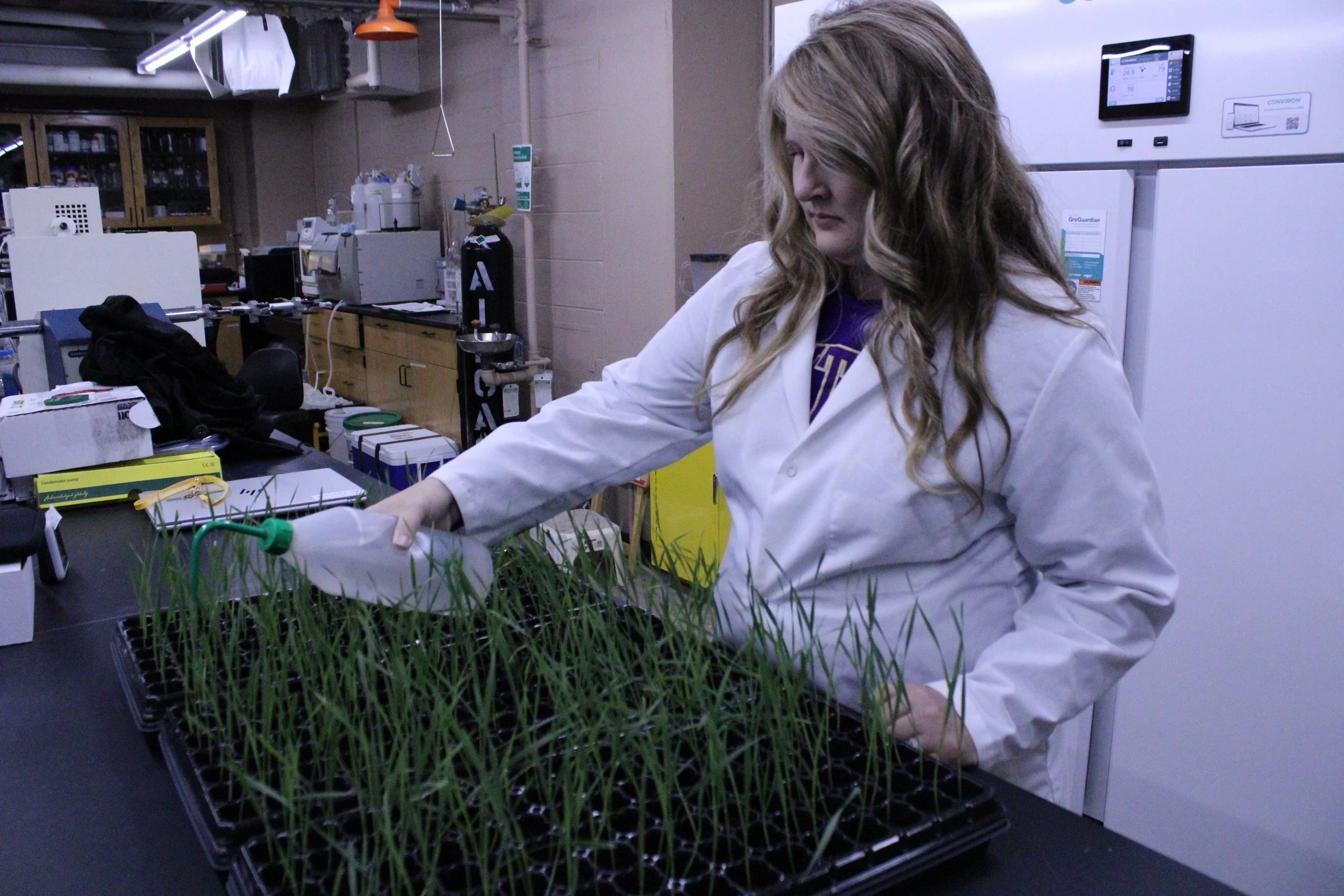
In this photo of the previous configuration, WIST’s laboratory equipment was spread into three separate room in two separate buildings. The Plant Growth Chamber in the background shared a lab space with another department, making the space less efficient for research for both entities. All images: Courtesy of Wisconsin Institute for Sustainable Technology
As demand grows for sustainable packaging and circular economy solutions, research facilities are being challenged to provide more sophisticated testing capabilities while maintaining efficiency, flexibility, and scientific rigor. At the University of Wisconsin–Stevens Point, the Wisconsin Institute for Sustainable Technology (WIST) recently addressed that challenge with the opening of its new 2,800-sf Compostability Testing Laboratory, a facility designed to consolidate operations, improve workflow efficiency, and support the next generation of sustainable materials research.
Opened in May 2026, the laboratory occupies much of the university's Waste Education Center and serves as one of only a handful of facilities in the US approved to conduct compostability testing for organizations such as the Biodegradable Products Institute (BPI) and DIN CERTCO. The project not only expanded WIST's testing capabilities but also provided an opportunity to rethink how laboratory design can support highly specialized research workflows.
Eliminating workflow bottlenecks
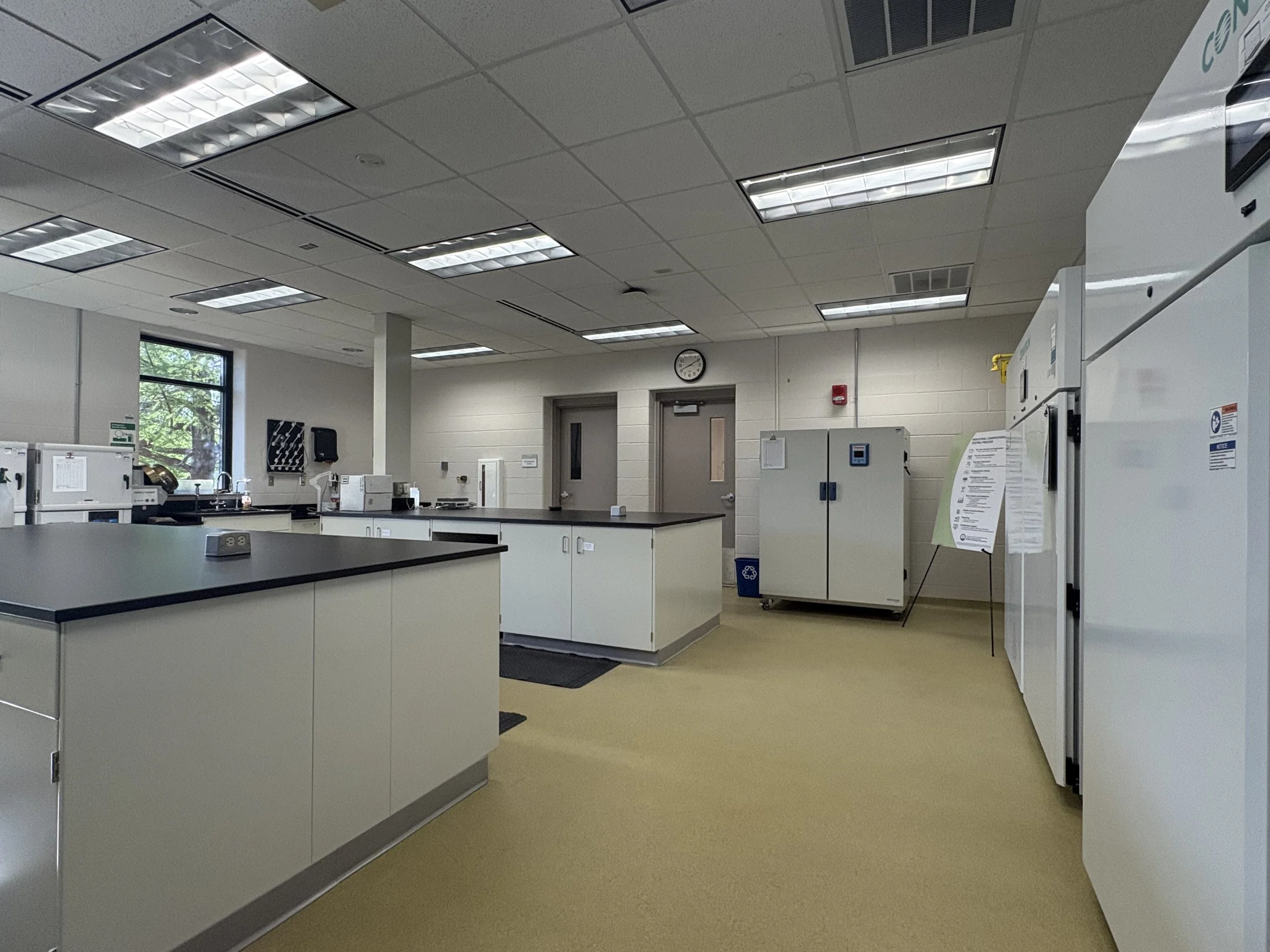
The portion of the new lab with the plant growth chambers is open, airy, well-ventilated and with plenty of work station space for plant care and materials processing.
One of the primary drivers behind the new facility was the need to overcome significant operational inefficiencies created by WIST's previous laboratory arrangement.
Prior to the move, compostability testing operations were spread across three laboratories located in two separate buildings. While functional, the configuration complicated what is fundamentally a sequential research process.
“One of the biggest operational challenges in our old setup was that workflows were spread across three laboratories in two buildings,” says Paul Fowler, executive director, Wisconsin Institute for Sustainable Technology, University of Wisconsin-Stevens Point.
The logistical challenges were considerable. Compost generated during disintegration testing would later be used in plant growth trials, requiring technicians to move large numbers of planted seedling trays between facilities. Similarly, biodegradation studies often required the transportation of dozens of glass vessels across campus.
These repeated movements introduced risks to sample integrity while consuming valuable staff time.
Those experiences became a foundational design lesson for the new facility. “The fundamental lesson was that experiments with sequential workflows should be co-located, preferably on the same level, with uninterrupted paths so carts and trolleys can move safely and efficiently over the shortest possible distances,” Fowler says.
As a result, the new laboratory was organized around workflow continuity. Functions that support sequential testing processes were brought together within a single facility, eliminating the need for researchers to move materials between buildings and significantly reducing opportunities for disruption or sample loss.
Balancing shared infrastructure with scientific precision
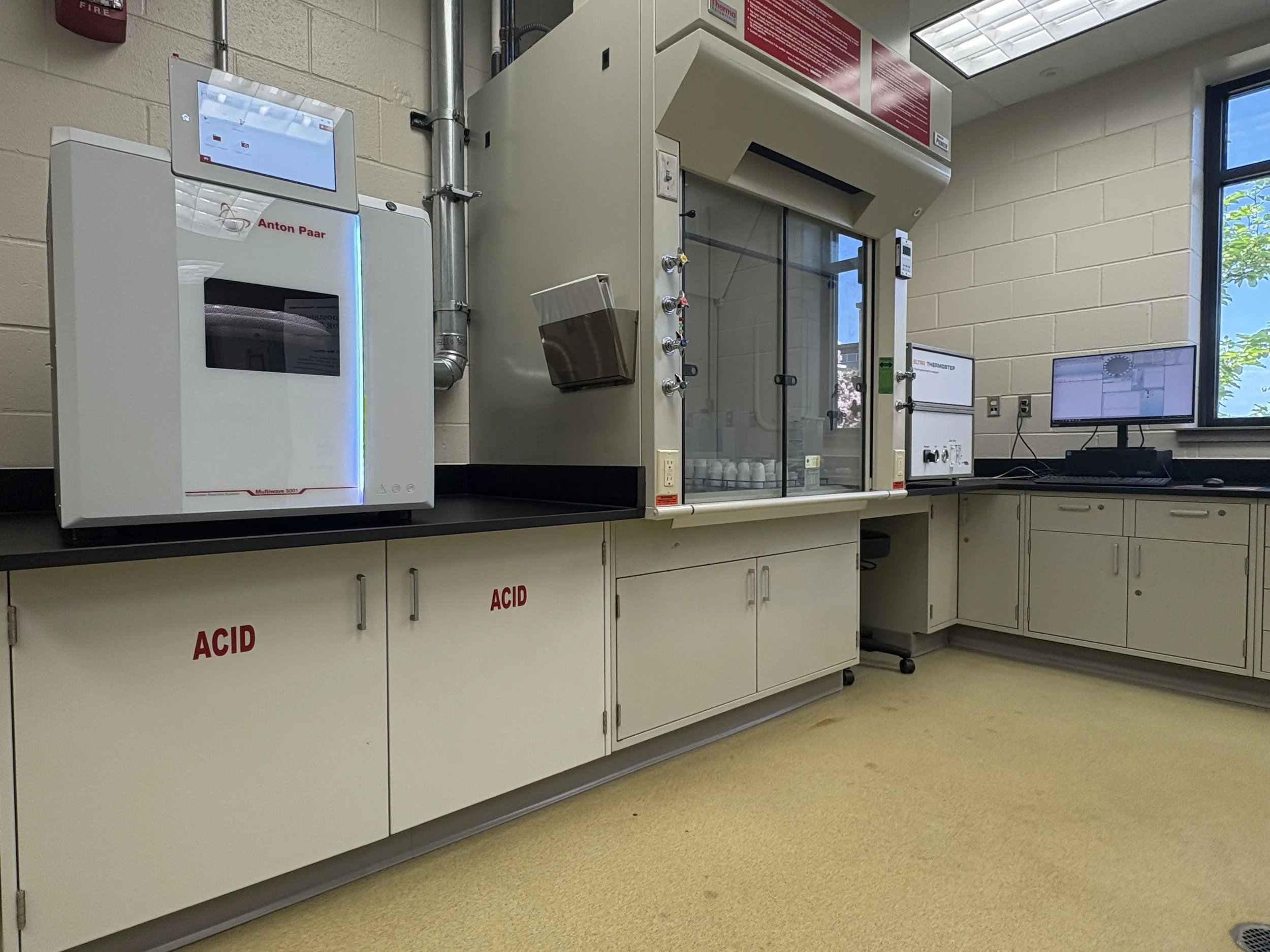
New vent hoods help provide enhanced ventilation for the equipment.
Although consolidation was a major project goal, not every function could be housed in the same environment. The design team carefully evaluated which operations shared infrastructure requirements and which required separation to preserve testing accuracy and staff productivity.
Biodegradation testing, disintegration studies, and plant growth trials all involve long-duration experiments that operate continuously for weeks or months. These activities rely on specialized incubators and growth chambers that require consistent environmental conditions, generate heat, create noise, and depend on emergency backup power.
Because of these common characteristics, WIST grouped these activities together within a shared laboratory environment. The arrangement allowed the team to centralize backup power infrastructure while simplifying environmental management.
Analytical testing, however, required a different approach. Materials characterization and chemical analysis depend on stable environments that minimize vibration, noise, and other potential sources of interference. These functions also require access to specialty laboratory gases and highly sensitive instrumentation.
By locating analytical operations separately from long-term experimental activities, the design team created a quieter and more controlled environment for precision work while also simplifying specialty gas distribution throughout the facility.
The result is a laboratory that balances operational efficiency with scientific rigor, ensuring each testing function receives the environmental conditions necessary for reliable results.
Designing around accreditation requirements
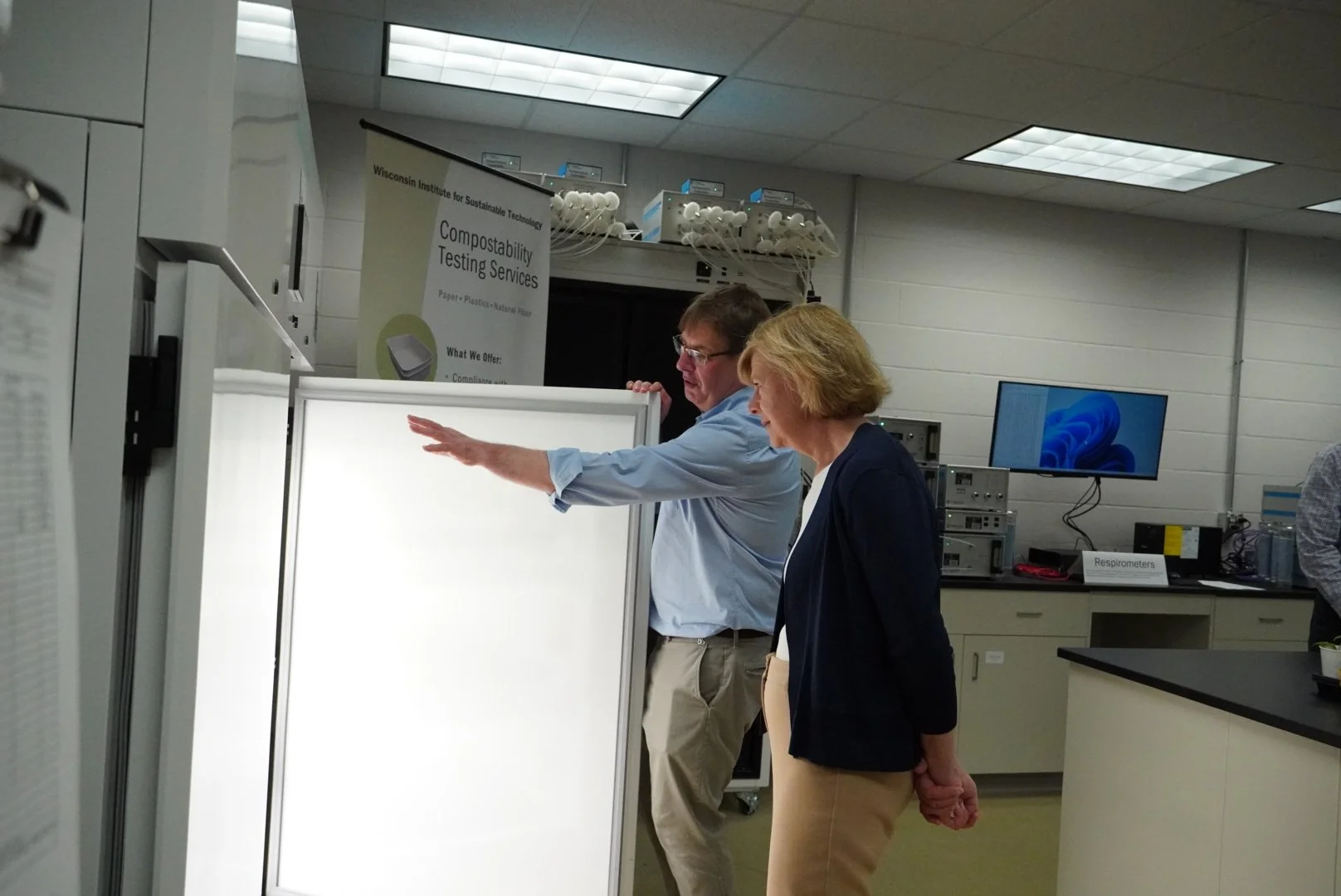
Dr. Paul Fowler discusses plant growth trials in the new laboratory with US Senator Tammy Baldwin on May 27.
As an ISO 17025-accredited laboratory approved by BPI, WIST faced a unique set of design considerations related to quality assurance and regulatory compliance. Laboratory systems needed to support calibration, verification, and ongoing maintenance by qualified third-party providers. This requirement influenced equipment selection throughout the project.
Rather than relying on costly room-level environmental conditioning, the team selected individual incubators and growth chambers capable of maintaining highly stable testing conditions within their own controlled environments. This approach reduced infrastructure complexity while ensuring the laboratory could continue meeting accreditation requirements.
The strategy also provided flexibility for future equipment upgrades and replacement, allowing environmental controls to remain closely tied to individual testing systems rather than the building itself.
End users input to shape the final design
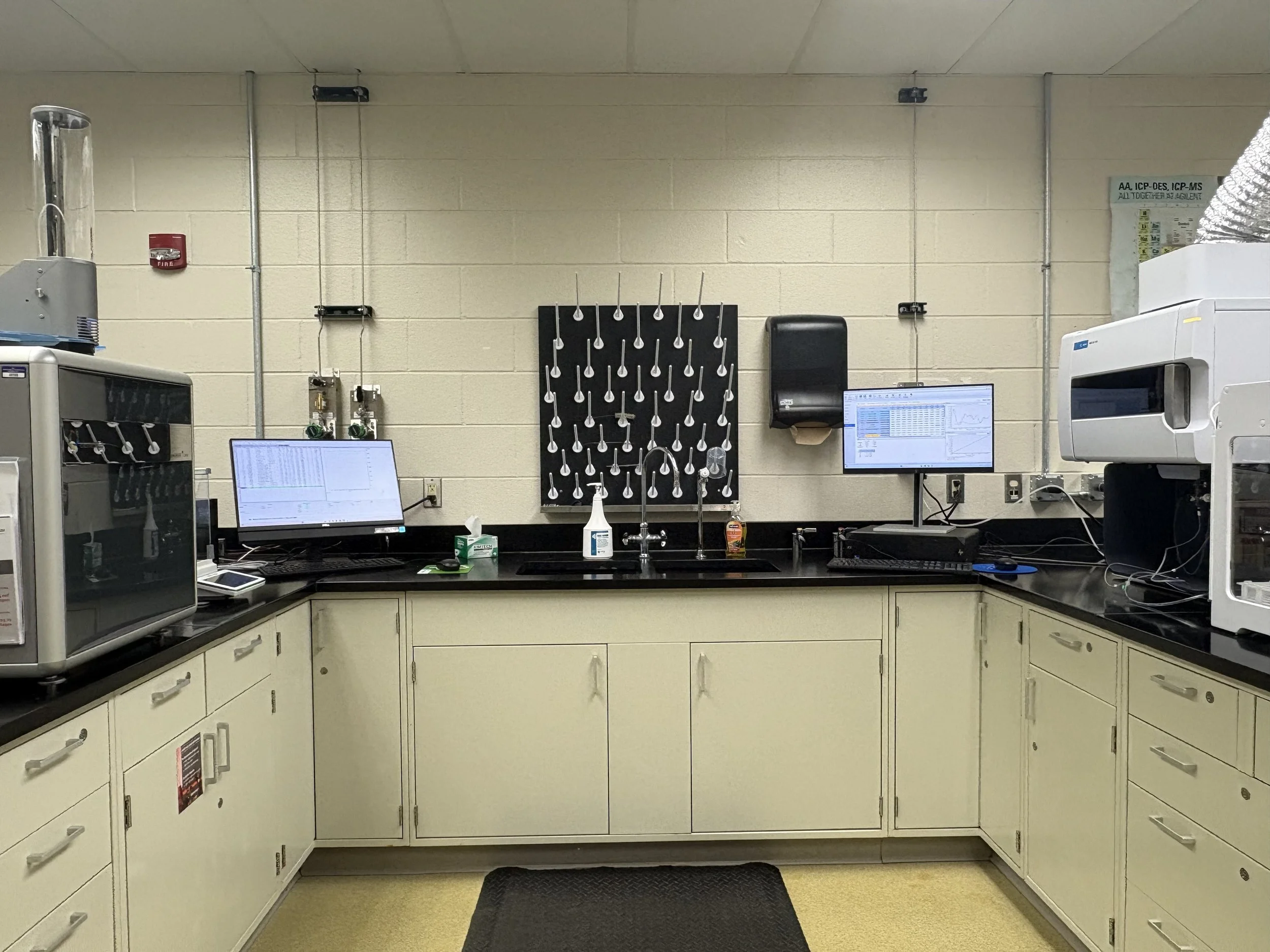
Cabinetry ensures appropriate work space for the complex instrumentation.
A key factor in the project's success was the extensive involvement of laboratory users throughout planning and construction. Researchers, technicians, university facilities personnel, project managers, and institutional leadership participated in weekly meetings during the design process. Updated drawings were routinely shared and reviewed, creating continuous opportunities for feedback. “The planning process was collaborative from the start,” says Fowler.
One notable example involved the placement of the laboratory's disintegration incubators. Lab users recommended locating the incubators within a dedicated room inside the primary laboratory space rather than placing them directly within the larger testing area. The change helped improve air-change management and reduce the migration of odors into adjacent laboratory spaces.
Unexpectedly, the room also created an ideal location for air-drying compost and test materials after disintegration studies were completed, providing an additional operational benefit that may not have emerged without direct user input.
The experience highlights the value of engaging laboratory personnel early and often during design, particularly when developing specialized research environments where day-to-day operational knowledge can reveal opportunities not immediately obvious in architectural plans.
Planning for growth and evolving research needs
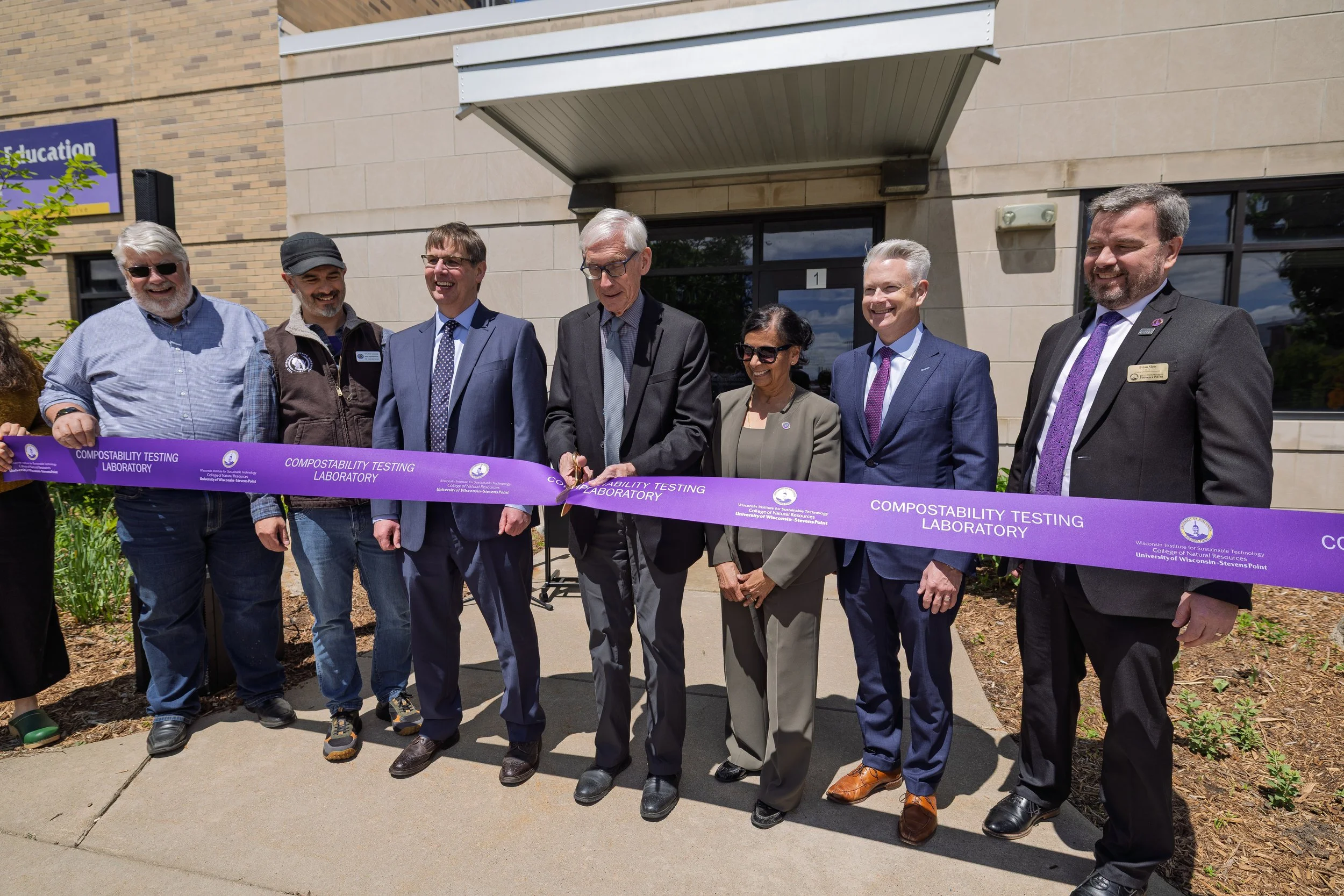
Gathered for the May 20, 2026 ribbon cutting, from left to right: Stevens Point Mayor Mike Wiza, Wisconsin Representative Vincent Miresse, WIST executive director Paul Fowler, Wisconsin Governor Tony Evers, UWSP Chancellor Pratima Gandhi, WEDC director John Miller, and College of Natural Resources Dean Brian Sloss.
While the facility was designed to support current compostability testing operations, WIST also recognized the importance of future adaptability. The laboratory was intentionally equipped with utility infrastructure that exceeds current requirements, including expanded electrical capacity, centralized distilled water distribution, and compressed air systems sized for future growth. This forward-looking approach allows new instruments and testing technologies to be added without major infrastructure modifications.
Flexibility was also incorporated through the selection of mobile and reconfigurable equipment. Rather than investing in fixed systems, the laboratory was designed so layouts can evolve as research priorities change. Laboratory casework and circulation pathways were similarly planned to accommodate future reconfiguration while maintaining efficient workflow patterns. These decisions position the facility to expand beyond its current capabilities as demand for sustainable materials testing continues to grow.
The laboratory's mission centers on advancing sustainable materials and circular economy solutions, and those principles extended to the facility itself. Rather than constructing a new building, UW–Stevens Point elected to renovate and repurpose existing campus space within the Waste Education Center. The adaptive reuse strategy reduced the environmental impact associated with new construction while allowing the university to create a highly specialized research facility within an existing structure.
At the same time, consolidating previously scattered operations into a single location improved operational efficiency, reducing unnecessary movement of materials and equipment across campus.
Lessons for future laboratory projects
Looking back on the project, Fowler believes the most important lesson is the value of maintaining continuous engagement with end users throughout planning and construction.
“Keep end users involved throughout planning and construction,” he says.
The laboratory team invested significant effort in evaluating workflows, equipment requirements, utility needs, and sample movement patterns before construction decisions were finalized. Regular collaboration between researchers and facilities staff helped ensure that scientific requirements, operational realities, and construction constraints remained aligned throughout the project.
“Ultimately, we attribute the success of this project to the close collaboration between technical staff, facilities professionals, university project managers, and institutional leadership from the very start,” Fowler says.
The result is a laboratory that not only supports nationally recognized compostability testing but also demonstrates how thoughtful workflow analysis, user engagement, and flexible infrastructure planning can create research environments capable of adapting to future scientific challenges.