
Rhode Island Unveils Modern Laboratory to Advance Public Health and Safety
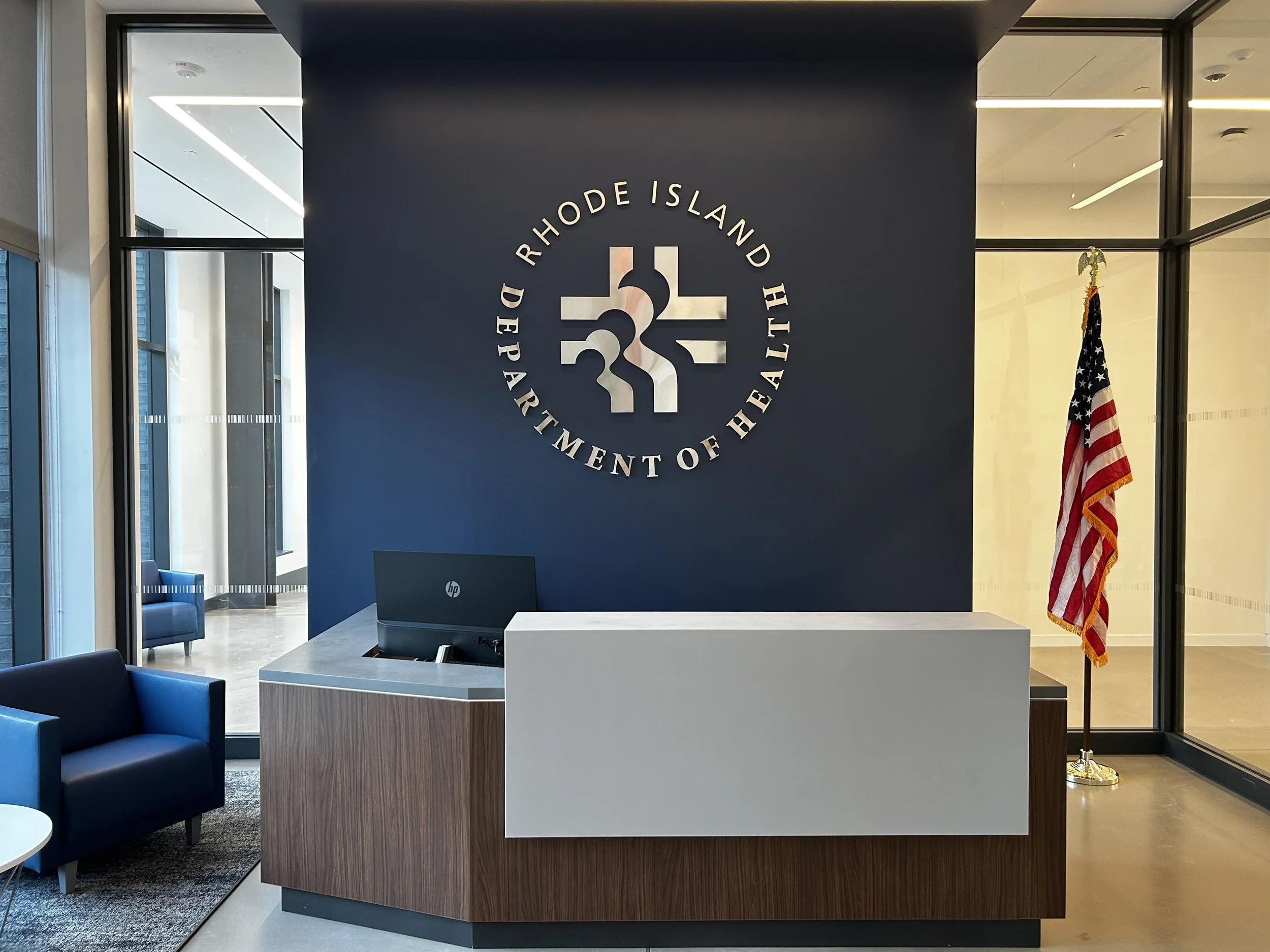
Rhode Island’s new 80,000-sf State Health Laboratory in downtown Providence reimagines how the state protects public health, offering modern, flexible space to help RIDOH respond to evolving challenges. Image: Courtesy of RIDOH
When the ribbon was cut on Rhode Island’s new State Health Laboratory in downtown Providence on October 17, 2025, it marked more than just the opening of a gleaming, 80,000-sf facility—it represented a complete reimagining of how the state safeguards public health.
The new lab, located at 150 Richmond Street in the 195 District redevelopment area, replaces an aging facility that had long struggled to keep pace with modern demands. With a forward-looking design and cutting-edge capabilities, the new space is poised to make the Rhode Island Department of Health (RIDOH) more flexible, adaptable, and responsive to emerging threats.
The new building—developed through that public-private model—was designed not only to meet today’s operational needs but to anticipate the public health challenges of tomorrow. Equipped with modern ventilation systems, state-of-the-art instrumentation, and expanded electrical and data infrastructure, the laboratory can accommodate evolving testing methods and new technologies without major renovations.
The project team included HOK (architecture/design), Dimeo (construction), Legal & General (developer), and GRE (project management). Most other services were provided through subcontracts managed by GRE.
Further reading: Rhode Island DOH Upgrades Lab Facilities
From outdated infrastructure to future-ready design
The decision to build a new facility rather than renovate the existing laboratory came after a careful cost-benefit analysis and years of feasibility studies. According to Glen R. Gallagher, PhD, MLS(ASCP), director of the Rhode Island State Health Laboratories, the old building had simply reached its limits.
“This decision was based on several factors,” Gallagher explains. “These included feasibility studies incorporating cost-benefit analyses; the ability to maintain continuity of laboratory operations during construction of the new facility; and the ability to secure financing by pursuing a public-private partnership. The new facility will also facilitate more collaboration with private industry and academic institutions, with improved utilization of the State Health Laboratories’ specialized capabilities and facilities.”
Shaping the space through staff collaboration
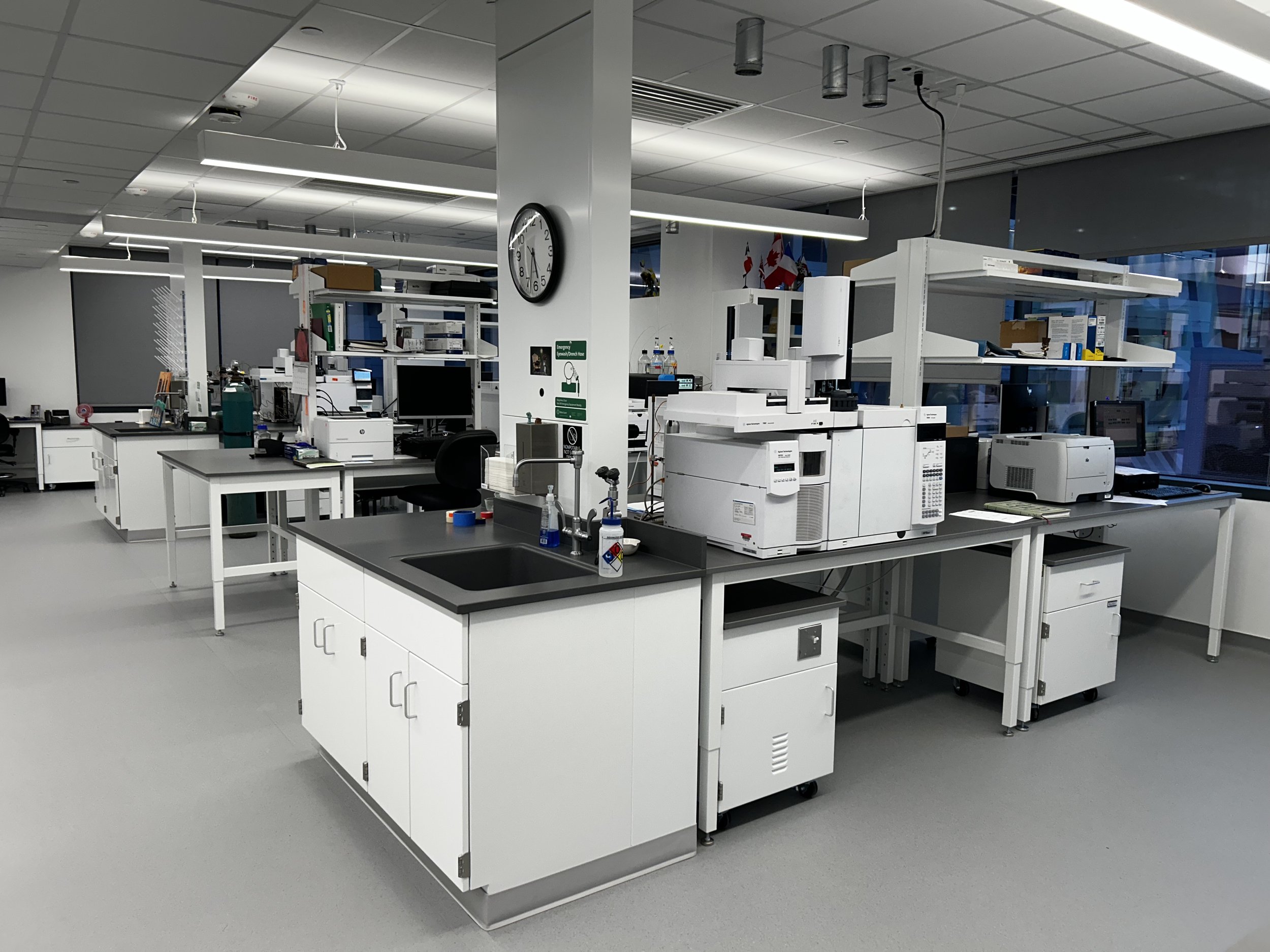
A chemistry lab in the newly developed facility, designed through a public-private partnership to meet current needs while adapting to future public health challenges with advanced ventilation, instrumentation, and infrastructure. Image: Courtesy of RIDOH
From the start, RIDOH prioritized feedback from the people who know the lab best: its staff. Gallagher emphasizes that end users were deeply involved throughout the design phase, ensuring that functionality and efficiency guided every layout decision.
“Once the general layout was established, we worked with laboratory staff and the architecture firm to identify closely related work processes and shift the floor plan to maximize efficiency,” he says. “For example, our sexually transmitted infections testing lab processes the highest volume of specimens, so we placed it as close as possible to the unit that processes and distributes samples to various labs for testing. Similarly, our clinical and forensic toxicology labs use similar equipment, so we designed a shared equipment room with laboratories for each function on either side.”
That level of operational precision has transformed how testing workflows are organized. In the old facility, work areas evolved piecemeal over decades, often driven by space limitations rather than strategic planning. The new lab, by contrast, was designed holistically—with flexibility and collaboration built into its very structure.
Meeting modern demands and emerging threats
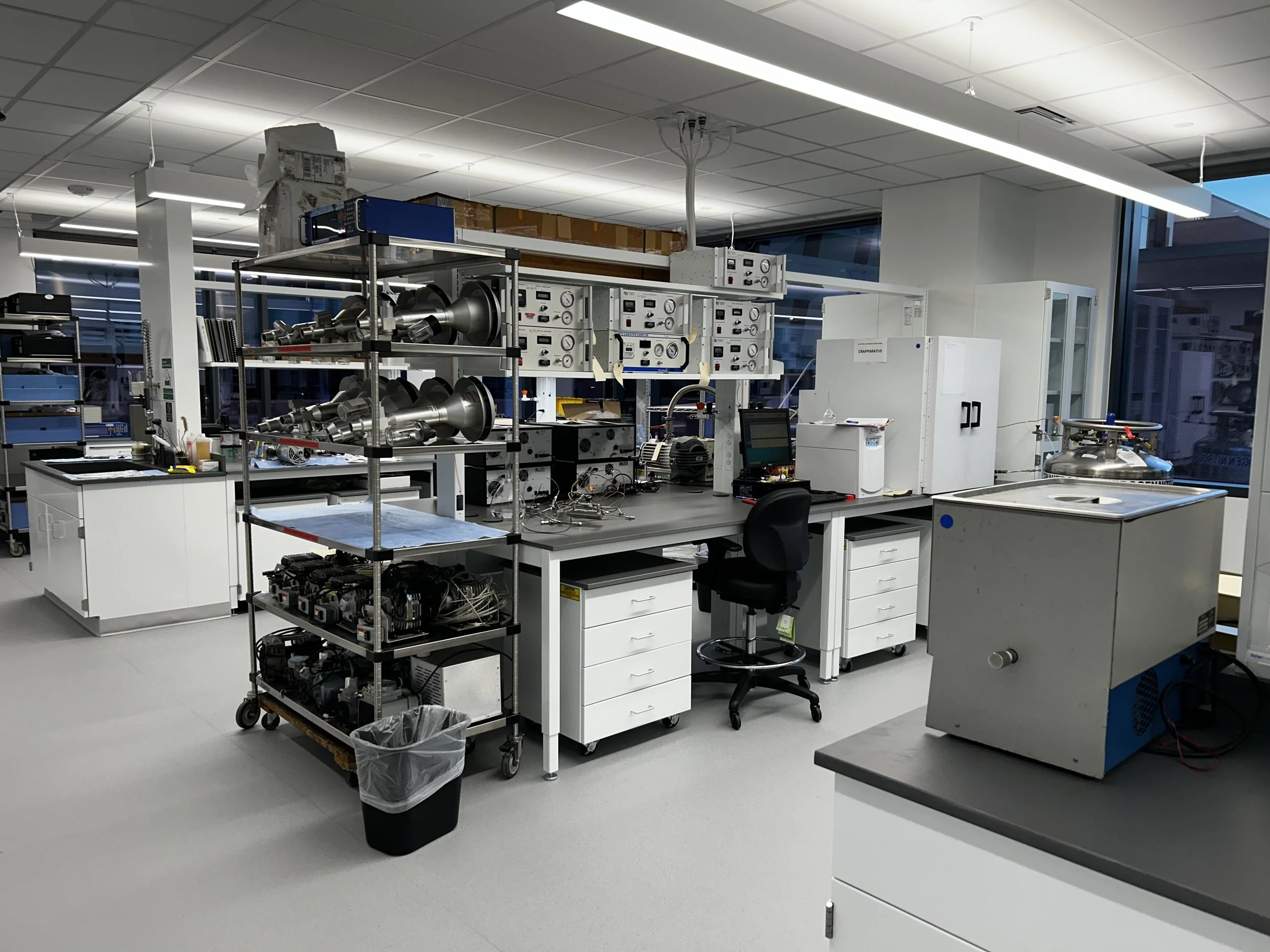
Air pollution lab in the new Rhode Island State Health Laboratory, which expands the state’s analytical capabilities in areas such as environmental testing, food safety, toxicology, forensics, and infectious disease monitoring. Image: Courtesy of RIDOH
Beyond the physical improvements, the new Rhode Island State Health Laboratory expands the state’s analytical capabilities in key scientific areas. The facility supports testing that directly impacts daily life—from air and water quality monitoring to food safety and toxicology services. It also plays a vital role in forensic investigations and public health emergencies, including monitoring wastewater for infectious disease trends.
Perhaps most transformative is the lab’s enhanced capacity for pathogen genomic sequencing, a technology that allows scientists to analyze an organism’s genetic makeup to track mutations, drug resistance, and links between outbreaks. Gallagher notes that genomic sequencing “has the potential to revolutionize how we monitor and treat infectious diseases and investigate crimes.” The lab began developing these capabilities during the COVID-19 pandemic and now stands at the forefront of this field with dedicated space and equipment to expand that work.
Integrating collaboration and community
The new facility doesn’t exist in isolation—it’s part of a broader ecosystem of innovation. The building also houses Ocean State Labs, a life sciences incubator operated by the Rhode Island Life Science Hub, and sits within Providence’s rapidly growing biotech cluster.
“At our new location, we look forward to building out some of our existing relationships with academic researchers at institutes of higher education and industry labs,” Gallagher says. “We already work with Brown University and the University of Rhode Island on shared interests to better leverage the data generated by our laboratory. We’re hoping that this can extend to more practical, shared collaboration in the new space.”
The proximity to startups and academic partners is expected to spur new opportunities for technology development and applied research—particularly in areas like diagnostic testing, bioinformatics, and instrumentation validation.
Sustainable, secure, and staff-focused
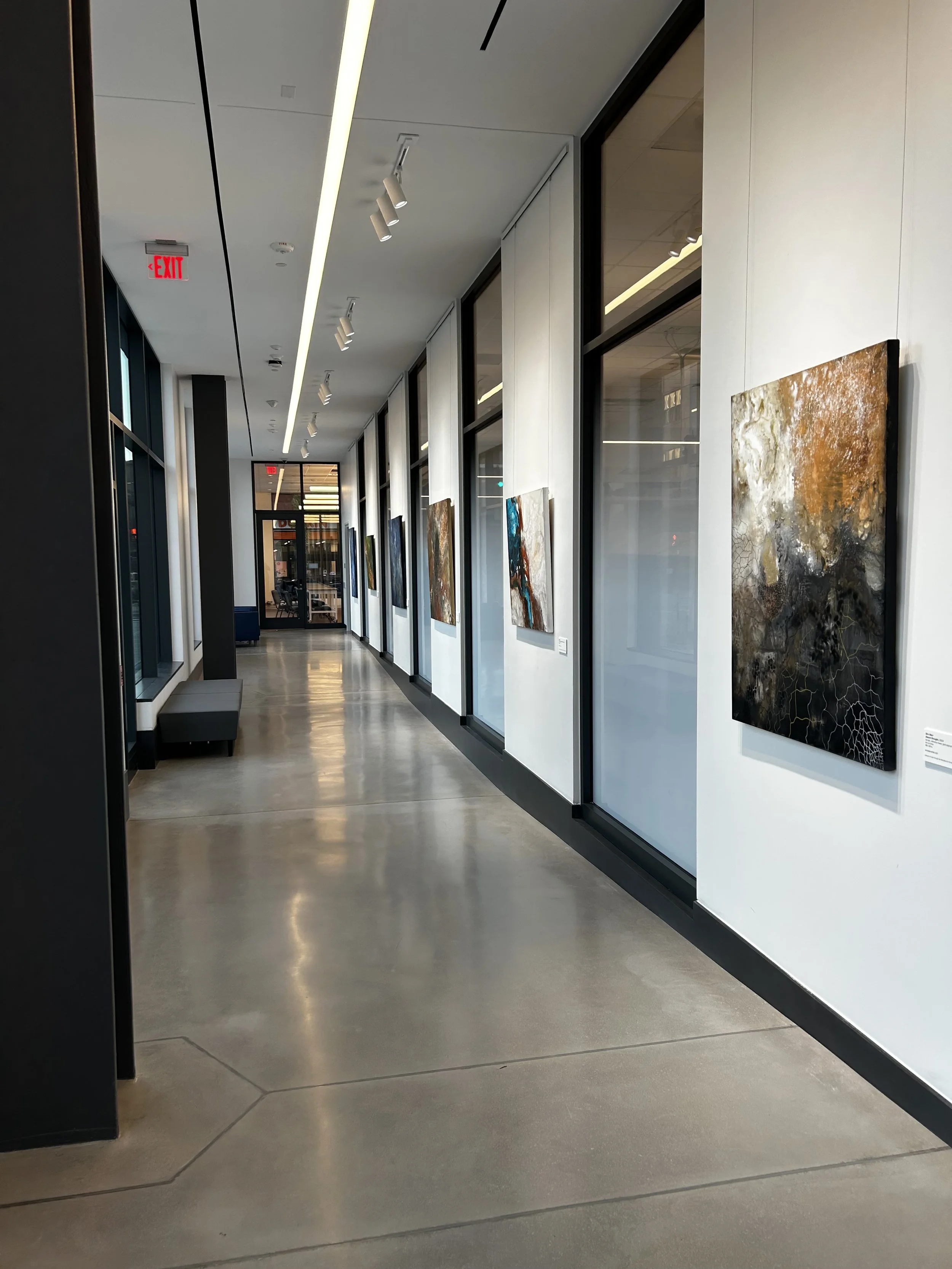
Inside the LEED Gold–certified Rhode Island State Health Laboratory, sustainable design features and human-centered amenities—from adjustable workstations and wellness spaces to improved natural light—support staff well-being while enabling a smooth transition of sensitive equipment and ongoing testing services. Image: Courtesy of RIDOH
The laboratory’s design also reflects Rhode Island’s commitment to sustainability and occupant well-being. Built to achieve LEED Gold certification, the facility incorporates numerous environmentally conscious features, including rainwater management systems, restricted cooling tower water use, enhanced refrigerant management, and renewable-ready mechanical systems. Biomorphic plantings connect the building to its surrounding landscape, while a substantial bike room and shower facilities encourage alternative transportation.
Inside, the emphasis on sustainability extends to human-centered design. Adjustable casework and motorized desks allow staff to customize their work environments. A wellness room offers space for meditation or exercise, while dedicated lactation and break areas support work-life balance. The facility’s improved natural light and acoustics further contribute to a healthier and more productive environment.
Transitioning into the new lab was no small feat. Coordinating the move of highly sensitive equipment, ensuring continuity of testing services, and maintaining strict security standards required careful planning and constant communication.
“The construction of the new space was completed on an aggressive timeline and required extensive coordination with employees as well as multiple vendors and partners to move staff and equipment and minimize disruptions in testing services,” Gallagher says. “In some cases, we were moving staff and equipment into the new space while also coordinating final details with construction and installation vendors to make the space as functional and user-friendly as possible.”
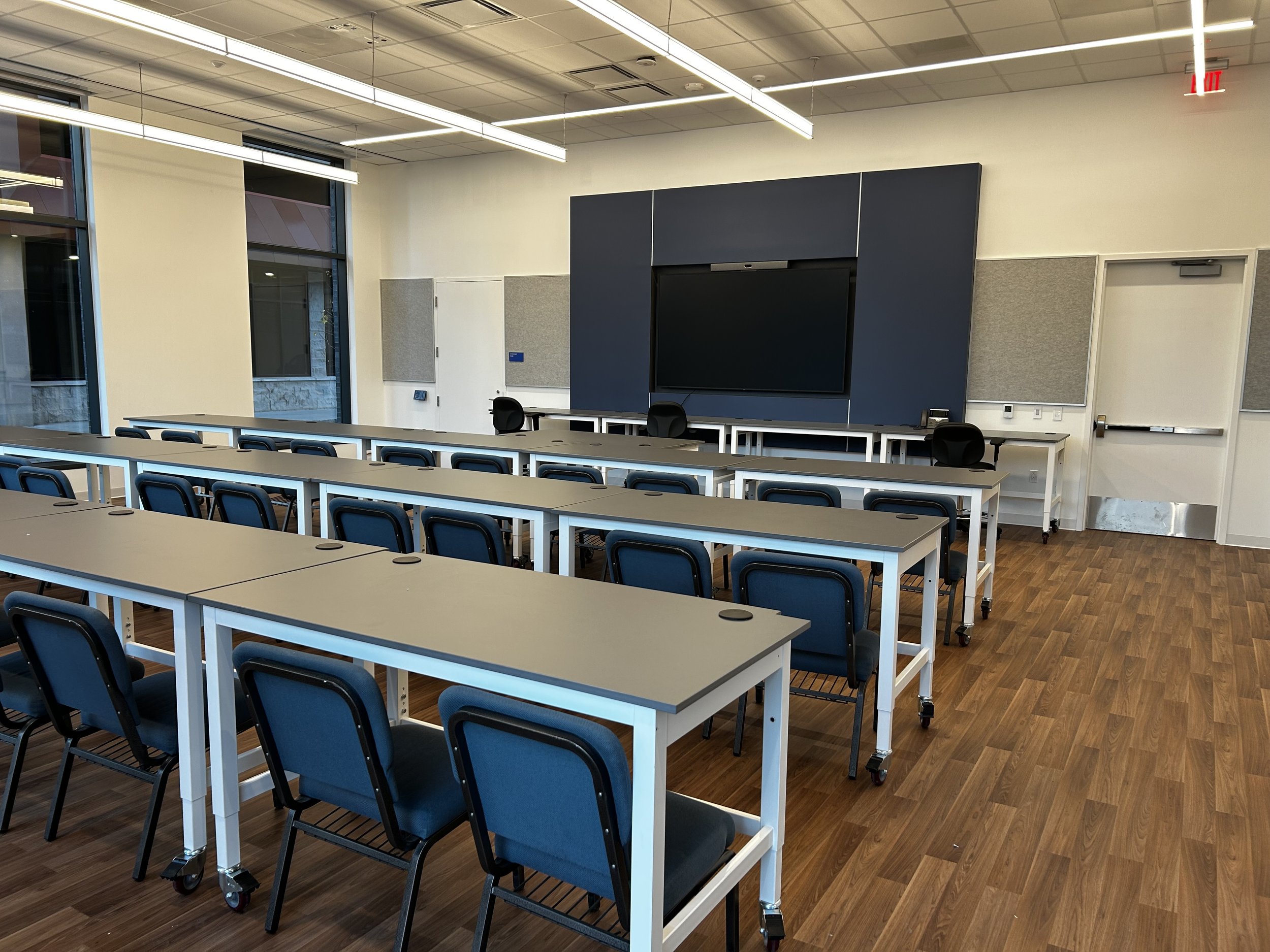
The fully operational Rhode Island State Health Laboratory provides a flexible, modern platform for public health, enabling scientific collaboration, innovation, and a stronger, more responsive state-wide infrastructure. Image: Courtesy of RIDOH
Through that process, Gallagher notes, continuity in leadership proved essential: “Continuity in the project team, and particularly in the owner’s project manager, was a huge benefit in this project. Our project manager was involved from inception through completion and was able to support us throughout.”
Looking ahead
Now fully operational, the Rhode Island State Health Laboratory stands as a cornerstone of the state’s public health infrastructure—ready to respond to new challenges while fostering scientific collaboration and innovation.
As Gallagher says, the move wasn’t just about upgrading facilities; it was about positioning Rhode Island for a more resilient, responsive, and interconnected future. “The new facility gives us the flexibility to better respond to emerging threats and apply new technologies,” he says. “It’s not just a new building—it’s a platform for the next generation of public health.”