
Chico State Breaks Ground on a Next-Generation Forensic Anthropology Laboratory
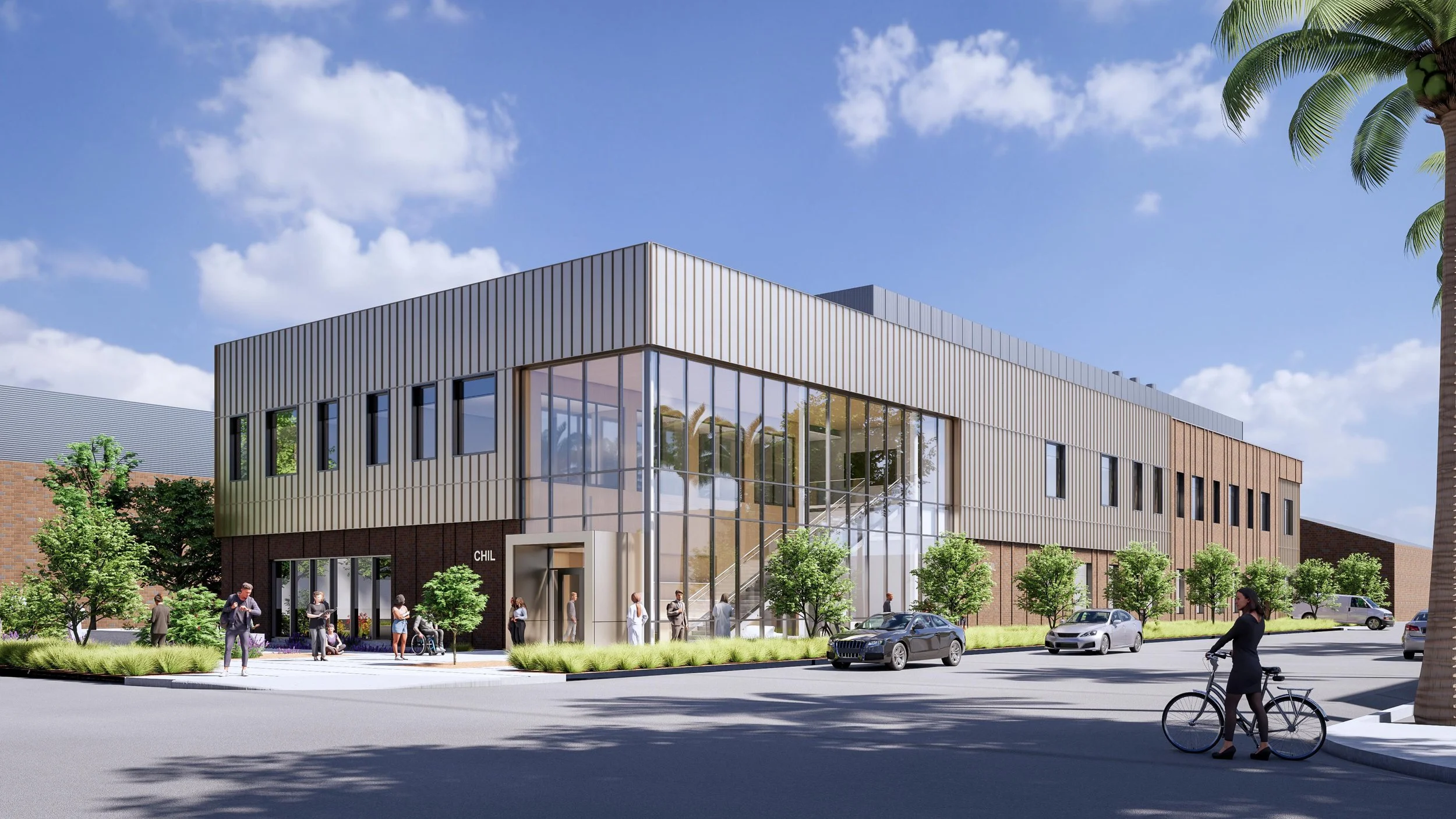
California State University, Chico has broken ground on a state-of-the-art Human Identification Laboratory, tripling capacity and advancing forensic anthropology research and law enforcement support across California. Image: Courtesy of SmithGroup
On November 14, California State University, Chico (Chico State) broke ground on a facility that redefines the future of forensic anthropology on the West Coast. The new Human Identification Laboratory (HIL)—a 28,600-sf, purpose-built facility designed by SmithGroup—will triple the lab’s operational capacity, expand its research and training programs, and strengthen its long-standing partnerships with law enforcement agencies across California.
For nearly five decades, the HIL has operated from a small, outdated space while serving as the state’s only full-time forensic anthropology laboratory—and the largest of its kind west of Texas. The lab’s team of five board-certified forensic anthropologists and 20 students handles nearly 90 percent of California’s forensic anthropology casework, assisting in more than 630 investigations in 51 counties over the past five years. From wildfire recovery to homicide investigations, the lab’s work provides critical support to the California Office of Emergency Services (CalOES), the FBI, the US Department of Defense, and numerous local and state agencies.
“The main design goals for the new lab centered on expanding our capacity for casework and having a facility that would allow us to better train the next generation of forensic scientists,” says Colleen Milligan, D-ABFA, HIL co-director. “We currently serve approximately 89 percent of the State of California in some capacity. Expanding our casework capabilities allows us to have a better response time when working with law enforcement partners across the state. Having a working laboratory that has room for training growing professionals in the field helps us serve the forensic science community as a whole.”
A flagship facility for the West Coast
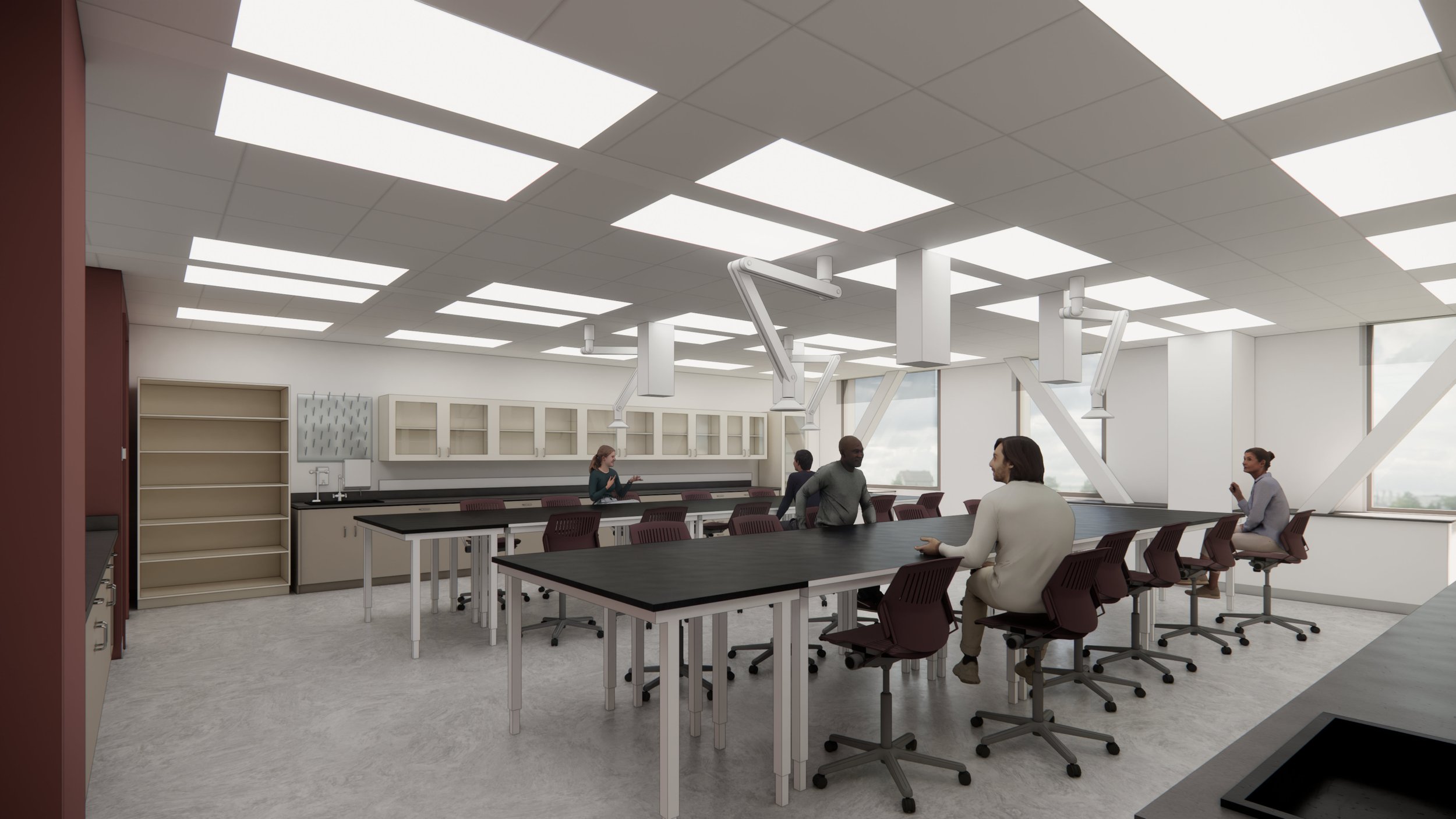
Located adjacent to Chico State’s main campus, the new Human Identification Laboratory is a $58 million, purpose-built facility designed for secure, flexible forensic work, advanced training, and LEED Silver–certified sustainability, establishing a flagship West Coast hub for forensic anthropology and public safety collaboration. Image: Courtesy of SmithGroup
The new HIL will be located at First and Cedar Streets, adjacent to Chico State’s main campus. With construction funding supported by a $3 million state budget allocation and secured bonds totaling more than $55 million, the project represents a major investment in forensic infrastructure and public safety collaboration.
“The design of the new Human Identification Laboratory at CSU Chico is purpose-built to support its mission of providing high-quality forensic anthropology services to law enforcement and the broader forensic science community across California,” says Chris Knorr, forensic market leader at SmithGroup. “Envisioned as a flagship facility for the West Coast, the building integrates secure labs, advanced forensic technologies, and specialized training spaces for students and partners in the public safety arena.”
Knorr describes the building as one that “directly enables its mission to serve justice through forensic science, education, and civic responsibility,” adding that its modular, flexible layout supports evolving research and teaching needs, while robust security, controlled access, and chain-of-custody protocols ensure the integrity of sensitive work. The lab is also designed for LEED Silver certification, incorporating all-electric systems, energy-efficient HVAC design, and resilient infrastructure to support long-term operational sustainability.
Specialized spaces and advanced capabilities
Inside, the new facility will house a range of specialized laboratories that elevate Chico State’s research capabilities and service capacity. The HIL will include state-of-the-art wet and dry labs, an archaeology lab, DNA extraction and isotope analysis suites, and a secure sallyport for the discreet transfer of remains. Dedicated cold storage will expand tenfold—from a three-body cooler to a walk-in unit capable of housing dozens of cases—while environmental controls and natural lighting improve both workflow and well-being.
“The Stable Isotope Preparation Lab space will allow the HIL to continue its work with the Department of Defense’s partners, such as the Defense POW/MIA Accounting Agency, which aids in the identification of servicemembers who died in previous conflicts such as the Vietnam and Korean Wars,” says Eric Bartelink, PhD, D-ABFA, professor of anthropology and director of the Human Identification Laboratory and Stable Isotope Preparation Laboratory. “Further, it will provide region of origin estimations on unidentified cold cases to provide new investigative leads.”
Ashley Kendell, PhD, D-ABFA, associate professor and director, Human Identification Lab, adds that the DNA extraction lab “will allow the HIL to continue in its collaboration with ANDE Rapid DNA. The HIL has partnered with ANDE to help develop sample collection methods to improve efficiency and success in wildfire victim identification. The new DNA extraction lab will also allow for growth in curriculum geared toward molecular anthropology.”
Knorr emphasizes that modular design was key to supporting these evolving research applications. “One of its most distinctive features is the modular planning system, that allows spaces like the morgue, wet/dry anthropology labs, and isotope/DNA extraction suites to be reconfigured as technologies and research evolve,” he says. The lab will also feature a rapid DNA analyzer, high-speed full-body X-ray, and isotope analysis instrumentation, supported by vibration mitigation and acoustic engineering due to the nearby rail line.
Built for collaboration and training
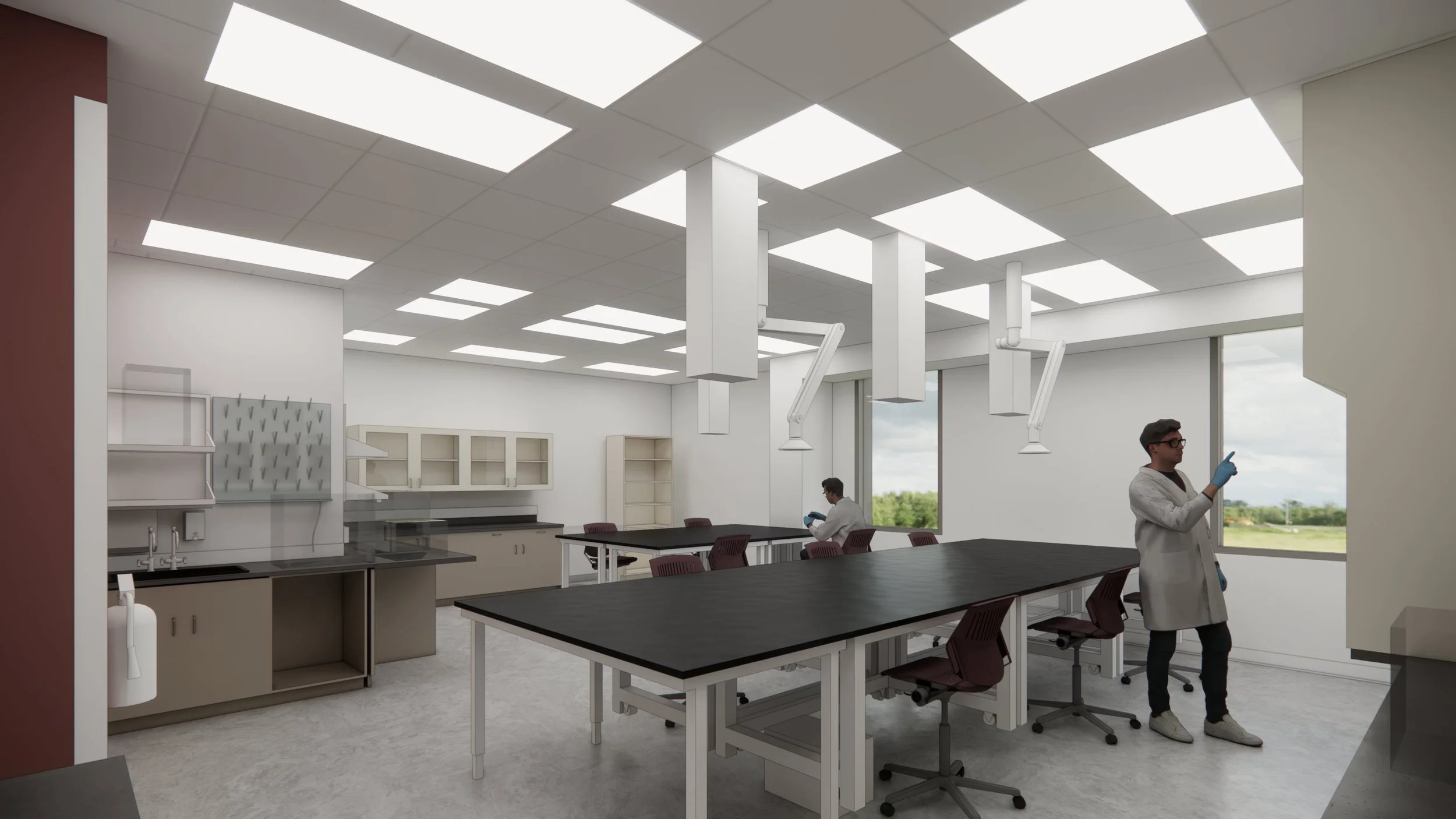
The new Human Identification Laboratory emphasizes a dual mission of advancing forensic science and public safety, featuring a large first-floor training classroom that will significantly expand Chico State’s capacity to educate law enforcement, coroners, and emergency personnel. Image: Courtesy of SmithGroup
A defining feature of the new facility is its dual mission: advancing science while supporting public safety. For decades, Chico State’s forensic anthropologists have trained thousands of officers, coroners, and emergency personnel in evidence recovery, wildfire response, and homicide investigations. The new building will expand this function significantly with dedicated instructional spaces.
“One of the main design needs was a large training classroom on the first floor that could accommodate at least 100 people,” Milligan says. “This dedicated training classroom will allow us to host a variety of professional development courses and training exercises with law enforcement partners.”
Kendell notes that flexibility was central to this approach. “Each of the spaces was also designed with flexibility in how the training spaces are used,” she says. “The classrooms allow for group discussions, hands-on learning and large-scale lectures. All furniture in the classroom is mobile and open to a wide array of teaching modalities.”
Knorr adds that the building’s physical layout was designed to accommodate three distinct user groups—law enforcement trainees, students and faculty, and forensic professionals—with careful separation to avoid disruption. “The building features a large training room for field-investigation instruction, joint exercise training, or interagency briefings,” he explains. “This building feature was placed near the building’s front entry but segregated from the secure morgue zone and educational uses on the second floor.”
Major upgrades and modern infrastructure
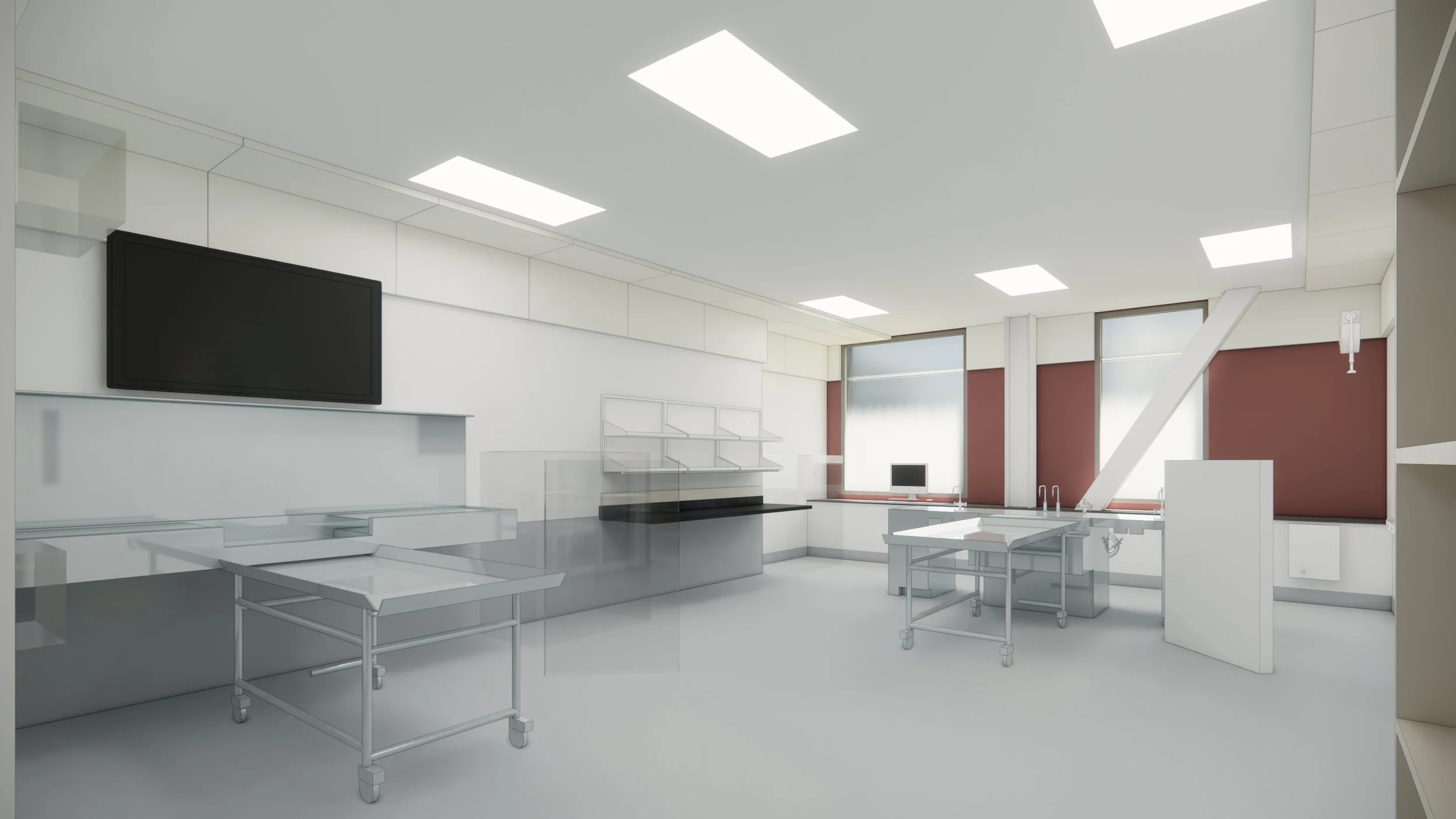
After 50 years in an outdated facility, the new HIL dramatically increases capacity with a tenfold larger cooler, additional processing stations, full-body X-ray and expanded lab spaces, while prioritizing air quality, ergonomics, natural light, and mental health for staff. Image: Courtesy of SmithGroup
After 50 years in the same facility, the new HIL represents a leap forward in both scale and sophistication. “One of the biggest improvements is a walk-in cooler/freezer,” says Milligan. “We currently have a three-body cooler which limits how many cases we can have in-house at one time. The new lab will give us more than ten times our current capacity. It will also double our processing stations so we will be able to process cases at a much faster rate.”
Bartelink adds that the facility will “further provide a full-body X-ray room, an enlarged dry lab space for skeletal analysis, working stations that can be moved and that will hold analysis equipment for each analyst.”
Beyond capacity and technology, the design also prioritizes air quality, ergonomics, and mental health—elements that are vital in a lab that routinely deals with sensitive, often distressing materials. “There are a number of features about the new building that are designed to address mental health and well-being,” Milligan says. “The office spaces all have views of the outside, letting a lot of natural light into those spaces. There are two respite areas with ergonomic furniture and quiet spaces to offer areas to reduce stress. The design also incorporates color palettes that are designed to be warm and inviting and that bring colors from nature indoors.”
Kendell adds, “In our old space, our lab is very dark with very little natural light. The new space focuses on improving on many of the areas that were not optimal in our old space, such as adding more natural light, brighter colors, surfaces that are easier to clean, etc.”
A secure, sustainable facility shaped by user input
The HIL’s design required an advanced engineering approach to safety and reliability. “Improving the air quality for the HIL team was a critical design consideration,” says Don Posson, corporate director of engineering at SmithGroup, who worked with Knorr on the project. “The laboratory ventilation systems provide high air change rates of outside air and exhaust to dilute and dissipate odors by supplying fresh air directly to the users and moving contaminants away from the breathable zone.” He adds that “state-of-the-art laboratory airflow controls provide a reliable airflow pressurization system throughout the building to align with laboratory processes working to control contamination and quality of testing results.”
The project’s sustainability strategy includes site and systems-level design choices aligned with LEED Silver certification. According to Knorr, “Stormwater management strategies, site and roofing materials for heat island reduction, and site lighting that minimizes light pollution reduce the environmental impacts of the site design.” The team also focused on energy optimization, renewable energy production, and refrigerant management, alongside water conservation and reduced material waste.
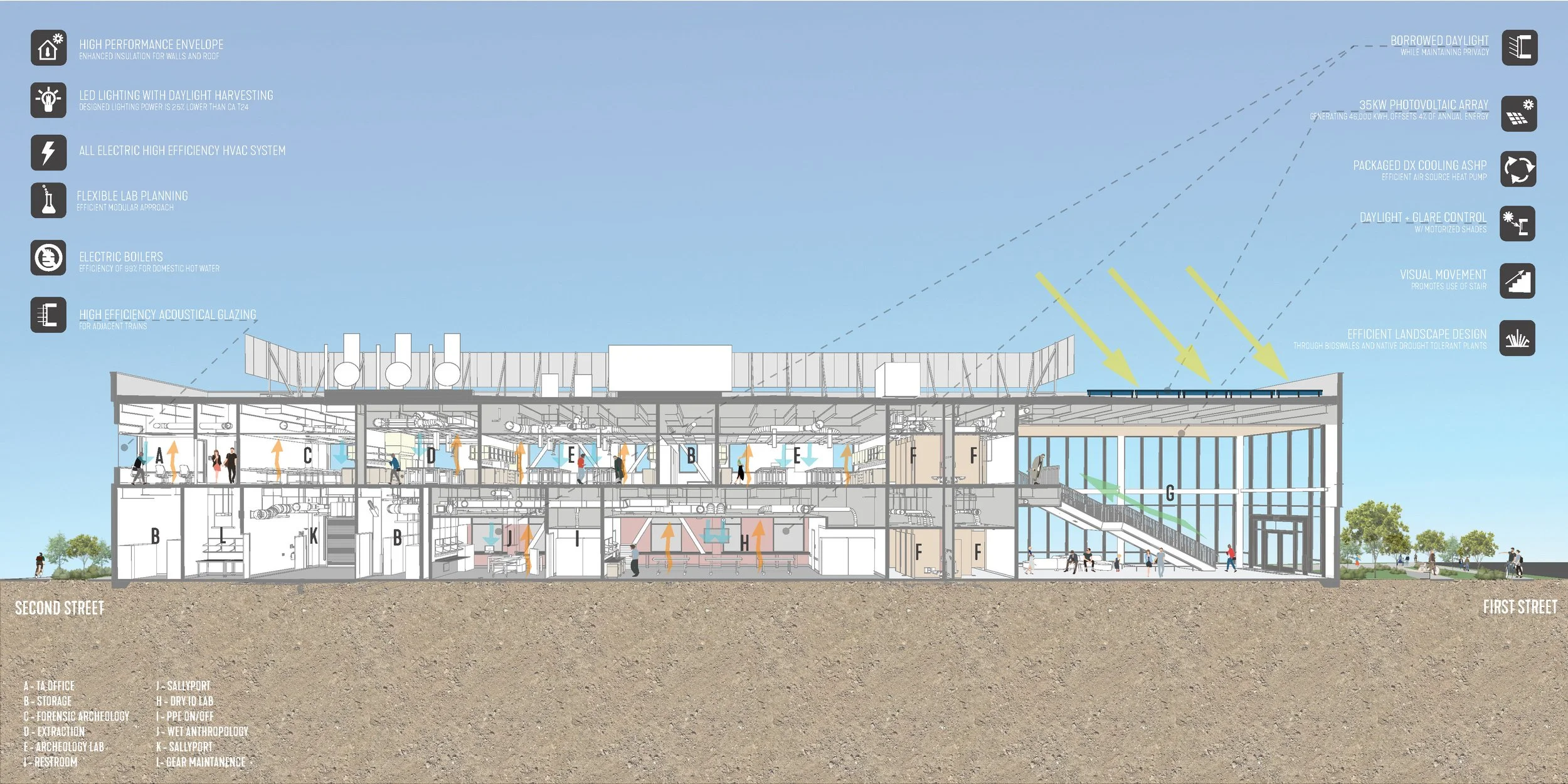
Faculty and staff played a central role in shaping the HIL’s design, providing extensive input through workshops and reviews that influenced ergonomic layouts, daylight access, collaborative workspaces, wellness areas, and secure lab spaces. Image: Courtesy of SmithGroup
Faculty and staff were deeply involved in shaping the lab’s design, drawing on decades of operational experience and site knowledge. “The faculty and staff are familiar with other forensic anthropology lab facilities as well as several other medical examiners’ offices,” says Bartelink. “Faculty and staff input was extensive in the design of the building, and it was easy to communicate this information to the architectural team.”
Knorr says this input had a direct impact on the final outcome: “Through multi-day workshops, stakeholder meetings, and iterative design reviews, users helped define priorities. Input led to ergonomic layouts, daylight access in key rooms, collaborative workspaces, spaces to encourage wellness, and spaces for secure activities.”
Preparing for the move
Transitioning from a working forensic lab presents unique logistical challenges. “The HIL faculty, staff, and students will play an active role in the physical transfer of all skeletal material, which will be done using our field response vehicle,” Bartelink says. “We will move over everything we can but will keep the old space functional until we are ready to intake new cases at the new lab space.”
Kendell says, “We worked to establish a redundancy of systems for operations to help with the transition to a new space. During the transition period, which may be extended, we must be able to maintain continuity of services to partnering agencies.”
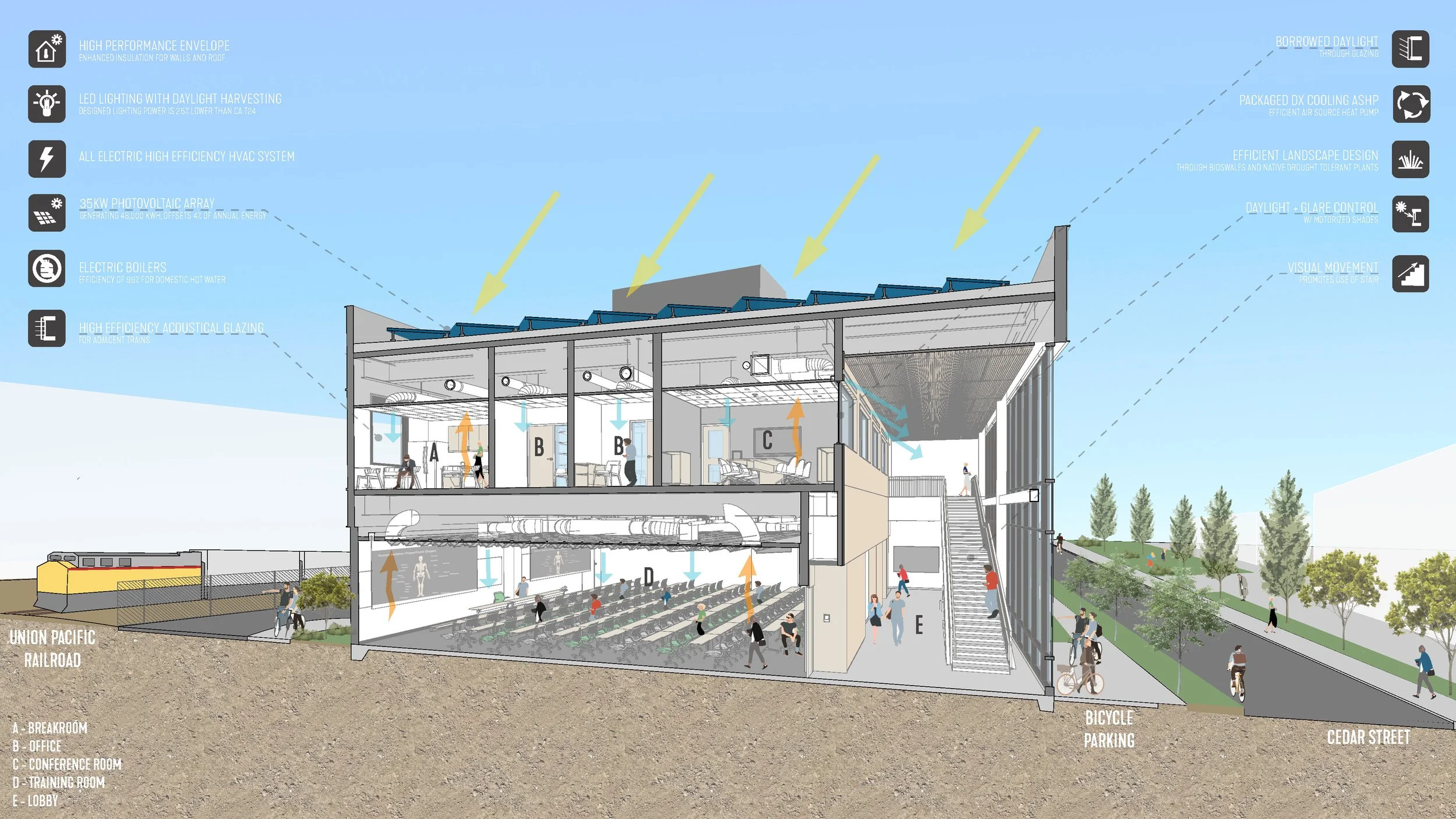
Transitioning to the new HIL involves careful logistics to maintain uninterrupted services, and once operational, the facility will expand Chico State’s forensic and academic capabilities while serving as a statewide hub for public safety, training, and scientific outreach for decades to come. Image: Courtesy of SmithGroup
When the Human Identification Laboratory opens its doors, it will not only expand Chico State’s academic and forensic capabilities—it will also stand as a statewide resource for public safety, training, and scientific advancement.
“We envision the new facility as a space that is inviting to students, the general public, and law enforcement professionals,” says Milligan. “It’s designed to allow multiple user groups to benefit from parts of the facility’s design. While the initial emphasis was on simply expanding the size of our space and capacity for casework, the overall final design expands our ability to do outreach with a number of different groups.”
Knorr notes that the facility will serve California for decades to come. “Once completed, the new Human Identification Laboratory at CSU Chico will significantly elevate its role as a premier center for forensic anthropology education, research, and service to California’s communities that struggle with loss and disaster,” he says.