
Reimagining a Historic London Landmark for Life Sciences Innovation
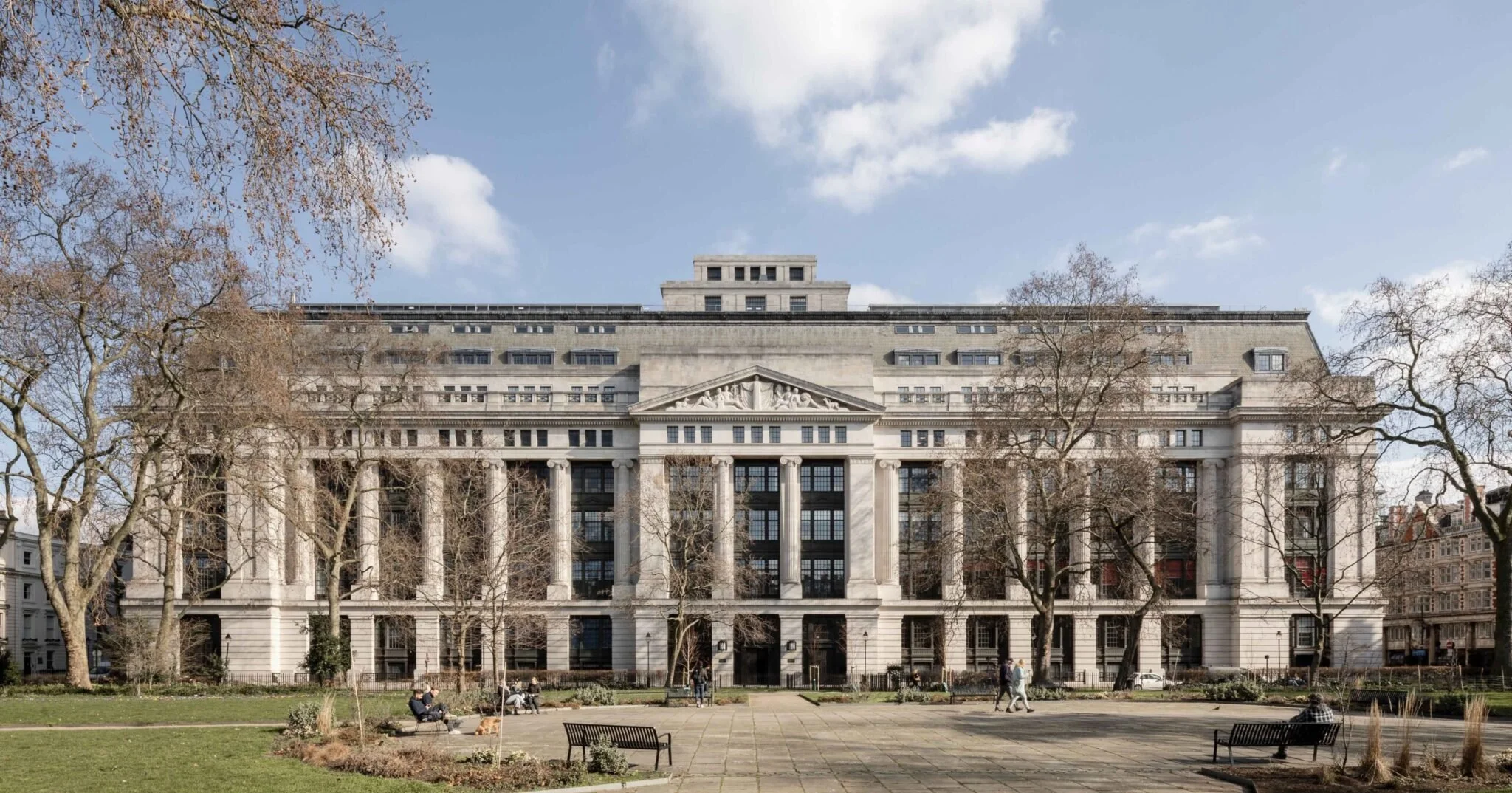
Victoria House in London combines historic architecture with modern labs and office spaces to support life sciences research and collaboration. Image: Courtesy of Pioneer Group
London’s Bloomsbury Square is now home to Victoria House, a newly restored Grade II listed building that officially opened on September 16, 2025. The 300,000 sf facility combines heritage architecture with modern laboratory and office infrastructure. Designed to support a range of life sciences companies, Victoria House provides flexible lab and office spaces intended to facilitate collaboration, research, and growth.
The project team included TLW (project manager), Wates (main contractor), Corstorphine & Wright (architect), KJ Tait (building services engineer), HTS (structural engineer), G&T (quantity surveyor), Buro Happold (lab designer), Gerald Eve (planning consultant), Montagu Evans/Donald Insall Associates (heritage consultant), SWECO (approved inspector), Marshalls Fire (fire consultant), CDM Services (client H&S advisor), Sandy Brown (acoustic engineer), Arup (ESG consultant), IBSECAD (BIM consultant), BCLP (construction legals), PFB and Environmental Essentials (asbestos), Dave Martin and Cordless (IT consultant), Burgess & Chesterfield (building services validation engineer), and Fox Curtis Murray (clerk of works).
Preserving history while building a flexible future
Converting a historic Art Deco building into a state-of-the-art life sciences facility posed significant challenges. “Creating an asset like Victoria House where history meets science is a one-of-a-kind opportunity and one that we have embraced from the outset in 2022 when we acquired the building,” Pierre-Etienne Accarier, director of EU development and asset management at Oxford Properties, tells Lab Design News. “The challenge we set ourselves was to unlock the huge potential of this Grade-II listed Art Deco icon by transforming it into a new 300,000 sf, state-of-the-art life sciences ecosystem in the heart of Bloomsbury, which could only be achieved by partnering with the best life sciences experts, engineers and architects.”
The building’s inherent architectural features—generous floor-to-ceiling heights and ornate Art Deco finishes—were leveraged to accommodate sophisticated lab infrastructure. Accarier says, “Retaining the character and historic features of the building was essential. The generous floor-to-ceiling heights in the building were ideal for the conversion to laboratory space, and we worked with KJ Tait to add advanced new MEP infrastructure including extensive ventilation, drainage and piped gases, which supports science experimentation.”
From the outset, Victoria House was conceived with flexibility at its core, responding directly to feedback from early-stage life sciences companies and start-ups. “Feedback from early-stage life sciences companies and start-ups played a central role in shaping the design of Victoria House,” says Miranda Knaggs, corporate development director at Pioneer Group, emphasizes this approach. “One of the strongest themes was the need for adaptability, both in physical lab space and in the commercial terms offered. Many early-stage companies struggle to find small, flexible spaces with short-term or rolling lease options. In response, Victoria House has introduced a highly adaptable model that includes flexible licenses and a ‘rent-a-bench’ model, allowing companies to occupy only the space they need and scale up or down as required.”
This model allows fledgling biotech ventures to begin operations with minimal overhead while maintaining the ability to expand into fully private labs or office suites as their needs evolve. “Whether supporting an early-stage biotech start-up or accommodating a global pharmaceutical company, our infrastructure is designed to grow with them,” says Robin Pearce, development director at Pioneer Group. “From fully fitted and managed incubator spaces to state-of-the-art CAT-B laboratories, Victoria House provides a clear pathway for innovation and growth within a single ecosystem.”
A unique blend of lab infrastructure and community spaces
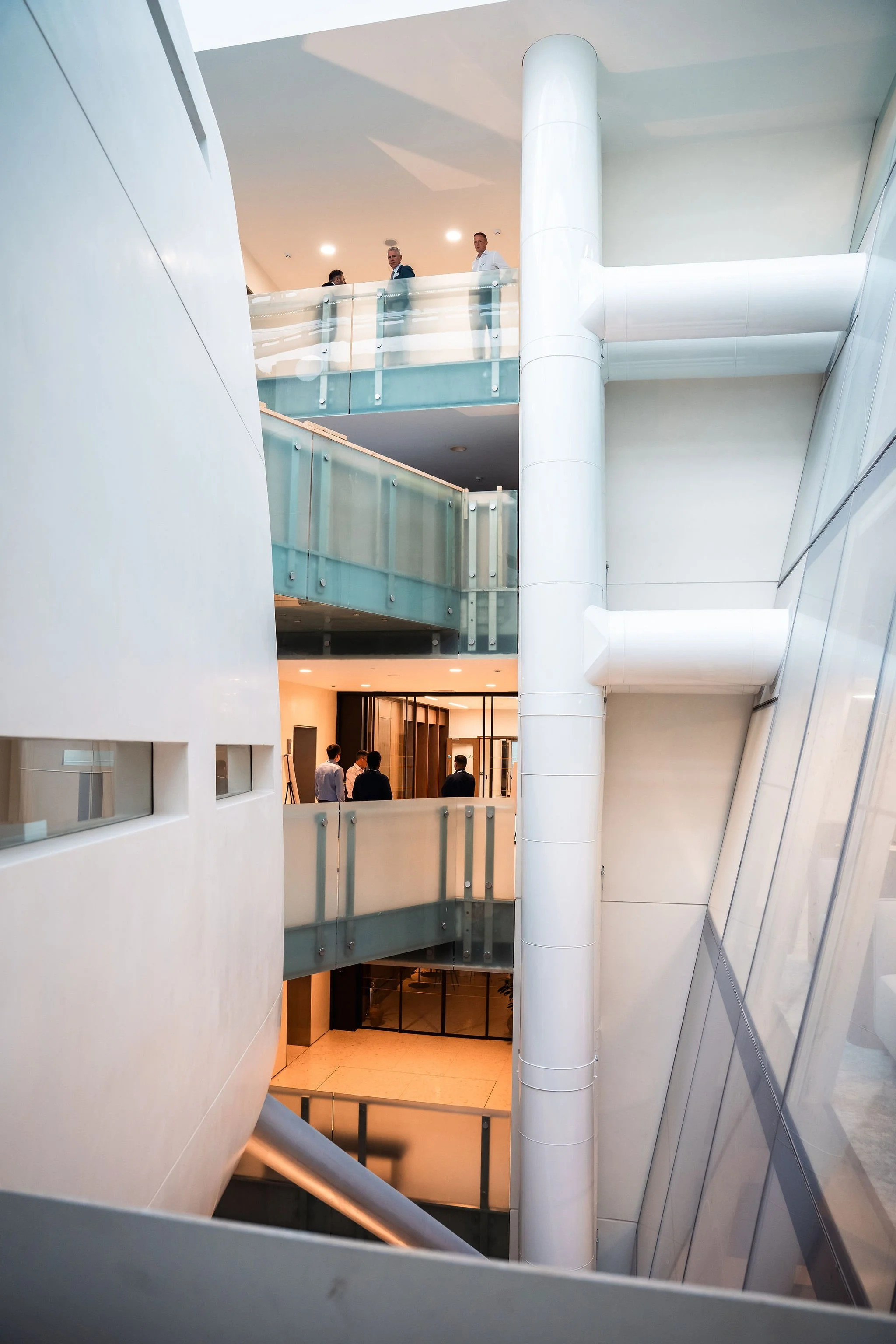
The facility blends historic Art Deco features with high-spec labs and flexible workspaces, creating a unique environment that supports both early-stage start-ups and established life sciences companies. Image: Courtesy of Pioneer Group
Victoria House sets itself apart with a design that combines high-spec scientific infrastructure with a hospitality-inspired approach to communal areas. Knaggs explains, “The building’s design carefully preserves original finishes whilst integrating a very modern, high-spec fit-out, fully equipped with essential lab infrastructure, including air exchanges and piped gases on each floor. When visitors enter the building, they are met with classic, luxury finishes that give a strong sense of place, with communal areas that have been intentionally designed to feel more like a boutique hotel than a traditional office or lab.”
Accarier adds, “The retained interior design elements, including the Art Deco ballroom and a triple height, marble lined central hall with classical columns, make Victoria House a completely unique space for life sciences businesses. Combining these special features with the engineering and precision required to deliver the laboratories, right at the heart of London, is what makes the building attractive for businesses looking to grow and attract talent and deliver an incredibly memorable experience for visitors.”
Victoria House’s design accommodates companies at every stage of growth. Its incubator labs, fully fitted lab spaces, and serviced offices provide both start-ups and global pharmaceutical firms with the infrastructure and flexibility they require. Knaggs highlights the incubator labs on the seventh floor: “Businesses at the very beginning of their journeys can start with a single bench in the open-access lab and scale into private flexi labs or office suites. The incubator removes operational barriers so early-stage companies can test, develop and scale faster, without the usual overheads or upfront costs of setting up a lab from scratch.”
Strategic partnerships with industry leaders such as Thermo Fisher Scientific, Miltenyi Biotec, and Zeiss provide advanced instrumentation and technical support, further reducing barriers for new ventures and reinforcing Victoria House as a magnet for talent and capital in London’s Knowledge Quarter.
Shared high-value laboratory equipment was a deliberate strategy to empower early-stage companies. Ashish Darekar, head of lab services at Pioneer Group, says, “Including shared, high-value lab equipment and core facilities was a key strategy to lower the barriers for early-stage companies to access world-class resources. For smaller firms, major capital equipment can be prohibitively expensive, so by centralising these assets within a centre of excellence for advanced therapies, we’ve created an environment that unlocks rather than blocks opportunities from day one.”
The facility also offers training, events, and networking opportunities to foster knowledge-sharing and innovation, solidifying its role as a collaborative hub.
Sustainability and future-proofing
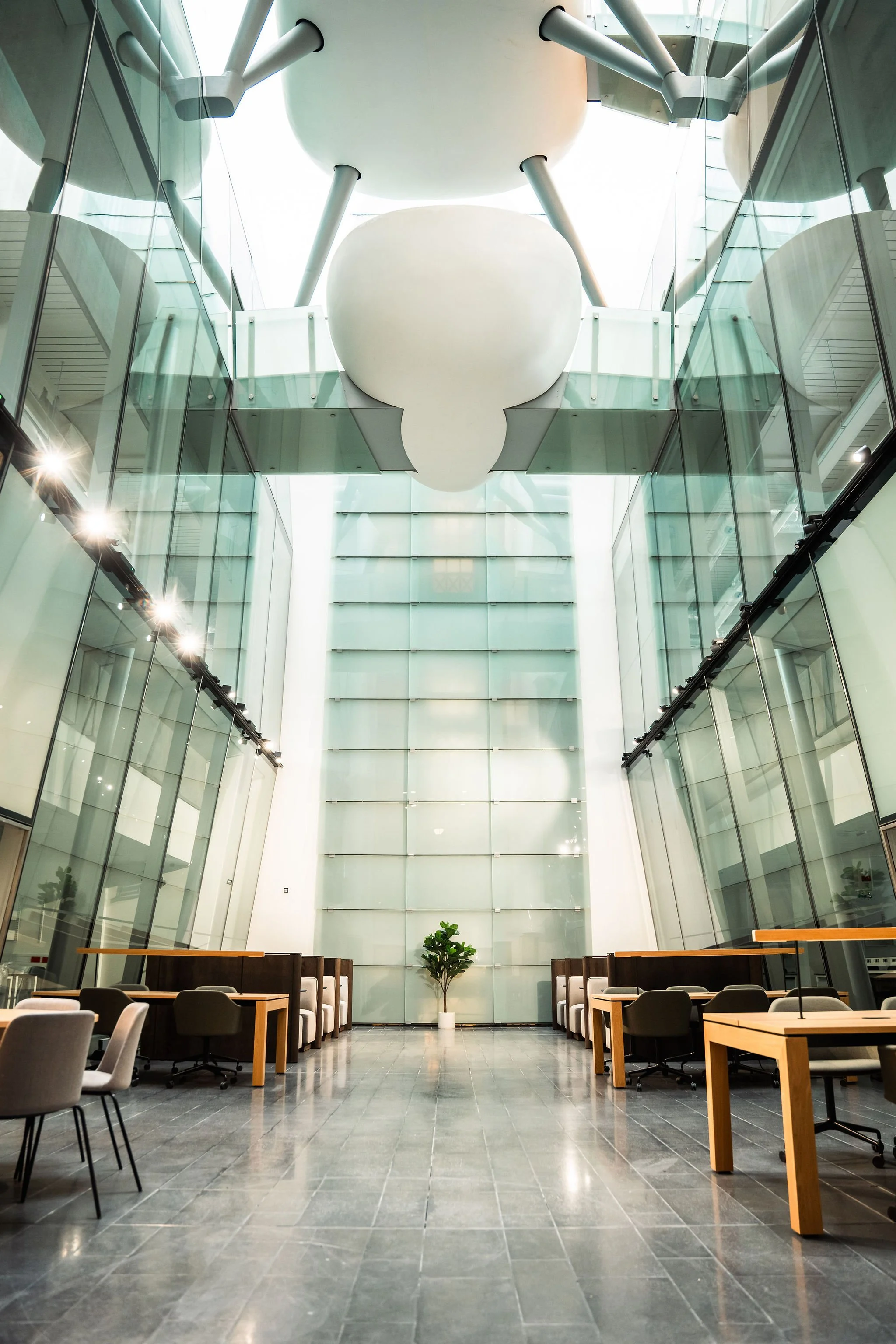
The refurbishment project prioritized sustainability, incorporating energy-efficient systems, extensive recycling, and green leases, while repurposing the historic building to reduce embodied carbon and extend its lifecycle. Image: Courtesy of Pioneer Group
Long-term usability and sustainability were integral to the refurbishment. “We placed a strong emphasis on sustainability including introducing heat pumps and heat recovery systems to reduce energy consumption and move away from gas fired systems,” says Pearce. “In addition, we’re collaborating with occupiers through green leases to help reduce their energy, waste, and water usage. Environmental impact was minimized during the refurbishment process, with over 95 percent of construction waste being recycled, 98 percent being diverted from landfill, and single-use plastic fully eliminated during construction. With the support of our partner Oxford Properties, Victoria House will achieve a BREEAM ‘Excellent’ rating.”
Accarier notes that refurbishing an existing building also significantly reduced embodied carbon: “The decision to refurbish an existing building for life sciences use rather than developing a net new one significantly reduced the embodied carbon of the structure, extending the life cycle of the building.”
Beyond physical infrastructure, Victoria House emphasizes community and serendipitous interactions. Knaggs describes the design intent: “We wanted Victoria House to be a living ecosystem—a place where collaboration and serendipitous encounters drive real progress. The shared spaces, from the light-filled atrium to heritage rooms like the Council Chamber, were carefully designed to encourage interaction between scientists, entrepreneurs, and investors. We regularly host events featuring leading figures from across the life sciences sector and even preserved unique and original spaces like the cabaret club and bowling alley to provide fun, informal settings where people can meet and connect. Additionally, Victoria House’s members’ lounge and collaboration spaces act as a ‘landing pad’ for tenants from other Pioneer sites across the UK, helping to weave together the national life sciences ecosystem.”
Victoria House demonstrates how careful design, strategic infrastructure, and ecosystem-focused planning can adapt a historic building for modern life sciences use. By combining flexible lab spaces, shared equipment, and communal areas, the facility provides a model for supporting a range of life sciences activities. For lab planners, architects, and managers working on similar projects, Victoria House highlights several key considerations: prioritize adaptability, incorporate sustainability from the outset, preserve historic character while updating technical systems, and create spaces that encourage collaboration. These approaches can help buildings support research, growth, and operational needs over the long term.