
Life Sciences Real Estate: Adjusting to a More Disciplined Market

After years of rapid expansion and correction, the US life sciences real estate market is stabilizing, reinforcing a tenant-driven shift toward purpose-built, high-quality laboratory spaces that can truly support scientific work.
After several years of unprecedented expansion followed by a sharp correction, the US life sciences real estate market is entering a period of moderation. While vacancy remains elevated and capital remains cautious, recent data points suggest that the sector’s fundamentals may be beginning to stabilize—reshaping how developers, investors, and laboratory users approach space decisions.
For lab planners and facility stakeholders, the current environment reinforces a familiar theme: quality and fitness for purpose matter more than ever. Spaces that align with the highly specific operational needs of scientific research are leasing, while those that fall short—particularly poorly executed conversions—continue to struggle.
A tenant-favored market, with early signs of stabilization
Recovery in the life science sector is expected to appear first in the largest and most established hubs, where access to capital, talent, and institutional infrastructure remains strongest.
“The US life science sector’s recovery is expected to emerge first in the major US biotech hubs including Boston, the Bay Area, and San Diego as investors remain focused on risk aversion,” Liz Berthelette, head of northeast research & national life science research at Newmark, tells Lab Design News. “These nodes maintain the deepest pools of venture capital funding, the highest concentrations of experienced management teams, proximity to world-class research institutions, greater access to key talent, and generally more real estate liquidity.”
National vacancy continues to edge upward, but only marginally, suggesting that the sharpest phase of the correction may be behind the market. Negative net absorption has begun to ease in several regions, signaling improved leasing velocity even as tenant leverage remains firmly intact.
Berthelette points to leasing activity by established players as a key driver. “We are seeing an improvement in leasing activity, which is leading to an abatement in negative net absorption in many markets. Larger pharmaceutical companies, many of whom are consolidating or expanding into new laboratory facilities, have been integral in driving recent leasing.”
She adds that emerging growth areas are also playing a role, noting, “Rapid growth among AI-related biotech firms, including Lila Sciences and Neuralink, has also benefited demand fundamentals in the US life science sector. During the third quarter of 2025, each of these users executed leases for 150,000 sf to 200,000 sf.”
Sublease space retreats, but not all space is equal

Sublease availability is beginning to retreat in major life science hubs like the Bay Area, but tenants remain highly selective—favoring functional, ready-to-use lab space over buildings that require costly retrofits.
One encouraging indicator is a decline in available sublease space in several major hubs, including Boston and the Bay Area. However, the reduction in sublease inventory does not automatically translate into demand for all vacant lab space. Tenants remain highly selective, prioritizing functionality and minimizing the need for costly retrofits.
“Lab users are focused on spaces that fit their scientific needs like a glove, and they are ignoring spaces that aren’t quite the perfect fit or would require any construction or extreme modifications,” Berthelette says.
Second-generation and Class B lab spaces can remain competitive under the right conditions—but only when fundamentals align. “While there is interest among many tenants for newly built space, lab users are more-than-willing to lease second generation or Class B space as long as it fits their specific needs and is in an amenitized campus setting,” she explains.
Ownership quality also matters: “Second generation or Class B space is owned by a premier operator, that will also make it attractive to prospective users.”
Office-to-lab conversions face a reality check
One of the clearest shifts in the market is tenant skepticism toward office-to-lab conversions that fail to meet the technical demands of modern research. What initially appeared to be a solution to supply constraints is now exposing the limits of retrofitting existing buildings.
According to Berthelette, “Tenant feedback on converted lab space remains focused on hallway widths, loading dock and freight elevator placement, uneven floors, excessive vibrations, limited power or air handling, and less-than-ideal ceiling heights.” These shortcomings often outweigh location or price considerations, particularly for tenants running capital-intensive research programs.
As a result, some recently delivered lab buildings—especially those with compromised infrastructure—are increasingly viewed as functionally obsolete. In response, landlords in certain markets are exploring repositioning strategies, including conversions back to non-biotech uses, in an effort to stabilize occupancy.
Non-negotiables in a tenant-favored market
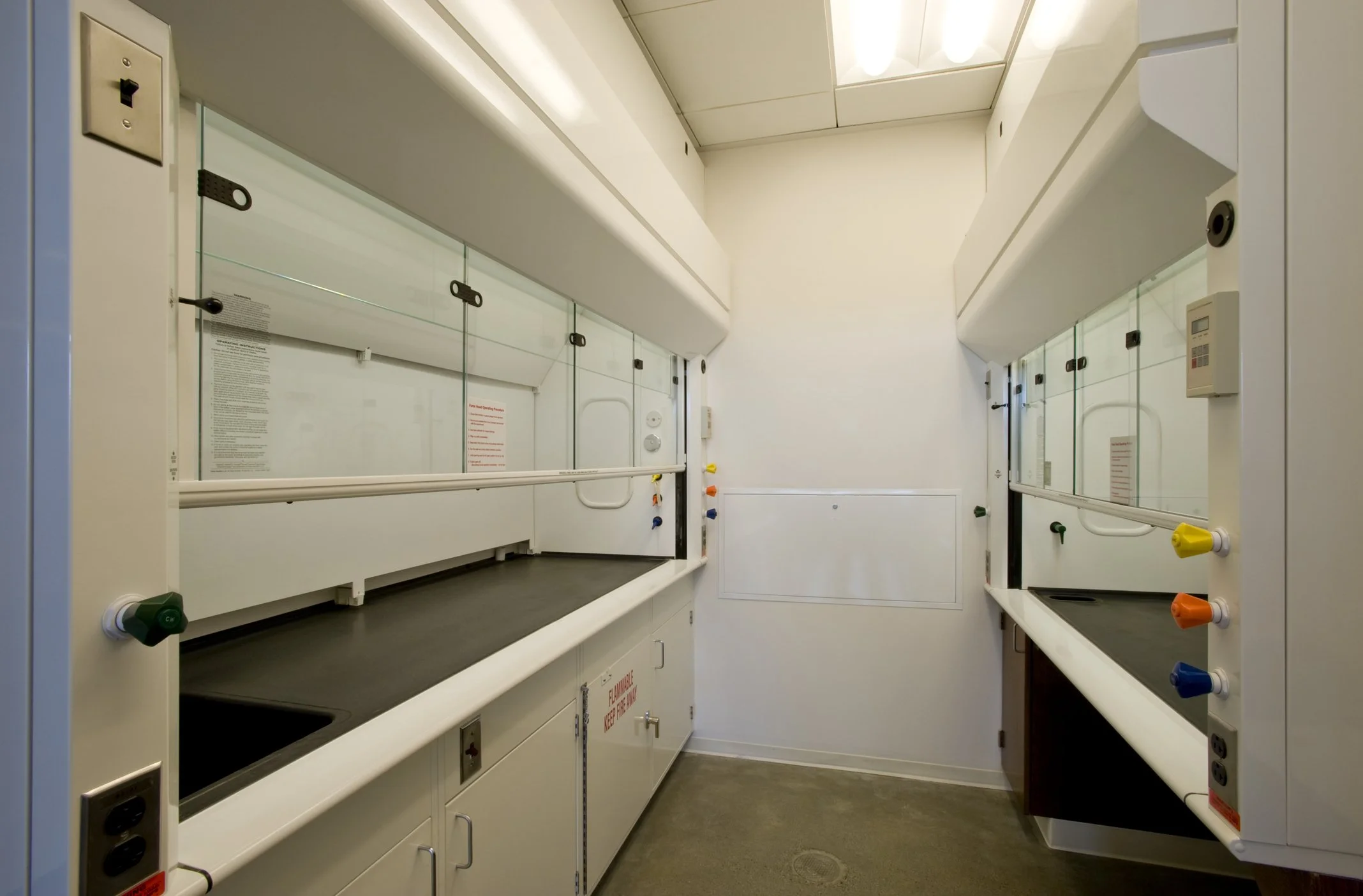
Today’s life science tenants expect resilient infrastructure—where HVAC redundancy, robust mechanical systems, and sustainability are baseline requirements, shaping both leasing decisions and project financing.
In today’s leasing environment, tenants are setting clear expectations. Robust mechanical systems, HVAC redundancy, and sustainability measures are no longer differentiators—they are baseline requirements. The emphasis has shifted decisively away from speed-to-market construction and toward long-term operational resilience.
This focus on durability extends into financing conversations as well. “Long-term operational efficiency and ROI are vital to obtaining financing today,” Berthelette says. “Landlords and operators that can secure occupancy in their assets are faring better than those facing significant vacancy.”
Thin liquidity in the capital markets has elevated scrutiny on underwriting assumptions, particularly for speculative projects. Purpose-built assets with demonstrated leasing traction are best positioned to attract investment, while marginal or overbuilt projects continue to face headwinds.
Investor interest in biomanufacturing remains strong in principle, but opportunities are limited in practice. Berthelette cautions that “Biomanufacturing in the US is still rather niche—while there is investor interest in the asset type, we’ve seen constraints on growth given the current weakness in research and development.”
Much of the recent activity has been driven by large pharmaceutical companies, many of which prefer to own rather than lease their facilities. “The recent flurry in new facility announcements and domestic investments in manufacturing is dominated by ‘big pharma’ who tend to own their real estate,” she says. Smaller and mid-cap manufacturers face additional barriers: “There are limited examples of small or mid-cap biomanufacturers making big bets on real estate to expand their production. Moreover, many of these companies lack credit, which increases the risk for real estate capital investing.”
A return to fundamentals
Taken together, current market conditions point to a return to core principles in life sciences real estate: disciplined development, infrastructure-first design, and a clear focus on long-term performance. For lab managers and facility planners, the message is consistent with what many have experienced firsthand—spaces must be designed around science, not squeezed into buildings never intended to support it.
As the sector continues to rebalance, adaptability, operational efficiency, and fit-for-purpose design will remain decisive factors, shaping not only which projects succeed, but which spaces ultimately enable the next wave of scientific discovery.