
Professional Profile: Tad Costerison
Tad Costerison is senior project architect with Taylor Design in San Francisco, CA. Lab Design News spoke to Tad about his path into lab design, the importance of empathy and user engagement, and how emerging technologies are reshaping the future of research environments.
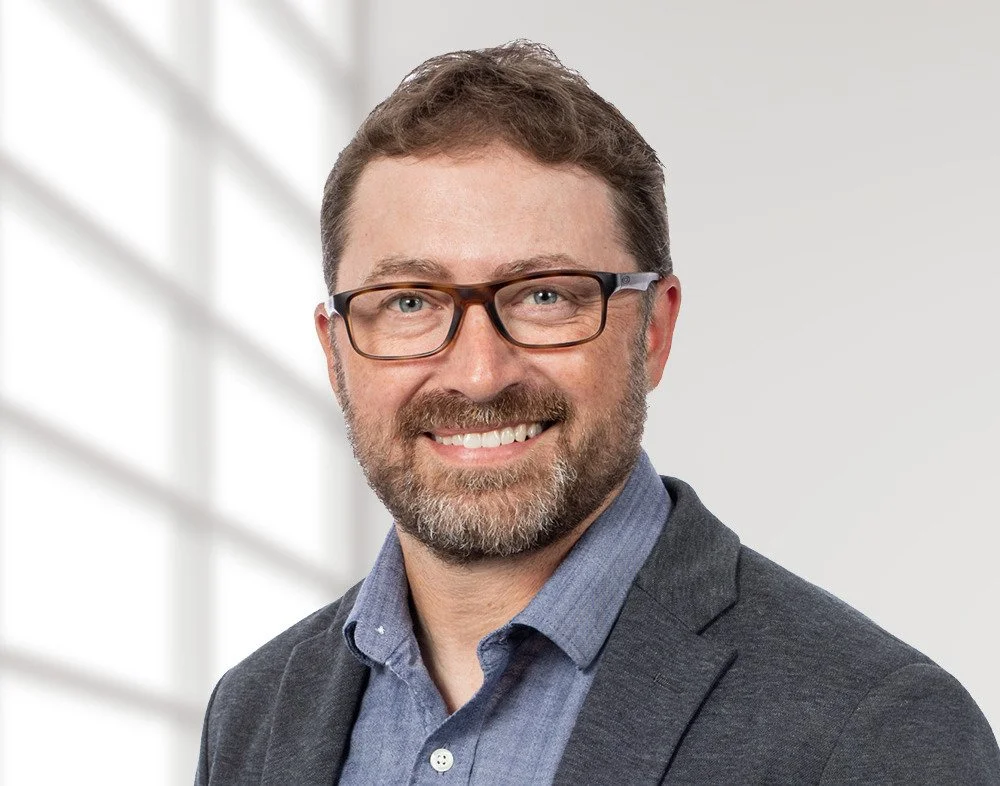
Tad Costerison, senior project architect, Taylor Design
Q: What sparked your interest in designing labs—was there a defining moment that led you to this career?
A: I’ve always been curious about science and how things work. Early in my career I had the opportunity to help design a five-story physics laboratory for a Nobel Prize–winning researcher. That experience really changed my trajectory. What struck me was the mindset of the scientists—their curiosity, their willingness to explore ideas without boundaries, and their belief that the work they were doing could meaningfully change the world. Designing the environment to support that kind of thinking was incredibly inspiring to me. Since then, I’ve felt fortunate to work alongside scientists and engineers who are pushing the edge of discovery. Lab design allows me to contribute to something much larger than myself.
Q: If you weren't in this profession, what job would you like to have instead?
A: I enjoy working with my hands and building things. If I weren’t practicing architecture, I’d likely be doing something related to craft—maybe woodworking or building furniture. What matters most to me feeling that the work I do contributes to something meaningful. Whether it’s a laboratory or a piece of furniture, there’s a similar satisfaction in creating something that improves people’s lives.
Q: What is the biggest work-related challenge you've faced and how did you overcome it?
A: One challenge in recent years has been maintaining strong connections with scientists while working in increasingly remote environments. The most meaningful insights often come from spontaneous conversations in the lab—watching how people actually work, asking questions in real time, and observing workflows firsthand.
To overcome this, I’ve become much more intentional about engagement. I schedule more in-person visits when possible and structure workshops that focus directly on the scientists’ research and workflows. When you meet scientists where they are, both physically and intellectually, you uncover insights that shape better design solutions.
Q: If you could collaborate with any architect, designer, or scientist (past or present), who would it be and why?
A: I would choose David Kelley, founder of IDEO and Stanford University’s Hasso Plattner Institute of Design. His work in human-centered design has had a huge influence on how I approach lab planning. Laboratories are often extremely technical environments, but they’re still ultimately about people—how scientists think, collaborate, and discover. David’s philosophy reminds us that empathy and curiosity are powerful tools for solving complex problems.
Q: What is one important “soft skill” that all lab design experts should have?
A: Empathy. Science is difficult, demanding work. Researchers are navigating complex experiments, grant pressures, and high expectations for discovery. As designers, we need to listen deeply and understand the challenges scientists face. Empathy allows us to design environments that truly support their work rather than simply meeting technical requirements.
Q: What’s one feature you think every modern laboratory should have, but many still don’t?
A: Visibility into the science. Too many labs hide the research behind closed doors. When possible, thoughtfully exposing aspects of the scientific process. through glass walls, shared collaboration areas, or visible instrumentation can reinforce the importance of the work happening inside. It helps scientists feel recognized and reminds everyone in the building that discovery is happening there.
Q: What trends are you seeing in lab design that you think will shape the future of the industry?
A: Automation and robotics are going to significantly influence laboratory design. Automated workflows, robotic instruments, and AI-assisted experimentation are changing how labs operate. These technologies require different spatial relationships, infrastructure strategies, and support spaces.
At the same time, automation often shifts scientists toward more collaborative and analytical work. That means laboratories will need to balance high-tech infrastructure with environments that support teamwork, data interpretation, and cross-disciplinary interaction.
Q: What’s the most rewarding feedback you’ve received from a lab end-user?
A: The most rewarding moments happen when scientists tell us that a breakthrough happened in their new lab that wouldn’t have been possible in their previous space. When a researcher shares that the environment helped accelerate their work or enabled new collaboration, it reinforces why thoughtful lab design matters.
Collaborative lab design will be a key topic at the 2026 Lab Design Conference, May 11-14 in Orlando. Join us for our special workshop on Collaborative Lab Planning: Aligning Space Design with Real-World Workflows. Spots are limited in this add-on workshop, so register now to secure your place!
Q: How do you approach designing a laboratory that balances functionality, safety, and sustainability?
A: The key is integrating these priorities early rather than treating them as competing goals. Safety and performance will always be non-negotiable in laboratory environments. But many sustainable strategies, such as right-sizing equipment, optimizing airflow, and designing adaptable spaces actually improve operational performance as well.
When design teams and lab managers align around those goals from the beginning, sustainability becomes part of how the lab functions rather than an add-on.
Q: What kinds of hobbies or interests do you have outside of work?
A: Outside of work I enjoy woodworking, fly fishing, cycling, camping, and spending time around baseball with my family.
Many of those activities involve patience and craftsmanship, qualities that translate surprisingly well into architecture.
Q: What strategies do you use to engage scientists and researchers in the design process and gather meaningful input?
A: I try to spend as much time as possible in the lab environment itself. Observing experiments, asking questions about workflows, and understanding the science taking place helps uncover insights that traditional programming sessions often miss.
When in-person engagement isn’t possible, I tailor workshops and discussions around the scientists’ research rather than just the space. When researchers feel that the design team genuinely understands their work, the conversation becomes much more productive.
Q:What are some of your future career goals?
A: I want to continue deepening my understanding of science and the evolving needs of research environments. My goal is to help lead a practice focused on designing high-performance laboratory environments that support breakthrough discovery.
Ultimately, I want to build trust with clients and research institutions so that when they are pursuing ambitious scientific work, they know they have a design partner who understands both the science and the architecture required to support it.
Q:For someone entering this career field, what advice would you give them?
A: Be curious. Just as curious as the scientists you’re designing for. Spend time learning about the research, ask questions, and challenge assumptions. The best laboratory designers are the ones who push the limits of architecture while remaining deeply engaged with the science.
Q: Can you share an example of a time when user feedback led to a significant design change in a lab project?
A: During the design of the Innovative Genomics Institute at UC Berkeley, the research team led by Nobel Laureate Jennifer Doudna pushed for a design that made the science more visible. Rather than isolating the laboratories, the design evolved to reveal the research process through transparency and shared spaces. That shift helped create an environment where collaboration and discovery could be seen and celebrated. It reinforced the idea that laboratory design should reflect the culture of the science taking place inside.
Q: What’s one lesson you’ve learned from working closely with lab end users that has changed the way you approach design?
A: Scientists have taught me the importance of listening. Early in my career I thought good design was mostly about technical problem solving. Over time I’ve learned that the best solutions emerge when every voice is heard; researchers, technicians, facilities teams, and students. That collaborative mindset leads to environments that truly support the people doing the work.
Q: What are you most looking forward to in this new role?
A: I’m excited about the opportunity to share what I’ve learned with the next generation of designers and scientists Helping younger architects understand the complexity and purpose behind laboratory design is incredibly rewarding. If we can inspire curiosity and empathy in the next generation, the environments they design will enable even greater discoveries.