
How Documentation Fragmentation Threatens Lab Planning, Operations, and Compliance
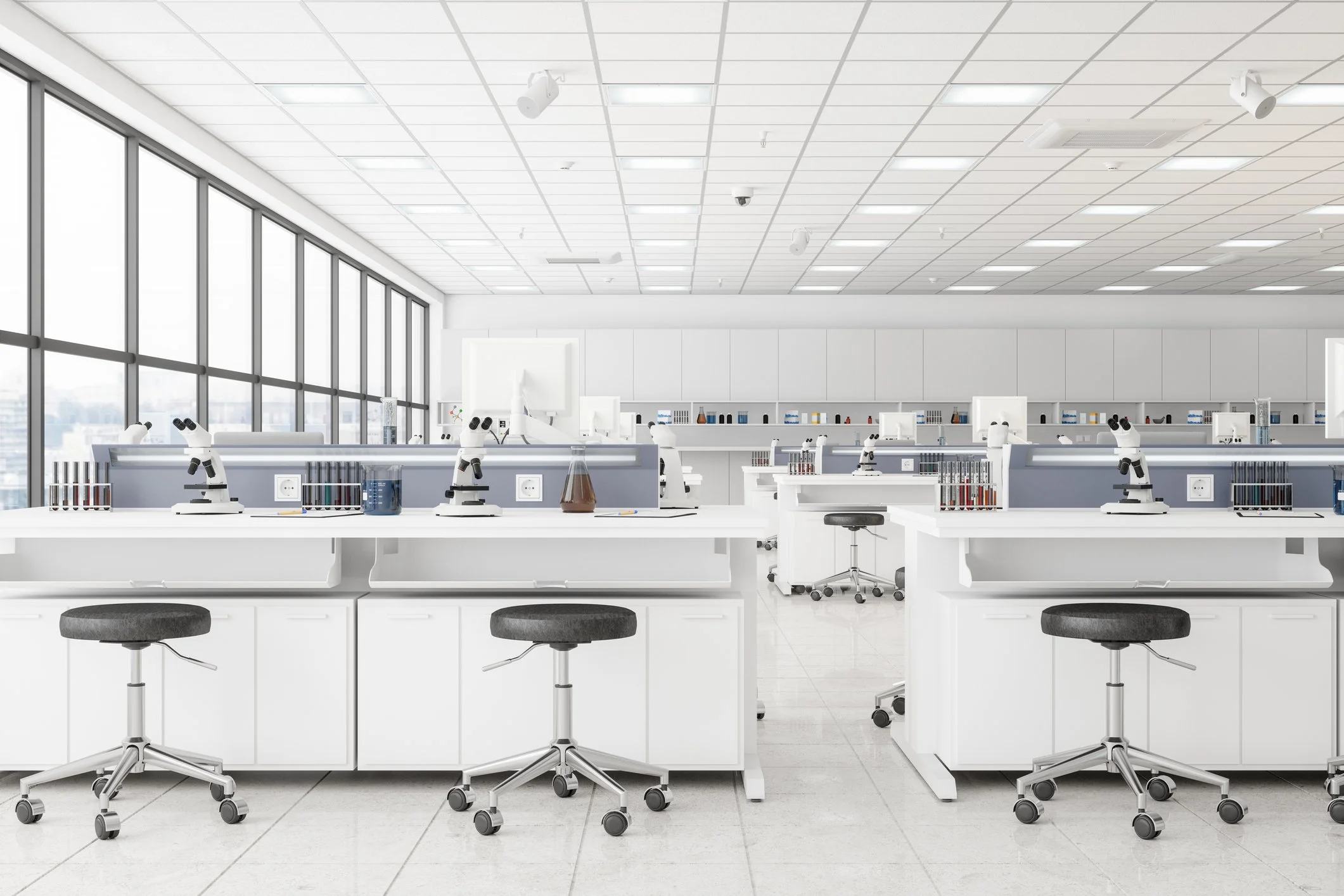
Picture the final week of a complex laboratory build-out. Months of highly specialized engineering work—biosafety containment calculations, HVAC pressure cascade validation, clean utilities commissioning data, equipment qualification protocols—get compiled into a closeout package and handed to the facility owner. The package lands on a server. Two years later, a renovation is scoped. Three years after that, an FDA inspector requests documentation on the original HVAC design basis. The server has been migrated. The engineering firm has changed ownership. The project manager who oversaw commissioning retired.
The lab is still standing. Its institutional memory is not.
Labs are not ordinary buildings
Laboratory facilities, whether research, pharmaceutical, clinical, vivarium, or advanced manufacturing, carry documentation burdens that far exceed conventional construction. Every design decision is interconnected: a change to exhaust airflow affects containment integrity; a swap in building materials can invalidate a cleanroom classification; a shift in utility routing can compromise qualification status. The value of that documentation is not just operational—it is regulatory, legal, and financial.
Yet lab facilities suffer from the same structural documentation failure that affects every building in the built environment: the complete absence of a durable identity layer that keeps records tethered to the physical asset they describe. Project files are organized around contracts, not assets. Platforms change. Organizations restructure. And the documentation that took years and millions of dollars to produce becomes effectively inaccessible within a decade of project completion.
Where continuity breaks down in the lab lifecycle
The problem compounds across every phase of a lab facility’s life.
Planning and programming. Lab planners designing a new facility or renovation are frequently working without access to the full history of the space. As-built drawings may be outdated or missing. Previous qualification records may exist only in a decommissioned platform. Decisions made without that context—about structural capacity, utility infrastructure, or existing containment configurations—carry risk that won’t become visible until construction or commissioning.
Design and engineering. Architects and engineers designing lab spaces depend on accurate baseline data: existing infrastructure capacities, prior MEP routing, and any special conditions imposed by earlier regulatory submissions. When that data cannot be reliably retrieved, teams either invest in costly field verification campaigns or proceed with assumptions—both of which introduce delays, cost overruns, or downstream compliance exposure.
Commissioning and qualification. Commissioning and qualification generate some of the most critical documentation in a lab’s lifecycle—IQ, OQ, and PQ protocols, test results, deviations, and acceptance records. These records underpin regulatory submissions, risk assessments, and change control decisions for the life of the facility. When they are stored in project-centric repositories disconnected from the physical asset, the thread connecting a current condition to its original validated state is cut.
Long-term operations. Maintenance events, equipment replacements, and facility modifications accumulate across years. Without a persistent link between those operational records and the original design and qualification baseline, change control becomes reactive and fragmented. When a regulatory body requests a full documentation trail—or when a facility needs to demonstrate that a modification did not affect validated status—assembling that record from disconnected systems can take months and still leave gaps.
The solution: persistent identity for lab assets
Addressing this requires intervention at the identity layer, not the application layer. The emerging framework—Persistent Infrastructure Identity (PIID)—assigns a permanent, globally unique identifier to every physical asset at the moment of its creation. That identifier belongs to no platform, depends on no single organization, and survives every ownership transfer, software migration, or corporate restructuring.
For lab environments, this concept is transformative. A PIID-anchored facility carries a continuous, append-only documentation chain that links design records to construction records to commissioning data to operational logs—all indexed to the physical asset, not to a project file or a vendor’s platform. When a renovation is planned, the full history of the space is accessible. When a regulator requests change control documentation, the record is traceable and complete. When an equipment failure occurs, the maintenance history and original specification are a single lookup away.
Actionable steps for lab professionals
Lab planners, architects, owner-operators, and facility managers can begin addressing documentation continuity risk today.
Anchor records at project inception, not closeout. The richest documentation window in a lab’s lifecycle is during design and construction. Establish asset-anchored record structures at the start of a project—before commissioning, before qualification, before handover. Retrofitting documentation continuity after the fact is exponentially more difficult.
Specify documentation deliverables in contracts. Design agreements, construction contracts, and commissioning scopes should explicitly require that records be delivered in formats that support long-term asset association—not just project-organized document packages. Owners should require persistent identifiers as part of the closeout package.
Connect operational systems to the design record. CMMS platforms, BMS systems, and qualification tracking tools should be configured to reference the same asset identifiers used during design and construction. Without that linkage, operational data and design data will drift apart the moment the project closes.
Treat documentation continuity as a regulatory risk. For GxP environments in particular, the inability to produce a complete and traceable documentation history is not just an operational inconvenience—it is a compliance liability. Organizations that build persistent identity into their facilities infrastructure are building a defensible audit trail from day one.
The lab that knows its own history
Lab facilities are among the most knowledge-intensive structures in the built environment. The teams that plan, design, commission, and operate them produce documentation of extraordinary technical depth. The tragedy is that this documentation routinely disappears within a decade—not because of negligence, but because the industry lacks the foundational identity infrastructure to keep it anchored to the asset it describes.
Persistent Infrastructure Identity offers lab professionals a direct path to closing that gap—protecting the investment in documentation, reducing risk across the lifecycle, and giving every lab the institutional memory it was designed to have.