
Powering Food Safety Science: University of Nairobi Opens Advanced Analytical Lab
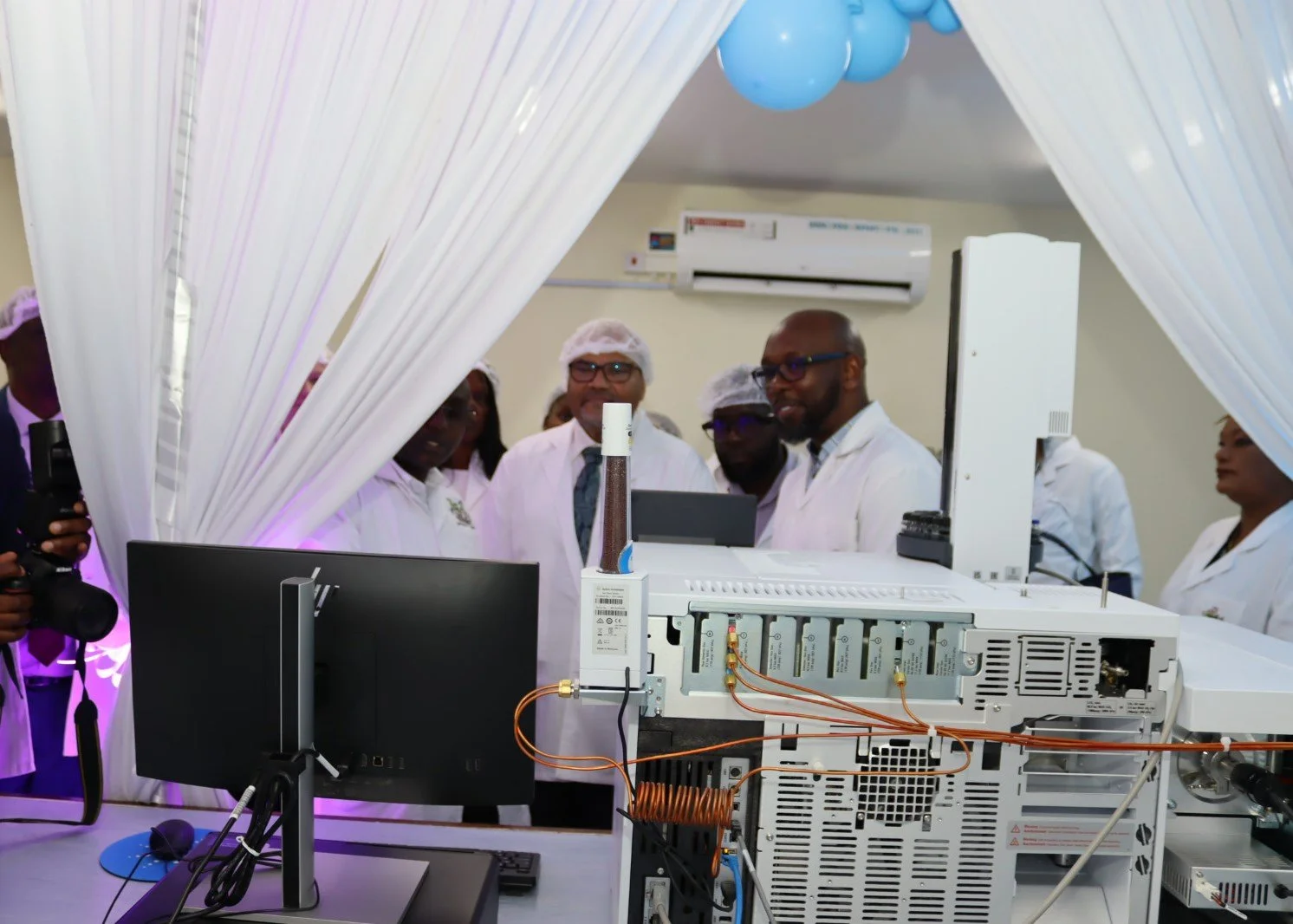
The University of Nairobi has launched a new GC/MS food testing laboratory under the Food Leader project, strengthening research, training, and international collaboration to advance food safety and food security science in Kenya. Image: Courtesy of the University of Nairobi
The University of Nairobi has launched a new gas chromatography/mass spectrometry (GC/MS) and specialized food testing laboratory at its Faculty of Agriculture, marking a significant expansion of Kenya’s capacity for advanced food safety research.
Developed under the “Food Leader” project—“Empowering Tomorrow’s Food Security Leaders: Strengthening Higher Education Capacity for Sustainable Food Systems in Kenya and Mozambique”—the facility is a product of international collaboration between the University of Nairobi, the University of Helsinki, and Universidade Lúrio.
The lab is designed to strengthen both scientific research and training, equipping students and researchers with access to high-end analytical tools used in global food safety and environmental testing.
Upgrading existing infrastructure into a workflow-driven design
At the heart of the project was a major transformation of an existing laboratory space. Rather than constructing a new facility from the ground up, the university focused on adaptive reuse—modernizing the existing structure to meet the technical demands of advanced instrumentation.
“The design goals were to renovate an old laboratory space with two large rooms into a state-of-the-art lab that could host specialized testing machines like the GC/MS,” says Catherine Nkirote Kunyanga, PhD, associate dean, faculty of agriculture, associate professor of food science and technology, coordinator, Food Security Center/University of Nairobi Department of Food Science, Nutrition and Technology. “We used our maintenance department to do the massive renovations including flooring, roofing/ceiling design, electricals and power supply, water and plumbing, tinting and repair of windows, gas lines and cages for gas cylinders, fume boards, and benches, among others repairs.”
A defining feature of the new laboratory is its process-oriented layout, designed to support the precise workflow required for food contaminant analysis. The space is divided into dedicated functional zones that separate sample handling from high-precision instrumentation.
“This design was structured to host high-tech machines for testing major contaminants in foods, especially pesticide residues which have been reported to exceed MRLs for most fruits and vegetables,” says Kunyanga. “The lab has a special section to receive the fresh samples [and] conduct sample preparation and derivatization. The second room has the GC/MS which is used to quantify the contaminants in foods.”
This separation helps reduce contamination risks while improving efficiency and consistency in analytical workflows—key considerations in high-sensitivity food testing environments. Beyond GC/MS testing, the laboratory has been designed with future expansion in mind.
“The design allows placement of many food testing machines. We plan to bring in a LC/MS for mycotoxins testing,” says Kunyanga. “These two contaminants have hindered achievement of food security in many African countries and due to lack of reliable testing as only few institutions have these machines, no constructive policy decisions have been implemented. The lab and the machine becomes a game-changer in addressing food insecurity by providing a platform where reliable data can be assed to inform policy.”
Training, Collaboration, and Knowledge Transfer
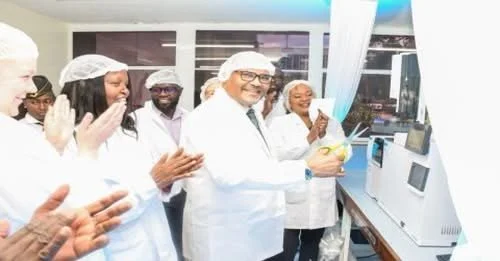
Student, faculty, and technician input—shaped by international training through the Food Leader program—guided the lab’s workflow and design. Image: Courtesy of the University of Nairobi
The design process was strongly influenced by input from students, faculty, and laboratory technicians—many of whom had previously trained at the University of Helsinki under the Food Leader program, led by Dr. Noora Kanerva. Their exposure to international laboratory standards helped shape decisions around workflow, usability, and equipment integration. The GC/MS was procured at a subsided cost from Agilent in Finland, which Kunyanga says was one of the biggest challenges her team faced when developing the lab facility.
“The students, staff, and technicians were hosted at the University of Helsinki to learn how to operate and use the GC/MS—hence, they brought so many ideas to the design of this lab as well as technical know-how,” Kunyanga notes.
This hands-on experience ensured that the final design reflects both global best practices and the operational realities of a teaching and research environment. The laboratory is intended not only as a testing facility but also as a training hub where students can gain practical experience with advanced analytical instrumentation.
The integration of GC/MS technology into the lab and the university’s curriculum will allow students to engage in authentic research experiences, says Kunyanga, noting that this will provide “invaluable skills in analytical techniques, preparing them for future careers in academia, industry, and beyond.”
“The GC/MS equipment … is a powerful tool that plays a critical role in various scientific fields, including agriculture, food science, chemistry, environmental science, and pharmaceuticals. This technology will not only enhance our research capabilities but also provide our students with hands-on experience, bridging the gap between theory and practical application. The primary focus in establishing this lab is to ensure that our students receive the highest quality education and research,” Kunyanga says.
She continues, “We envision this lab as a hub for innovation where students can collaborate on projects, conduct experiments, and contribute to groundbreaking research that addresses real-world challenges. By providing access to advanced equipment and training, we are empowering our students to become leaders in their fields.”
Building a flexible platform for future research
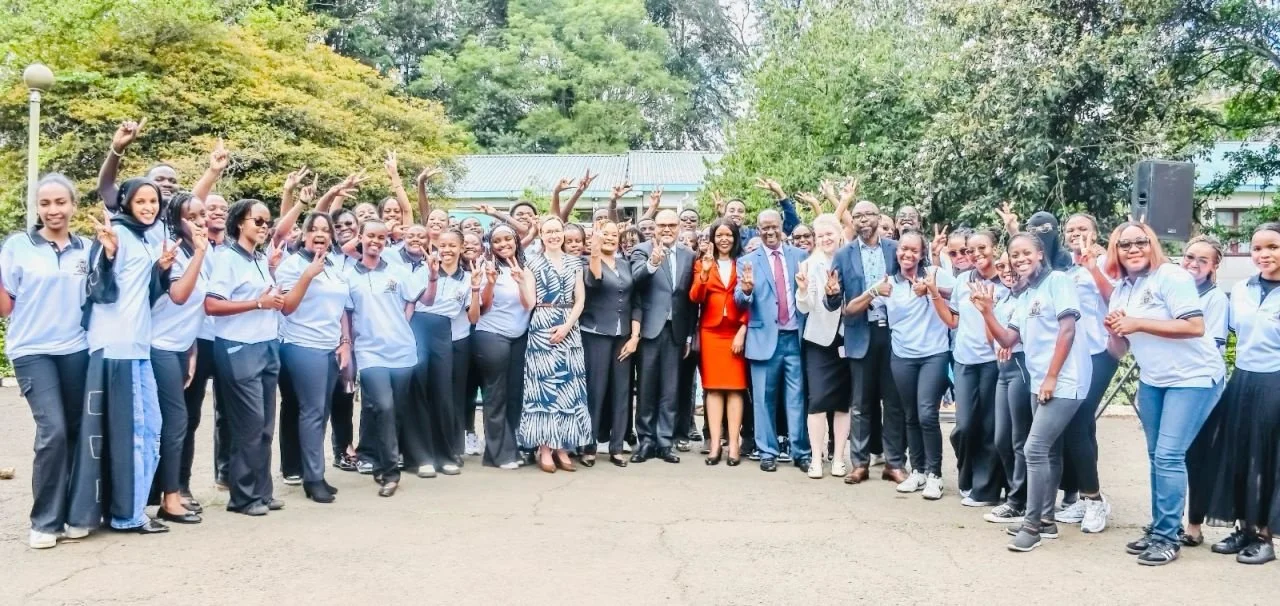
Designed for long-term adaptability, the University of Nairobi’s new GC/MS laboratory will support evolving research and future technologies while serving as a collaborative hub for advancing food safety and regional food security. Image: Courtesy of the University of Nairobi
The laboratory was designed with long-term adaptability in mind. Its infrastructure supports evolving research priorities and future technological upgrades, allowing it to remain relevant as analytical needs grow more complex.
Looking ahead, the University of Nairobi envisions the facility as a hub for innovation, where academic, industry, and government partnerships can converge to advance food safety research. By combining modern instrumentation with collaborative research models, the lab is positioned to play a central role in strengthening food security systems across the region.
“The success of this lab is a testament to the power of collaboration,” says Kunyanga. “We have worked closely with various stakeholders—including industry partners, academic institutions, and government agencies—to ensure that our research is relevant and impactful. This collaborative spirit is crucial as we strive to address complex global challenges through innovative research. Looking ahead, I envision this lab as a hub of innovation where students and faculty will collaborate on groundbreaking research projects. By harnessing the power of GC/MS technology, we will explore new frontiers in science and contribute to our community's well-being.”