
Planning for Sensitivity: Temperature, Vibration, and Power in Legacy Labs
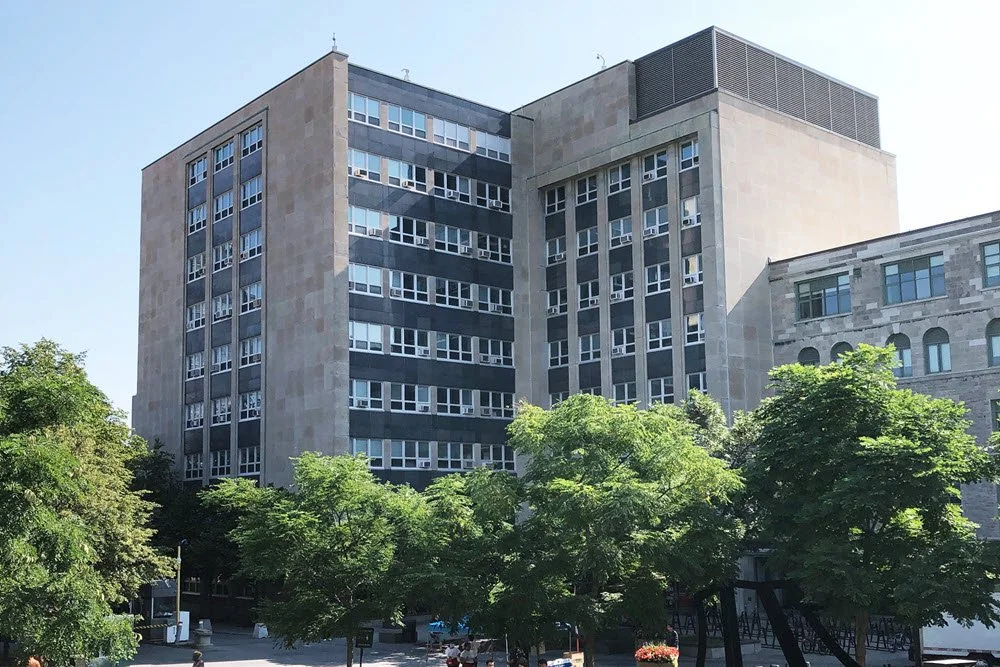
Targeted upgrades at McGill University’s McConnell Engineering Building in Montreal are transforming legacy dry labs into high-performance spaces for advanced photonics and fiber-optic research—without disrupting ongoing academic activity. Image: Courtesy of McGill University
Construction is underway at McGill University’s McConnell Engineering Building in Montreal, QC, Canada, where targeted upgrades are transforming two existing dry laboratories into high-performance research environments for advanced photonics and fiber-optic work. Mandated under Project 21-078 as part of the CFI IF 2023–Liboiron initiative, the renovation reflects a growing trend across academic campuses: extracting new research capability from legacy facilities through carefully coordinated, equipment-driven interventions.
The project, which began January 21, 2026, focuses on Rooms MC010 in the basement and Room 816 on the eighth floor. While modest in footprint, the scope is technically complex, requiring new mechanical, electrical, and architectural systems to support highly sensitive photonics equipment—all within a 75-year-old building that remains fully active for teaching and research.
For lab planners, architects, and facilities leaders, the McConnell project offers a case study in balancing advanced technical requirements with real-world constraints such as aging infrastructure, limited downtime, and the need for uninterrupted academic operations.
Designing around research-driven requirements
Unlike new construction, renovations of existing labs often begin with unknowns. According to Simon Lacoste, project manager with McGill University’s Facilities Management and Ancillary Services, the process is fundamentally researcher-led.
“My role as a project manager focuses on understanding the overall project requirements, which typically include factors such as lighting, vibration, temperature, and environmental conditions,” Lacoste explains. “It’s important to note that these needs are identified by the researchers. Based on those requirements, our project management team works to build and coordinate the project around them.”
In Room MC010, the installation of a fiber-optic assembly machine and a photonic die bonder required upgrades that extend well beyond equipment delivery. The project includes a new air-conditioning unit, expanded access via a larger door and new card reader, and coordinated mechanical and electrical improvements to ensure performance and maintainability. Room 816, meanwhile, will house a wire bonder on existing furniture, but still requires ceiling removal for electrical work, a new dedicated outlet, and supporting infrastructure modifications.
Getting the fundamentals right, especially in older buildings
While photonics research is often associated with exotic technologies, Lacoste emphasizes that fundamentals like environmental control remain the most critical—and most challenging—elements of lab modernization.
“Temperature and environmental control systems are among the most critical elements to get right the first time, particularly when renovating high-tech spaces in a 75-year-old building,” he says. “These systems require careful coordination and execution to ensure long-term performance and reliability.”
For lab designers, this underscores the importance of early validation of existing systems. Assumptions about available capacity, zoning, or stability frequently need adjustment once equipment heat loads, vibration sensitivity, and power quality requirements are fully understood.
As Lacoste notes, equipment itself is rarely the only variable. “The biggest surprises usually relate to the surrounding environment rather than the equipment itself. Heat loads, vibration, and electromagnetic interference are common challenges.”
Want to dig deeper into vibration issues in lab design? Join us May 11–14 in Orlando at the 2026 Lab Design Conference, where Michael Wesolowsky, principal with Thornton Tomasetti, will lead an interactive roundtable session on “Addressing Vibration Concerns in Laboratory Design and Renovation.” Come prepared with your questions, insights, and real-world experiences!
Working inside an active academic environment
Because the McConnell Engineering Building remains occupied throughout construction, minimizing disruption in an academic setting has been a core planning priority. Room MC010 will be fully closed during construction, while areas near both labs may experience temporary noise, access limitations, or short service shutdowns.
Lacoste describes a highly structured coordination process designed to protect safety and continuity. “Initial meetings with the building director and department leads to present the project and its potential impacts” are followed by deep engagement with the professional design team and McGill’s internal stakeholders—including operations, security, fire prevention, accessibility, IT, and others—at multiple design milestones.
“Continuous communication with users is essential to avoid surprises and maintain safety and access,” Lacoste stresses. “Successful projects require full collaboration, if one party acts independently, the entire process can be compromised.”
This approach reflects a broader best practice for renovations in active research environments: proactive engagement is not optional, but foundational.
Planning for workflow, maintenance, and flexibility
Beyond infrastructure, the project also addresses how new equipment integrates into existing lab layouts. Decisions around casework, tables, and clearances must balance current workflows with future adaptability—an increasingly important consideration as photonics tools evolve rapidly.
According to Lacoste, these decisions are made collaboratively. Equipment placement and layouts are “evaluated jointly by the professional team and researchers,” he says, with safety and code requirements established first and workflows refined from there.
For lab end users involved in similar projects, Lacoste offers clear advice: “Understand both the equipment requirements and the research needs. Equipment specs represent only part of the challenge whereas research conditions (e.g., strict temperature control) often impose additional constraints.”
A model for incremental, high-impact upgrades
Scheduled for completion in March 2026, the McConnell Engineering Building upgrades demonstrate how focused investments can significantly expand research capability without large-scale construction. The project highlights the importance of early equipment coordination, rigorous environmental control, and disciplined stakeholder engagement—especially when modern science meets legacy infrastructure.
As institutions continue to retrofit existing buildings for next-generation research, projects like this one show that success lies not in sweeping redesigns, but in precision, collaboration, and a deep understanding of how research actually happens.