
Ocean Conservation Lab is Purpose-Built for Preservation
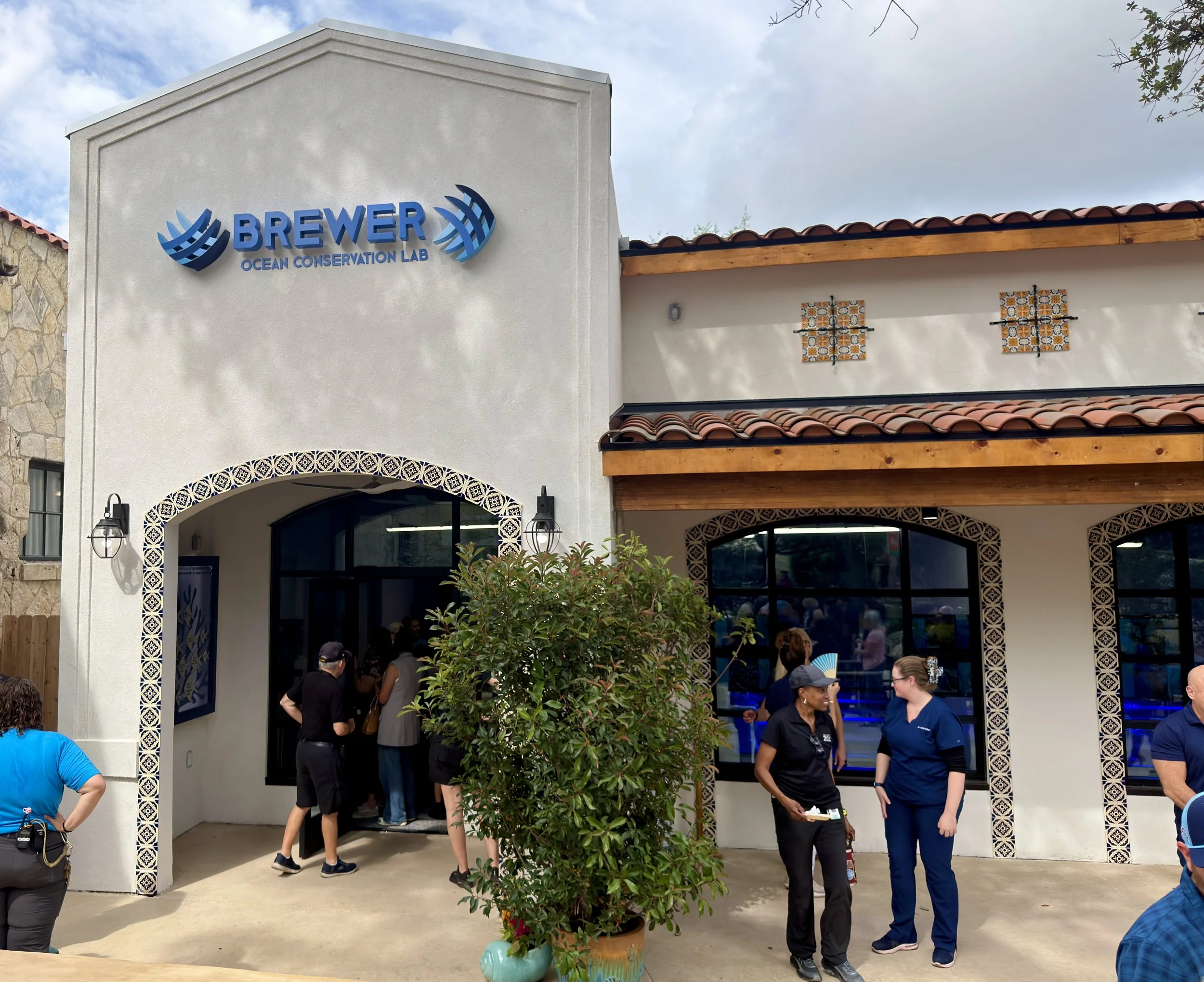
The Brewer Ocean Conservation Lab at the San Antonio Zoo was purpose-built to support coral propagation, restoration, and conservation research while allowing visitors to observe reef recovery efforts through interactive exhibits and behind-the-scenes views of the working laboratory. Image: Courtesy of San Antonio Zoo
When the San Antonio Zoo officially opened the Brewer Ocean Conservation Lab on June 1, 2026, it marked more than the debut of a new exhibit. The 937-sf facility represents a significant investment in coral restoration, research, and public education, providing the zoo’s aquatic conservation team with a purpose-built environment designed specifically to support the long-term preservation of some of the world's most threatened ecosystems.
Made possible through a gift from the Brewer family in honor of the late R.P. Brewer III, the new laboratory supports coral conservation initiatives in partnership with NOAA and the Association of Zoos & Aquariums’ Saving Animals From Extinction (SAFE) program. While the facility serves an important educational function for zoo visitors, its design was driven first and foremost by the operational requirements of coral husbandry and conservation.
Creating a dedicated space for coral conservation
Prior to the lab’s construction, San Antonio Zoo staff had already established a successful coral propagation program despite working in facilities not originally designed for the task.
“San Antonio Zoo’s team of Aquarists has been highly successful at propagating coral, despite their historical reliance on appropriated facilities and improvised equipment,” says Jesse Vargas, chief operating officer for the San Antonio Zoo.
The new facility was conceived to give staff the infrastructure needed to expand those efforts in a more efficient, biosecure environment.
“Thanks to Robert Brewer’s background as a marine biologist, his shared passion for coral conservation, and his thoughtful investment in the zoo’s preservation mission, the Brewer Ocean Conservation Laboratory now provides the zoo team a dedicated and purpose-built space,” Vargas adds.
The facility incorporates upgraded staff support areas for research and curatorial activities, saltwater mixing and brining systems, life-support infrastructure, exhibit aquariums, and quarantine areas. All of these features are integrated within a controlled environment designed specifically for coral conservation.
Designing for coral health and long-term stewardship
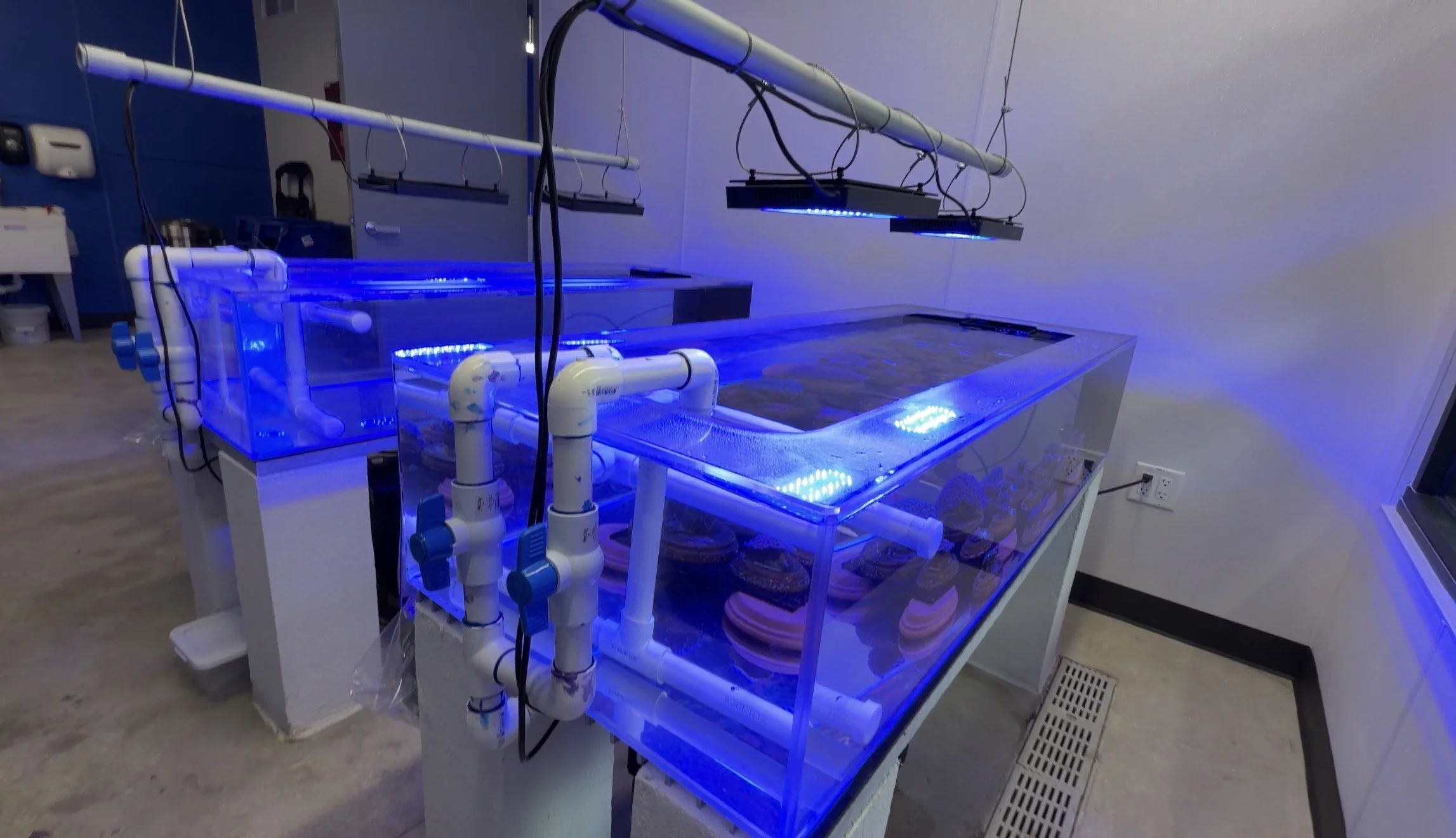
The San Antonio Zoo’s new coral lab utilizes specialized life-support systems, tailored lighting, and expert-backed techniques to maintain optimal water quality and support long-term coral fragmentation. Image: Courtesy of San Antonio Zoo
Coral restoration presents unique design challenges. Unlike many laboratory environments, successful coral propagation depends on maintaining highly stable aquatic conditions while replicating critical environmental factors found in natural reef ecosystems.
According to Craig Pelke, director of ectotherms at the San Antonio Zoo, the project team drew heavily from proven practices used at other zoological institutions and consulted extensively with coral conservation experts during planning.
“The features/systems/technologies used to create SAZ's coral husbandry setup were based on what works (and doesn't work) at other zoological institutions as well as researching the most optimal life support/husbandry equipment available to meet our goals,” Pelke says.
The lab was designed primarily to support long-term coral holding and asexual reproduction through coral fragmentation, or “fragging.” While the current facility does not support coral spawning events, it plays a critical role as an assurance colony facility for coral species managed in collaboration with NOAA.
At the heart of the facility is a sophisticated life-support system engineered to maintain optimal water quality. Multichambered sump systems provide both physical and biological filtration, while protein skimmers remove waste and dissolved organic nutrients from the water.
Additional specialized equipment includes calcium reactors that utilize recycled coral skeletal structures to precisely regulate calcium and alkalinity levels essential for coral growth. Lighting design also plays a vital role. The overhead system allows staff to tailor light wavelengths to the specific needs of the deepwater coral species maintained at the facility.
“The lighting installed overhead allows us to match the appropriate light wavelengths for the deepwater (mesic) corals SAZ holds to optimize photosynthetic activity with the coral's symbiotic algae (zooxanthellae),” Pelke says. “This action can produce up to 90 percent of the coral's energy, helping fuel growth.”
Leveraging staff and partner expertise
Input from experienced coral husbandry professionals was a key component of the design process.
“The majority of input in the design of the lab came from other institutions and their coral staff, primarily Moody Gardens,” Pelke says.
The project team also collaborated with NOAA personnel working directly with Flower Garden Banks National Marine Sanctuary, one of the nation’s most significant coral reef ecosystems.
“Moody Gardens was instrumental in hosting visits to their facility as well as providing integral husbandry information that is being implemented at SAZ,” Pelke says.
These collaborations helped shape decisions regarding life-support systems, animal care workflows, and operational requirements, allowing the team to avoid common pitfalls and implement proven coral conservation strategies from day one.
Balancing conservation and public engagement
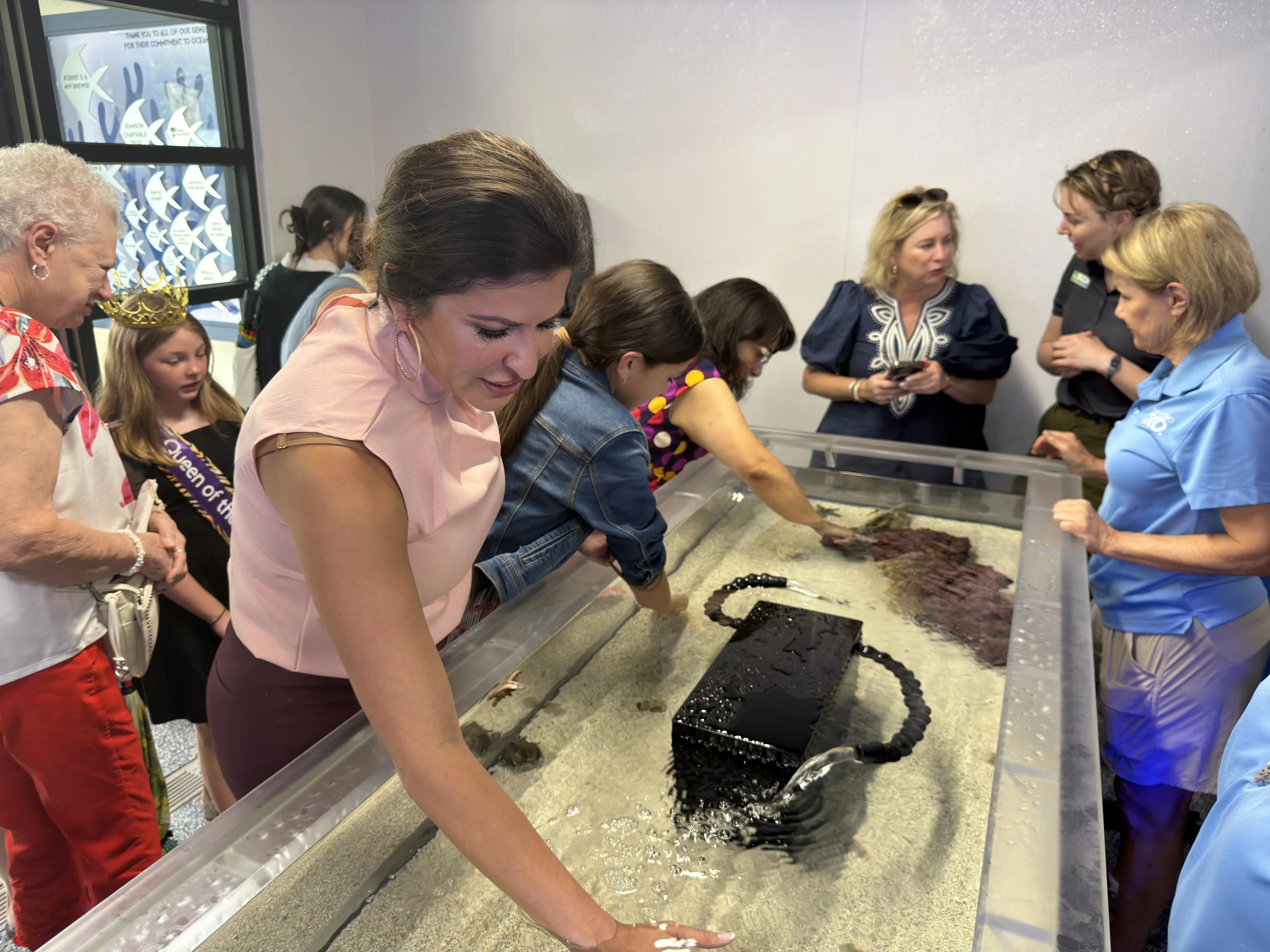
A dedicated touch-tank room embedded within the Brewer Ocean Conservation Lab allows visitors to interact with marine life and observe coral restoration efforts firsthand, creating an engaging connection to ocean conservation. Image: Courtesy of San Antonio Zoo
One of the facility’s most distinctive design features is its ability to support active conservation work while simultaneously providing educational opportunities for visitors. Unlike traditional back-of-house research spaces, the Brewer Ocean Conservation Lab was intentionally designed to make coral restoration visible and accessible to the public.
“The lab makes use of modern and adaptable interpretive mediums in the form of digital screens that have evolving messaging and allow for quick information change-outs,” Vargas says.
The zoo’s education and animal care teams also worked together to develop a storytelling-focused approach to visitor engagement.
“In addition, our education and animal care team focused on a story-telling mode format for the information so that it was much more engaging,” he says.
Perhaps the most innovative feature is a dedicated touch-tank room integrated directly into the laboratory environment.
“The project team made the brilliant decision to include a touch tank room embedded within the lab,” Vargas says. “Staffed by docents and education staff members, the space provides guests of all ages with meaningful opportunities to interact with marine life while learning about their natural ecosystems.”
This transparent approach allows visitors to witness conservation work in progress while creating deeper connections to ocean stewardship.
Building for future growth
Like many specialized research facilities, the project faced budgetary and construction challenges. To maintain momentum, the design and construction team adopted a flexible approach, making strategic modifications throughout the process.
“The project team—client, architect, engineers, and general contractor—remained flexible and at the ready to make changes to save space and substitute materials,” Vargas says.
The resulting facility not only improves operational efficiency but also positions the zoo for future collaboration and expansion.
“The space allows for quarantining and curating of coral under the care of our conservation partners,” Vargas says. “The space has also been built for expansion and in-residence research for our conservation partners.”
For Vargas, the completed facility represents more than a laboratory.
“The Brewer Ocean Conservation Lab is an ocean incubator in a translucent box,” he says, “one that engages with guests and teaches them the dynamics of an ocean in the making and one full of life, all in a fun and accessible way.”
By combining specialized coral husbandry infrastructure with immersive public engagement opportunities, the Brewer Ocean Conservation Lab demonstrates how thoughtful design can simultaneously advance conservation science, education, and community awareness—helping support reef restoration efforts far beyond the Texas coastline.