
Modernizing Mid-Century Research Buildings
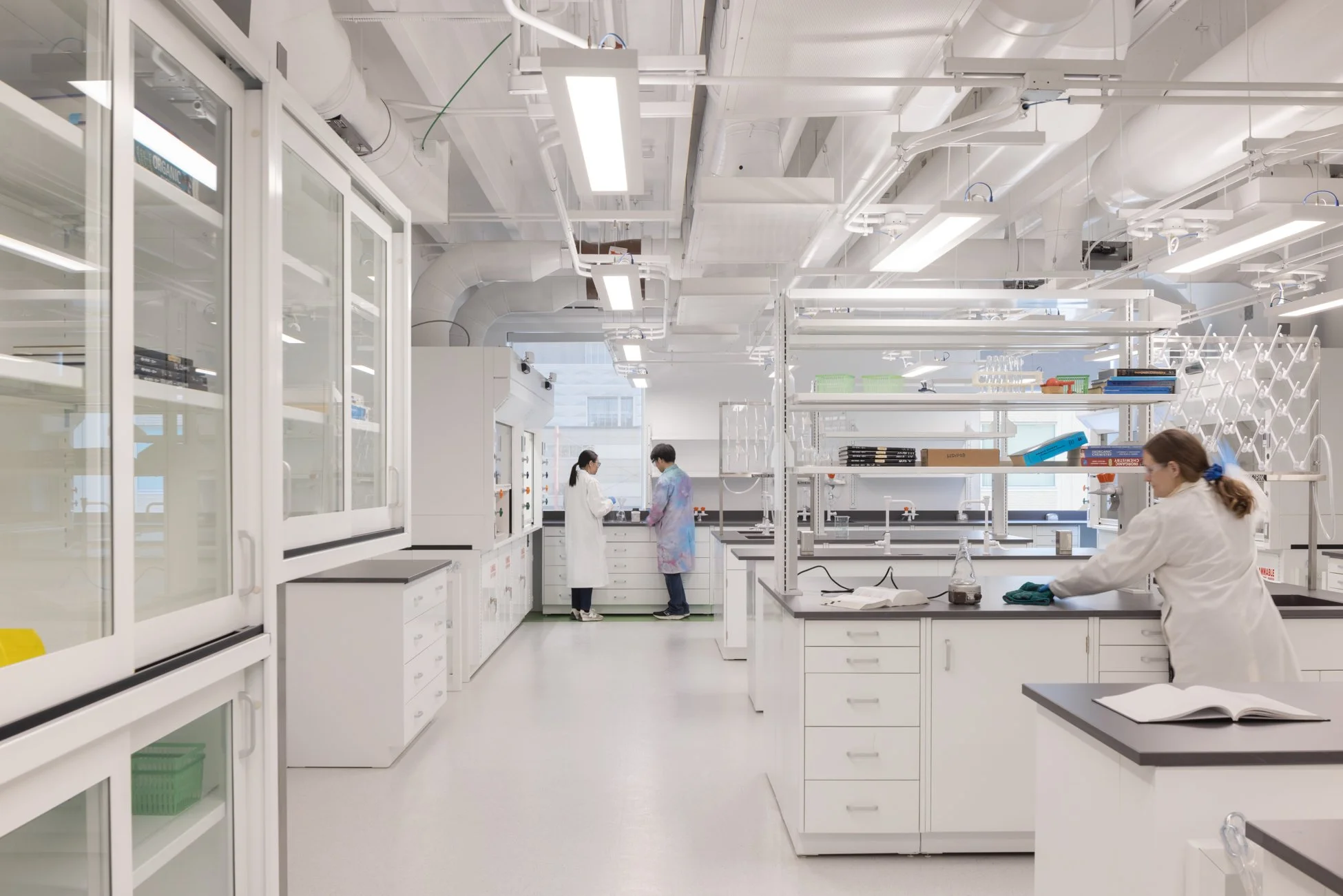
Renovating mid-century research buildings requires balancing preservation of iconic architectural features with modern lab functionality, flexibility, and sustainability. Image: Courtesy of mcCallumSather
Renovating mid-century research buildings presents a unique set of challenges and opportunities. Structures built in the 1950s through 1970s often feature striking architectural forms, from brutalist concrete facades to precast structural elements, yet many struggle to meet the demands of contemporary science. Outdated infrastructure, inflexible layouts, and energy-intensive systems frequently hamper functionality, collaboration, and sustainability.
Modernizing these laboratories often involves rethinking circulation, daylight access, and lab modularity, while upgrading mechanical, electrical, and ventilation systems to meet current safety and energy standards. Flexible lab layouts, standardized yet adaptable casework, and high-performance HVAC systems allow spaces to support evolving research needs, foster collaboration, and improve occupant well-being, all without erasing the building’s historical character.
For lab planners, architects, and research end users, these projects require a delicate balance between preserving character and enabling modern research performance. The University of Waterloo’s Earth Sciences & Chemistry (ESC) Building third-floor renovation offers a compelling case study in achieving this balance.
Reimagining a 1960s facility for contemporary science
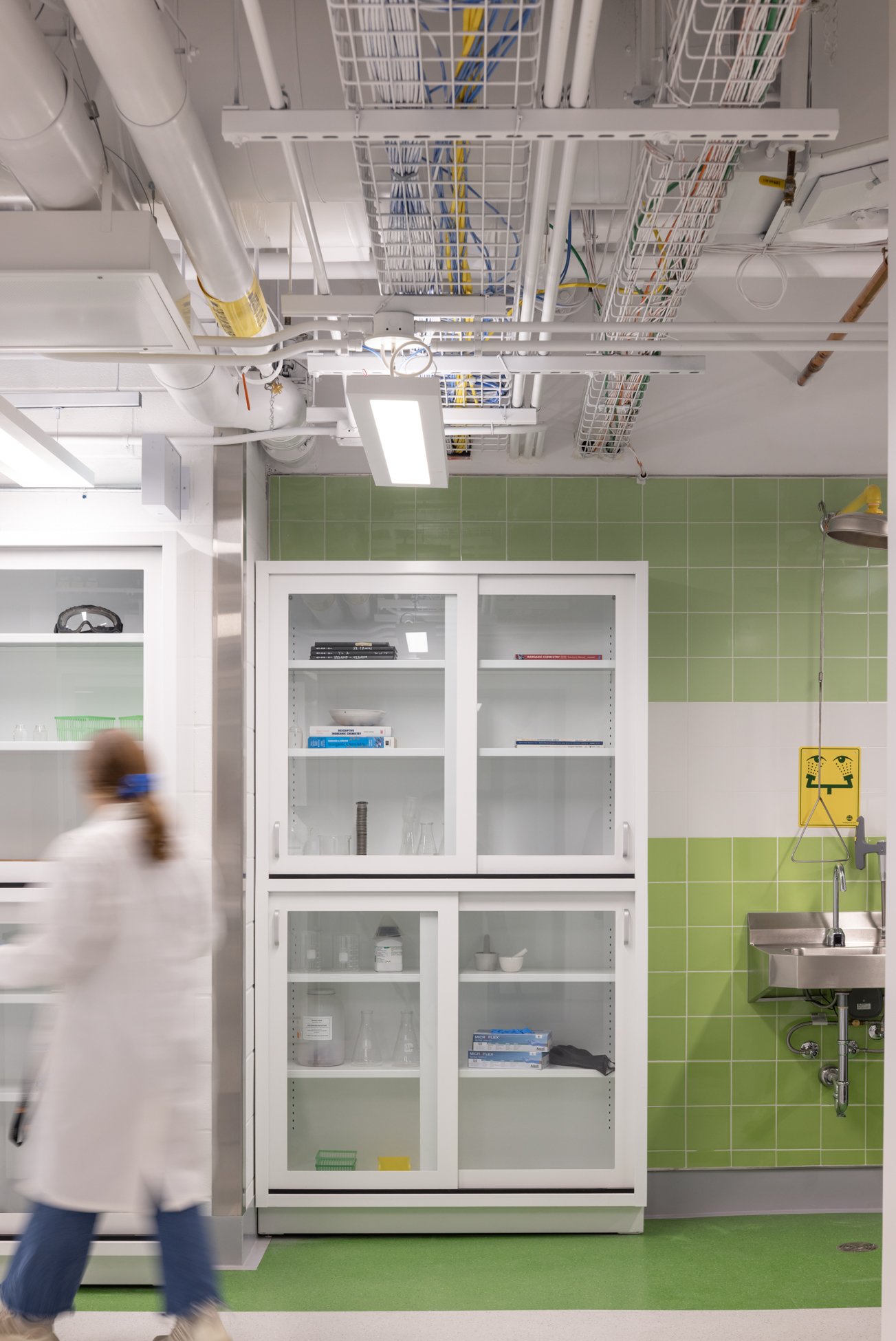
The University of Waterloo ESC renovation features flexible, modular labs designed to provide equitable resources and adapt to changing research needs over time. Image: Courtesy of mcCallumSather
Completed in November 2025, the ESC renovation transformed a fragmented, aging facility into an open, collaborative research hub designed to support the next generation of scientific discovery. “Breathing new life into an old friend” is how university project leadership describes the revitalized space—a nod to both the cultural significance of the building and its renewed relevance for researchers.
The architectural approach, led by Liam Brown, principal at mcCallumSather, focused on respecting the building’s original brutalist character while introducing contemporary elements. “Brick, precast concrete, and terrazzo are maintained and integrated into our design which otherwise introduces contemporary elements,” Brown explains. Heritage sensitivities were carefully considered, ensuring that interventions celebrated existing materials and geometries while providing modern functionality.
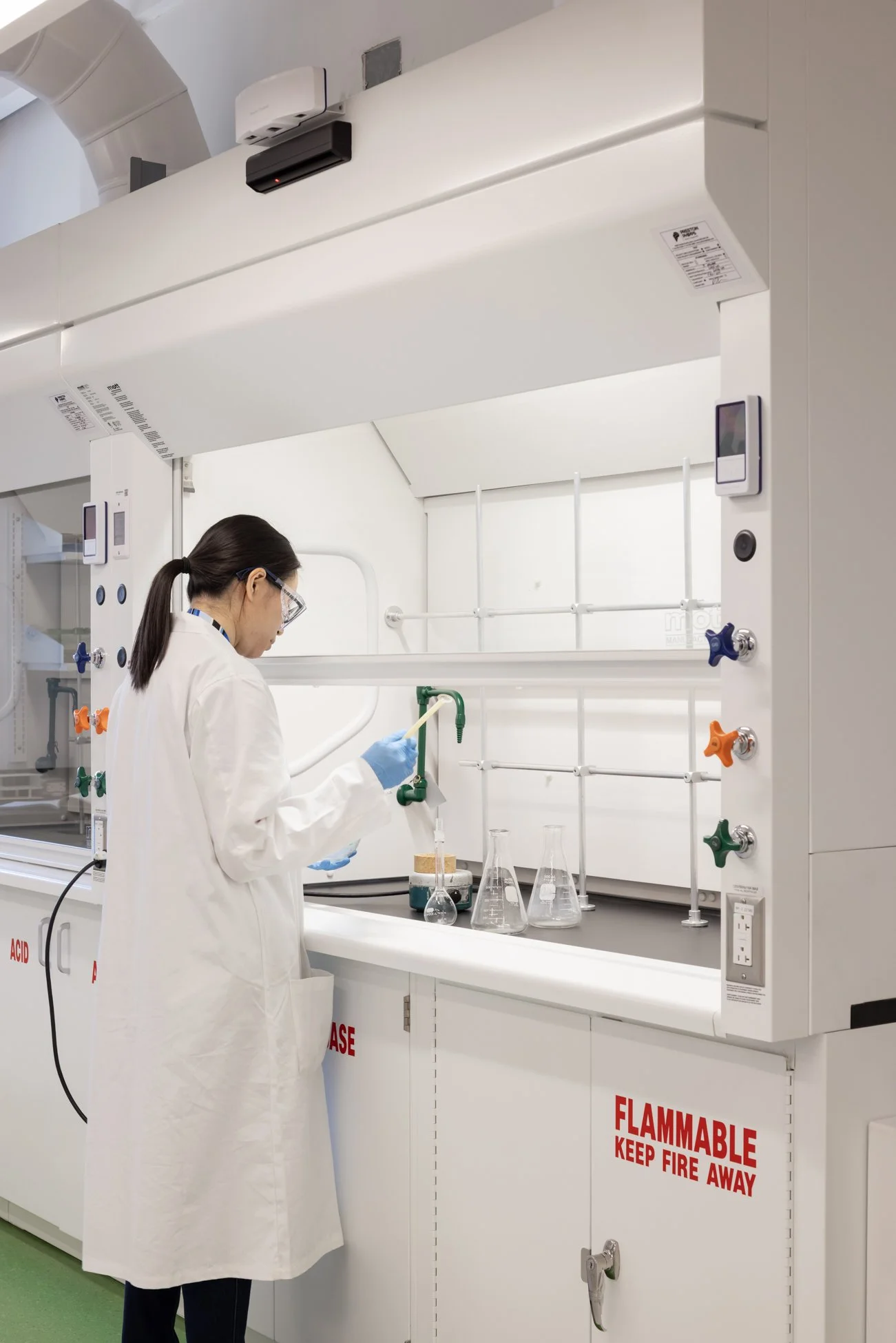
At the heart of the renovation is an equitable, modular lab strategy that supports eight graduate research groups. Labs were designed for flexibility, allowing for changes in personnel, research focus, and equipment without major reconstruction. Brown says, “When we are designing a lab, we take the approach that the person we are designing it for may have tenure for a year or 20 years, but ultimately another individual will conduct research in that space. Each PI should be equipped with comparable resources and space.”
Brown cites the the basis of the Council of Ontario Universities (COU) metrics that influence post-secondary campuses. “By taking this approach, we are able to deliver a project faster, capitalize on economies of scale for casework and fume hoods, integrate changes more readily, and encourage collaboration and sharing of resources post-occupancy.”
Standardized services and modular casework layouts were repeated across the eight laboratories, creating equitable spaces while allowing researchers to personalize their immediate work environments. This approach balances the efficiency of standardization with the flexibility to accommodate evolving scientific needs.
Transforming circulation for collaboration and daylight access
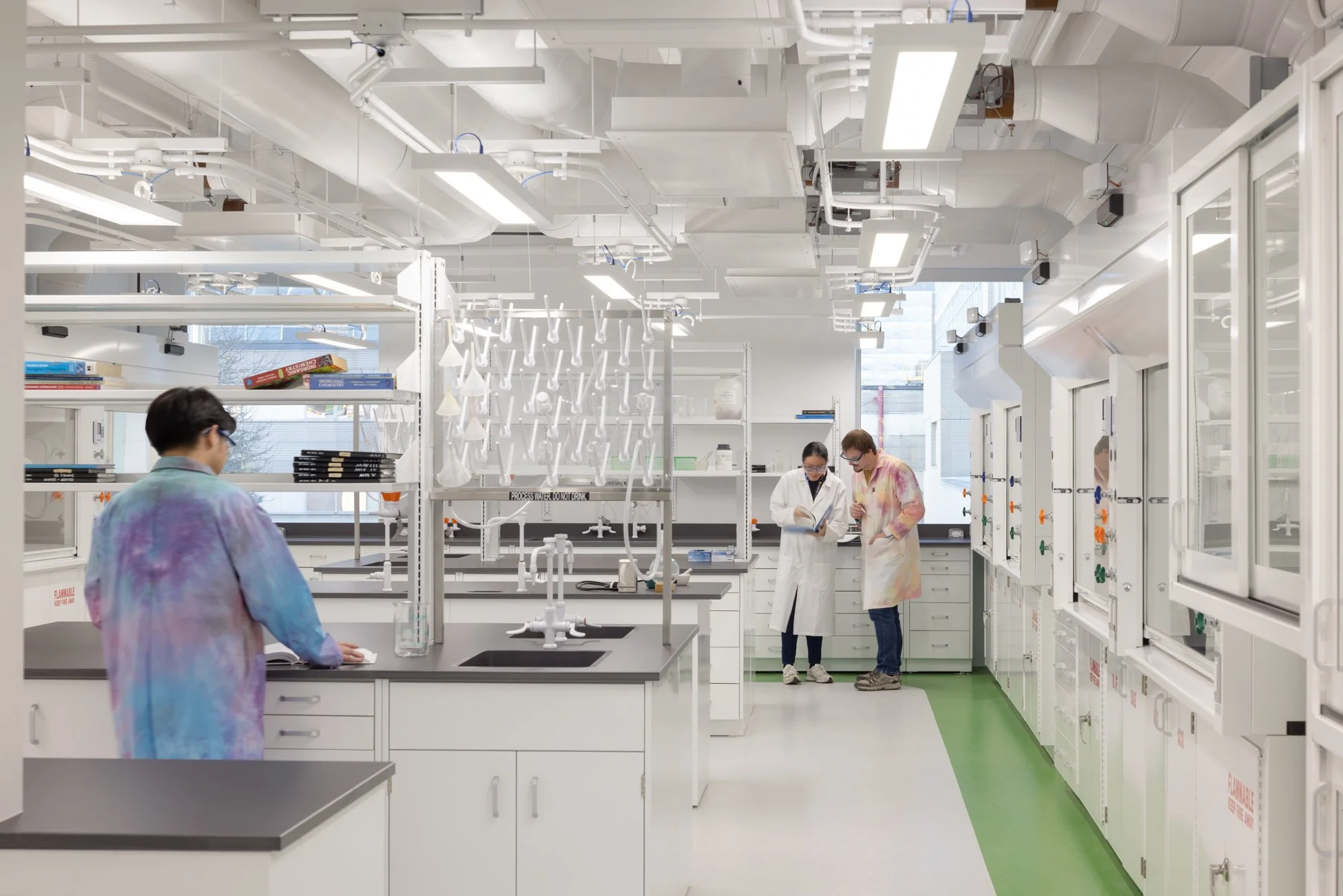
Creative design strategies, like repositioning circulation, can maximize light, collaboration, and infrastructure functionality in mid-century buildings. Image: Courtesy of mcCallumSather
A standout feature of the renovation is the reconfiguration of a double-loaded corridor into a single-loaded, glazed passage along the building’s southern façade. This move dramatically improved daylight access, views, and the daily experience of researchers. The corridor now includes a series of arched alcoves and informal collaboration spaces that foster interdisciplinary interaction.
Brown explains the strategy: “Moving the corridor allowed us to reconfigure the proportions of the labs and the distribution of the office space so that both labs and offices equally enjoy access to light and views, essential elements of occupant wellbeing. This move also enabled us to convert the corridor from a straight linear narrow path to string-of-pearls style of circulation that oscillates between circulation and collaboration spaces. This seemingly counterintuitive approach of moving the corridor resulted in a floor plate that supports new vertical infrastructure, access to natural light, and a reconfiguration of the occupied spaces.”
Such design interventions highlight the importance of thinking creatively when dealing with structural constraints inherent in mid-century buildings. By strategically repositioning circulation, the team unlocked new opportunities for natural light, informal interactions, and functional infrastructure upgrades.
Modernizing mechanical systems in an occupied building
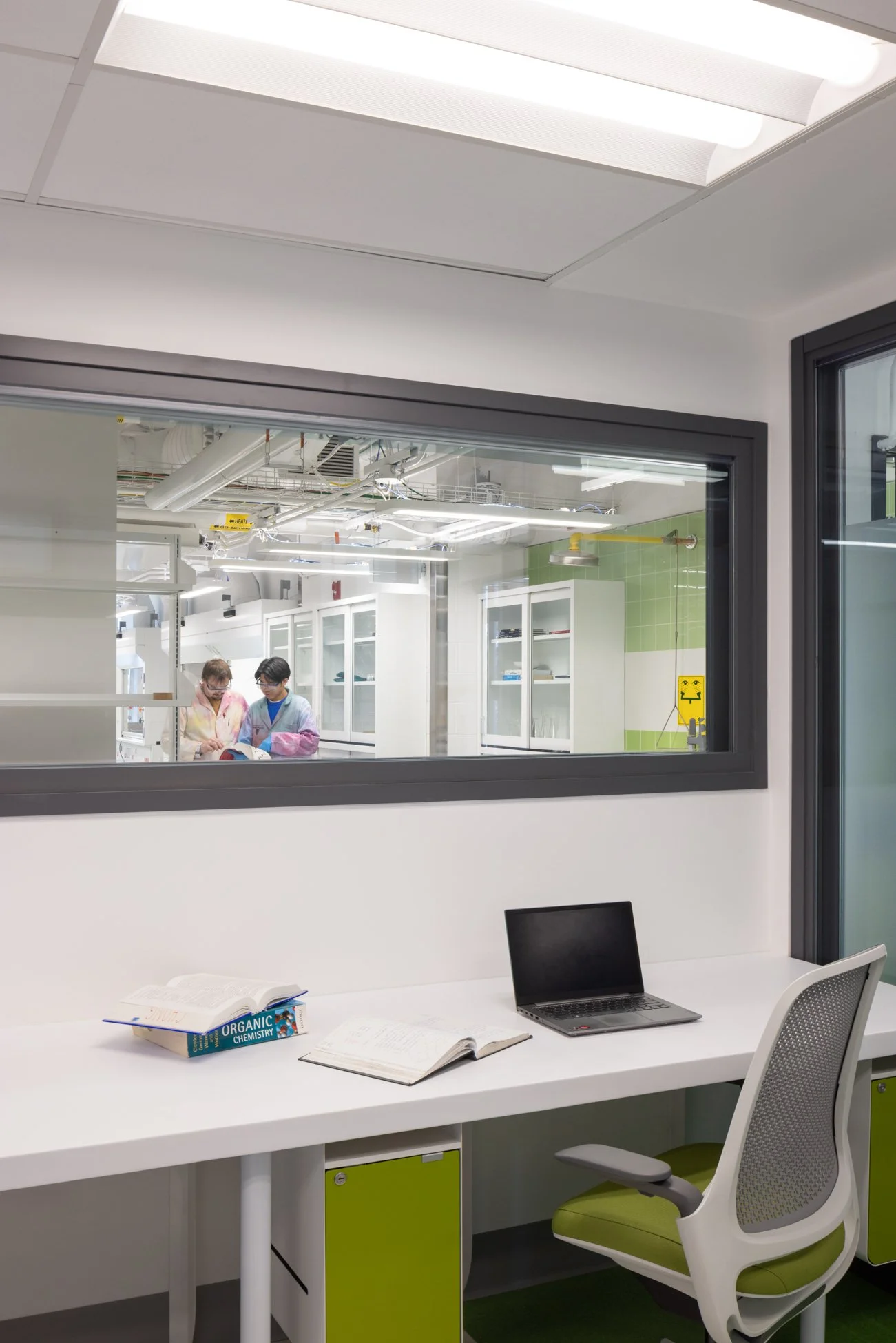
Upgrading mechanical systems in the mid-century ESC building required relocating critical lab services while keeping active research spaces fully operational. Image: Courtesy of mcCallumSather
Upgrading mechanical and ventilation systems was arguably the most complex aspect of the ESC renovation. The original building concentrated services in narrow risers, with inefficient constant-volume systems that recirculated air and failed to meet modern safety and energy requirements. Converting to a single-loaded corridor required relocating fume hood exhaust, laboratory gases, plumbing, and other services, all while maintaining continuity of operations for active labs.
Mary Georgious, principal and mechanical engineering lead at mcCallumSather, describes the challenge: “Existing fiberglass exhaust was removed and replaced with code-compliant welded stainless steel, manifolded to new high-plume Strobic fans with run-around glycol heat recovery. Roof penetrations were tightly controlled, so new risers and exhaust stacks had to be threaded between existing structural Tees, while six-inch and larger services were carefully routed under beams within limited ceiling depth. All work was sequenced to maintain service continuity to occupied floors. High-plume dispersion modelling and wind analysis were completed to protect nearby campus buildings and air intakes.”
The upgraded systems introduced significant energy and safety improvements. VAV fume hoods, a dedicated outdoor air system with energy recovery, and fully VFD-driven fans and pumps reduce energy consumption while maintaining containment and pressure cascades essential for research performance. “The final system improves safety through robust pressurization control and compliant materials, and reduces energy use via VAV fume hoods, Dedicated Outdoor Air System (DOAS) with energy recovery, facility air quality monitoring system, and Variable Frequency Drive (VFD) high plume fan control,” Georgious notes.
Additionally, the mechanical infrastructure was designed to integrate seamlessly with future low-carbon district energy and geothermal systems. Low-temperature hot water distribution, heat pumps configured for replacement with geothermal loops, and hydronic headers prepared the building for energy-efficient, low-carbon operations over the long term.
Lessons learned for mid-century renovations
Preserving cultural elements while making bold design interventions can enhance functionality, user experience, and campus identity in mid-century renovations. Image: Courtesy of mcCallumSather
For teams considering similar projects, the ESC renovation offers several instructive takeaways:
Respect and highlight original character: Even if heritage designations are not mandated, mid-century buildings often hold cultural significance. Integrating original materials and architectural features can enrich the renovation and foster campus identity.
Plan bold interventions where needed: Major moves, such as relocating a corridor or adding a mechanical wing, may introduce complexity, but the long-term functional and experiential benefits often justify the risks.
Engage users throughout: Faculty, students, and lab staff provide critical insights into workflow, equipment placement, and day-to-day functionality. Brown emphasizes, “This requires the engagement of all invested parties, and it’s important to begin this process with an openness to understanding what will work for a given client and not force whatever worked on the ‘last project.’”
Integrate maintenance and operations early: Collaboration with facilities teams ensures that mechanical layouts, access paths, and service clearances support long-term maintenance. Georgious explains, “Maintenance and operations staff provided detailed feedback on equipment accessibility, service clearances, and routing within mechanical rooms; these comments directly informed final equipment locations, valve groupings, and access paths. This collaborative process ensured that the mechanical systems and associated lab layouts are technically robust, maintainable, and aligned with actual research workflows, while providing flexibility for future program growth.”
Leverage energy modeling and standardization: Using consistent casework and standardized service distributions supports flexible research spaces while realizing cost efficiencies. Energy modeling guides where investments in mechanical systems and building envelope upgrades will yield the highest returns.
Employ advanced tools for risk reduction: Three-dimensional BIM and interference modeling are invaluable in navigating unknown conditions in mid-century structures. Georgious notes, “The value of the 3D Revit model cannot be overstated. Our team put as much detail as possible into this, and shared it with the contractor for their interference modeling.”
The ESC third-floor renovation at the University of Waterloo illustrates how mid-century research buildings can be transformed into functional, equitable, and future-ready environments. By balancing respect for original architecture with modern flexibility, daylight access, and advanced mechanical systems, the project demonstrates that thoughtful interventions can extend the useful life of aging labs while supporting cutting-edge science.
For lab planners, architects, and research administrators, the key takeaway is clear: modernization is not merely about upgrading equipment or meeting codes—it is an opportunity to reimagine spaces in ways that enhance collaboration, sustainability, and research excellence. Whether through strategic circulation shifts, modular lab design, or low-carbon mechanical systems, projects like the ESC renovation provide a roadmap for breathing new life into mid-century laboratories while preparing them for the challenges of the future.