2026 Lab Design Conference Lab Tour Preview: Iron Bridge Regional Water Reclamation Facility
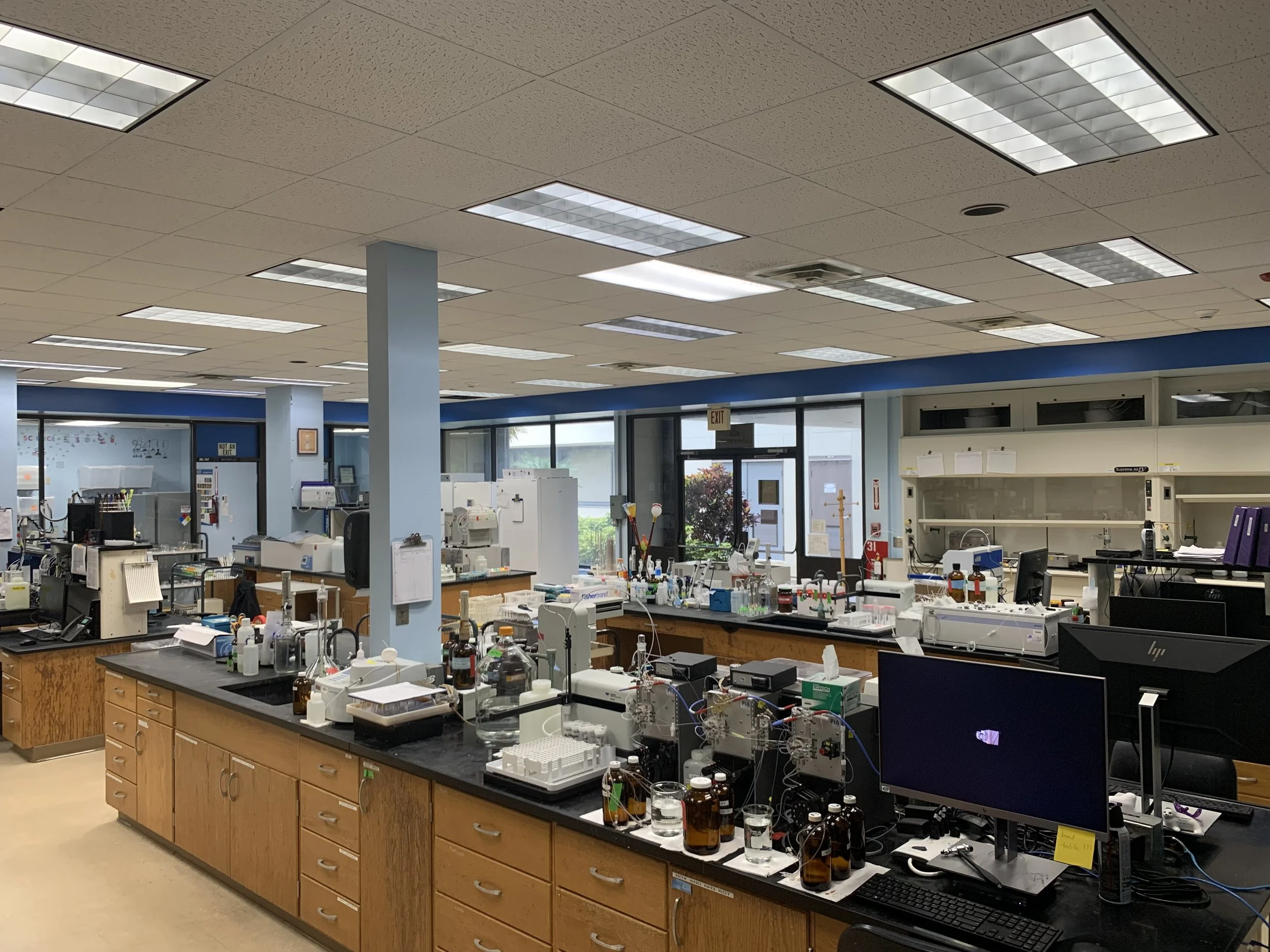
Iron Bridge Regional Water Reclamation Facility, one of the exclusive lab tours offered by the 2026 Lab Design Conference
This year’s Lab Design Conference offers attendees the rare chance to step inside one of Orlando’s most important scientific buildings: the Iron Bridge Regional Water Reclamation Facility. The optional afternoon tour—scheduled for May 14, 2026, departing at 12:30 pm—invites participants to see firsthand how a compact, highly optimized municipal laboratory supports a major metropolitan water system.
Please note: Lab tour tickets are sold separately from regular conference registration. Click here to get your ticket!
Established in 1982, the Iron Bridge Laboratory conducts environmental testing and analysis that keeps Orlando’s lakes, wetlands, and wastewater treatment systems safe and compliant. The lab is certified for 85 parameters in non-potable water and solids and is accredited through the Florida Department of Health in accordance with The NELAC Institute (TNI) Standard. Each year, its staff of eight professionals produces approximately 80,000 analytical results. Their turnaround is exceptionally fast—84 percent of results are available within 24 hours, and 95 percent within a week—allowing city treatment facilities to make timely, data-driven decisions.
What visitors will learn and who will benefit most
On this behind-the-scenes tour, attendees will be guided by laboratory manager Keith O’Daniel and his team, who collectively hold more than a century of service to the City of Orlando and 125 years of expertise in environmental chemistry. O’Daniel notes that the facility’s layout and organization are central to its efficiency. “Our laboratory is made up of one main room with several smaller rooms attached,” he explains. Those rooms include dedicated spaces for metals analysis—equipped with an ICP, graphite furnace, and mercury analyzer—along with a microbiology room, a Quality Assurance Officer records room, a dishwasher and supply room, a UPS room, and more. Meanwhile, “The large main room contains areas for nutrients testing with three auto-analyzers, solids testing with multiple analytical balances and ovens, sample preparation, BOD/CBOD testing with several incubators, and alkalinity and TOC analysis. There are three fume hoods—one for solids and volatile solids, one for metals prep, and one for general wet chemistry usage.”
For lab designers, architects, planners, and municipal project teams, the tour offers a distinctive chance to see how a relatively small laboratory has been adapted, reorganized, and reimagined to keep pace with evolving environmental regulations and operational needs. “The organization of the laboratory is one of its key features,” O’Daniel says. “With the Iron Bridge Laboratory being a small lab, efficiency in workspaces is crucial. We have made significant changes throughout the years to improve workflows and therefore productivity.”
Optimizing space and efficiency over decades
Much of the current layout reflects decades of responsive, incremental renovation. Visitors will learn how the facility’s footprint and functions have transformed since the early 1980s. “Just as requirements for laboratory certification have changed vastly over the last 40+ years, the layout of our building has as well,” O’Daniel notes. “Our metals analysis room was once an equipment room. Our QAO records room began as a wastewater operations preparation room. Our restroom was once a chemical delivery room. And our microbiology room started as a shift chemist office.”
A major renovation in 1998 replaced the original metal cabinetry—already rusting—with wood, and even the building’s infrastructure had to evolve. “All of the waste piping had to be changed within the first few years of operation due to corrosion in the metal pipes,” he adds. “All of the drain pipes are now glass.”
Tour participants will also get an up-close look at the laboratory’s modern instrumentation and streamlined workflows. While the space itself is modest and utilitarian, “we have relatively new equipment, considering the building is 43 years old,” O’Daniel says. The lab is NELAP-certified for 84 parameters, and its team places strong emphasis on maintaining instruments and grouping analyst responsibilities by zone. “One key feature we have optimized is the workflow of each analyst. By grouping all the responsibilities of an analyst to a certain part of the lab, we can keep everyone in zones and not get in the way of others.”
Register now to secure your spot
With limited capacity and high interest expected—particularly among those involved in lab planning, design, engineering, and environmental testing—this tour is anticipated to sell out quickly. If you want a firsthand look at how a four-decade-old environmental lab continues to modernize, optimize, and safeguard a major city’s water systems, be sure to reserve your spot when registering for the 2026 Lab Design Conference. Secure your ticket right away!