
Life Science Center Vienna: Aa Convergence Hub for AI and Biomedical Research
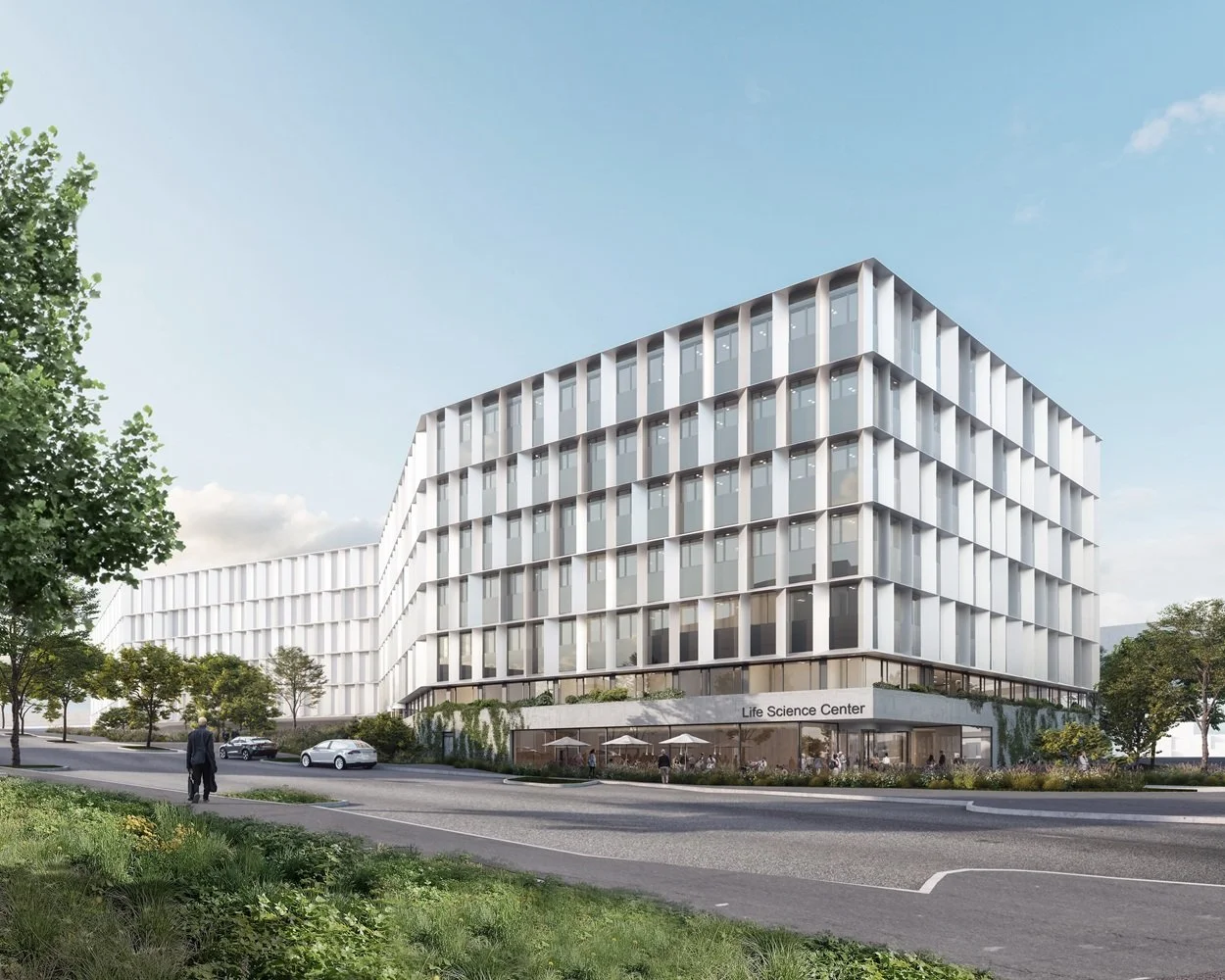
Artificial intelligence has become indispensable in modern health research. With the Life Science Center Vienna, the Vienna Business Agency is developing an innovation and AI hub in Neu Marx spanning approximately 14,000 m², designed to make a significant contribution to improving people’s health. Image: Courtesy of Wirtschaftsagentur Wien-Kronaus Mitterer Architekten
The City of Vienna is advancing its position as one of Europe’s leading life sciences clusters with plans for the new Life Science Center Vienna, a €170-million laboratory and research complex that will integrate biomedical science and artificial intelligence under one roof. Located in the city’s Neu Marx district near the established research ecosystem of the Vienna BioCenter, the project will provide approximately 14,000 square meters of laboratory, office, and technical space designed to support the growing intersection of computational science and experimental biology.
Scheduled to begin construction in 2027 and open by 2030, the facility will serve as a flagship initiative for the Austrian capital’s economic and scientific development strategy. The building will anchor a broader innovation hub for data-driven biomedical research, bringing together startups, scale-ups, academic groups, and global research organizations in a single collaborative environment.
At the center of the project will be AITHYRA Institute for Artificial Intelligence in Biomedicine, a research institute supported by the Austrian Academy of Sciences and the Boehringer Ingelheim Foundation. With the institute expected to occupy roughly half the building, the design team is approaching the project as a hybrid facility that must simultaneously support wet-lab experimentation and large-scale computing infrastructure.
Location matters
How did the project team approach the design of a facility that supports both wet-lab life sciences research and high-performance AI computing, particularly in terms of infrastructure, adjacencies, and building systems?
“The short answer is: through a careful, integrative planning approach—one that began with site selection,” says Rainer Holzer, head of the real estate department at the Vienna Business Agency, the organization overseeing development of the project.
The Vienna BioCenter houses over 50 research institutes, companies, and startups, as well as the University of Vienna’s biology campus. This establishes a cluster that can support collaboration, talent exchange, and startup growth. By embedding the project within an existing research ecosystem, the city aims to expand available laboratory capacity while strengthening connections between academic research, startups, and industry partners.
Holzer notes that the location will not only serve individual tenants but also reinforce the broader cluster. “Building here will benefit the entire area by creating additional, flexible use laboratory space as well as dedicated infrastructure for data-intensive applications,” he says.
Designing for the convergence of AI and wet lab research
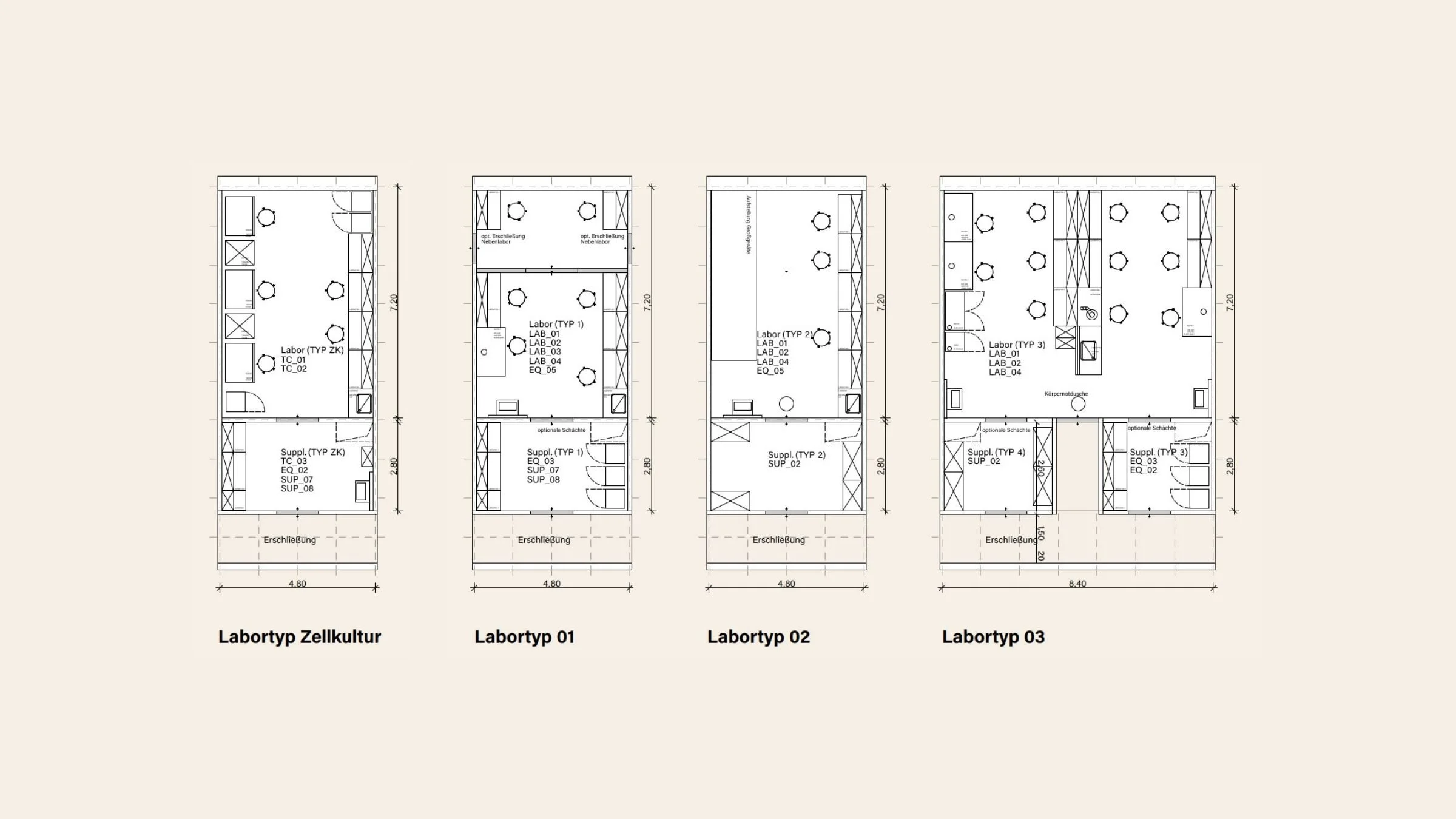
Designed to unite experimental life sciences and AI-driven research, the Life Science Center Vienna integrates modular BSL-2 laboratories, collaborative workspaces, and high-performance computing infrastructure within a single, interconnected building system. Image: Wirtschaftsagentur Wien
The defining challenge of the Life Science Center Vienna is integrating two infrastructure-intensive domains: experimental life sciences laboratories and high-performance computing environments. Traditionally, these functions have been located in separate facilities. Biomedical labs require stringent environmental controls, specialized ventilation systems, and laboratory utilities, while AI research demands large server rooms, advanced networking infrastructure, and significant power and cooling capacity.
To address these overlapping requirements, the project team has adopted an integrated design process that aligns spatial planning, building systems, and digital infrastructure from the earliest stages of development.
“At the Life Science Center Vienna, 14,000 square meters of lab, office, operations, and building services will be directly interconnected, which again requires an integrated planning approach,” Holzer says.
This integrated strategy extends beyond physical adjacency to encompass the building's organizational and technological structure. “We are combining the requirements of wet lab research and AI computing into a single overall concept that is coordinated spatially, organizationally, and technologically,” he says.
The design will feature modular biosafety level-2 (BSL-2) laboratory units capable of supporting a wide range of biomedical research programs. Office and collaboration spaces will be placed in close proximity to experimental areas, encouraging interaction between computational scientists and laboratory researchers.
“The laboratories are planned as modular, flexibly configurable BSL-2 units that can be adapted to different research needs and project phases,” Holzer says.
Planning around a major anchor tenant
The presence of AITHYRA as the building’s primary tenant has significantly influenced the planning process. Because the institute will occupy roughly half of the total space, its operational requirements have shaped the facility’s infrastructure and spatial framework.
“As the Vienna Business Agency, we are proud to have secured AITHYRA as the anchor tenant for the Life Science Center Vienna,” Holzer says. “AITHYRA is the Research Institute for Biomedical Artificial Intelligence of the Austrian Academy of Sciences (ÖAW) and the non-profit Boehringer Ingelheim Foundation.”
Rather than limiting flexibility, the anchor tenant model provides early design clarity while still allowing space for future tenants.
“The fact that AITHYRA will occupy around 50 percent of the total area creates a stable anchor and early planning certainty for highly specialized requirements (labs, data/compute, building services) without restricting other tenants,” Holzer says.
Early involvement of potential users has also played a key role in shaping the building’s layout and systems. According to the project team, incorporating tenant requirements early in the design process allows planners to optimize laboratory-to-office ratios, equipment loads, and infrastructure capacity before construction begins.
Flexible space for startups and scale-ups
While the AI institute will serve as a cornerstone tenant, the building is also intended to support emerging companies and early-stage research groups. To accommodate these organizations, the project will include modular laboratory suites and shared research infrastructure that can adapt to changing tenant needs.
Markus Galuska, real estate project developer for the Life Science Center Vienna at the Vienna Business Agency, says flexibility is the guiding principle behind the building’s laboratory concept.
“We focus on flexibility, scalability, and the lowest possible barriers to entry—principles that have proven effective in practice,” Galuska says.
The modular design will allow research groups to expand or contract their space as projects evolve.
“At the Life Science Center Vienna, we are translating this into a building designed for long-term use: with a modular lab concept offering different, individually configurable spaces that can be adapted—and expanded when needed—depending on the project phase, from pilot to scale-up to established groups,” he says.
To further support early-stage companies, the building will feature a dedicated floor for startups and scale-ups. Shared equipment and jointly accessible infrastructure will help reduce the high capital costs often associated with laboratory research.
“This can reduce costs for startups and scaleups—for example, for equipment or conversions—and make entry into the lab phase significantly more cost-efficient,” Galuska notes.
Integrating high-performance computing infrastructure
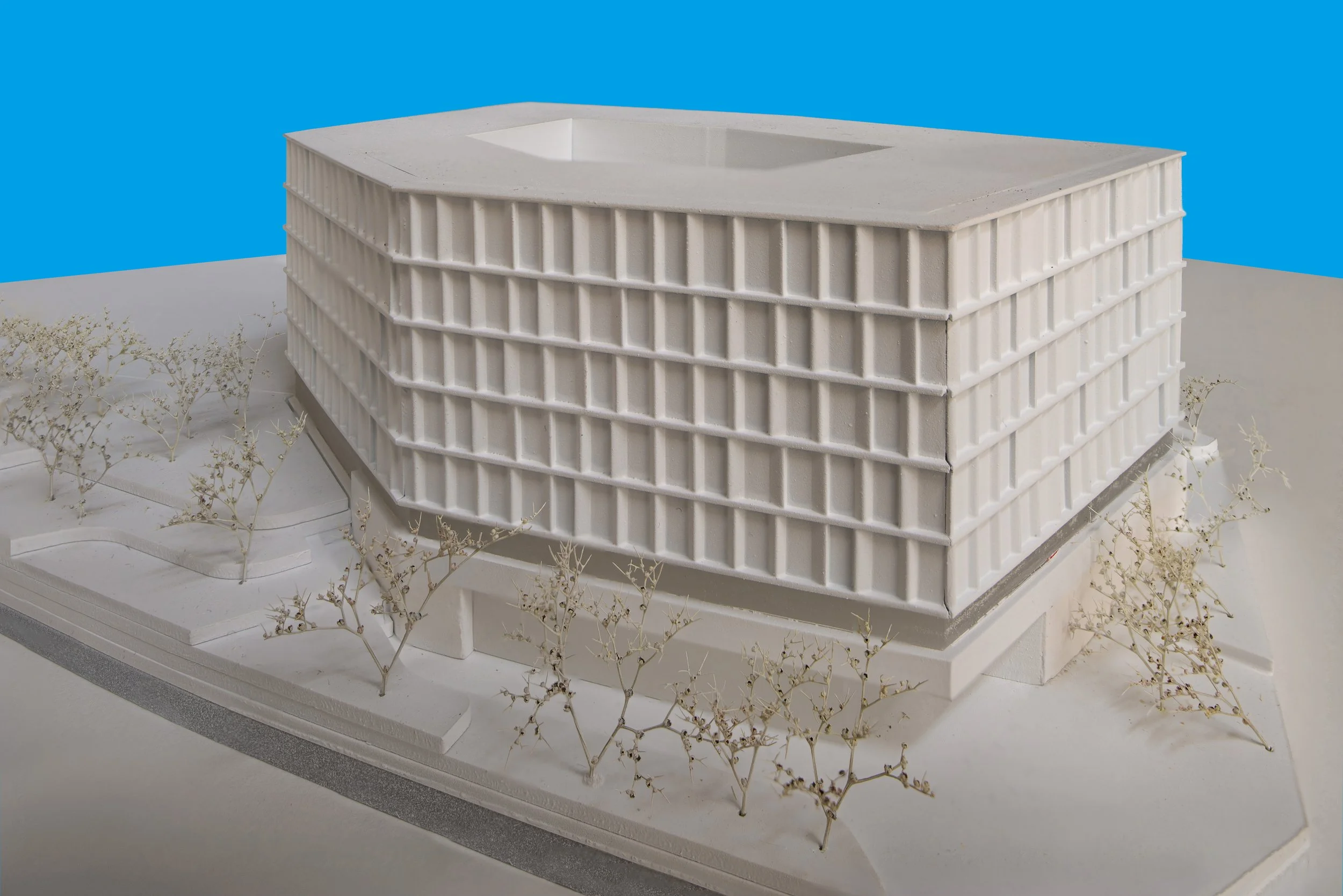
At the Life Science Center Vienna, dedicated technical zones and basement infrastructure will house AI server clusters, plant systems, and media distribution networks—integrating high-performance computing into the building’s core design while preserving safe, uninterrupted wet-lab operations above. Image: Courtesy of Hannes Buchinger
One of the project’s most technically complex components is the integration of server infrastructure and computing clusters needed for AI-driven research. Rather than treating these systems as separate from the laboratory environment, the design incorporates computing infrastructure as a central architectural element.
“Technical infrastructure is part of the architectural core concept because lab operations and building services are directly intertwined,” Galuska says.
Dedicated technical zones will house servers and specialized hardware while maintaining strict safety and operational standards.
“Server and computing infrastructure will be allocated to suitable technical zones where access, fire protection, security requirements, and heat loads can be optimally controlled,” he says.
The building’s basement will play a critical role in supporting these functions, consolidating plant systems, media distribution, and redundant infrastructure.
“The basement consolidates central technical functions such as defined server and plant areas, media distribution, and redundancies—without affecting the (wet) lab areas on the upper floors,” Galuska says.
Sustainability in an energy-intensive building type
Laboratory buildings are among the most energy-intensive building types due to their ventilation requirements, temperature control needs, and continuous operation. The Life Science Center Vienna aims to address this challenge through a combination of energy-efficient building systems and renewable energy sources.
“At the Life Science Center Vienna, sustainability is not an add-on—it is part of the technical core concept, especially because laboratory buildings have high, stable energy demand,” Galuska says.
The facility will incorporate photovoltaic systems, green façades, and shading strategies designed to reduce cooling loads. Efficient building services and heat recovery systems will further reduce energy consumption. The project also aligns with Vienna’s broader energy transition strategy, which includes decarbonizing district heating, geothermal energy, and large-scale heat pump systems.
“Embedded in Vienna’s energy transition—with PV, large-scale heat pumps, waste-heat utilization, geothermal energy, and the decarbonization of district heating—this will create a lab building that enables energy-intensive research while laying the foundation for operation that is as climate-neutral as possible,” Galuska says.
Planning for a 2030 opening
Because the building will not open until the end of the decade, the project team has placed particular emphasis on future-proofing the facility. According to Galuska, two factors are especially important: a clear project timeline and early tenant involvement.
“To ensure the Life Science Center Vienna remains relevant when it opens at the end of 2029/early 2030, the Vienna Business Agency sees two key levers in planning and building specialized commercial real estate of this kind: a clear project roadmap and integrated planning with very early user involvement,” he says.
Ultimately, the development reflects a broader lesson learned from complex laboratory projects.
“The most important insight we’ve gained from this and previous years of experience is: integrated planning across all disciplines, from day one, is essential,” Holzer says.
When completed, the Life Science Center Vienna will represent a new model for research infrastructure—one designed to support the increasingly interconnected worlds of biology, data science, and artificial intelligence.