
Hidden Risks When Furniture, Fixtures, and Equipment Are Overlooked
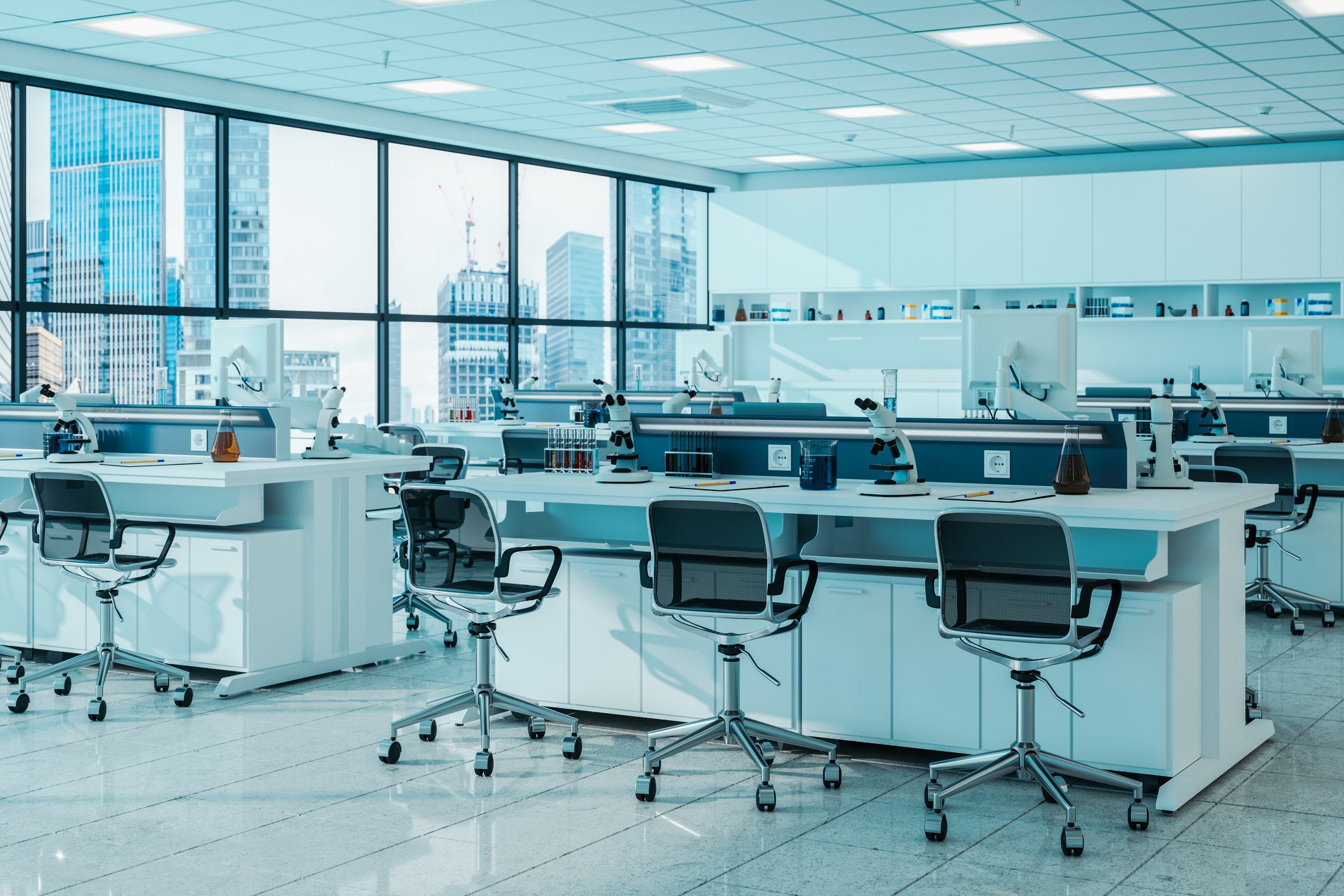
In laboratory building and renovation projects, the focus often lands on the most visible and permanent elements of design: structure, HVAC systems, casework layouts, and specialized infrastructure. Yet one of the most critical components of a successful lab environment is frequently under-scoped or deferred—furniture, fixtures, and equipment (FF&E). When FF&E is not fully integrated into the planning process from the beginning, the consequences can ripple across budget, schedule, functionality, and even long-term usability of the lab.
FF&E includes everything from lab benches, chairs, and storage systems to biosafety cabinets, fume hoods, centrifuges, freezers, and specialized instrumentation. While these items may seem like “furnishings” that can be addressed later, they are in fact deeply interconnected with spatial design, utility requirements, and workflow efficiency.
One of the most significant risks of excluding FF&E from early planning is budget distortion. Capital projects often allocate funds for construction and core building systems, leaving FF&E as a later consideration or separate procurement process. This can result in a serious underestimation of total project costs. When FF&E is eventually addressed, teams may face difficult trade-offs—either reducing the quality or quantity of critical equipment, or seeking additional funding mid-project. Both scenarios introduce avoidable stress and delay.
Equally important is the impact on spatial planning. Laboratory spaces are highly dependent on the exact dimensions, placement, and utility needs of equipment. A fume hood, for example, is not simply a “plug-in” asset—it requires specific airflow considerations, clearances, and service connections. If FF&E decisions are made late, previously designed layouts may no longer function as intended, forcing redesigns, change orders, or inefficient compromises. In some cases, equipment may even arrive to find insufficient space or incompatible infrastructure.
Workflow disruption is another hidden cost. Laboratories are designed around processes—sample intake, preparation, analysis, storage, and disposal. FF&E plays a direct role in enabling or hindering these workflows. Without early input from end users on equipment selection and placement, labs risk becoming operationally inefficient, with poorly positioned instruments, inadequate storage, or unnecessary movement between work zones.
Procurement and lead times also present a major challenge. Many laboratory instruments and specialized fixtures have long manufacturing and delivery timelines. If FF&E is not planned early, it can become one of the last items to arrive—potentially delaying commissioning, validation, and occupancy. This is particularly critical in research environments where grant timelines or regulatory approvals are tied to operational readiness.
Finally, there is the issue of integration and accountability. When FF&E is treated as separate from the core design process, ownership becomes fragmented between architects, contractors, procurement teams, and end users. This fragmentation increases the likelihood of misalignment, overlooked requirements, and last-minute problem-solving that is both costly and inefficient.
The most successful lab projects treat FF&E not as an afterthought, but as a core design driver. Early engagement between lab users, planners, and design teams ensures that equipment needs inform spatial layouts, utility planning, and budgeting from day one. This integrated approach reduces risk, improves functionality, and ultimately leads to laboratories that perform as well in practice as they do on paper.
In today’s increasingly complex research environments, FF&E is not simply “furnishing the lab”—it is enabling the science.