
The Lab Is Home: Why the People Who Work in Scientific Spaces Should Never Feel Like an Afterthought
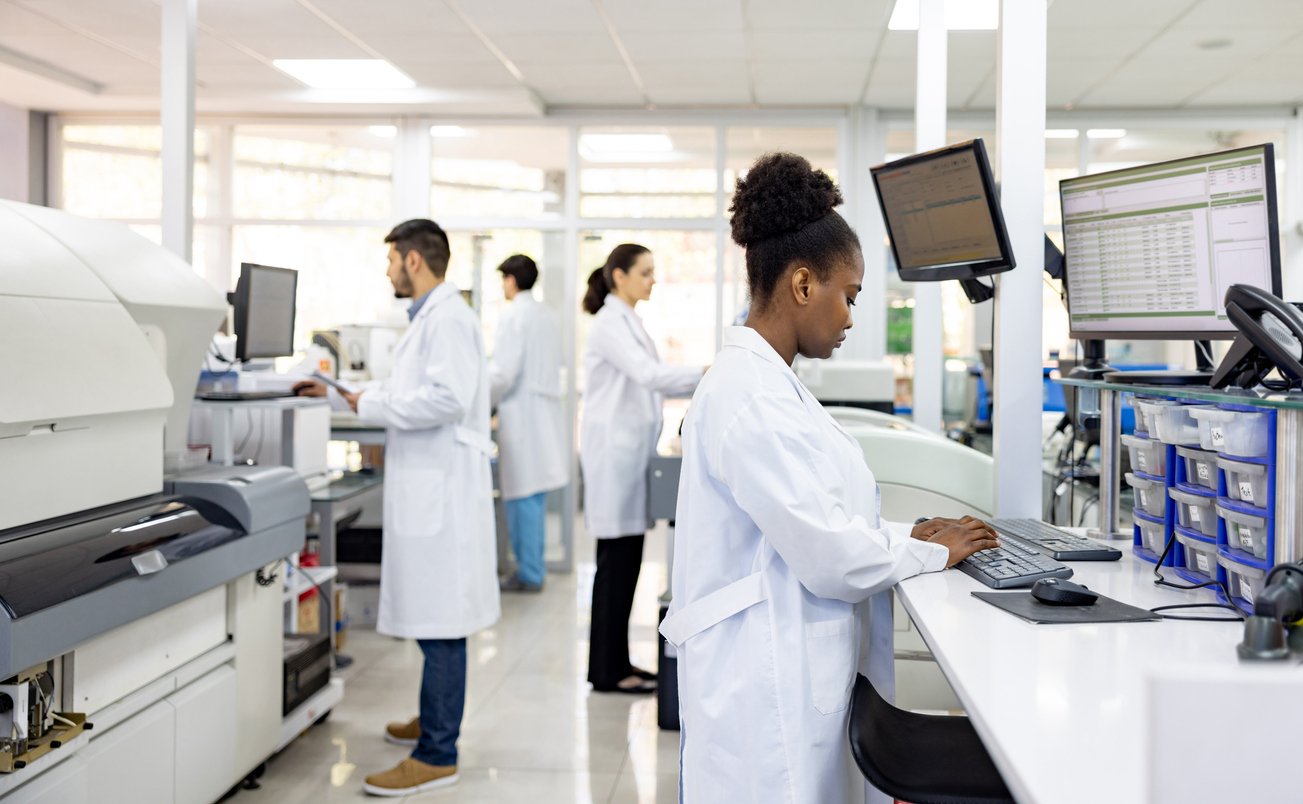
A thoughtfully designed laboratory recognizes that human comfort, focus, and endurance are essential conditions for doing precise and reliable scientific work.
The people in the lab often feel like an afterthought in the building.
You can feel it in the way most laboratories are planned. The equipment is carefully considered. The compliance requirements are carefully considered. The workflow on paper is carefully considered. But the person who must stand there for 10 hours, move through that space all day, focus under pressure, and stay precise while tired is too often treated as secondary.
Science does not happen in abstraction. It happens through people, through their bodies, concentration, stamina, judgment, and ability to stay careful hour after hour. If the environment makes that harder than it needs to be, then science is already being compromised long before anyone looks at the data.
If someone is going to spend most of their waking life in a laboratory, that space should support their best work. That is not indulgence. It is a basic condition for doing serious work well.
When people design homes, they think about how life will feel inside them. They think about light, movement, noise, and rest. And yet for the researcher, the microbiologist, the analyst, and the technician, the lab is where life is happening. It is where they think, move, document, repeat, solve problems, and carry the mental weight of precision.
Most lab designs begin with equipment placement, technical systems, code requirements, and spatial efficiency. Those things matter. But somewhere along the way, those valid priorities became the whole conversation. The human being is expected to fit around the design, rather than the design being shaped around the human being.
If someone designed a home that way, we would immediately see the problem. Imagine a house built by first locking in the appliances, circulation widths, and storage volumes, then asking at the very end where a person might rest or whether it feels exhausting to be there for long stretches of time. We would call it cold and difficult to live in. Labs may not be unlivable, but many are unnecessarily hard to inhabit day after day.
The strain is often subtle, which is part of why it gets ignored. Poor lighting or a cramped workstation does not always lead to a formal complaint. Constant noise, awkward movement, nowhere to pause, nowhere to think quietly, nowhere to take a breath between tasks. These things often pass without comment because people in science are used to enduring discomfort without naming it. But the body names it anyway. It shows up as fatigue, irritation, and the growing difficulty of staying patient, focused, and careful by the ninth or tenth hour of a shift.
This is often framed as though comfort and scientific seriousness are in conflict. A lab designed around human needs is no less rigorous. It is more intelligent. Precision work depends on concentration. Concentration depends on conditions. People do not become more accurate because they are overstimulated, physically strained, or mentally worn down. They become more vulnerable to error. Harsh environments do not just make people unhappy. They make mistakes more likely.
When errors happen in labs, the blame usually lands on the individual. Someone was careless or missed a step. But many of those mistakes are predictable outcomes of badly designed environments. A person moving quickly through a poorly laid out space, sharing crowded zones, stopping to document at a cramped station under poor light, hours into a long shift, is working under conditions that increase the chance of error. That is not a personal failure. It is a design outcome.
Poor design also has a longer shadow than we admit. It contributes to burnout. It drains people who might otherwise have stayed in the field. Some are leaving environments that quietly wear them down year after year. We talk about retention as though it is only a management problem. Sometimes it is also a design problem.
One reason this persists is that the design team is often missing a crucial voice. Architects bring spatial expertise. Engineers bring technical and systems knowledge. But too often, nobody at the table has lived the day-to-day reality of lab work. Nobody is there to say this corner will become a point of collision by 2:00 pm, this task needs more visual calm, this station will be unbearable by the end of a long shift, or this route will create unnecessary fatigue.
A lab-intelligent voice should be present from the beginning, not invited in after decisions have already been made. That voice asks different questions. Where does fatigue build up? Where do workflows cross in ways that create stress? Which tasks require quiet? Where will people go when they need 30 seconds to breathe? What will this place feel like at hour 10, not just on opening day?
Designing for people first starts before a single line is drawn. It starts with sitting down with the people who will actually use the space and asking them how their day unfolds. Not the workflow on paper. The real one. What the body is doing at hour two versus hour eight. Where the friction lives.
What comes from that conversation is specific and practical. You learn that a person moves between standing at a bench, perching on a stool, and sitting at a workstation dozens of times across a shift. Those positions are rarely designed to work together as a system. Sustained standing without support, followed by a stool that offers none, followed by a chair that was never chosen for the kind of focused work happening at that desk, is not a minor inconvenience. Bodies in static or poorly supported positions for hours at a time experience reduced circulation, and that physical reality translates directly into the fatigue and mental vulnerability to error that no amount of professional discipline fully overcomes.
You also learn that many people do not leave the lab when they should. Not for lunch, not for a proper break, not even to reset. The cafeteria is too far, the elevator takes too long, the experiment cannot be left. So, they eat at their desks, between tasks, in the same space where they work. A small eating area close to the lab, somewhere intentional and separate, can change that.
And people need somewhere to pause that is not a workstation. Not a break room on another floor. Something close, quiet, and deliberately separate from the place where work happens. A few minutes away from screens, equipment, and the accumulated weight of concentration can change the quality of what comes next.
That is the deeper point. Designing human beings in scientific spaces is not about decoration. It is about recognizing that serious work still happens in a body, and that body is always in relationship with space. If we want better science, we have to care more seriously about the conditions under which people are asked to produce it. The lab is not just where work happens. For the people inside it, the lab is one of the main places’ life happens. It should be designed with that level of respect.