
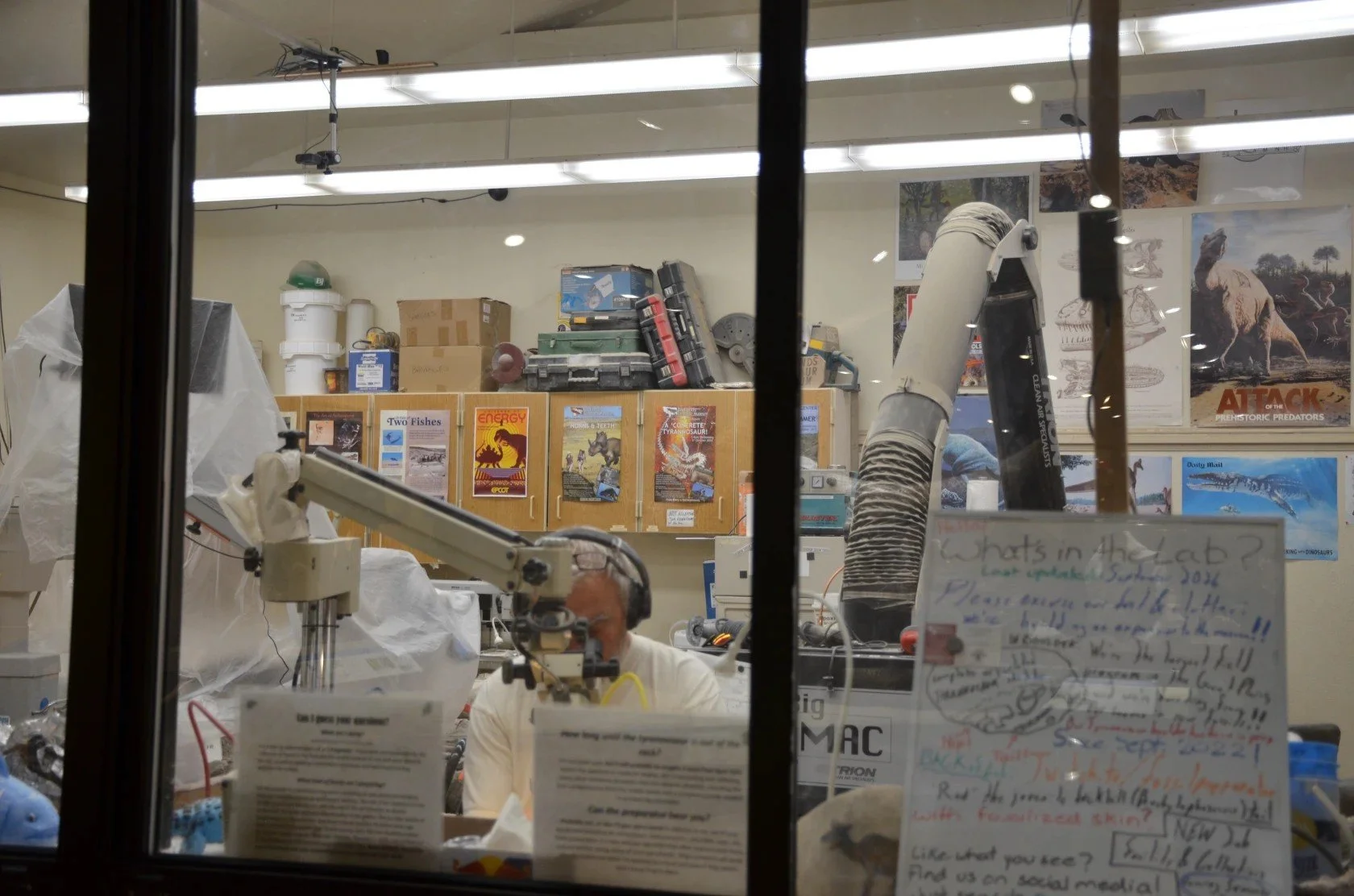
A window overlooking the existing paleontology laboratory at the Badlands Dinosaur Museum in Dickinson, ND, allows visitors to observe fossil preparation and interact with researchers. Image: Kelly Harju/The Dickinson Press
The Badlands Dinosaur Museum in Dickinson, ND, is expanding its facilities to accommodate a growing fossil collection, more staff and volunteers, and increasingly ambitious paleontology projects. The $6 million expansion of the Dickinson Museum Center adds about 12,000 square feet of space, including a larger fossil preparation laboratory, expanded collections storage, and additional exhibition areas.
The project team includes GT Architecture (architectural services), JE Dunn (construction manager at risk/general contractor/builder), Prairie Engineering (mechanical engineers), and Advanced Mechanical (installers for mechanicals).
For Denver Fowler, PhD, curator of the Badlands Dinosaur Museum, the project addresses a fundamental challenge: the museum's paleontology operations have outgrown their existing facilities.
The current laboratory occupies approximately 430 square feet, while collections storage totals about 625 square feet. Those spaces must support a program that has grown from a single curator working in the paleontology backrooms to three regular staff members, typically a contractor, and as many as three volunteers.
“We have lots of new large fossils that need accommodating in collections,” Fowler says. The new collections storage area will house fossils that are awaiting preparation, as well as completed specimens and research materials. Visiting scholars will also have opportunities to study the museum's collections.
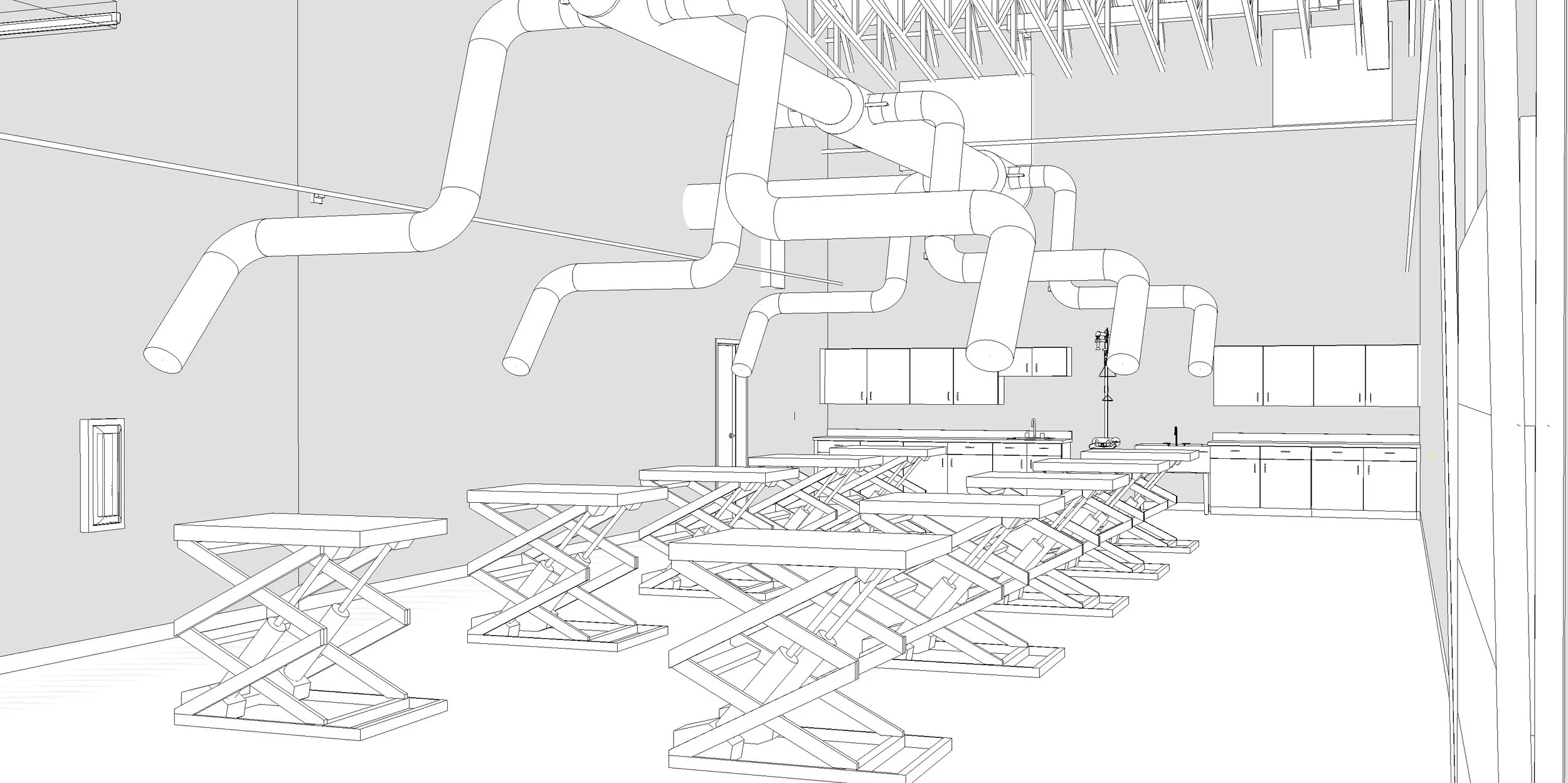
A 3D view of the new lab. Image: Courtesy of Dickinson Museum Center
The expansion will provide approximately 2,015 square feet for the new laboratory and 7,020 square feet for collections storage. The museum anticipates the storage area will provide capacity for about 50 years of fossil accumulation, while the larger laboratory will let staff work on more large specimens at once and accommodate additional volunteers.
Designing for fossil preparation and staff safety
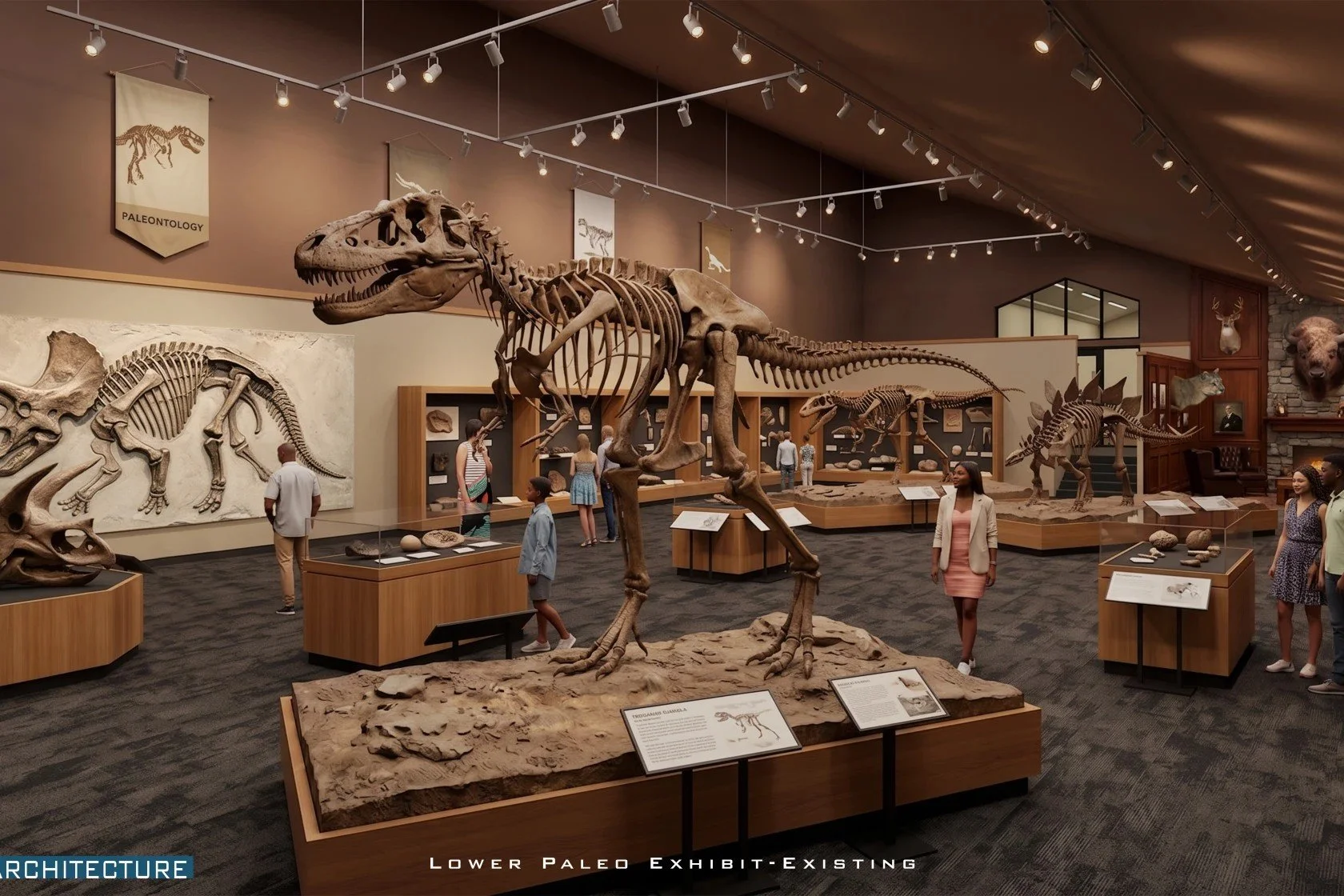
A rendering by GT Architecture shows the planned renovations to the existing lower paleontology exhibit at the Badlands Dinosaur Museum in Dickinson as part of the Dickinson Museum Center’s $6 million expansion project. Image: GT Architecture
Fossil preparation requires space for specimens of varying sizes, specialized tools, and staff to remove surrounding rock, repair damaged fossils, and prepare specimens for research and exhibition. The expanded laboratory is intended to support these activities while addressing safety concerns associated with dust and heavy materials.
A central feature of the design is a dust extraction system with multiple hoses suspended from ceiling-mounted connections. Fowler expects approximately eight extraction points, with collected air passing through HEPA 14-grade filters. The system will help limit fine dust in the laboratory, benefiting the respiratory health of staff, volunteers, and visiting researchers while reducing dust accumulation in adjacent areas.
The laboratory will also incorporate pressurized-air connections supplied by a large compressor located in the machine room. Staff will access the system through drop-down hoses with quick-connect fittings. Smaller, quieter compressors will remain available as backups if the main unit is out of service.
Material handling is another important consideration. Fossil specimens are sometimes enclosed in heavy plaster jackets that staff must lift and reposition during preparation. The museum is building its inventory of hydraulic lifting tables to reduce the need for staff to lift these loads manually.
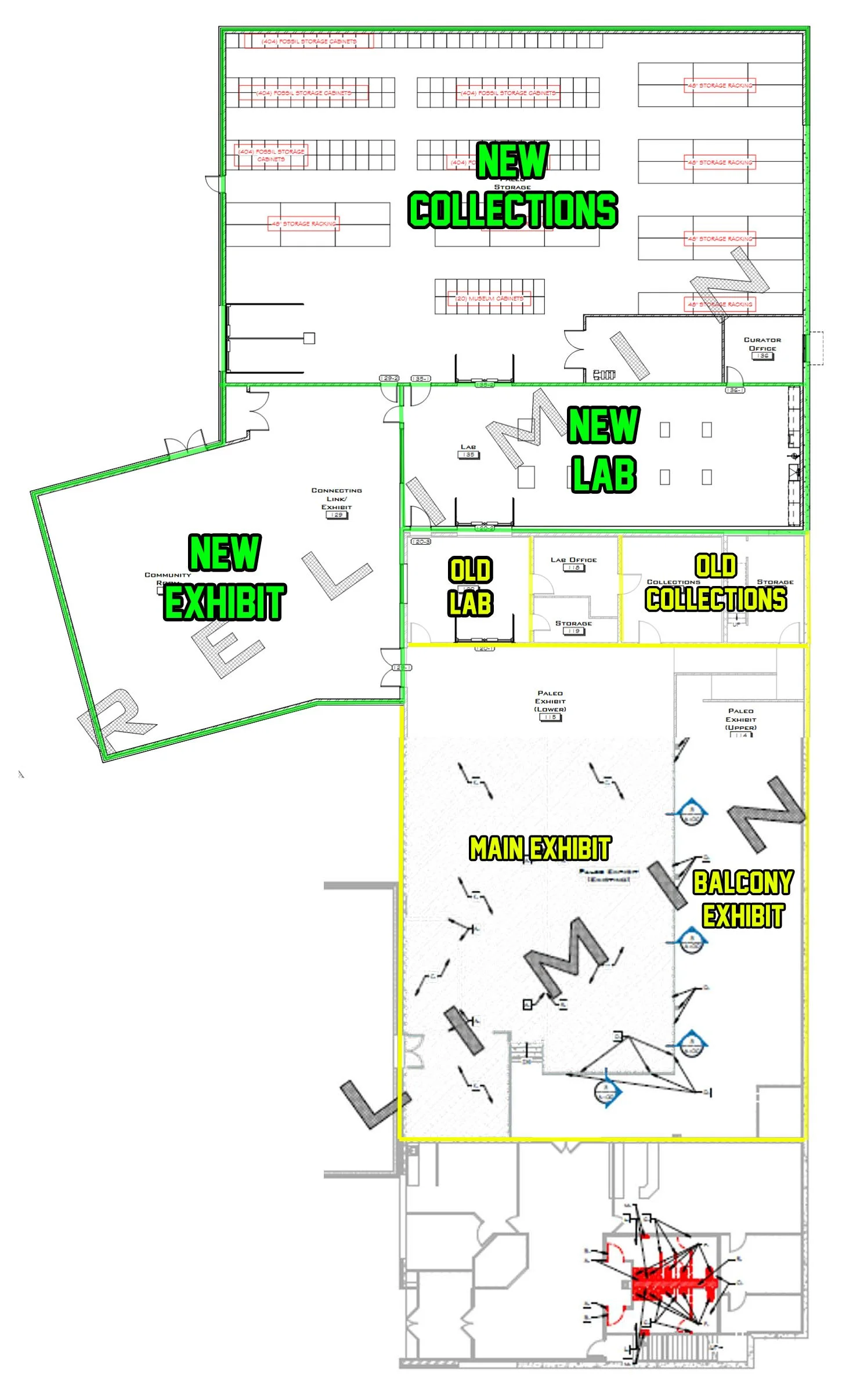
Museum expansion plan. The red area designates the interior renovations to the old building. Image: Courtesy of Dickinson Museum Center
Existing equipment includes two mobile tables with 1,000-pound capacities. The museum also plans to purchase a larger hydraulic lift with a rotating stage, allowing preparators to reposition specimens without repeatedly moving them by hand. Additional hydraulic tables with capacities of approximately 3,000 pounds are planned for the completed laboratory.
These features are intended to make specimen preparation more manageable while reducing the risk of back injuries and other strains associated with lifting heavy materials.
The new space will also include a dedicated eyewash station and emergency shower for chemical spill incidents. A larger stainless-steel double sink with sediment traps will replace the existing sink, which must be removed to meet building-code requirements.
Connecting collections, laboratory, and exhibits
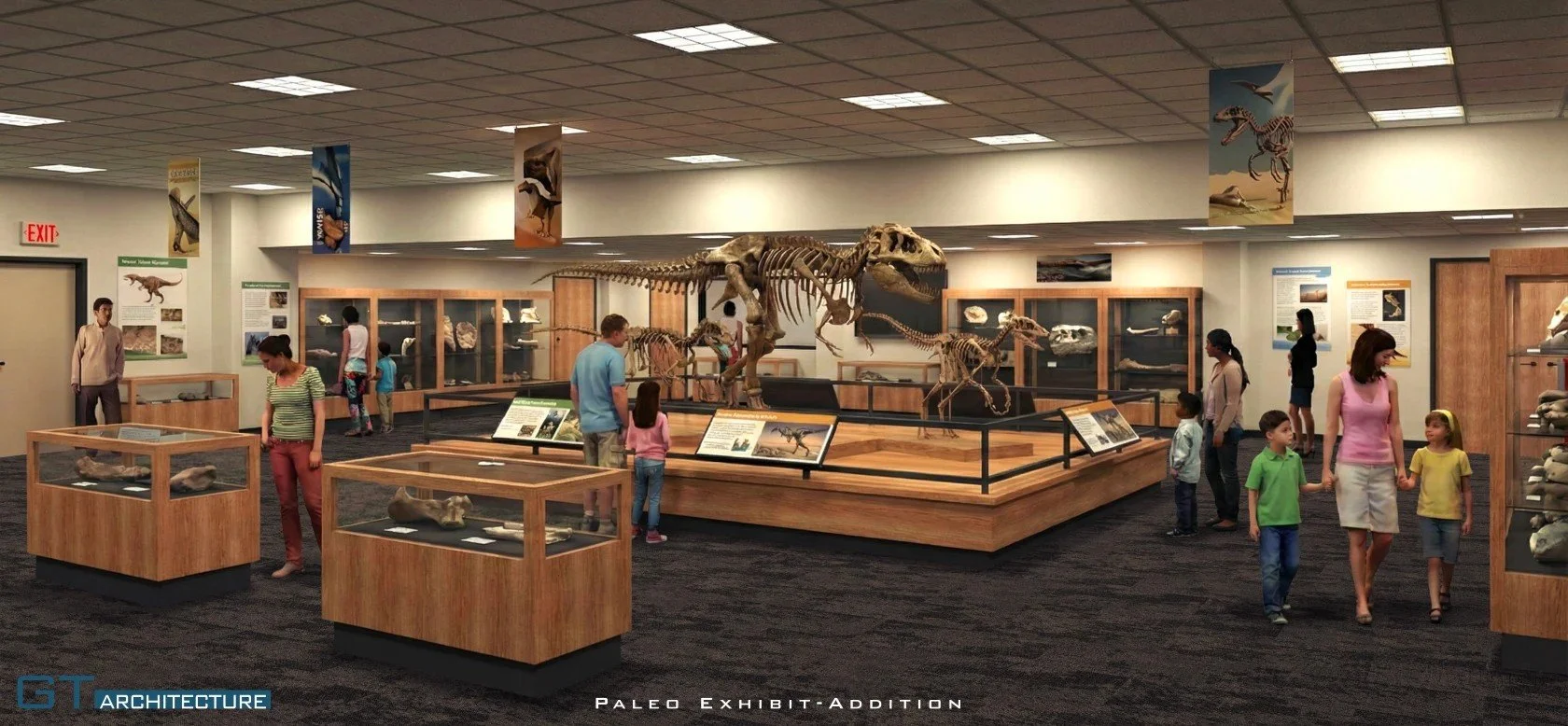
A rendering by GT Architecture shows the planned new exhibition space, once a community room, at the Badlands Dinosaur Museum in Dickinson as part of the Dickinson Museum Center’s $6 million expansion project. Image: GT Architecture
The expansion also addresses how fossils move through the facility, from storage to preparation and eventually to exhibition. Previously, moving a specimen between the existing laboratory and exhibit required staff to take it through an exterior double door, across approximately 15 feet of outdoor space, and back inside through a fire escape.
Although the route was manageable in favorable weather, outdoor movement introduced bumps that were less than ideal for fragile specimens and created difficulties during winter.
The new layout will incorporate three sets of large rolling doors aligned between the collections area, new laboratory, existing laboratory, and main exhibit. This arrangement will allow staff to move large specimens between spaces without taking them outdoors.
The new laboratory will also support exhibit construction, an important benefit while the museum renovates its existing paleontology galleries. The facility must serve both the behind-the-scenes work of preparing and preserving fossils and the public-facing mission of interpreting those discoveries.
Expanding access to paleontology
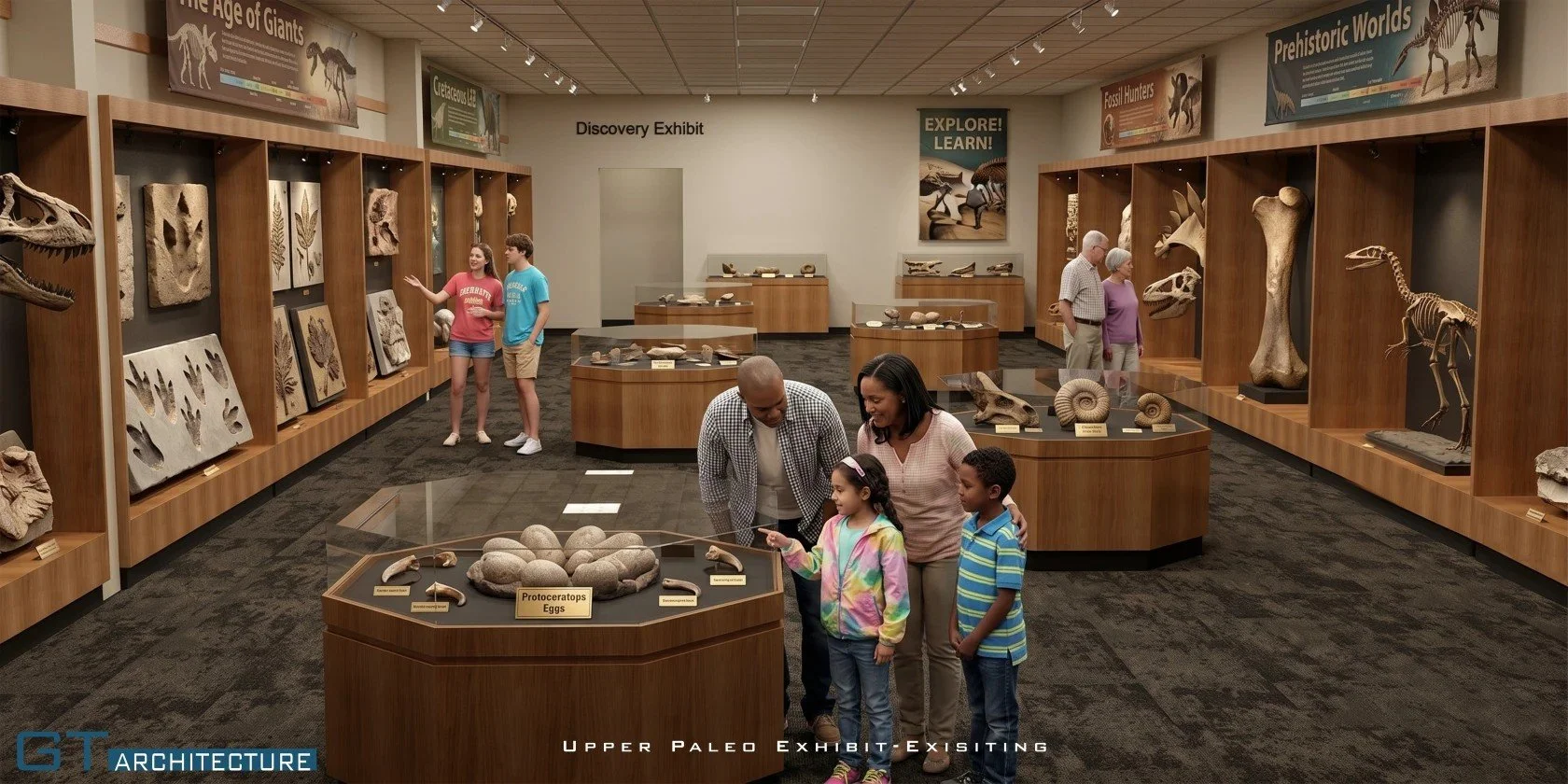
A rendering by GT Architecture shows the planned renovations to the existing upper paleontology exhibit at the Badlands Dinosaur Museum in Dickinson as part of the Dickinson Museum Center’s $6 million expansion project. Image: GT Architecture
The project also creates opportunities to make laboratory work more accessible. Fowler says the existing lab is so crowded that wheelchair access is essentially impossible. The larger, more open layout is intended to address that limitation. The plans also include adult changing stations to improve accessibility for visitors.
Once the new laboratory opens, anticipated for June 2027, Fowler hopes to establish a summer volunteer program based in the lab. The museum's existing field program brings approximately 30 volunteers to the badlands each summer, where they help excavate fossils while camping in rugged conditions. However, fieldwork is not accessible to everyone.
Fowler hopes to offer three to five summer laboratory volunteer positions, including opportunities for people who cannot participate in field excavations because of physical limitations or other barriers. Establishing the program will depend on securing transportation, funding, and a summer staff position.
The expansion's broader lesson for institutions planning specialized laboratory projects is to establish requirements early and communicate them repeatedly. Fowler cautions that design changes, especially financial adjustments, can have unintended consequences for how a building functions.
“Decisions are made early, especially budget decisions,” he advises. “Stay on top of what is going on and make sure that you notify the builders/architects quickly if you want to have something changed.”
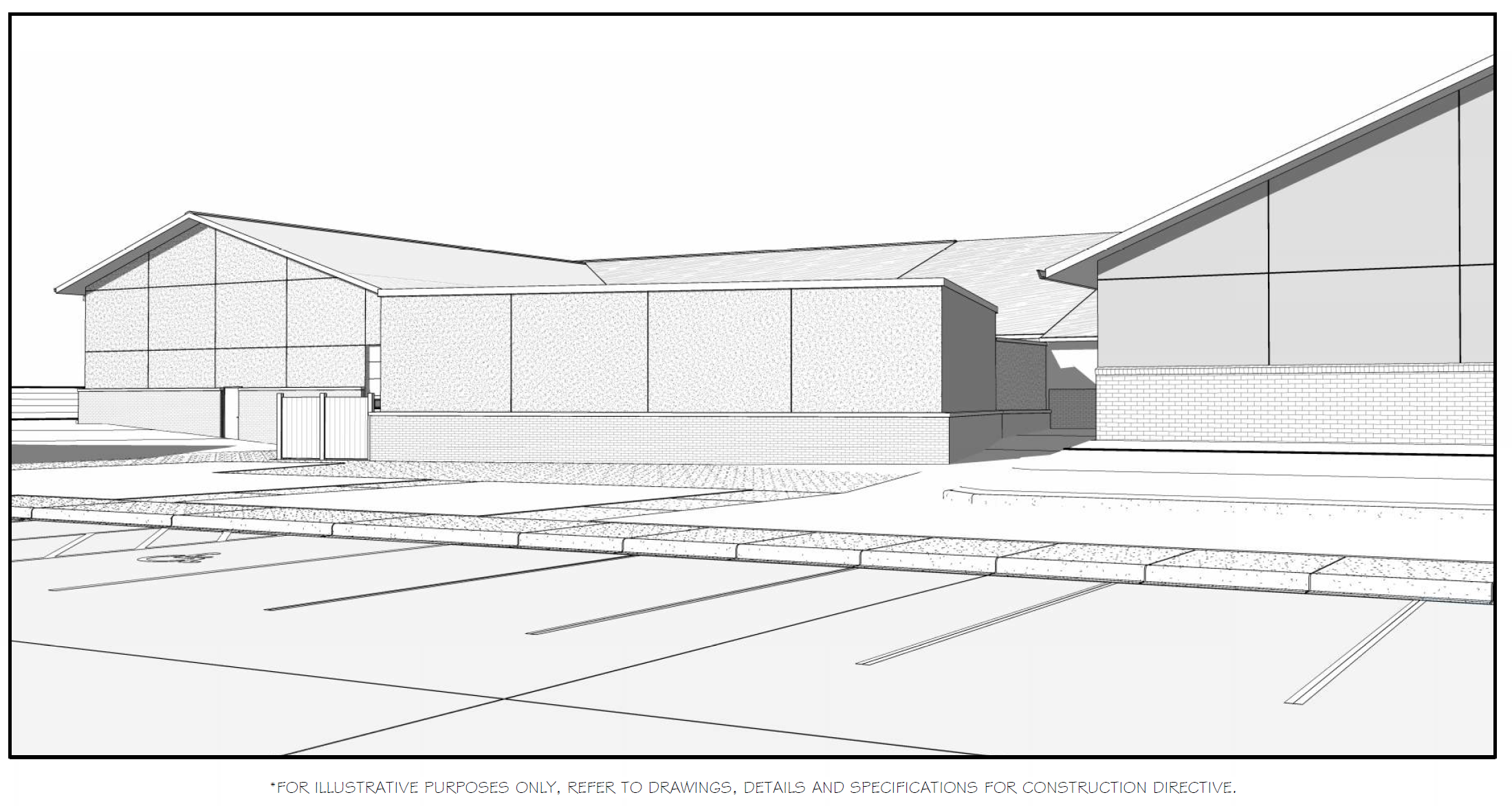
A rendering of the exterior expansion plans. Image: Courtesy of Dickinson Museum Center
Constant communication is vital to a lab project. “It's difficult enough to change things during planning, but once construction gets to a certain point it is much, much harder,” he adds.
For the Badlands Dinosaur Museum, the new facility will provide more than additional square footage. By coordinating storage, specimen handling, preparation, accessibility, and exhibition needs, the expansion is designed to support the museum's growing paleontology program for decades to come.