
Designing for the Unknown: Inside RTI’s Expanded Pilot Xcelerator
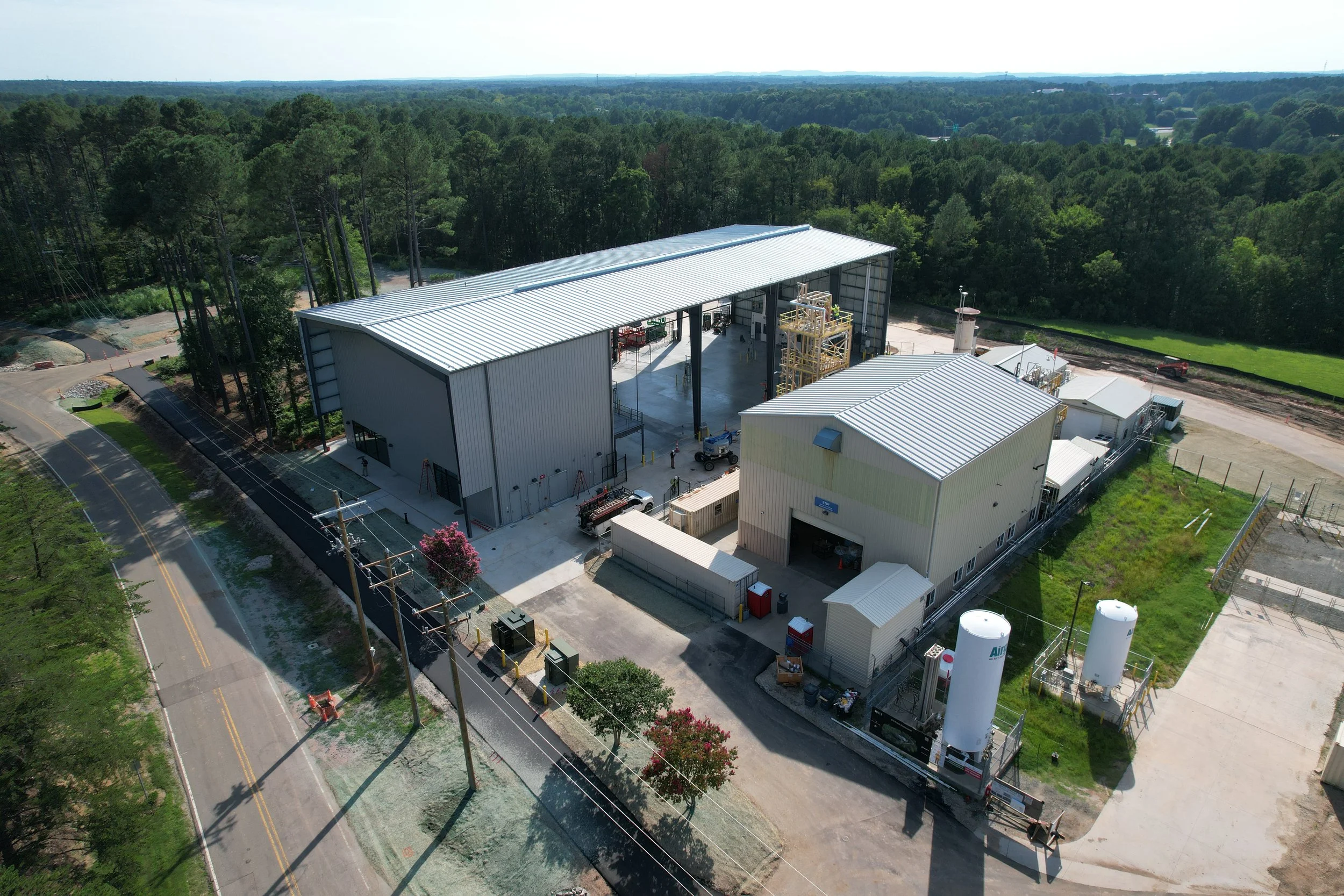
An aerial view of the expanded RTI Pilot Xcelerator. Image: Courtesy of RTI International
RTI International’s expanded Pilot Xcelerator (RPX) in Research Triangle Park, NC, is now complete, more than doubling the facility’s footprint and capacity for hosting pilot-scale energy and industrial technologies. The expansion, which broke ground in October 2025, adds eight large, flexible process bays designed to accommodate systems with widely varying equipment layouts, utility requirements, operating conditions, and hazard profiles.
RTI celebrated the expansion’s grand opening on September 10, 2026, marking the next phase for a facility designed to help innovators navigate one of the most challenging stages of technology development: moving from laboratory research to industry-relevant demonstration and, ultimately, commercial deployment.
At the heart of the expansion is a simple design philosophy: build the infrastructure around flexibility rather than around a particular technology.
“The most valuable decisions were the large, open process bays, generous vertical clearance, and shared utility infrastructure with accessible connection points at each bay,” says David Dausch, PhD, vice president of engineering and advanced technology at RTI. “Together with dedicated control rooms, bulk-gas distribution, emissions-control capabilities, and adaptable safety provisions, these features allow users to install, operate, and remove systems with minimal facility modification.”
Further reading: Breaking Ground on Energy Innovation: RTI Scales Up Pilot Xcelerator
Designing for technologies that have yet to emerge
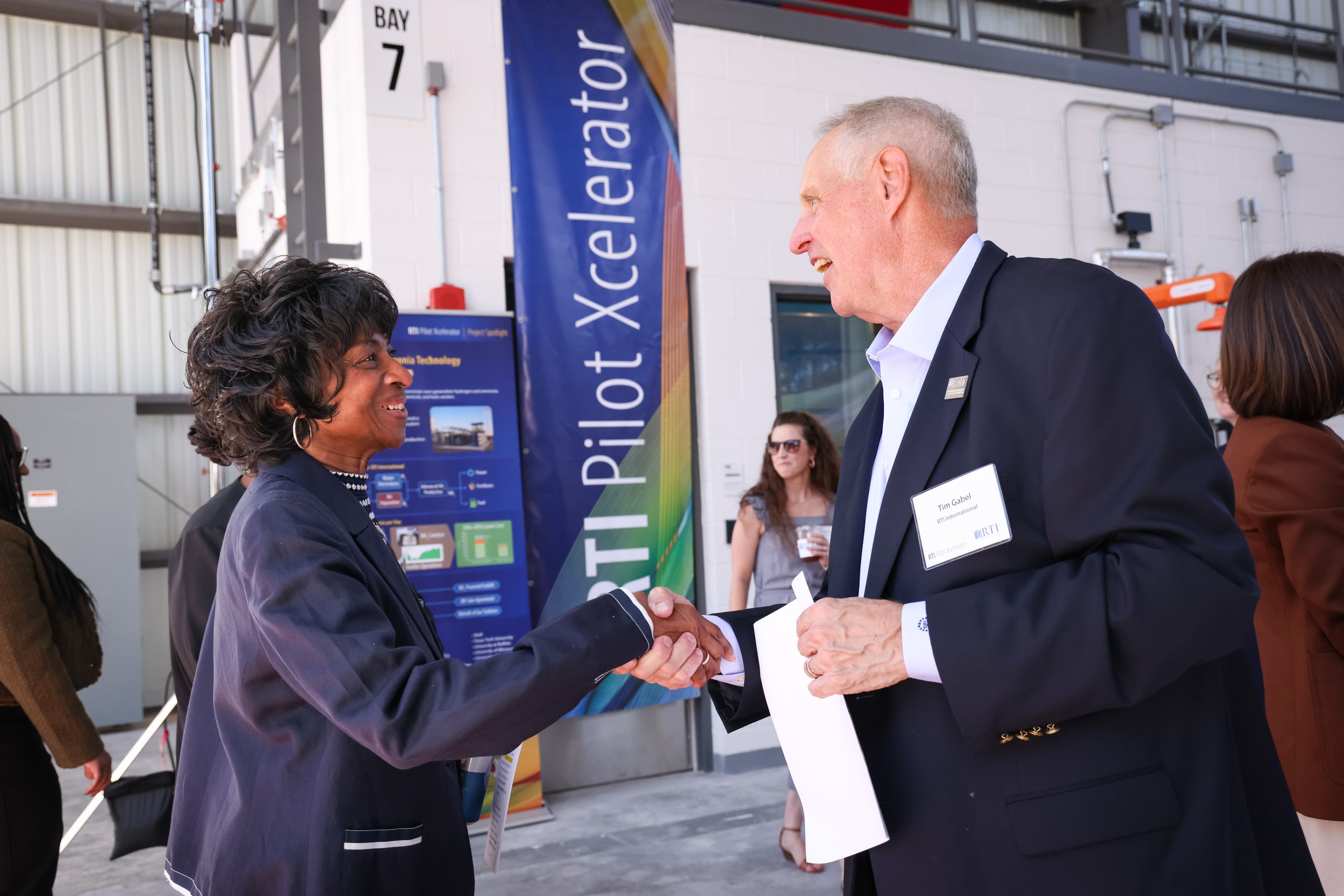
Congresswoman Valerie Foushee (NC-04) congratulates Tim J. Gabel, RTI president and CEO, on the expanded RPX, a technology-agnostic pilot facility designed with flexible process bays and shared infrastructure to accommodate a range of equipment and configurations. Image: Courtesy of RTI International
The expanded RPX is intentionally different from facilities designed around a particular technology or process. Rather than requiring users to adapt their equipment to an existing pilot plant configuration, the facility provides a flexible platform that can be configured around each project.
“Many pilot and demonstration facilities are designed around a specific technology platform, feedstock, or host-site resource,” Dausch explains. “It is uniquely designed as a technology agnostic facility to support a broader range of technologies and process configurations.”
The facility includes eight open 40-ft × 40-ft process bays with 40-ft clear heights, providing space for skid-mounted and custom-built pilot systems with different footprints and configurations. Shared infrastructure includes utility connections, bulk gases, process water and cooling, electrical power, emissions-control systems, and dedicated control rooms.
That infrastructure is intended to eliminate some of the time and capital typically required for a technology developer to establish its own pilot site.
“This plug-and-play infrastructure lets each project bring its own core process equipment while avoiding the time and capital required to build an entirely new pilot site,” Dausch says.
Expanding infrastructure without overdesigning
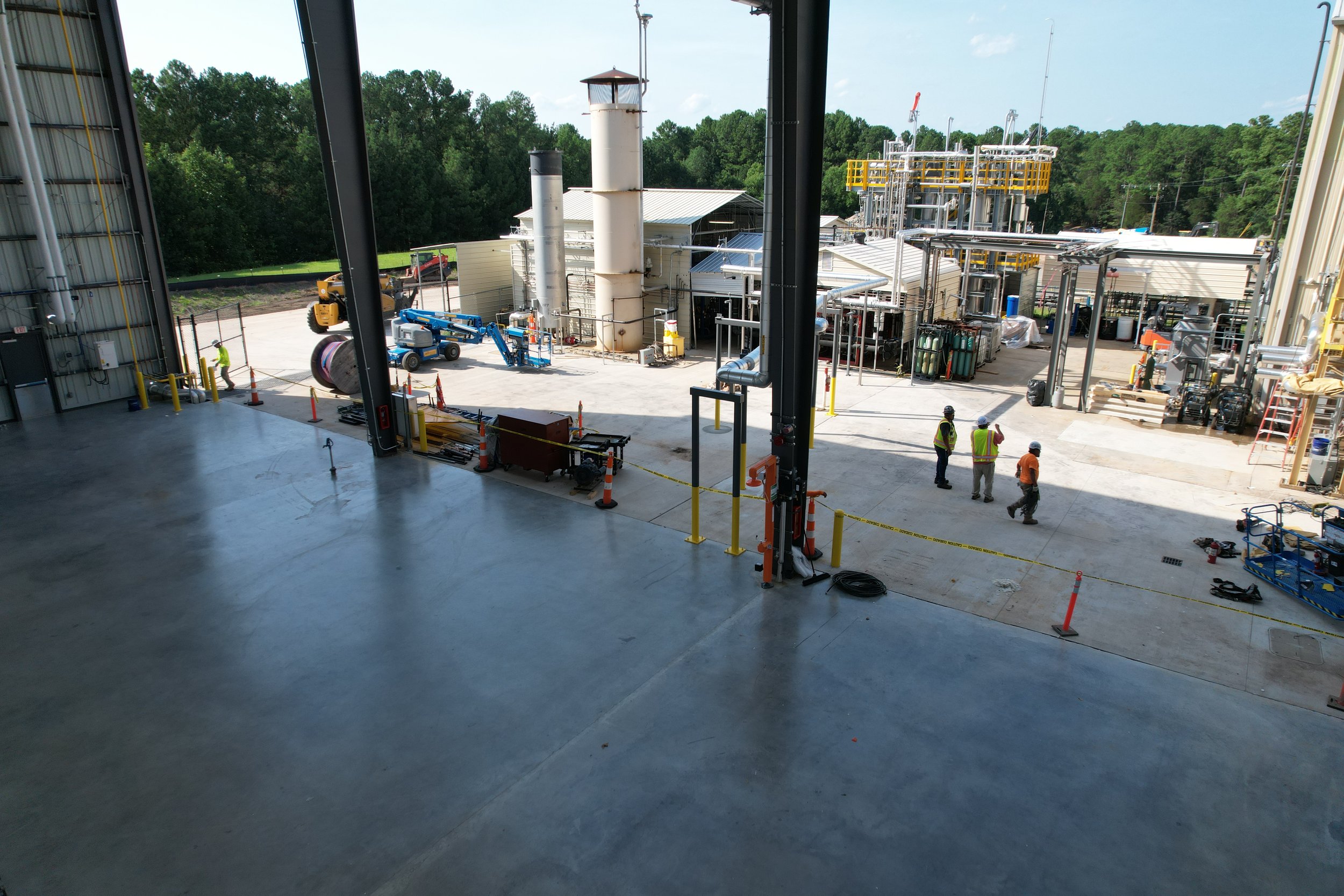
The RPX expansion adds major utility and safety infrastructure, including expanded electrical and water capacity, additional process connections, hydrogen storage, emissions controls, and fire suppression to support diverse pilot projects. Image: Courtesy of RTI International
Creating a facility capable of supporting such a wide variety of processes presented a significant engineering challenge. Rather than designing around the maximum requirements of one hypothetical technology, RTI established baseline infrastructure requirements intended to support a broad range of applications.
“The main challenge was scaling infrastructure across eight new process bays while preserving flexibility for projects with different layouts, utility demands, operating conditions, and hazard profiles,” Dausch says.
The expansion includes a fourfold increase in electrical capacity, an extension of municipal water service from RTI’s main campus, utility piping and connection points for each bay, a second enclosed flare for combustible waste gases, expanded fire-suppression capacity, and additional control rooms and staff workspace. RTI also added high-pressure bulk hydrogen storage and distribution, along with associated gas monitoring, ventilation, controls, and hazardous-location provisions.
The facility can support appropriately designed equipment and electrical installations in Class I, Division 2 hazardous locations when projects involve flammable gases or vapors.
These capabilities are already being put to use. According to Dausch, three pilot projects in the original RPX space have produced synthesis gas or other intermediates for sustainable aviation fuel using different combinations of carbon dioxide, methane, and hydrogen source gases.
Designing around the people operating the facility
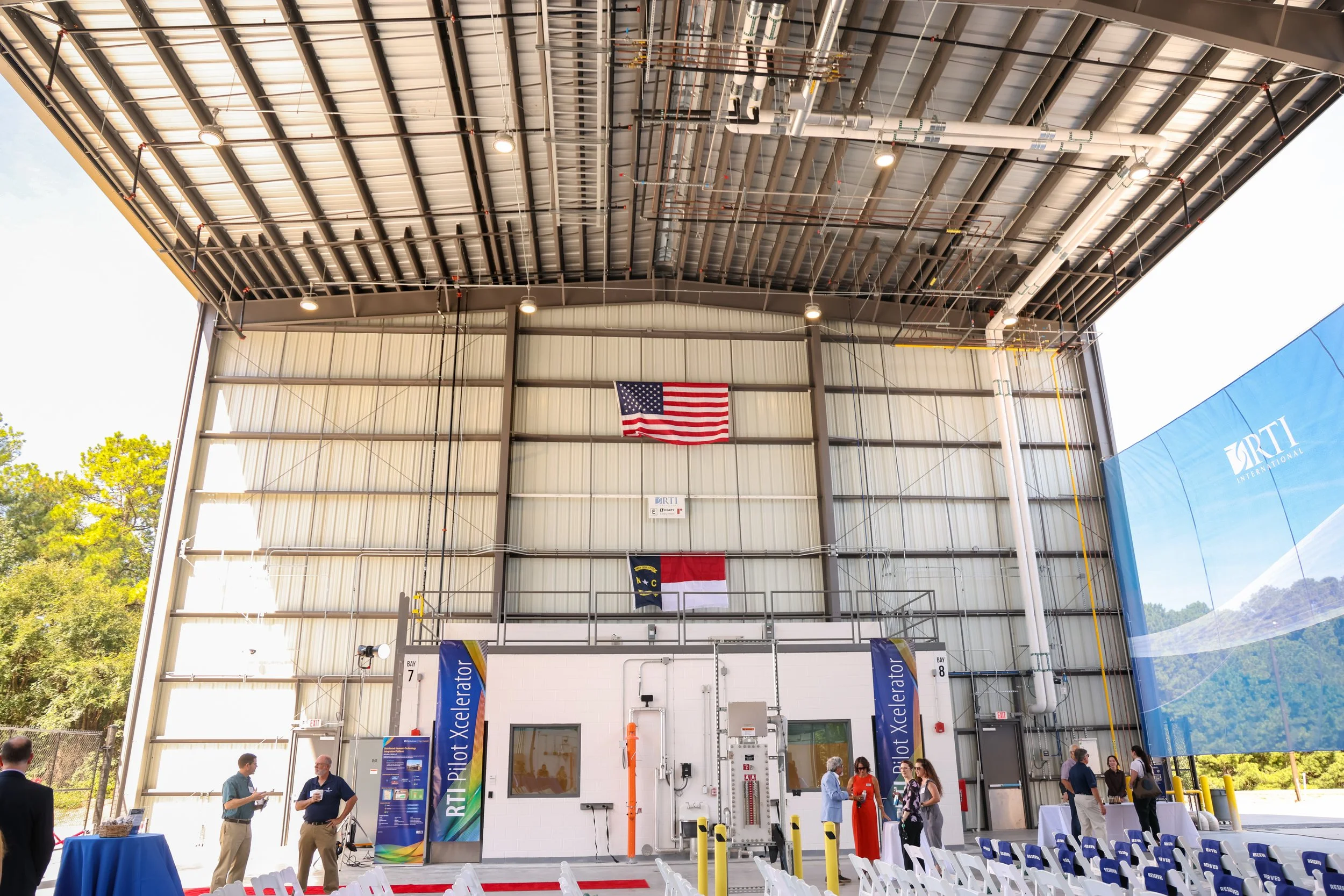
Facility before guest arrival at the grand opening of the RTI Pilot Xcelerator. Image: Courtesy of RTI International
The expansion also addresses lessons learned from operating the original RPX facility. As existing space became occupied by permanent process equipment and support infrastructure, RTI found itself increasingly constrained when accommodating larger or more complex pilot systems.
Those experiences directly influenced the new design, says Dausch.
“The open-bay design provides unobstructed floor area and vertical clearance, allowing project teams to install, connect, operate—and later once test campaigns are complete—remove a wider range of pilot units without extensively reworking the facility,” he says.
The expansion also adds climate-controlled control rooms and a suite of support spaces that were largely absent from the original facility. These include office space, a breakroom and kitchen amenities, restrooms, showers, a conference room, and an indoor laboratory workshop for equipment preparation, maintenance, and troubleshooting.
The additions reflect the realities of pilot-scale research, where testing may require extended shifts or continuous operation. “Together, these additions create a more complete operating environment for the hands-on and often around-the-clock work required to run pilot plants,” Dausch says.
Bridging the gap to commercialization
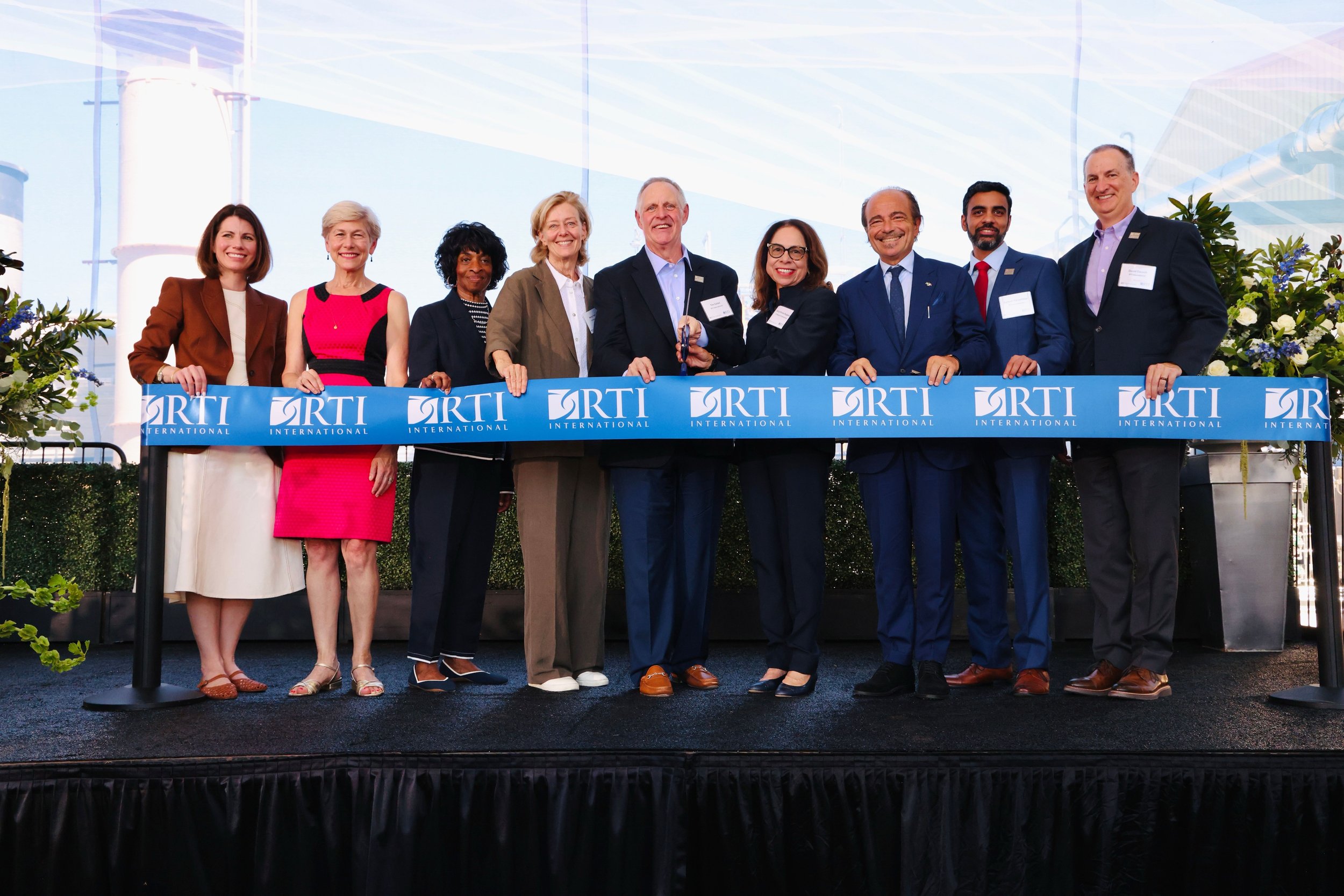
The September 10 ribbon-cutting marks the opening of RTI’s expanded RPX, a flexible pilot-scale research facility designed to help emerging technologies move from laboratory development toward commercial deployment. Mary Elizabeth Wilson, NC Department of Commerce; Congresswoman Deborah Ross (NC-02); Congresswoman Valerie Foushee (NC-04); Penny Freer, AP Ventures Chairman; Tim J. Gabel, RTI President and CEO; Hilda Pinnix-Ragland, RTI Board Member; Alessio Butti, Undersecretary to the Presidency of the Council of Ministers for Technological Innovation and Digital Transition in Italy; Sameer Parvathikar, Program Director for the RTI Pilot Xcelerator and David Dausch, vice president of engineering and advanced technology at RTI. Image: Courtesy of RTI International
The fundamental purpose of RPX remains the same: helping technologies make the transition from laboratory research to integrated pilot-scale operation. At laboratory scale, technologies can often be tested using relatively small quantities of materials and common laboratory infrastructure. As systems scale up, however, equipment becomes larger, material and gas inventories increase, and process safety, emissions control, utilities, automation, and data acquisition must be addressed together.
“The objective is not simply to make more product, but to demonstrate reliable operation, generate scale-up data, identify performance and safety issues, and reduce risk before committing to a commercial demonstration or full-scale plant,” Dausch says.
RTI’s role extends beyond providing the physical facility. Clients can also draw on RTI’s multidisciplinary engineering and scientific expertise, analytical chemistry capabilities, and commercialization support, including market feasibility, technology landscaping, partner scouting, techno-economic and life-cycle assessments, and regulatory evaluations.
Looking ahead, the expanded RPX is intended to support established areas such as biomass pyrolysis, carbon capture, and fuels and chemicals production while opening the door to emerging applications including low-carbon steel and cement, critical-mineral recovery, plastics and textile recycling, and industrial bioprocessing.
“By providing configurable floor space together with shared utilities, safety systems, emissions controls, and process-control infrastructure, we can accommodate a broad range of industrial pilot units including technologies that have not yet been conceived,” Dausch says.
For architects, engineers, and facility owners planning flexible research infrastructure, Dausch says the central lesson is straightforward: design for flexibility rather than around a single process, involve operators and end users early, establish realistic common infrastructure baselines, and leave room for specialized requirements to emerge later.
The result is a facility designed not simply for today’s technologies, but for the unpredictable path from laboratory innovation to commercial deployment.