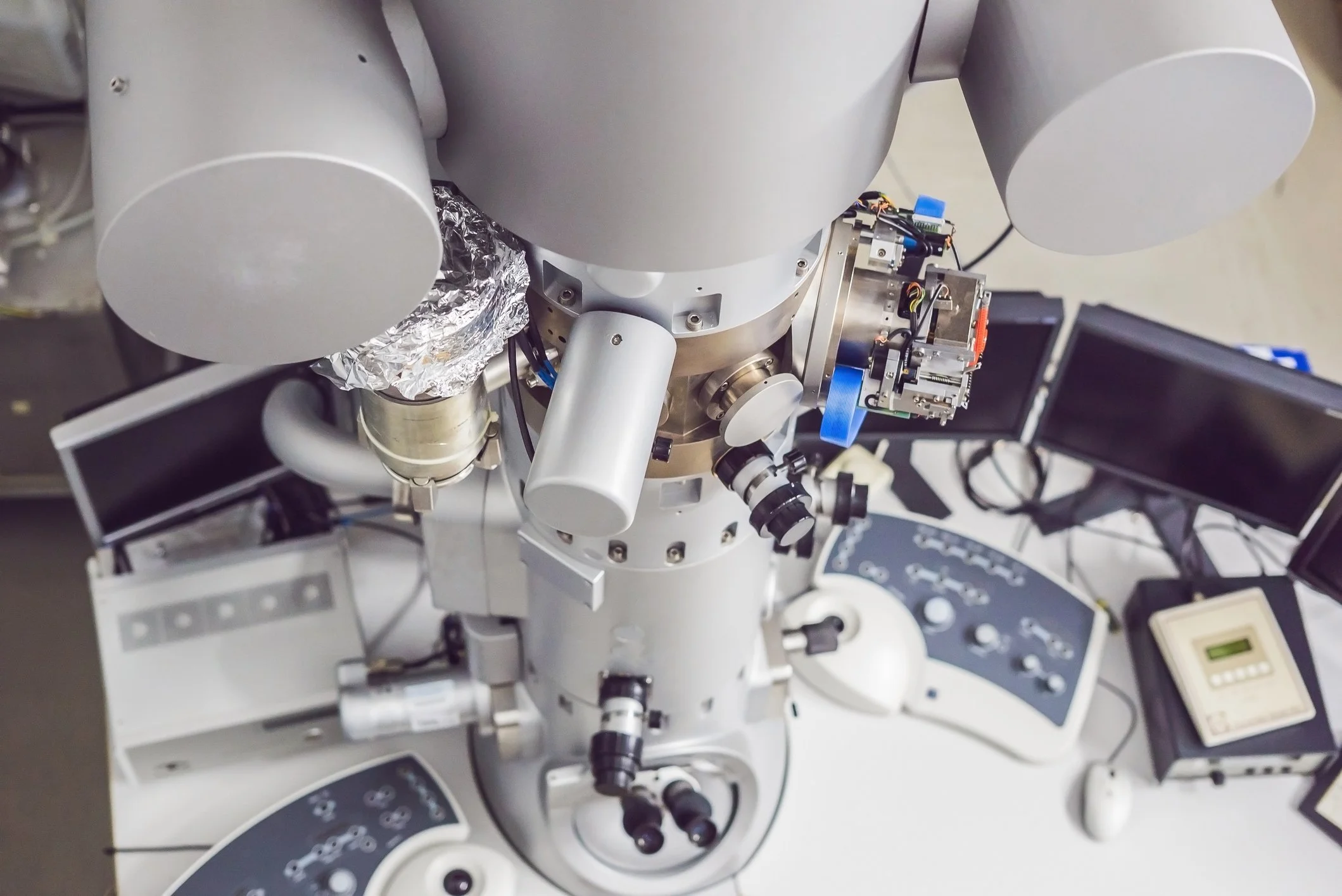
Bringing transmission electron microscopy (TEM) capabilities in-house gives biologics and viral safety teams greater control over sample preparation, imaging quality, turnaround time, and day-to-day operations. But those advantages only come if the facility is designed to support the instrument properly. A TEM is highly sensitive to its surroundings, so decisions about room location, vibration control, infrastructure, and workflow can directly affect performance. In many cases, organizations make the most important choices long before the microscope arrives.
For organizations considering an in-house TEM program, start not with the microscope itself, but with the facility around it.
Start with the environment
One of the first questions to ask is whether the proposed location can support equipment that is extremely sensitive to vibration and electromagnetic interference. That can be more complicated than it sounds. Potential sources of interference can include nearby machinery, electrical closets, building systems, traffic, and even activity outside the facility. Evaluate these factors early because they can influence both room selection and the level of structural or environmental mitigation required.
In some cases, the challenges are not obvious. At our Philadelphia facility, for example, proximity to the airport meant we had to consider aircraft vibration during design. The solution included reinforcing the foundation and walls and carefully selecting a location within the building that would reduce exposure to vibration and electromagnetic interference.
Room placement matters for the same reason. Electrical equipment and large machinery can generate fields that affect microscope performance, so TEM spaces are often best located away from those sources whenever possible.
The broader lesson is that a room that works well for a typical laboratory instrument may not suit TEM. Conditions that seem minor elsewhere in the lab can noticeably affect image quality and instrument performance.
Plan for more than the microscope
It is easy to focus on the microscope itself when calculating space and infrastructure requirements. In reality, the full TEM operation requires considerably more. Depending on the system, teams may need to account for a water chiller, associated equipment, and radiation safety requirements. Newer microscopes are becoming more self-contained, but the overall footprint can still be significant.
The supporting workflow also requires space. Consider sample preparation equipment, computers, and data systems from the start. These areas are easy to underestimate during planning, particularly when teams focus on the primary instrument.
In a regulated environment, the computer system is especially important. Data needs to be generated, captured, and backed up appropriately, so incorporate IT and data management requirements into the design rather than treating them as something to solve after installation. The same applies to access and service. Teams should think ahead about how the equipment will be delivered, installed, calibrated, and maintained over its operational life.
Bring the right people in early
TEM facility design shouldn't be handled by one discipline. Equipment vendors, engineers, architects, laboratory users and facility planners all bring different expertise, and each has information the others need.
The equipment vendor can assess a proposed space and identify environmental factors that could affect instrument performance. Engineers and architects can then determine whether proposed solutions are practical and what they will require from a structural or building-systems standpoint. Laboratory teams bring another perspective entirely. They understand how samples will move through the space, how the instrument will actually be used, and what will make the workflow practical day to day. All of those perspectives need to come together early.
Problems arise when one group makes decisions for the others. For example, a design choice that makes sense architecturally may create an operational problem for the laboratory. Likewise, a location that looks convenient to the laboratory team may expose the microscope to interference. Once construction is complete or equipment is installed, those mistakes can become expensive and difficult to correct.
Give sample preparation the attention it deserves
Image quality starts with sample preparation. Sectioning, staining, grid preparation, and sample handling all affect whether you can generate useful images. That makes sample preparation a critical part of facility design.
If the space is too small or crowded, staff may face safety concerns, particularly when working with reagents used for fixing or staining. If the area is too far from the microscope or environmental conditions are not well controlled, grids can be compromised before imaging. Poor sections, damaged grids, or inconsistent preparation can make imaging difficult or, in some cases, prevent meaningful data generation altogether.
The people doing that work are just as important. TEM requires hands-on expertise across the full workflow, from sample preparation and grid handling to microscope operation and image acquisition. Those skills take time to develop, so the facility plan should include staffing and training from the outset.
Experienced operators also play an important role in troubleshooting. They need to recognize when something does not look right and determine whether the issue is tied to the sample, the instrument, or the surrounding environment.
For that reason, map the workflow early. Teams should consider where samples arrive, how they are prepared, where materials are staged or stored, how grids move to the microscope, and who is responsible at each step. Getting those details right can significantly affect image quality, safety, and day-to-day efficiency.
Decide whether in-house TEM is the right fit
Before committing to a dedicated TEM facility, organizations should clarify what they need the technology to do and whether those needs justify bringing the capability in-house. Smaller benchtop systems can help with certain applications, but they may not offer the same resolution, flexibility, or control as a dedicated facility-based TEM.
The decision should come down to intended use, testing volume, turnaround expectations, and the required image quality and consistency. For regulated biologics testing, control is often a major factor. A purpose-built GMP environment lets teams manage facility conditions, sample preparation, and imaging workflows more closely, reducing variables that can affect performance and supporting more consistent results.
It also offers a practical operational advantage. Keeping TEM in-house can eliminate the need to ship samples to an outside provider, wait for external availability, or coordinate around another facility’s schedule. That can be especially valuable when timelines are tight or when you need repeat imaging and follow-up analysis quickly.
But in-house TEM is not automatically the right answer. It requires a meaningful investment in facility design, specialized equipment, trained staff, and ongoing maintenance. The strongest business case is usually one where the technology will be used often enough, and where control, responsiveness and consistency matter enough, to justify that investment. That is why the decision should be part of the broader facility strategy, not simply an equipment purchase.
Expect the unexpected
Perhaps the most important lesson in planning a TEM facility is that sources of interference are not always obvious. Building systems, electrical infrastructure, nearby equipment, and structural vibration can all affect performance, sometimes in ways that are easy to overlook during early design.
That is why a thorough site assessment matters. The earlier teams identify potential risks, the more options they have to address them before construction is complete or equipment is installed.
Ultimately, the strongest TEM facilities are designed as integrated systems, not simply as rooms built around a microscope. When teams plan the building, workflow, people, and supporting technology together from the start, they are better positioned to protect image quality, operate efficiently, and avoid costly changes later. That early coordination is what turns a complex installation into a reliable, sustainable capability. And one final practical tip: check what is nearby, including airports.