
Casework and Benches as Strategic Infrastructure in Lab Design
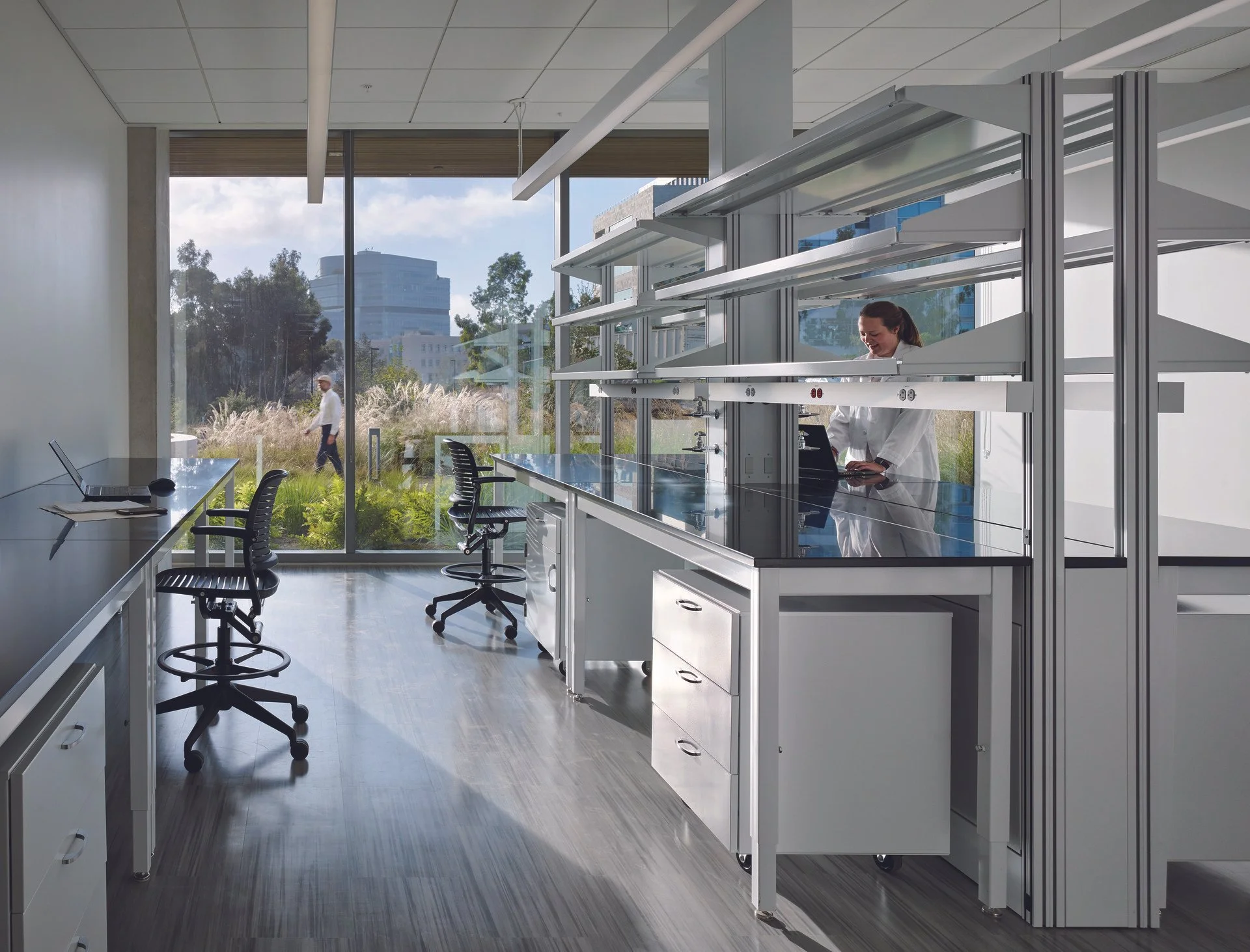
Early decisions around laboratory casework and bench systems shape long-term flexibility, workflow efficiency, and operational resilience, making them a critical planning consideration rather than a simple procurement choice. Image: BioMed Center for Novel Therapeutics. Credit: Nick Merrick
Casework and bench systems are often one of the most visible—but least strategically discussed—elements in a project. Yet they quietly shape everything from daily workflows to long-term operational costs, space utilization, and the ability to adapt as research priorities change.
The challenge is that these decisions are frequently made early, when pressures around budget, timelines, and space programming can obscure their long-term implications. Understanding how to evaluate these systems upfront can help project stakeholders ask better questions, avoid costly assumptions, and ultimately create labs that perform well not just on day one, but over decades of use.
That is why benching and casework should be treated as a planning conversation rather than a procurement decision. The choices made at this stage—fixed versus mobile systems, infrastructure placement, and allowances for future reconfiguration—set the tone for how resilient a laboratory will be as science evolves.
According to Stephen Wood, LEED GA, senior project architect with Perkins&Will, and Susan Clark, senior lab planner with Perkins&Will, early decisions around these systems can either enable long-term flexibility or lock users into costly constraints.
Designing for flexibility from the start
A recurring theme in lab planning is adaptability. As Wood and Clark explain, flexibility must be embedded into the earliest stages of design, particularly when determining how benches interact with fixed infrastructure.
“Good lab design allows for future flexibility. Strategically placed fixed items, such as fume hoods and sinks, allow tenants to pivot as scientific or spatial requirements change,” they say. “Similarly, strategic bench placement should accommodate infrastructure needs—whether fixed casework or mobile, the position remains the same.”
They add, “Efficiency can also come into play. For example, placing items with fixed utilities, such as sinks, along a common wall in larger labs can allow for greater flexibility in the future as labs expand or contract.”
This mindset reframes benches as part of a building’s long-term operational backbone rather than interchangeable furniture.
Fixed vs. mobile: a question of evolution
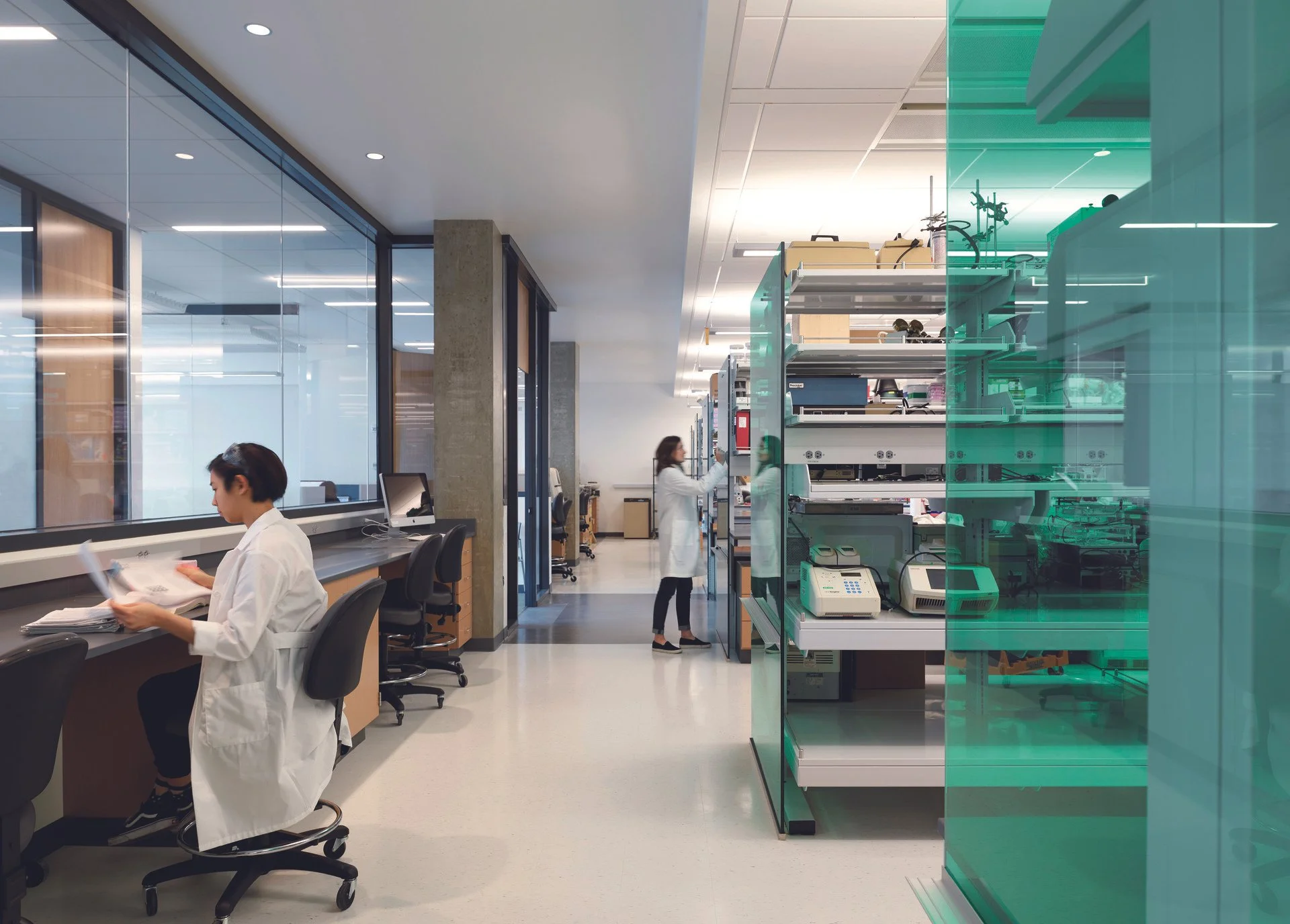
Designing laboratory casework as a flexible, right-sized system—rather than overbuilt or overly customized—helps balance user needs, simplify future modifications, and support long-term adaptability in ever-evolving research environments. Image: University of Washington Life Sciences Building. Credit: Kevin Scott
In enterprise and commercial labs, mobility is increasingly the default. Fixed casework is typically reserved for infrastructure-heavy zones like sinks or service walls, while mobile benches dominate general lab areas. This allows teams to reconfigure spaces quickly as research needs evolve.
Mobility also extends to equipment support. Larger organizations often invest in mobile carts and cabinets for instruments such as HPLC systems or mass spectrometers, reducing reliance on facilities teams and avoiding unnecessary duplication of assets.
Start-ups, meanwhile, are encouraged to avoid premature over-investment in fixed systems. As Wood and Clark note, “Choosing a system that offers accessories or options for future modifications is key, and it should be sophisticated enough that they won’t outgrow it. We typically advise clients at this stage to avoid the most expensive option and instead choose the option that best suits their needs, as features can be added in the future.”
Avoiding common design missteps
One of the most common pitfalls organizations encounter is importing bench and casework strategies from other sectors without fully accounting for long-term laboratory performance needs. Cost-driven decisions can also create challenges later if they compromise adaptability or fall short of lab-grade requirements.
As Wood and Clark emphasize, compliance and performance standards are critical from the outset. When these early decisions are misaligned, they often result in inefficiencies that are difficult—or expensive—to correct after the fact.
“We have also seen some furniture vendors attempt to enter the lab casework market without understanding the needs and requirements for lab benches,” they say. “Failure to comply with the SEFA 8 industry standard for metal casework in the US can result in suboptimal plumbing and electrical services in benches.”
Beyond compliance, the selection of fixed versus mobile systems plays a significant role in a lab’s ability to adapt over time. Mobile benches, in particular, allow for rapid reconfiguration to accommodate large equipment, adjust storage layouts, or even create seated workstations by repositioning cabinets. This flexibility supports evolving workflows without requiring major construction interventions.
Planning for long-term value
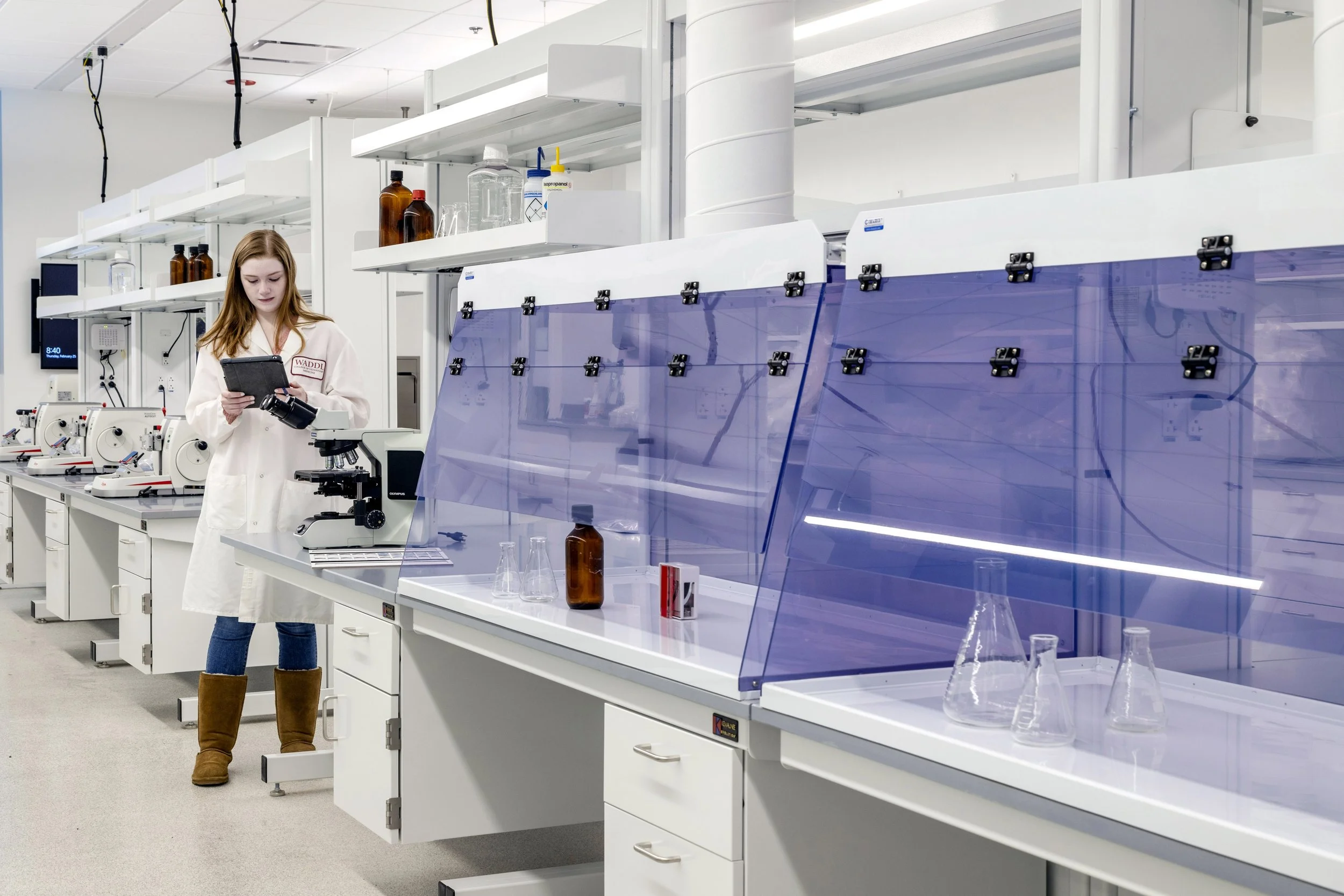
Right-sized, modular casework—aligned with infrastructure planning—supports flexible, future-ready laboratories without overdesigning for extremes or individual preferences. Image: Washington State University Global Animal Health Phase. Credit: Rick Keating
Ultimately, successful lab design hinges on aligning casework decisions with broader infrastructure planning. Wood and Clark emphasize the importance of “right-sizing” systems rather than overdesigning for extreme future scenarios or tailoring solutions too closely to individual preferences. This approach helps maintain balance across user groups while preserving flexibility for future growth.
“Typically, we advise clients to size MEP systems or select a balanced lab bench system that offers flexibility to accommodate growth without planning for the most extreme needs,” they say. “It's important not to cater to every individual PI request, but to design with all researchers in mind, which provides the most long-term value. Having a single manufacturer supply the client also simplifies deliveries and future modifications.”
Looking ahead, modular systems are expected to take on an even greater role, enabling components to be swapped or upgraded without the need to replace entire bench systems. This shift reflects a broader reality: laboratories are no longer static environments, and their infrastructure must be designed to support continuous change.
By treating benches and casework as strategic assets rather than interchangeable furnishings, project teams can create laboratories that remain efficient, adaptable, and cost-effective over decades of scientific advancement.