
2026 Lab Design Conference Lab Tour Preview: Florida Polytechnic University
Attendees of the 2026 Lab Design Conference may enhance their conference experience by adding a guided laboratory tour on May 14. This exclusive visit to the Barnett Applied Research Center and the Innovation, Science and Technology Building at Florida Polytechnic University provides a unique opportunity to explore two complementary facilities that showcase flexibility, high performance, and bold architectural vision.
Departing at 8:15 am, the tour provides a focused, behind-the-scenes exploration of how these two buildings work together to support advanced STEM education, applied research, and industry collaboration.
Please note: Lab tour tickets must be added on to the regular conference registration. Click here to get your ticket!
A transparent model for flexible, future-ready research
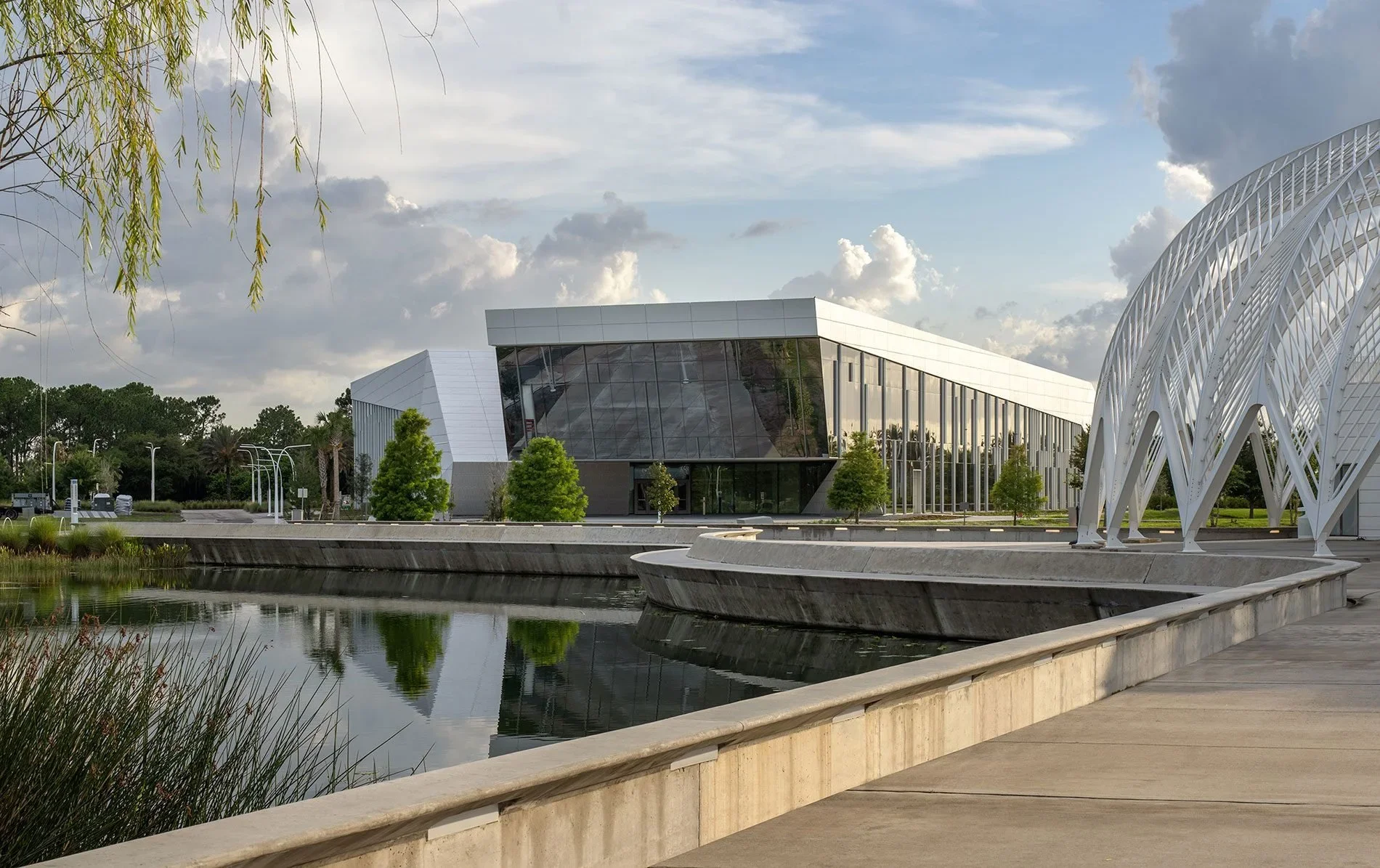
The Barnett Applied Research Center (ARC) at Florida Polytechnic University, a striking addition to the campus, showcases cutting-edge research and technology. Image: Courtesy of HOK
The Barnett Applied Research Center (BARC), completed as an 85,000-sf applied research hub, was designed to support evolving scientific programs while promoting interaction between students, faculty, and industry partners. HOK provided architecture, interior design, lab planning and programming services.
For lab planners and designers, the building serves as an instructive example of how flexibility can be embedded into both spatial planning and infrastructure.
The facility is organized around two linear bars of high-performance academic and laboratory space that frame a dramatic, multistory atrium. This central atrium is more than an architectural statement—it functions as the “social and intellectual heart” of the building, encouraging informal collaboration and spontaneous exchange, says John P. Trecastelli, RA, director, facilities & safety services, Florida Polytechnic University. “The ARC is organized around a multi-story, light-filled atrium that visually and physically connects teaching labs, research labs, offices, and student spaces, encouraging chance encounters and interdisciplinary exchange,” he says.
From a planning perspective, this configuration demonstrates how circulation zones can double as collaboration zones, maximizing usable space while strengthening interdisciplinary interaction.
Further reading: Project Profile: The Applied Research Center at Florida Polytechnic University
Equally important is the building’s strategic use of transparency. Extensive glazing brings daylight deep into lab and teaching environments, improving occupant well-being while reducing reliance on artificial lighting. This approach aligns with growing evidence that access to natural light enhances productivity, supports recruitment, and improves retention of scientific talent—key considerations for any organization planning new or renovated laboratory facilities.
“Extensive glass walls and open sightlines put research ‘on display,’ reinforcing the ARC’s role as a ‘Gallery for Science’ and making innovation visible to students and visitors,” says Trecastelli.
The BARC was also designed with future adaptability in mind. Flexible lab layouts, modular planning strategies, and infrastructure systems capable of accommodating evolving research programs allow the building to support new technologies and changing research priorities without major renovation. For stakeholders concerned with lifecycle costs and long-term operational resilience, these features illustrate how thoughtful early planning can extend a facility’s useful life and reduce future disruption.
“At the time of design, specific research groups were not fully defined; the building was intentionally designed as a ‘workhorse’ research facility capable of supporting a broad spectrum of science and engineering disciplines over time,” says Trecastelli.
A landmark in integrated academic and laboratory design
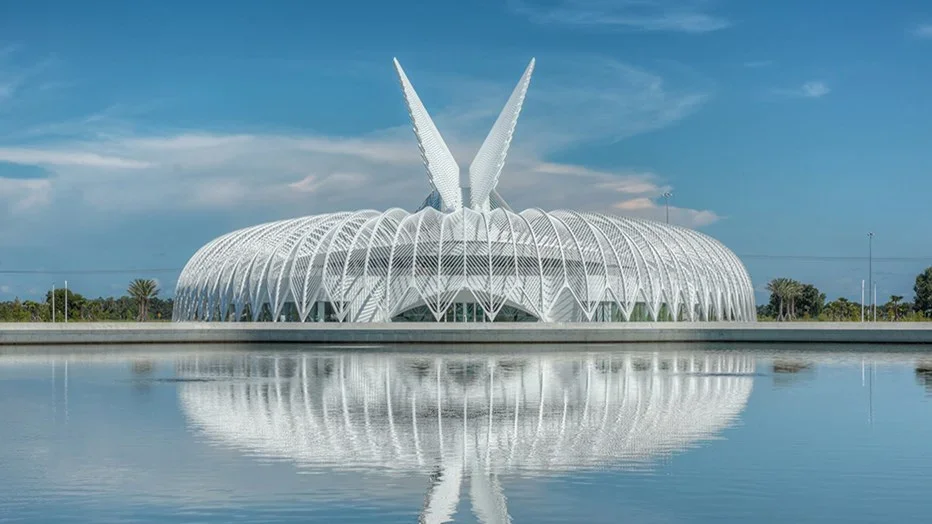
The Innovation, Science and Technology Building serves as both an academic anchor and architectural centerpiece, demonstrating how bold design can support high-performance teaching and laboratory environments. Image: Courtesy of Skanska
Complementing the applied research focus of the BARC, the Innovation, Science and Technology (IST) Building serves as both an academic anchor and an architectural centerpiece for the campus. Designed by renowned architect Santiago Calatrava, the building demonstrates how bold architectural identity can coexist with rigorous technical performance. Skanska worked alongside Thornton Tomasetti for structural engineering.
Inside, the building houses classrooms, innovation labs, faculty offices, and shared collaboration spaces organized around two curved, double-loaded corridors. This layout provides a clear example of how lab and teaching functions can be carefully zoned to balance technical requirements with user experience.
One of the most instructive design strategies is the placement of research labs within the building’s core, where mechanical, electrical, and plumbing systems can be efficiently concentrated to support intensive laboratory operations. Meanwhile, teaching labs and classrooms are located along the perimeter, benefiting from abundant daylight and views of the surrounding campus and lake. This separation optimizes building performance while enhancing the experience of occupants—a valuable lesson for designers balancing energy efficiency, technical requirements, and human-centered design.
“Attendees will see how architectural form, lab planning, building systems, and campus planning work together as a cohesive whole,” notes Trecastelli.
At the center of the IST Building is the Commons, a large, skylit, multi-use space that can accommodate lectures, exhibitions, recruiting events, and informal study. This adaptable space highlights the growing importance of shared environments that support both formal and informal collaboration, a key priority in modern research and academic facilities.
“The tour demonstrates how daylighting, visibility, and openness can coexist with the technical rigor of laboratory environments,” Trecastelli says.
Campus-scale planning and connectivity
Beyond showcasing two high-performance buildings, the tour highlights how strategic campus-scale planning can strengthen an entire research ecosystem. For attendees of the Lab Design Conference—including lab planners, architects, facility managers, and design/build professionals—this tour provides tangible, real-world insight into how flexible lab infrastructure, integrated building systems, and collaboration-driven architectural strategies are implemented at both the building and campus scale. Experiencing these spaces firsthand reveals how modern laboratory environments can simultaneously support research, teaching, entrepreneurship, and recruitment, offering practical lessons and inspiration for anyone planning a new facility, renovation, or long-term master plan.
Register now to reserve your spot
Space is limited, so be sure to reserve your place on this tour when registering for the Lab Design Conference. This is a unique opportunity to see firsthand how innovative laboratory design, adaptable infrastructure, and integrated campus planning come together to support advanced research and collaboration. Don’t miss your chance to explore these forward-thinking facilities—secure your spot today!